cTrader Goes Big on AI: Official MCP Servers Bridge the Gap Between LLMs and Live Markets
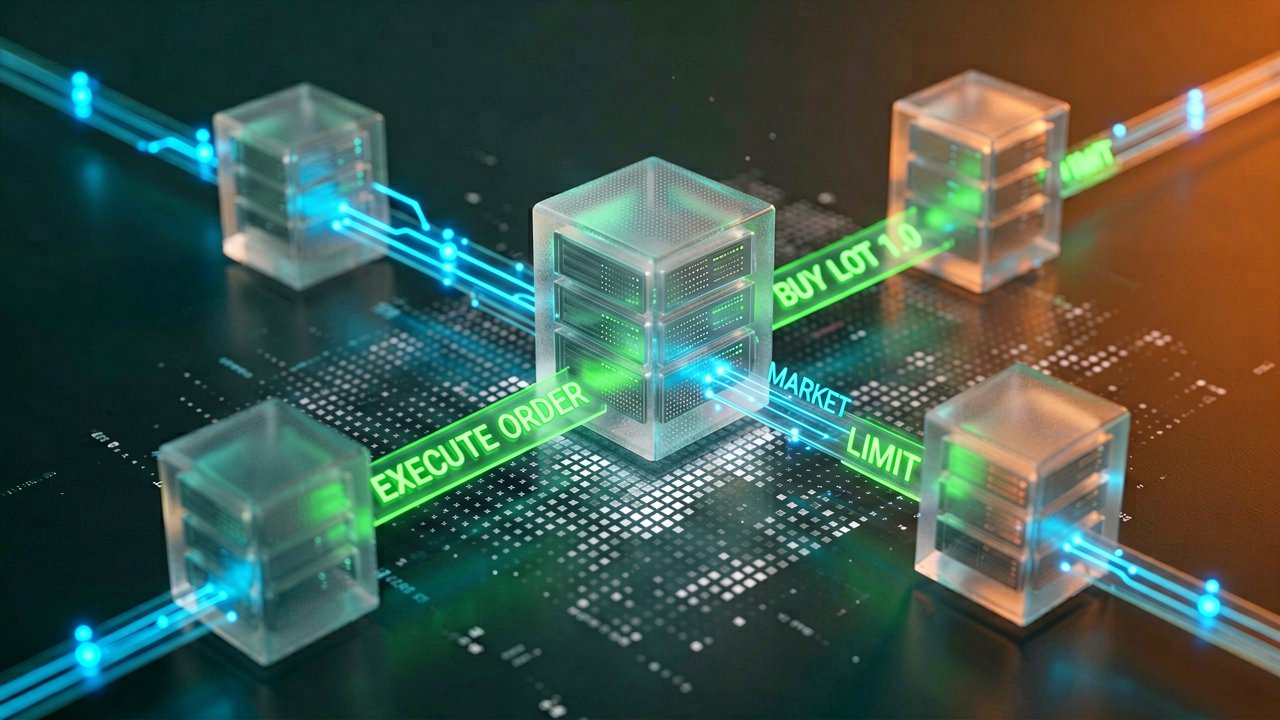
For years, the retail trading world has been stuck in a bit of a "walled garden" when it comes to automation. If you wanted to build something smart, you usually had to be a decent C# coder or spend hours wrestling with proprietary languages. But that just changed. Spotware has officially pulled the curtain back on its cTrader AI Agent Connect, a launch that brings the Model Context Protocol (MCP) directly into the execution layer. It’s a move that feels less like a simple update and more like a fundamental shift in how we interact with our terminals.
By rolling out official MCP servers, cTrader is effectively giving Large Language Models (LLMs) like Claude or ChatGPT a pair of hands. Instead of just asking an AI to "analyze this chart" and then manually clicking the buttons yourself, the protocol allows these agents to fetch real-time data, manage accounts, and execute orders directly. According to FX News Group, the integration includes both local and remote servers, ensuring that whether you're a power user on Windows or a mobile trader on the web, your AI can stay in the loop.
Breaking the Coding Barrier
The real magic here isn't just the connectivity; it's the "Skills" library. Spotware isn't just handing over the keys and wishing you luck; they’ve included ready-made workflow instructions that act as templates for common trading tasks. This lowers the barrier to entry significantly. You don't need to write 500 lines of code to build a sentiment-following bot anymore. You can just prompt your agent to "monitor my exposure and close all GBP positions if the news turns bearish," and the MCP server handles the translation between human intent and machine execution. As noted by LiquidityFinder, this puts cTrader in a very strong position against legacy platforms like MetaTrader, where the "MQL barrier" has long kept casual traders away from advanced automation.
Local vs. Remote: Choosing Your Setup
The dual-server approach is a clever bit of engineering. The Local MCP server is built for the cTrader Windows desktop app, offering the deepest level of control, including UI manipulation and indicator tuning. It’s for the trader who wants an AI "co-pilot" living right inside their workspace. On the other hand, the Remote MCP server works via cTrader Web, allowing you to connect your account to AI apps on any device. According to the cTrader Help Center, while the remote version is slightly more streamlined, it still covers the essentials: trading, account stats, and historical data analysis. It’s a versatile setup that acknowledges that today’s traders are rarely tethered to a single screen.

The Shift Toward Executable Intelligence
Beyond the API Hype: What most surface-level reports miss is that this isn't just another API wrapper; it’s a total reimagining of the trader-platform relationship. For decades, the industry standard was the "black box" approach, where you either traded manually or handed your capital over to a rigid, pre-programmed Expert Advisor. By adopting the Model Context Protocol, cTrader is betting on a third way: interactive, conversational execution. This moves the needle from "automated trading" to "augmented trading," where the AI isn't just a tool you build, but a collaborator you talk to in real-time.
Historically, the bottleneck for retail algorithmic trading was the massive technical debt required to keep a bot running. You needed a VPS, a solid grasp of C#, and the patience to debug thousands of lines of code when the market shifted. Spotware’s pivot to MCP effectively offloads the logic processing to the LLMs that are already getting smarter by the day. This creates a fascinating power dynamic shift. Now, the value isn't in who can write the best code, but in who can provide the best "reasoning" via prompting. It levels the playing field for the strategist who understands market macro but lacks a computer science degree.
From a stakeholder perspective, this move puts immense pressure on MetaQuotes to modernize. MetaTrader 4 and 5 still dominate the market share, but they are built on foundations that pre-date the generative AI boom. Industry insiders have long whispered that the "MQL ecosystem" is a double-edged sword; it’s vast, but it’s also a silo. By using an open standard like MCP, cTrader is inviting the entire Silicon Valley AI ecosystem into the forex terminal. It’s an open-door policy that could see third-party developers building specialized "trading brains" that work plug-and-play with any cTrader-enabled broker.
There is also a subtle but critical security narrative here. By offering a Local MCP server option, cTrader addresses the primary concern of institutional-grade retail traders: data privacy. Many professional traders are hesitant to send their proprietary strategies or sensitive account balances into a cloud-based AI. The local server allows the "reasoning" to happen via the LLM while keeping the actual execution and sensitive account calls within the user’s own environment. This balance of cutting-edge tech and traditional risk management is a hallmark of Spotware’s engineering philosophy.
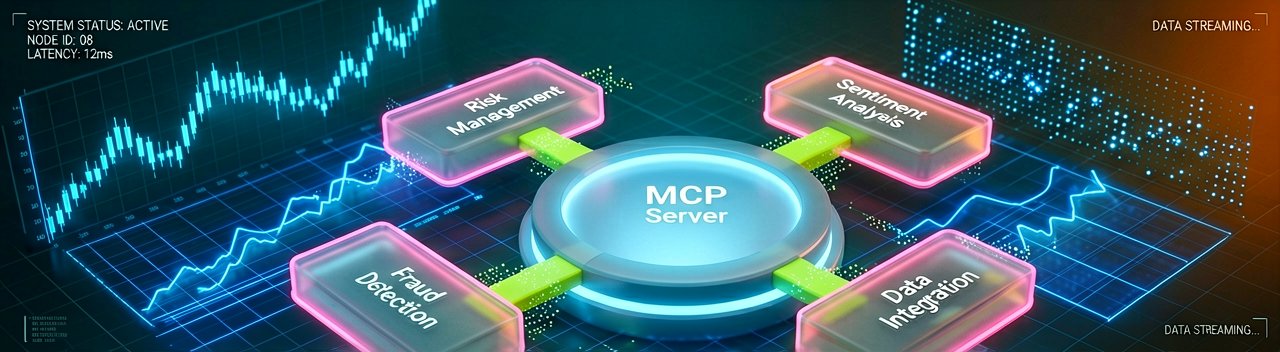
Finally, we have to look at the "Skills" library as the new marketplace. In the old days, you’d buy a .ex4 file from a forum and hope for the best. In this new era, we are likely to see a shift toward "Prompt Engineering for Finance." As documented by cTrader Help Center, these skills are essentially standardized instructions that tell the AI how to behave. This modularity means a trader can swap out a "Scalping Skill" for a "Risk Management Skill" as easily as changing a profile picture, making the platform more adaptive to volatile market conditions than any static bot could ever be.
Ultimately, this launch marks the end of the "silent terminal" era. We are moving toward an environment where the platform understands the trader’s intent, not just their clicks. For the tech-forward journalist, the story here isn't that cTrader added AI—it's that they built a bridge that allows the world’s most powerful language models to finally cross over into the high-stakes world of live CFD execution without losing anything in translation.
The Reality Check: Intelligence vs. Execution
Reading Between the Lines: While the technical marriage of LLMs and order books is a feat of engineering, it forces us to confront an uncomfortable truth about market efficiency. The prevailing narrative suggests that giving an AI "hands" will lead to better trading outcomes, but this assumes that the LLM's reasoning is inherently superior to human intuition or traditional quantitative models. In reality, LLMs are probabilistic engines, not deterministic ones. Entrusting a model prone to "hallucinations" with a high-leverage CFD account is a gamble that the cTrader documentation glosses over in favor of seamless connectivity.
There is also a glaring contradiction in the promise of "democratizing" algo-trading. By lowering the barrier to entry, cTrader is inviting a wave of traders who may understand how to prompt a bot but lack a fundamental grasp of market microstructure or risk management. We are essentially giving high-powered power tools to people who haven't yet mastered the hand saw. If thousands of retail traders begin using similar LLMs—trained on the same public data—to execute trades via the same MCP protocols, we risk creating a feedback loop of "copy-paste" volatility that could lead to crowded trades and flash-crash scenarios in niche pairs.
Furthermore, the reliance on third-party AI providers introduces a new layer of systemic risk: the "API outage." If a trader is using a cloud-based LLM to manage a complex grid strategy and the AI provider suffers a latency spike or a service blackout, the bridge is out. Unlike a locally compiled C# bot that runs autonomously once launched, an AI-agent setup is only as strong as its weakest connection. This creates a fragile dependency on external tech giants like OpenAI or Anthropic, whose primary business isn't ensuring your stop-loss hits during a NFP release.
Projecting into the near future, we must ask if this is truly the "death of the coder" or just the birth of a more expensive middleman. While users save time on syntax, they will likely spend it on "prompt debugging" and API subscription fees. The efficiency gain is real, but it’s a shift in the cost of doing business rather than a total elimination of overhead. The savvy trader will recognize that while the AI can fetch the data and click the button, the burden of strategy—the actual "alpha"—remains stubbornly, and perhaps fortunately, human.
Trading with an AI agent is a bit like hiring a genius intern who occasionally forgets what a dollar is worth; it’s brilliant until it confidently explains that your margin call is actually a creative way to diversify your portfolio.
Artūras Malašauskas is an AI Systems Integrator with 20+ years of production-grade web engineering experience. He has designed, shipped, and scaled enterprise Python/PHP systems for logistics, SaaS, and public-sector clients. For the past year, he has focused exclusively on AI integrations: deploying open-source LLMs, building generative media pipelines (image, audio, video), and engineering multi-agent workflows for real production environments. His standard: reproducibility, security, cost-efficient inference—no vaporware. He documents and evaluates emerging AI tooling, separating verified capabilities from marketing noise. Technical editor at: muza-ai.eu, ai-verslas.lt, ai-naujinos.lt Connect on LinkedIn
Comments