WIZ.AI Unleashes Wizlynn: Putting the 'Reliable' Back into Enterprise AI Agents
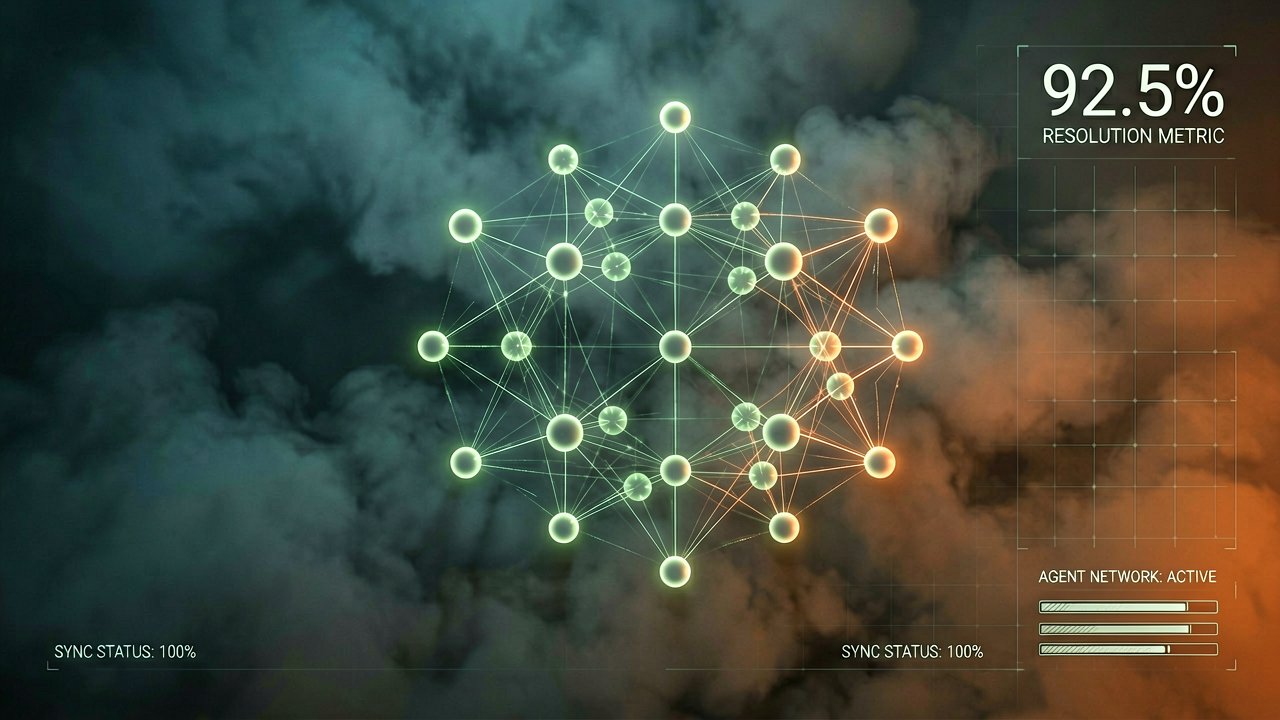
For years, the promise of generative AI in the enterprise has been haunted by the "pilot purgatory" ghost—those flashy demos that look great in a boardroom but crumble under the weight of real-world customer frustration. WIZ.AI is looking to change that narrative. With the launch of Wizlynn, a multi-agent inbound platform, they aren't just adding another chatbot to the pile; they're aiming for production-grade reliability that regulated industries like banking can actually bet on. Introduced at the One North Foundation AI Community Gathering in Singapore, the platform represents a shift from simple, reactive bots to proactive, multi-agent systems that understand the messy reality of human conversation.
What sets Wizlynn apart isn't just the tech under the hood, but its focus on "dialect fluency." In regions like Southeast Asia, where speakers might hop between languages and accents mid-sentence, traditional AI often trips over its own feet. Wizlynn is built to handle this linguistic agility naturally. It’s backed by a Triple-Flywheel Engine—comprising an AI Builder, Simulation, and Evaluation suite—that reportedly slashes deployment times. According to PR Newswire, enterprises can have a system live in just two days, with full-service operations hitting the ground running by the following week.
Precision Meets Production
The numbers WIZ.AI is putting up are ambitious. In testing, Wizlynn achieved a 92.5% AI Resolution Rate, which is a far cry from the "I don't understand that" loops we've all come to dread. With response times clocked under two seconds and a 95% intent recognition accuracy, the platform is clearly gunning for a "human-level" experience. For those moments when things do get too complex, it targets a 95% successful handoff rate to human agents, ensuring customers aren't left stranded in a digital dead end. As reported by , the platform already includes over 40 specialized agents tailored for banking scenarios, covering everything from loan inquiries to account transfers.
Security for the High-Stakes Player
You can't talk about enterprise AI without talking about security, especially for a company like WIZ.AI that serves high-volume, regulated sectors. Wizlynn includes multi-layer guardrails and strict access controls to ensure that generative outputs don't go rogue. It integrates directly with core enterprise systems, pulling live data to provide actual answers rather than just "hallucinating" plausible-sounding fluff. This deep integration, paired with the ability to handle massive conversation volumes simultaneously, positions Wizlynn as a serious contender for businesses ready to move beyond the experimental phase and into a truly AI-native future.

What Most Reports Miss: The Friction of Real-World Deployment
Behind the digital curtain: While the headline-grabbing resolution rates are impressive, the real story lies in how WIZ.AI is tackling the "last mile" of enterprise integration. Most AI deployments stall because they act as isolated silos, unable to "talk" to legacy banking cores or outdated CRM systems without months of custom coding. Wizlynn’s architecture attempts to bypass this by utilizing a pre-integrated agent framework. This isn't just about speed; it’s about reducing the technical debt that usually accumulates when companies try to force-fit generative models into rigid corporate workflows.
Industry veterans know that the biggest hurdle in Southeast Asian markets isn't just translation—it's cultural nuance. Stakeholders at the Singapore launch emphasized that a "reliable" agent must understand the difference between a formal inquiry and a frustrated colloquialism. WIZ.AI’s focus on dialect-specific training data allows Wizlynn to maintain a professional veneer while navigating the linguistic code-switching common in hubs like Jakarta or Manila. This localized expertise provides a competitive moat that global, one-size-fits-all LLM providers often struggle to cross.
The Triple-Flywheel Engine—specifically the "Simulation" component—serves as a high-stakes rehearsal space. Before a single customer interacts with the bot, the system stress-tests thousands of permutations of a conversation. This historical shift from "build and monitor" to "simulate and certify" marks a transition in the AI industry toward engineering rigor. By treating AI behavior like software code that requires automated testing, WIZ.AI is addressing the primary fear of CIOs: the unpredictable brand damage caused by an unhinged chatbot.
From a stakeholder perspective, the push for a 95% successful handoff rate is a strategic acknowledgement of AI’s current limitations. Rather than promising a total replacement of the human workforce, the platform is designed to act as a sophisticated filter. By resolving 92.5% of routine queries, it frees up human specialists to handle the high-empathy, high-complexity cases that AI still can't touch. This hybrid approach is what makes the platform palatable to labor unions and traditional management layers alike.
Looking at the broader market context, WIZ.AI is positioning itself against both the tech giants and the niche startups. While companies like Google and Microsoft offer the raw power, WIZ.AI is betting on specialized, "turnkey" reliability for specific verticals like finance and telecommunications. This vertical integration, as noted by PR Newswire, suggests that the future of enterprise AI isn't in general-purpose models, but in purpose-built ecosystems that come with industry-specific guardrails pre-installed.
Reading Between the Lines: The Reality of "Production-Ready" AI
The skeptics' corner: Every enterprise software launch is wrapped in the shiny veneer of "reliability," but the term is often a moving target in the world of large language models. While WIZ.AI’s claim of a 92.5% resolution rate is staggering, it invites a deeper interrogation of what "resolution" actually means. In many enterprise contexts, a resolution can simply mean the user stopped talking, not necessarily that their problem was solved. The industry has a history of inflating metrics by counting "successful" exits that were actually just users giving up in frustration, and the real test for Wizlynn will be the long-term customer satisfaction scores that follow the initial deployment hype.
There is also a fascinating contradiction in the promise of a "two-day deployment." For a highly regulated bank, a forty-eight-hour turnaround is virtually unheard of—not because the technology isn't ready, but because the internal compliance, legal, and data privacy hurdles are intentionally designed to be slow. WIZ.AI is essentially betting that their "Triple-Flywheel Engine" can automate the trust-building process that usually takes months of human oversight. This assumes that the simulation layer is robust enough to satisfy a Chief Risk Officer’s scrutiny, which remains a tall order when generative AI still possesses an inherent streak of unpredictability.
Projecting forward, the proliferation of specialized multi-agent systems like Wizlynn might actually lead to a new kind of "agent fatigue." As every enterprise deploys its own fleet of niche bots, the digital landscape could become a fragmented maze of automated gatekeepers. While WIZ.AI handles linguistic code-switching brilliantly, the broader implication is an increasingly automated barrier between a company and its customers. If every "reliable" agent is designed to deflect 92% of traffic, the remaining 8% of human interactions will become exponentially more high-pressure, potentially straining the very workforce these systems are meant to support.
Furthermore, the reliance on industry-specific "pre-built" agents—such as the forty banking agents mentioned by Dealroom.co—suggests a trend toward the commoditization of AI expertise. If every bank uses the same underlying logic for loan inquiries and account transfers, the competitive advantage shifts from the technology itself to the quality of the underlying data. Companies may find that while Wizlynn solves the "how" of communication, the "what"—the actual value offered to the customer—remains as difficult to innovate as ever.
In the race to automate empathy, we’ve reached a point where a bot can navigate three languages and a banking core in under two seconds, yet most of us would still trade all that efficiency for a human being who can actually apologize for a lost credit card and mean it.
Artūras Malašauskas is an AI Systems Integrator with 20+ years of production-grade web engineering experience. He has designed, shipped, and scaled enterprise Python/PHP systems for logistics, SaaS, and public-sector clients. For the past year, he has focused exclusively on AI integrations: deploying open-source LLMs, building generative media pipelines (image, audio, video), and engineering multi-agent workflows for real production environments. His standard: reproducibility, security, cost-efficient inference—no vaporware. He documents and evaluates emerging AI tooling, separating verified capabilities from marketing noise. Technical editor at: muza-ai.eu, ai-verslas.lt, ai-naujinos.lt Connect on LinkedIn
Comments