The End of the Paper Trail: Texas NTS Brings Foreclosure Data Into the AI Age
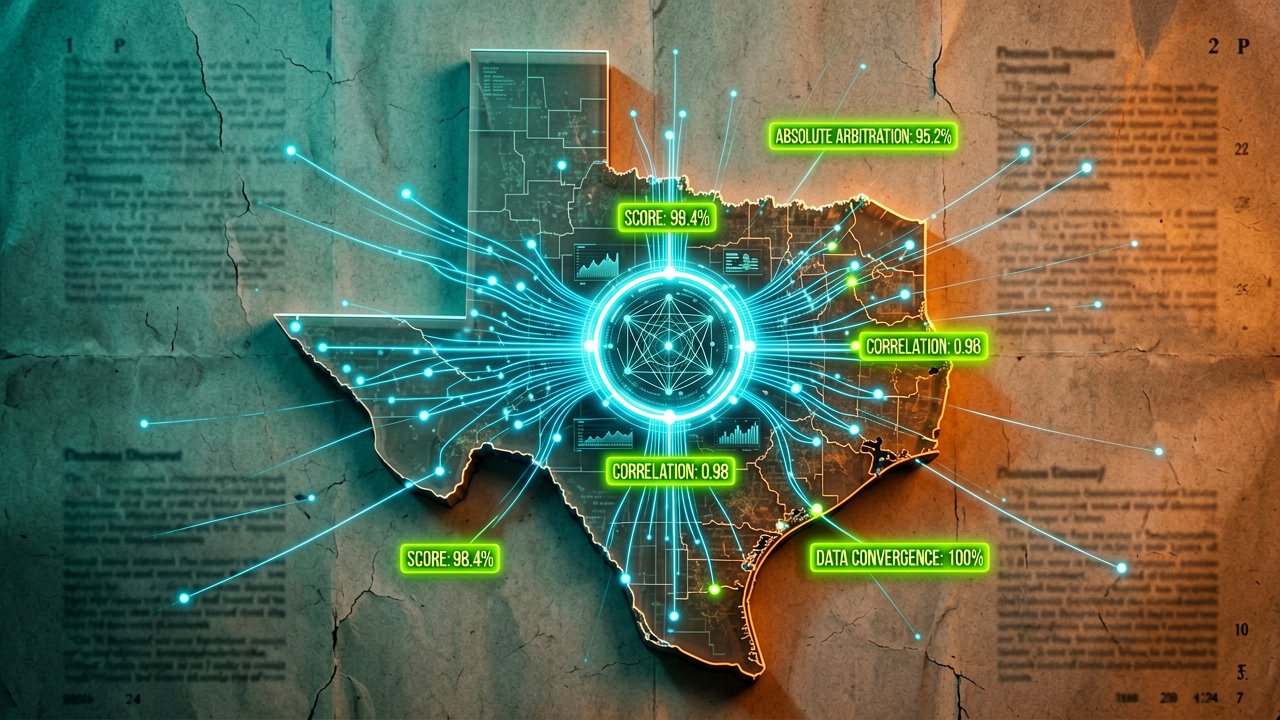
In a state where real estate moves as fast as a summer storm, the data undergirding the foreclosure market has remained stubbornly stuck in the past. Until now. Texas NTS has just flipped the switch on a statewide, AI-driven intelligence platform designed to track every single foreclosure filing across all 254 Texas counties. It’s a massive technical lift that solves a problem most national players have simply ignored: the sheer, messy fragmentation of Texas’s local clerk offices. While the big data brokers usually stick to the major metros, this Lubbock-built system is digging into the rural corners where opportunity—and data gaps—typically hide.
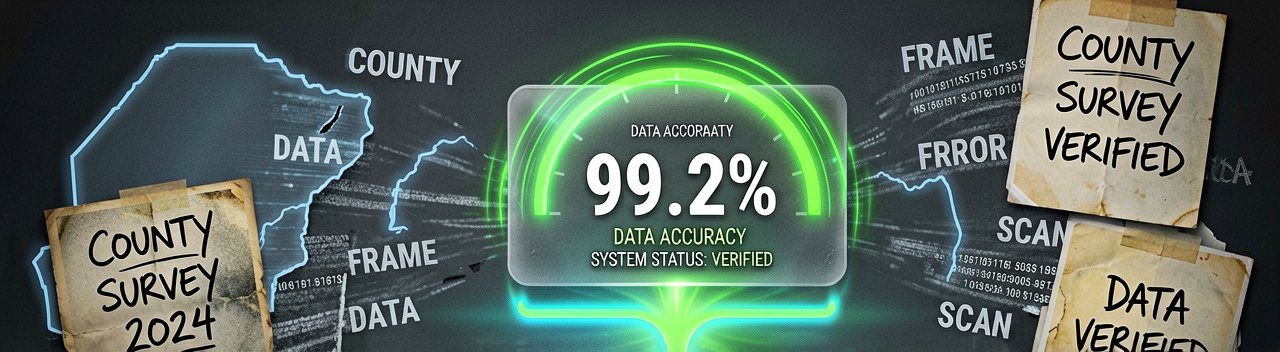
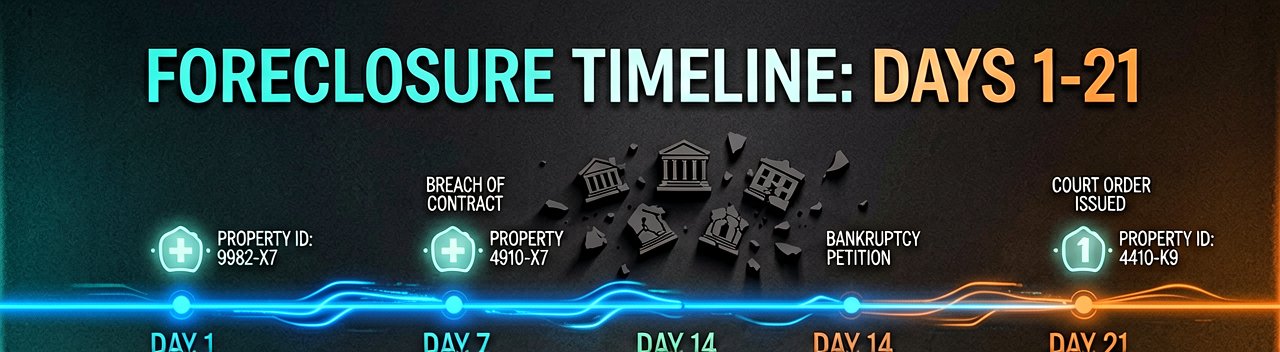
The platform doesn’t just aggregate; it interprets. According to a report from GlobeNewswire, the system uses a multi-agent AI architecture to extract "Notices of Trustee's Sale" with a staggering 99.2% accuracy rate. That’s a big deal when you consider that these notices come in every format imaginable—from clean digital PDFs to grainy scans and physical bulletin board photos. By delivering structured data within roughly 24 hours of a filing, the platform effectively hands investors back the full 21-day window required by state law for non-judicial foreclosures, a window that often shrinks to a mere week when using slower, manual data feeds.
Solving the 254-County Headache
Anyone who’s tried to pull a comprehensive list of Texas filings knows it’s a nightmare. You’re dealing with 254 different clerk sites, many of which are locked behind login walls or rely on broken OCR that can’t tell a "5" from an "S." The Texas NTS engine continuously monitors these sites, using what they call "arbitration scoring" to ensure the data is verified before it hits a subscriber’s dashboard. It’s a move toward "applied AI" that actually works for a living, moving beyond the chatbot hype into the gritty world of structured-data problems.
Timing is Everything in the Lone Star State
Texas law is rigid: foreclosure sales happen on the first Tuesday of every month. If you’re a private equity firm or a local wholesaler, knowing about a filing three days late isn't just an inconvenience—it's a missed deal. This platform provides the audit trail required for institutional due diligence, essentially standardizing the wild west of Texas property records. By bridging the gap between rural filings and institutional capital, the tech is making the state’s distressed debt market more transparent, and significantly more competitive.
What Most Reports Miss: The Frictionless Frontier of Distressed Debt
The real magic of the Texas NTS rollout isn't just the sheer volume of data, but the way it dismantles the "local knowledge" monopoly that has historically governed the Texas auction steps. For decades, the most successful foreclosure investors were those with the boots on the ground—runners who spent their mornings in dusty county clerk offices or outside courthouse doors. This manual bottleneck acted as a natural barrier to entry, keeping institutional players and out-of-state capital at bay. By digitizing the physical bulletin board, the platform essentially levels the playing field, turning a localized scavenger hunt into a high-speed data race.
From a stakeholder perspective, the shift is transformative for both the buy-side and the service industry. Banks and trustees often struggle with the logistical nightmare of ensuring every filing is compliant across varying county standards. With a multi-agent AI system maintaining a 99.2% accuracy rate, the platform acts as a third-party audit trail. This reduction in administrative friction means that the 21-day legal window, which was once a frantic scramble to verify property titles and occupant status, can now be used for sophisticated financial modeling and risk assessment.
Historical context is key to understanding why this matters now. Texas is one of the fastest-growing real estate markets in the country, yet its foreclosure laws remain some of the most expedited and non-judicial. Unlike states with lengthy court-monitored processes, Texas moves with brutal efficiency. If you don't have the data the moment it’s filed, you are effectively invisible to the transaction. By capturing filings from all 254 counties, Texas NTS is providing a macro view of the state's economic health that was previously impossible to stitch together in real-time.
There is also the human element of the data extraction itself. The AI handles the "dirty work" of interpreting handwritten notes or poorly scanned documents that would typically cause a standard OCR program to fail. This is where the technical nuance of "arbitration scoring" becomes vital. The system doesn't just guess; it cross-references data points to ensure that a misspelled street name or a missing zip code doesn't lead an investor to a dead end. This reliability is what allows smaller, tech-forward firms to compete with the massive datasets owned by the "Big Three" real estate aggregators.
Finally, the timing of this launch coincides with a shift in how distressed assets are handled in the post-pandemic era. With interest rates fluctuating and inventory remains tight, the foreclosure market is no longer just for bottom-feeders; it’s a primary source of inventory for "fix-and-flip" operators and rental fund managers. The ability to see a statewide trend—noting, for example, a spike in filings in the Permian Basin versus a slowdown in the Austin suburbs—gives these firms a strategic advantage that goes far beyond a single property purchase.
Reading Between the Lines: The Efficiency Paradox
While the marketing narrative focuses on the democratic "leveling of the playing field," there is a cynical reality to consider: when everyone has the same high-speed data, the margin for profit often evaporates. In the old days, the "friction" of a messy county clerk’s office was a feature, not a bug, for savvy local investors. It rewarded the diligent and the local. By automating the extraction of these 254-county filings, Texas NTS is effectively commoditizing what used to be a specialized trade craft. We may soon find that the primary beneficiary isn't the scrappy local wholesaler, but the high-frequency institutional algorithm that can outbid a human before they’ve even finished their morning coffee.
There is also the matter of that 99.2% accuracy claim, which sounds impressive until you consider the legal stakes of a foreclosure sale. In the world of non-judicial foreclosures, a single digit error in a property ID or a missed name can lead to years of litigation and "wrongful foreclosure" suits. Even the most sophisticated multi-agent AI is still, at its core, a predictive engine. Relying on an automated audit trail to replace a human title search is a high-stakes gamble that assumes the underlying county records—which are notoriously riddled with human error—are worth digitizing in the first place. High-speed data on a flawed filing just means you’re making a mistake faster than your competition.
Furthermore, the sudden transparency of rural Texas markets might bring an unintended cultural clash to the courthouse steps. The Texas foreclosure system relies heavily on local norms and physical presence. As AI-driven platforms invite more "armchair investors" from coastal hubs into places like Loving or Brewster County, we are likely to see a surge in legal challenges. These markets aren't used to the aggressive, litigious nature of institutional capital. The platform provides the data, but it cannot provide the local nuance or the "handshake" diplomacy that often governs how these distressed assets are actually resolved on the ground.
Finally, we have to look at the broader economic signaling. A platform that tracks every filing with such granular precision is essentially a dashboard for a shipwreck. While Texas NTS frames this as an opportunity for market liquidity, it also creates a feedback loop where distressed areas are targeted with such efficiency that recovery becomes harder. When the vultures have better GPS, the carcass doesn't last as long. This technical achievement is undeniable, but it underscores a growing trend where the real estate market is treated less like a community of homes and more like a high-velocity stock exchange.
Texas has finally managed to turn the chaotic, dusty ritual of courthouse auctions into a clean, digital data stream—proving once and for all that while you can’t automate away the pain of a foreclosed mortgage, you can certainly make sure the paperwork is filed with impeccable, cold-blooded efficiency.
Artūras Malašauskas is an AI Systems Integrator with 20+ years of production-grade web engineering experience. He has designed, shipped, and scaled enterprise Python/PHP systems for logistics, SaaS, and public-sector clients. For the past year, he has focused exclusively on AI integrations: deploying open-source LLMs, building generative media pipelines (image, audio, video), and engineering multi-agent workflows for real production environments. His standard: reproducibility, security, cost-efficient inference—no vaporware. He documents and evaluates emerging AI tooling, separating verified capabilities from marketing noise. Technical editor at: muza-ai.eu, ai-verslas.lt, ai-naujinos.lt Connect on LinkedIn
Comments