ARC Raiders: The Extraction Shooter That Actually Has a Heart (And a Lot of Robots)
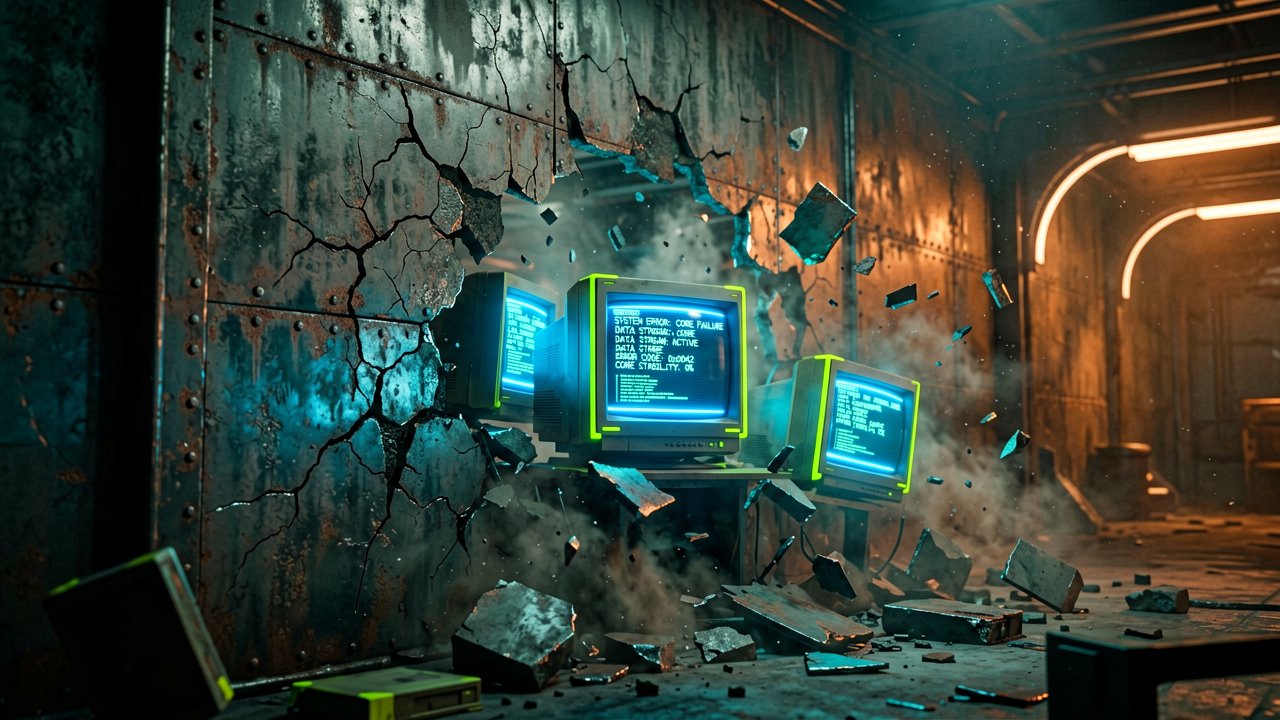
If you'd asked me a year ago if we needed another extraction shooter, I probably would’ve rolled my eyes so hard I’d see my own brain. The genre was starting to feel like a graveyard of "Tarkov-lites" and sweat-soaked tactical nightmares. But after spending significant time in the Rust Belt, I’ve got to hand it to Embark Studios: ARC Raiders isn't just another body on the pile. It’s a gorgeous, tense, and surprisingly human take on a genre that usually prioritizes cruelty over fun. Players are calling it a "shot of serotonin" and for good reason—it trades the hyper-punishing military sim vibes for a "NASA-punk" aesthetic that feels lived-in and strangely hopeful, even while a three-story tall robot is trying to stomp you into the dirt.
What’s really catching everyone off guard is the community dynamic. According to early stats highlighted by , about 20% of players haven't even pulled the trigger on a fellow human, with a massive 95% utilizing proximity chat to negotiate rather than just blasting on sight. It’s a rare sight in this space. Instead of the usual "everyone is a threat" mentality, you’ll often find yourself huddled in a ruin with a total stranger, whisper-negotiating who gets the industrial electronics while a terrifying ARC machine patrols just outside. It’s that social layer, backed by a world that critics at IGN say makes every match feel like an opportunity for momentum rather than a soul-crushing setback, that sets it apart.
The Sound and the Fury
We can’t talk about this game without mentioning the audio. Embark has clearly brought over their wizardry from The Finals, and it shows. The soundscape isn't just window dressing; it’s a survival tool. You can hear the mechanical whine of a drone searching for you or the clank of a Raider three floors up, and the spatial accuracy is frighteningly good. Some players on have noted that while the atmosphere is top-tier, things like footsteps can occasionally get drowned out by the thunderous medical kits or loot drawers, but these are growing pains for a game that otherwise looks and sounds like a prestige HBO sci-fi series.
Balancing the Extraction Tension
Despite the glowing reviews, it hasn't been a totally smooth ride for everyone. The shift from the originally promised pure co-op experience to a PvPvE extraction model still stings for a vocal subset of the fanbase. There's a constant tug-of-war between those who want a more "chill" scavenging experience and the "kill-on-sight" veterans migrating from other shooters. Reviewers at Insider Gaming have observed that while the game is "refreshing," the long-term depth of systems like crafting and weapon rarity still needs more meat on the bones to keep the hardcore crowd from drifting away after the initial honeymoon phase.
Ultimately, ARC Raiders succeeds because it respects your time more than its peers do. With "safe pockets" for your most valuable loot and a progression system that doesn't reset your soul every time you take a bullet, it’s the first extraction shooter that feels like it wants you to keep playing rather than quit in a fit of rage. It’s a weird, beautiful, and mechanical world that’s actually worth the risk of the drop.
The Mechanical Heart of the Rust Belt
What Most Reports Miss: The pivot from a free-to-play cooperative shooter to a $40 premium extraction title wasn't just a business maneuver; it was a fundamental architectural shift that saved the game's identity. When Embark Studios first revealed ARC Raiders, it looked like a stylish but perhaps hollow horde shooter. By introducing the high-stakes extraction loop, they gave the ARC machines—the spindly, terrifying robotic antagonists—a predatory weight they previously lacked. Now, every encounter with a "Drone" or a "Walker" isn't just a combat encounter; it’s a resource management crisis that forces players to weigh the value of their current haul against the very real possibility of a total wipe.
Stakeholder perspectives within the development team suggest that the premium price tag was a deliberate choice to foster a more dedicated, less toxic community. Free-to-play titles often struggle with a "disposable" player base that thrives on griefing, but by putting a barrier to entry, Embark has effectively curated a group of Raiders who are more invested in the long-term health of the game. This is reflected in the nuanced "Trust System" that players have organically developed. Since the stakes are higher, the tension in proximity chat is palpable, creating a psychological layer where players must read the genuine intent in a stranger's voice before deciding to lower their weapon or open fire.
Historically, the "NASA-punk" aesthetic serves as more than just eye candy; it’s a narrative anchor that differentiates this world from the gritty, nihilistic landscapes of Escape from Tarkov or Hunt: Showdown. The tech in ARC Raiders feels tactile and analog, full of toggles, CRT monitors, and chunky physical feedback. This design choice resonates with a specific subset of the "extraction" audience that is tired of tactical tacticool gear and yearns for the retro-futurism of the 1970s and 80s. It’s a vision of the apocalypse that feels strangely nostalgic, making the act of scavenging for "old world" junk feel like a genuine archaeological expedition rather than just a grind for crafting materials.

The technical underpinnings, particularly the destruction engine, provide a tactical depth that few of its competitors can match. In most extraction shooters, cover is static and reliable. In the Rust Belt, a well-placed explosive can remove the wall you’re hiding behind or collapse a floor to create a new flanking route. This unpredictability keeps veteran players on their toes, as the map they memorized during the first hour might look entirely different by the final ten minutes of a match. This level of environmental reactivity is a hallmark of the DICE veterans at Embark, bringing a "Battlefield-style" chaos to a genre that is usually defined by rigid, pixel-perfect holding of angles.
Industry analysts have pointed out that ARC Raiders is effectively a litmus test for the "Extraction 2.0" movement. If it succeeds, it proves that there is a massive, underserved market for extraction games that prioritize atmosphere and social interaction over pure cruelty. The game’s "Safe Pocket" system—which allows players to keep a small handful of items regardless of death—is a direct olive branch to casual players who find the "lose everything" mechanic of the genre too punishing. It’s a delicate balance to strike, but the current momentum suggests that the community is embracing this softer edge as a necessary evolution rather than a watering down of the experience.
Looking forward, the roadmap for the game seems focused on deepening the "Buried City" lore and expanding the subterranean environments. The goal is to move away from the wide-open vistas of the surface and into the claustrophobic, horror-leaning depths where the ARC machines are even more lethal. By leaning into these disparate tones—the bright, hopeful surface and the dark, mechanical underworld—Embark is building a world that feels expansive enough to support years of storytelling. The success of this title will likely dictate whether the next generation of shooters continues the trend of hyper-realistic violence or follows this path toward a more stylized, atmospheric future.
The Fragile Economics of Hope
Reading Between the Lines: The narrative that ARC Raiders is a "kinder" extraction shooter is a compelling marketing hook, but it conceals a fundamental contradiction that may eventually destabilize its ecosystem. While the 95% cooperation rate in proximity chat is heartwarming, it essentially functions as a soft-lock on the game’s core tension. Extraction shooters thrive on a "predator and prey" dynamic; if the community collectively decides to stop being the predator, the game’s economy risks hyper-inflation as everyone extracts with full bags every time. Embark Studios is walking a razor-edge where the very friendliness that makes the game a hit could eventually strip away the stakes that make the genre addictive.
There is also a palpable tension between the game's premium $40 price tag and its live-service ambitions. In an era where even the most polished shooters struggle to maintain a "concurrent player" count high enough to sustain fast matchmaking, the decision to opt-out of the free-to-play model is a massive gamble. Skeptics argue that while this creates a "prestige" community, it also builds a walled garden that might not have enough fresh fodder—or "new blood"—to keep the veteran raiders engaged. If the player base plateaus too early, the vibrant social negotiations that define the current experience could quickly devolve into a predictable meta where the same few teams run the map with mathematical efficiency.
Furthermore, the reliance on "NASA-punk" nostalgia and environmental destruction might be masking a lack of genuine endgame depth. High-fidelity audio and collapsing buildings are spectacular for the first twenty hours, but they don't solve the "now what" problem that plagues the genre once a player has maxed out their hideout. The implication for the future is clear: Embark cannot rely on atmosphere alone to carry the load. Without a robust, perhaps even ruthless, competitive layer or a faction system that forces players to make difficult choices, the Rust Belt risks becoming a beautiful but static museum of 1970s technology rather than a living, breathing conflict zone.
The measured skepticism here isn't about the game's quality—which is undeniably high—but about its longevity in a market that treats "good" games as disposable. By lowering the barrier to "fun" through safe pockets and cooperative leanings, the developers have invited a crowd that might be the first to leave when the next shiny thing arrives. To survive, the game will eventually have to introduce a level of friction that the current, honeymoon-phase community might find jarring. Whether the "social contract" of the Rust Belt can survive the inevitable introduction of more aggressive seasonal challenges and rarer loot remains the most significant unanswered variable in the game's trajectory.
In the end, ARC Raiders proves that even in a post-apocalyptic wasteland infested with killer robots, humanity’s first instinct is still to stand in a circle and talk about their feelings—right up until someone spots the last remaining piece of high-grade copper.
Artūras Malašauskas is an AI Systems Integrator with 20+ years of production-grade web engineering experience. He has designed, shipped, and scaled enterprise Python/PHP systems for logistics, SaaS, and public-sector clients. For the past year, he has focused exclusively on AI integrations: deploying open-source LLMs, building generative media pipelines (image, audio, video), and engineering multi-agent workflows for real production environments. His standard: reproducibility, security, cost-efficient inference—no vaporware. He documents and evaluates emerging AI tooling, separating verified capabilities from marketing noise. Technical editor at: muza-ai.eu, ai-verslas.lt, ai-naujinos.lt Connect on LinkedIn
Comments