The Ghost in the Machine: Sakaguchi’s AI Flirtation Sparks a JRPG Legend Civil War
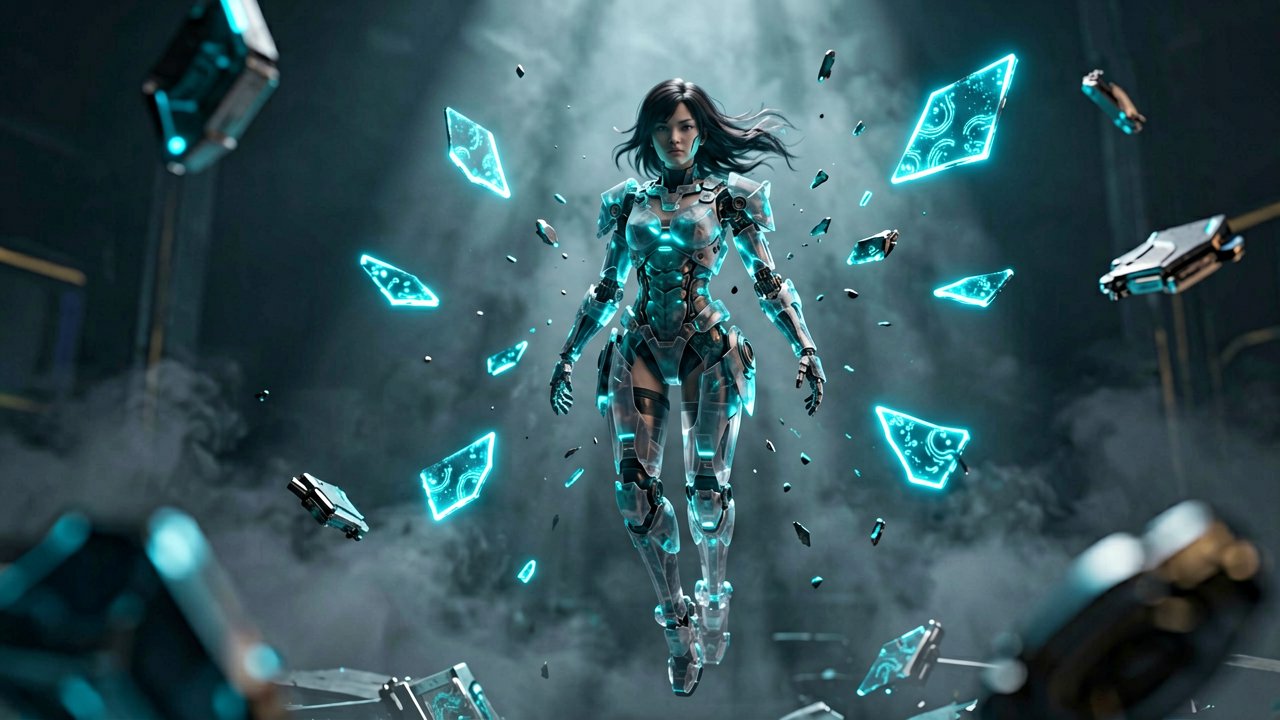
Hironobu Sakaguchi, the man who essentially willed the JRPG genre into the global consciousness, recently sent shockwaves through the industry by offering high praise for an AI-generated vision of a Final Fantasy VI remake. Reposting the viral footage on social media, the legendary creator of the series didn’t hold back his enthusiasm, exclaiming, “What is this!? It’s amazing, right?” as he marveled at the hyper-realistic, 3D reinterpretations of characters like Terra and Celes. For a community that has spent decades begging for a modern treatment of the 16-bit masterpiece, seeing the "Father of Final Fantasy" validate such technology felt like a seismic shift in the remake conversation.
However, the celebration was short-lived as Akitoshi Kawazu, another pillar of Square’s golden age and the mastermind behind the SaGa series, stepped in to play the skeptic. Kawazu took to X (formerly Twitter) to urge Sakaguchi to "stop at the first line," cautioning that while the imagery might be flashy, its origins in generative AI carry significant baggage that shouldn’t be ignored. This public pushback from a fellow veteran highlighted a growing divide between those who see AI as a harmless conceptual spark and those who view it as "slop" that threatens the very artistic soul Sakaguchi himself once championed at Square Enix. You can see the full exchange and the divisive footage via reporting from Nintendo Life.
What Most Reports Miss: The Narrative vs. The Tech
Behind the Scenes: This isn’t just a tiff between two retired game devs; it’s a collision of two fundamentally different philosophies regarding the future of the medium. Sakaguchi has always been a tech-first dreamer, the kind of guy who nearly bankrupted Square because he believed The Spirits Within could pioneer a new form of digital humanity. To him, this AI video represents the "next frontier" of that same dream—a way to see his pixelated children finally inhabit a world of cinematic fidelity. He’s looking at the result, the shimmering Magitek armor and the emotive faces, and seeing the potential for a fire to be lit under Square Enix’s current leadership to finally greenlight a Final Fantasy VI remake.
Kawazu’s hesitation, meanwhile, is rooted in the "uncanny valley" of creative intent. As someone who has built a career on experimental, often obtuse systems in the SaGa franchise, Kawazu values the human hand—the specific, sometimes messy choices an artist makes that AI simply cannot replicate. To him, and many vocal critics in the community, the video is a collection of "dead husks" moving underwater, lacking the warmth and specific art direction of Yoshitaka Amano’s original sketches. By telling Sakaguchi to "hold his horses," Kawazu is acting as the guardian of the series' legacy, reminding us that a remake isn't just about higher resolution; it's about preserving an artistic identity that AI often homogenizes.
The fallout from this interaction has also exposed a generational rift among fans. While some younger players see the AI footage as a tantalizing "proof of concept" that could theoretically run on modern engines, purists are horrified that the man behind the "Spirit" of Final Fantasy would settle for anything less than human-led artistry. This tension is further complicated by Sakaguchi’s recent praise for the Final Fantasy VII Remake trilogy, where he lauded the blend of modern tech and traditional storytelling. His pivot to AI might suggest he believes the tech has finally reached a point where it can serve as a legitimate tool for visualization, even if it’s not ready for the final product.
Ultimately, this public debate has served a dual purpose: it has reignited the global demand for a Final Fantasy VI remake and simultaneously centered the ethical debate over AI in game development. Sakaguchi later moderated his stance, noting that while the video "wouldn't work as-is," it hints at an interesting future where the barriers between imagination and execution are lowered. Whether that future is one we actually want to live in remains the central question as the industry watches its founding fathers grapple with the tools of a new, and perhaps more complicated, era.
As the conversation continues, the pressure on Square Enix to address the 16-bit elephant in the room grows. With veterans like Sakaguchi and Kawazu both agreeing that the sixth entry deserves the "VII treatment"—albeit with different views on the methodology—the silence from the current developers at Square Enix feels louder than ever. The fans have made it clear that while they might disagree on the "how," the "what" is non-negotiable: Terra Branford's story is too big to stay trapped in 1994, even if it takes a controversial AI spark to remind everyone of that fact.
Hironobu Sakaguchi, the man who essentially willed the JRPG genre into the global consciousness, recently sent shockwaves through the industry by offering high praise for an AI-generated vision of a Final Fantasy VI remake. Reposting the viral footage on social media, the legendary creator of the series didn’t hold back his enthusiasm, exclaiming, “What is this!? It’s amazing, right?” as he marveled at the hyper-realistic, 3D reinterpretations of characters like Terra and Celes. For a community that has spent decades begging for a modern treatment of the 16-bit masterpiece, seeing the "Father of Final Fantasy" validate such technology felt like a seismic shift in the remake conversation.
However, the celebration was short-lived as Akitoshi Kawazu, another pillar of Square’s golden age and the mastermind behind the SaGa series, stepped in to play the skeptic. Kawazu took to X (formerly Twitter) to urge Sakaguchi to "stop at the first line," cautioning that while the imagery might be flashy, its origins in generative AI carry significant baggage that shouldn’t be ignored. This public pushback from a fellow veteran highlighted a growing divide between those who see AI as a harmless conceptual spark and those who view it as "slop" that threatens the very artistic soul Sakaguchi himself once championed at Square Enix. You can see the full exchange and the divisive footage via reporting from Nintendo Life.
What Most Reports Miss: The Narrative vs. The Tech
Behind the Scenes: This isn’t just a tiff between two retired game devs; it’s a collision of two fundamentally different philosophies regarding the future of the medium. Sakaguchi has always been a tech-first dreamer, the kind of guy who nearly bankrupted Square because he believed The Spirits Within could pioneer a new form of digital humanity. To him, this AI video represents the "next frontier" of that same dream—a way to see his pixelated children finally inhabit a world of cinematic fidelity. He’s looking at the result, the shimmering Magitek armor and the emotive faces, and seeing the potential for a fire to be lit under Square Enix’s current leadership to finally greenlight a Final Fantasy VI remake.
Kawazu’s hesitation, meanwhile, is rooted in the "uncanny valley" of creative intent. As someone who has built a career on experimental, often obtuse systems in the SaGa franchise, Kawazu values the human hand—the specific, sometimes messy choices an artist makes that AI simply cannot replicate. To him, and many vocal critics in the community, the video is a collection of "dead husks" moving underwater, lacking the warmth and specific art direction of Yoshitaka Amano’s original sketches. By telling Sakaguchi to "hold his horses," Kawazu is acting as the guardian of the series' legacy, reminding us that a remake isn't just about higher resolution; it's about preserving an artistic identity that AI often homogenizes.
The fallout from this interaction has also exposed a generational rift among fans. While some younger players see the AI footage as a tantalizing "proof of concept" that could theoretically run on modern engines, purists are horrified that the man behind the "Spirit" of Final Fantasy would settle for anything less than human-led artistry. This tension is further complicated by Sakaguchi’s recent praise for the Final Fantasy VII Remake trilogy, where he lauded the blend of modern tech and traditional storytelling. His pivot to AI might suggest he believes the tech has finally reached a point where it can serve as a legitimate tool for visualization, even if it’s not ready for the final product.
The Aesthetic Mirage and the Cost of Convenience
Reading Between the Lines: There is a profound irony in watching the man who nearly burned down the house of Square to achieve "perfect" digital realism now championing a tool that effectively automates that labor. Sakaguchi’s praise for AI-made visuals suggests a dangerous pivot from the meticulous craftsmanship that defined 1994’s Final Fantasy VI. While the video looks expensive, it lacks the intentionality of Yoshitaka Amano’s ethereal linework, replacing a distinct artistic voice with a generic, high-fidelity sheen that resembles a tech demo rather than a living world. We are witnessing a pioneer prioritize the destination over the journey, forgetting that the "amazing" visuals he sees are built on the uncompensated archives of human creators who preceded him.
This clash also reveals the internal contradictions of Square’s old guard. Kawazu’s intervention serves as a necessary reality check, highlighting that the JRPG genre’s strength lies in its idiosyncrasies—the very things generative models tend to smooth out in favor of "average" aesthetics. If a creator as influential as Sakaguchi begins to normalize AI-driven conceptualization, it signals to the industry that the "vibe" of a classic is more important than the integrity of its recreation. It is a slippery slope that ends with remakes feeling like products of an assembly line rather than curated experiences, turning legendary intellectual properties into mere fodder for algorithmic refinement.
The long-term implications are equally unsettling for the workforce currently toiling at Square Enix. When a series' patriarch gives a thumbs-up to AI concepts, it inadvertently undercuts the thousands of concept artists and designers who spend years iterating on how to translate 2D sprites into 3D space. It creates a false expectation of speed and quality that devalues human iterative processes. While Sakaguchi likely meant his comments as a nudge to Square Enix to "do something" with the property, he may have accidentally handed the accountants a justification to replace expensive talent with efficient prompts. The "amazing" future he envisions could very well be one where the soul of the franchise is the first thing sacrificed at the altar of technological convenience.
It’s a classic JRPG scenario: the veteran hero wants to use the ancient, forbidden magic to save the kingdom, while his cynical party member points out that the "forbidden" part is usually there for a reason—mainly because it replaces the kingdom's artisans with a very shiny, very soulless cloud of pixels.
Hironobu Sakaguchi, the man who essentially willed the JRPG genre into the global consciousness, recently sent shockwaves through the industry by offering high praise for an AI-generated vision of a Final Fantasy VI remake. Reposting the viral footage on social media, the legendary creator of the series didn’t hold back his enthusiasm, exclaiming, “What is this!? It’s amazing, right?” as he marveled at the hyper-realistic, 3D reinterpretations of characters like Terra and Celes. For a community that has spent decades begging for a modern treatment of the 16-bit masterpiece, seeing the "Father of Final Fantasy" validate such technology felt like a seismic shift in the remake conversation.
However, the celebration was short-lived as Akitoshi Kawazu, another pillar of Square’s golden age and the mastermind behind the SaGa series, stepped in to play the skeptic. Kawazu took to X (formerly Twitter) to urge Sakaguchi to "stop at the first line," cautioning that while the imagery might be flashy, its origins in generative AI carry significant baggage that shouldn’t be ignored. This public pushback from a fellow veteran highlighted a growing divide between those who see AI as a harmless conceptual spark and those who view it as "slop" that threatens the very artistic soul Sakaguchi himself once championed at Square Enix. You can see the full exchange and the divisive footage via reporting from Nintendo Life.
What Most Reports Miss: The Narrative vs. The Tech
Behind the Scenes: This isn’t just a tiff between two retired game devs; it’s a collision of two fundamentally different philosophies regarding the future of the medium. Sakaguchi has always been a tech-first dreamer, the kind of guy who nearly bankrupted Square because he believed The Spirits Within could pioneer a new form of digital humanity. To him, this AI video represents the "next frontier" of that same dream—a way to see his pixelated children finally inhabit a world of cinematic fidelity. He’s looking at the result, the shimmering Magitek armor and the emotive faces, and seeing the potential for a fire to be lit under Square Enix’s current leadership to finally greenlight a Final Fantasy VI remake.
Kawazu’s hesitation, meanwhile, is rooted in the "uncanny valley" of creative intent. As someone who has built a career on experimental, often obtuse systems in the SaGa franchise, Kawazu values the human hand—the specific, sometimes messy choices an artist makes that AI simply cannot replicate. To him, and many vocal critics in the community, the video is a collection of "dead husks" moving underwater, lacking the warmth and specific art direction of Yoshitaka Amano’s original sketches. By telling Sakaguchi to "hold his horses," Kawazu is acting as the guardian of the series' legacy, reminding us that a remake isn't just about higher resolution; it's about preserving an artistic identity that AI often homogenizes.
The fallout from this interaction has also exposed a generational rift among fans. While some younger players see the AI footage as a tantalizing "proof of concept" that could theoretically run on modern engines, purists are horrified that the man behind the "Spirit" of Final Fantasy would settle for anything less than human-led artistry. This tension is further complicated by Sakaguchi’s recent praise for the Final Fantasy VII Remake trilogy, where he lauded the blend of modern tech and traditional storytelling. His pivot to AI might suggest he believes the tech has finally reached a point where it can serve as a legitimate tool for visualization, even if it’s not ready for the final product.
The Aesthetic Mirage and the Cost of Convenience
Reading Between the Lines: There is a profound irony in watching the man who nearly burned down the house of Square to achieve "perfect" digital realism now championing a tool that effectively automates that labor. Sakaguchi’s praise for AI-made visuals suggests a dangerous pivot from the meticulous craftsmanship that defined 1994’s Final Fantasy VI. While the video looks expensive, it lacks the intentionality of Yoshitaka Amano’s ethereal linework, replacing a distinct artistic voice with a generic, high-fidelity sheen that resembles a tech demo rather than a living world. We are witnessing a pioneer prioritize the destination over the journey, forgetting that the "amazing" visuals he sees are built on the uncompensated archives of human creators who preceded him.
This clash also reveals the internal contradictions of Square’s old guard. Kawazu’s intervention serves as a necessary reality check, highlighting that the JRPG genre’s strength lies in its idiosyncrasies—the very things generative models tend to smooth out in favor of "average" aesthetics. If a creator as influential as Sakaguchi begins to normalize AI-driven conceptualization, it signals to the industry that the "vibe" of a classic is more important than the integrity of its recreation. It is a slippery slope that ends with remakes feeling like products of an assembly line rather than curated experiences, turning legendary intellectual properties into mere fodder for algorithmic refinement.
The long-term implications are equally unsettling for the workforce currently toiling at Square Enix. When a series' patriarch gives a thumbs-up to AI concepts, it inadvertently undercuts the thousands of concept artists and designers who spend years iterating on how to translate 2D sprites into 3D space. It creates a false expectation of speed and quality that devalues human iterative processes. While Sakaguchi likely meant his comments as a nudge to Square Enix to "do something" with the property, he may have accidentally handed the accountants a justification to replace expensive talent with efficient prompts. The "amazing" future he envisions could very well be one where the soul of the franchise is the first thing sacrificed at the altar of technological convenience.
It’s a classic JRPG scenario: the veteran hero wants to use the ancient, forbidden magic to save the kingdom, while his cynical party member points out that the "forbidden" part is usually there for a reason—mainly because it replaces the kingdom's artisans with a very shiny, very soulless cloud of pixels.
Artūras Malašauskas is an AI Systems Integrator with 20+ years of production-grade web engineering experience. He has designed, shipped, and scaled enterprise Python/PHP systems for logistics, SaaS, and public-sector clients. For the past year, he has focused exclusively on AI integrations: deploying open-source LLMs, building generative media pipelines (image, audio, video), and engineering multi-agent workflows for real production environments. His standard: reproducibility, security, cost-efficient inference—no vaporware. He documents and evaluates emerging AI tooling, separating verified capabilities from marketing noise. Technical editor at: muza-ai.eu, ai-verslas.lt, ai-naujinos.lt Connect on LinkedIn
Comments