The Silicon Sentry: How AI is Rewriting the Alzheimer’s Timeline
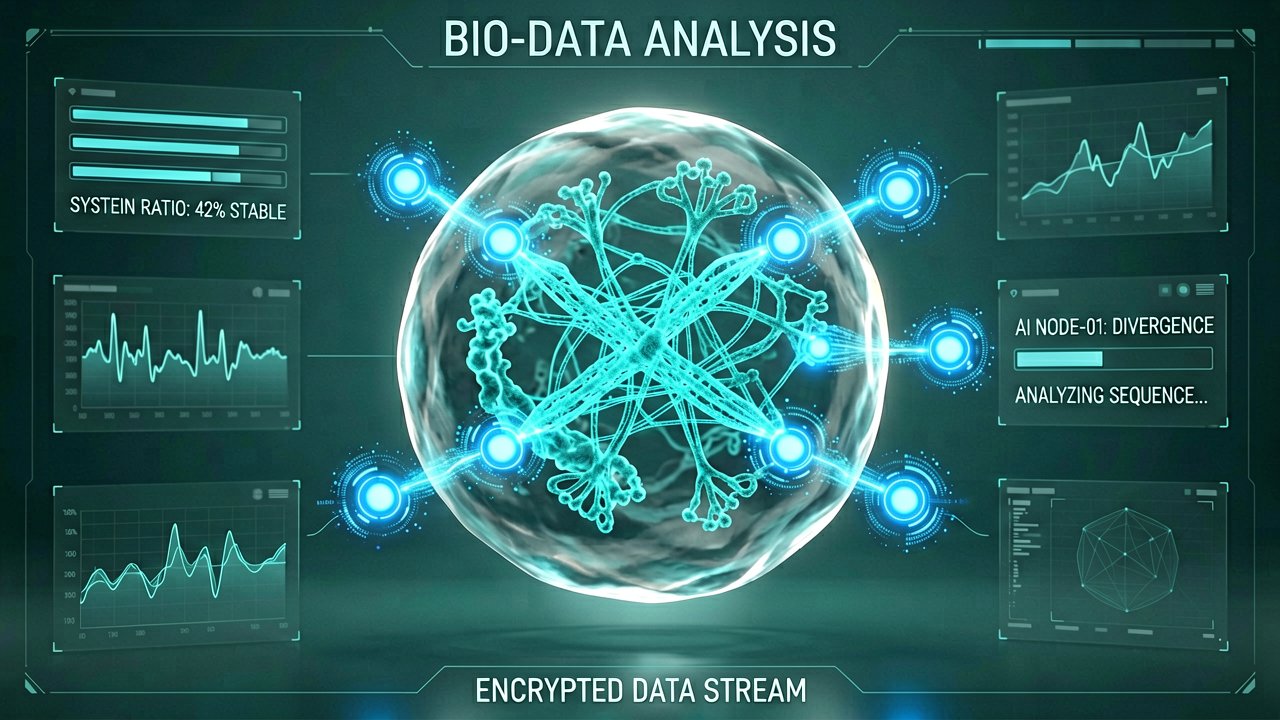
For decades, a diagnosis of Alzheimer’s disease has felt less like a medical finding and more like an autopsy performed on the living. By the time the clinical signs—the forgotten keys, the lost names—become undeniable, the structural damage to the brain is often past the point of no return. But we're witnessing a tectonic shift in neuro-diagnostics. Artificial Intelligence is no longer just a buzzword in a lab; it’s becoming the early-warning system we’ve desperately lacked, capable of spotting the whispers of cognitive decline long before they become a scream.
The most striking breakthroughs aren't just coming from high-end MRI machines, though those are getting smarter too. We’re seeing "zero-cost" digital detection methods that use machine learning to parse through electronic health records, identifying at-risk patients with startling precision. Researchers at Indiana University have pioneered ways for AI to flag potential cases without requiring extra clinician time, effectively acting as an invisible safety net in primary care. This isn't just about cool tech; it's about accessibility in a healthcare system that is notoriously bottlenecked by specialist wait times.
What’s truly wild is the move toward non-invasive "digital biomarkers." AI models can now analyze a minute of speech or a single blood draw to predict disease progression with over 90% accuracy. The FDA recently cleared tools like Darmiyan’s BrainSee, which uses AI to forecast the leap from mild cognitive impairment to full-blown Alzheimer’s years in advance. By integrating these tools into routine check-ups, we’re moving toward a future where "early detection" actually means early enough to intervene, potentially through the new wave of disease-modifying therapies that require a head start to work.
From Speech Patterns to Blood Tests
We've known for a while that the way we speak changes as our neurons struggle, but the human ear isn't tuned to catch the micro-hesitations or syntactic shifts that appear in the prodromal stages. AI, however, is. New speech-based systems can screen for early signs in under sixty seconds, offering a frictionless alternative to grueling three-hour cognitive batteries. Meanwhile, the BMJ reports that the FDA has greenlit the first blood tests for Alzheimer’s, utilizing AI to analyze protein ratios in plasma with a level of sensitivity that once required an invasive spinal tap. These tools are democratizing diagnosis, taking it out of elite research centers and putting it into local clinics.
The Challenge of the Black Box
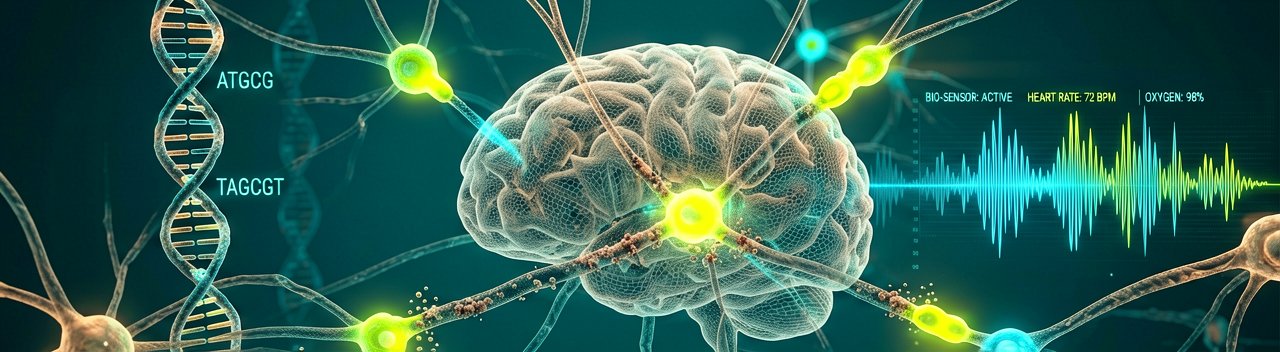
Of course, it isn’t all smooth sailing. The "black box" problem still haunts medical AI—clinicians are naturally wary of a computer that says "this person has Alzheimer's" without being able to explain exactly why. There’s also the critical issue of data diversity; an algorithm trained mostly on one demographic might fail someone from another. To solve this, the next generation of AI is leaning into "multimodal" data, blending imaging, genetics, and even wearable sensor data to build a more holistic, and hopefully less biased, picture of brain health. The goal isn't to replace the neurologist, but to give them a high-definition map of a territory that has been foggy for far too long.
The Hidden Architecture of Algorithmic Diagnosis
Beyond the High-Resolution Headlines: The real story isn't just that AI can spot Alzheimer’s; it’s the quiet war being waged against the "gray zone" of medical data. While the public focuses on the flashy prospect of a computer out-performing a doctor, seasoned researchers are more concerned with the quality of the data silos these machines are fed. Historically, neurology has been plagued by "noisy" data—subjective patient self-reporting and varied clinical interpretations that make training a precise algorithm nearly impossible. We are finally seeing a shift toward standardized, longitudinal datasets that allow AI to track the subtle "drift" in a patient’s cognitive baseline over decades rather than months.
There is also a significant tension between tech developers and the old guard of the medical establishment regarding "explainability." Many clinicians are hesitant to rely on deep-learning models that provide a high-probability diagnosis without a clear "why" attached to the result. This has sparked a surge in eXplainable AI (XAI) within neuro-diagnostics, where the software must highlight specific cortical thinning or amyloid patterns it used to reach its conclusion. Stakeholders from the Alzheimer's Association suggest that for these tools to gain universal trust, they must function as a transparent "co-pilot" rather than an opaque oracle.
The economic stakes are equally massive and often overlooked in purely clinical discussions. Early detection isn't just a win for patient outcomes; it is a calculated bet by insurance providers and healthcare systems to mitigate the astronomical costs of late-stage care. By identifying patients in the "subjective cognitive decline" phase, systems can begin low-cost interventions—lifestyle changes, blood pressure management, and targeted clinical trial recruitment—that could potentially delay the need for 24-hour nursing care by years. This fiscal reality is driving more investment into AI startups than almost any other sector of geriatric medicine.
Looking back at the history of the field, we’ve spent forty years chasing a "silver bullet" drug while ignoring the diagnostic bottleneck. The legacy of failed clinical trials is often attributed to the fact that participants were already too far progressed for the medication to work. AI is effectively retrofitting these past failures, acting as a filter to ensure the right patients are in the right trials at the exact right moment in their disease trajectory. We are moving away from the era of "wait and see" medicine and into a period of aggressive, data-driven surveillance.
However, the human element remains the most volatile variable. There is a profound psychological weight to knowing you are on a path toward Alzheimer’s five to ten years before symptoms manifest. Bioethicists are now grappling with the "right to not know" in an age where an algorithm might inadvertently reveal a person’s future during a routine check-up for something else entirely. As we sharpen our digital scalpels, the industry must ensure that the infrastructure for psychological support scales at the same rate as the predictive power of the silicon.
The Mirage of the Instant Fix
Reading Between the Lines: There is a seductive, almost dangerous optimism in the idea that more data naturally equates to better care. The industry is currently obsessed with "prediction," yet we rarely stop to ask what we are actually offering the patient once the algorithm hands down its verdict. Detecting Alzheimer’s a decade early is a profound feat of engineering, but in the absence of a universally effective cure, we risk creating a new class of "pre-symptomatic patients"—individuals living under a digital sword of Damocles with very few clinical moves to make. We must be careful not to mistake a sophisticated weather report for the ability to actually stop the rain.
Furthermore, the assumption that AI will automatically reduce healthcare disparities is increasingly under fire. While proponents argue that automated screening removes human bias, algorithms are notoriously "lazy" mirrors of their training data. If the underlying datasets primarily feature affluent, urban populations with access to high-end medical centers, the "early warning" system may simply become another luxury tier of medicine. A predictive tool that only works accurately for one demographic isn't a medical breakthrough; it’s a localized optimization that could inadvertently widen the gap in global health outcomes.
We also have to contend with the "False Positive" anxiety trap. Machine learning models are probabilistic, not prophetic. When an AI flags a patient for potential decline based on subtle speech patterns or retinal scans, the psychological and financial fallout is immediate. We are seeing a burgeoning market for "brain health" supplements and unproven therapies ready to prey on anyone the silicon sentry marks as at-risk. Without rigorous regulatory guardrails that go beyond mere "accuracy" scores, we may find that we’ve traded the tragedy of late diagnosis for the chaos of over-diagnosis and the anxiety of the "worried well."
There is a final, uncomfortable contradiction in the push for "zero-cost" digital biomarkers. As we move diagnostic tools onto smartphones and wearable devices, we are effectively outsourcing medical surveillance to big tech. The same companies that struggle to protect our browsing history are now being positioned as the custodians of our most intimate neural signatures. The prospect of an insurance algorithm "adjusting" a premium based on a secret analysis of a user’s typing speed or vocal jitter isn't science fiction; it is the logical, if cynical, endpoint of unregulated predictive health. Moving forward, the challenge won't be perfecting the math, but ensuring the math isn't weaponized against the very people it’s meant to save.
It turns out that teaching a computer to remember that you’re going to forget is the easy part; the real trick will be making sure the healthcare system doesn’t develop its own case of amnesia when it comes time to actually pay for the treatment.
Artūras Malašauskas is an AI Systems Integrator with 20+ years of production-grade web engineering experience. He has designed, shipped, and scaled enterprise Python/PHP systems for logistics, SaaS, and public-sector clients. For the past year, he has focused exclusively on AI integrations: deploying open-source LLMs, building generative media pipelines (image, audio, video), and engineering multi-agent workflows for real production environments. His standard: reproducibility, security, cost-efficient inference—no vaporware. He documents and evaluates emerging AI tooling, separating verified capabilities from marketing noise. Technical editor at: muza-ai.eu, ai-verslas.lt, ai-naujinos.lt Connect on LinkedIn
Comments