TeamCentral Unleashes Central AI and CORBI™ to Bridge the Enterprise AI Execution Gap

The enterprise AI landscape just got a much-needed reality check. TeamCentral has officially pulled back the curtain on its dual-threat offering: Central AI and CORBI™. While most of the industry is still chasing the high of generative chatbots that can’t access a spreadsheet, TeamCentral is doubling down on "governed execution"—essentially giving AI the keys to the company’s engine room without the risk of it driving into a ditch. By marrying its established no-code iPaaS (Integration Platform as a Service) foundation with a new orchestration layer, the company aims to move AI from a novelty side-show to a core business operator.
At the heart of this launch is Central AI, a platform designed to solve the "context problem" that plagues most LLM deployments. Instead of feeding an AI raw, disconnected data, Central AI uses a semantic metadata layer to teach the models exactly how a specific business functions—mapping the relationships between ERPs, CRMs, and supply chain logistics in real-time. This structural integrity is what allows the platform’s star pupil, the digital assistant known as CORBI™, to go beyond just summarizing emails. According to The National Law Review, CORBI™ is built to act as a "secure AI agent," capable of executing multi-step workflows across diverse systems while adhering to strict role-based access controls.
Behind the Scenes: What sets this release apart isn't just the tech, but the corporate DNA it inherited. TeamCentral was born out of the IT trenches of Centric Consulting, where the founders were reportedly fed up with the "integration tax" of scaling SaaS products that refused to talk to one another. That pedigree shows in the governance-first approach of the new platform. In an era where "shadow AI" is the latest CIO nightmare, TeamCentral is pitching a "hub and spoke" model—centralizing security and data quality at the core while allowing individual departments to spin up custom agents for everything from invoice reconciliation to real-time supply chain visibility. It’s a pragmatic pivot toward what industry analysts at Databricks describe as the shift from AI that generates insights to AI that drives measurable business outcomes.
The Architecture of Trust in Agentic AI
What Most Reports Miss: The real "secret sauce" here isn't the AI model itself—it’s the bi-directional plumbing. Most AI assistants are read-only; they can see your data, but they can't change it. CORBI™ breaks this wall by leveraging TeamCentral’s library of over 80 pre-built, SOC 2 compliant connectors to actually perform tasks back in the source systems. If CORBI™ identifies an inventory discrepancy in a warehouse management system, it doesn't just send a "Pulse" notification; it can be authorized to trigger the corrective transaction. This bi-directional capability transforms the AI from a spectator into a participant, a move that requires the kind of "observable data" infrastructure TeamCentral has been perfecting for years.

Stakeholders across the board are signaling that "AI readiness" is no longer about how many GPUs you have, but how clean your data is. The launch of Central AI addresses this by embedding data governance directly into the integration pipeline. As data flows between systems, the platform automatically applies business rules and filtering, ensuring that the AI isn't learning from "dirty" or outdated information. This focus on the "context layer" is frequently cited by practitioners at Atlan as the single most ignored step in AI projects, and the one most likely to cause production-scale failure if skipped.
From a market perspective, this launch positions TeamCentral as a bridge for mid-market and enterprise organizations that lack the budget for a massive custom-coded AI overhaul. By offering a no-code path to "agentic" automation, they are effectively democratizing the kind of sophisticated AI orchestration typically reserved for the tech giants. Early adopters in the pilot program are already reportedly seeing "accelerated onboarding," benefiting from a platform that treats the integration as the prerequisite for intelligence, rather than an afterthought. As the industry moves toward autonomous agents, the winners won't just be the ones with the smartest models, but the ones with the most secure and well-connected nervous systems.
Ultimately, TeamCentral's gambit is that businesses are tired of "expensive toys" and are ready for tools that actually punch a clock. By emphasizing role-based security and audited execution, they are checking every box on the enterprise safety checklist. The message to the C-suite is clear: it’s time to stop talking to your data and start letting your data work for you. With Central AI and CORBI™ now live, the bar for what constitutes a "useful" enterprise AI has been significantly raised, leaving "chat-only" solutions looking increasingly like relics of a simpler time.
The Reality Check: Governance vs. Autonomy
Reading Between the Lines: The marketing gloss suggests a seamless transition to "agentic" bliss, but the inherent contradiction in "governed autonomy" remains a hard pill for IT departments to swallow. TeamCentral is essentially asking organizations to trust that CORBI™ won't hallucinate a destructive database command while it’s busy "optimizing" a workflow. While the semantic metadata layer is designed to act as a guardrail, the history of enterprise software is littered with "automated" solutions that required a small army of human supervisors to ensure they didn't accidentally delete a production environment. The friction between the speed of AI and the necessary slowness of enterprise compliance is a gap that no amount of no-code connectors can entirely bridge.
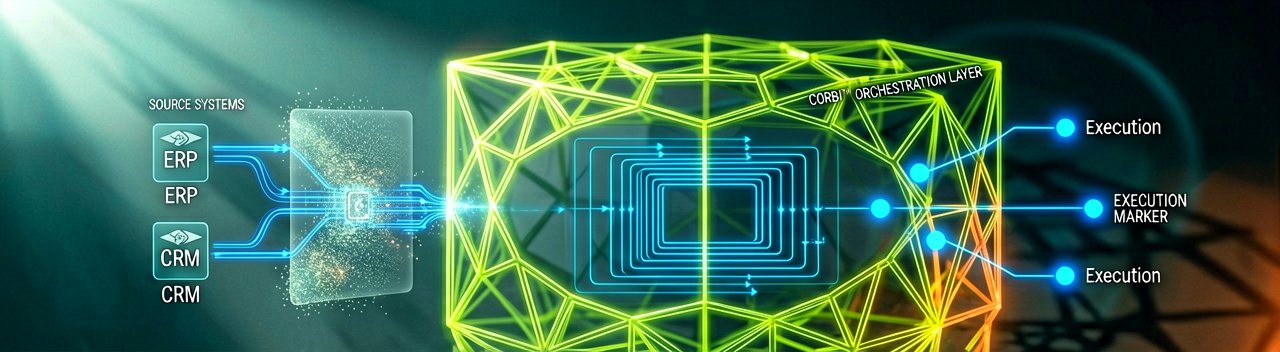
There is also the matter of the "Integration Tax" that TeamCentral claims to abolish. By positioning Central AI as the new "hub," the company is effectively creating a new form of vendor lock-in. While pre-built connectors for eighty-plus platforms sounds like freedom, it actually tethers a company’s entire AI logic to TeamCentral’s specific orchestration layer. If the industry shifts toward a more decentralized, open-source agent protocol, those who have built their entire operational "nervous system" on a proprietary iPaaS may find themselves back in the same siloed hell they were trying to escape. Measured skepticism suggests that while "no-code" lowers the barrier to entry, it often raises the cost of exit.
Furthermore, the reliance on LLMs to interpret complex business logic introduces a layer of non-determinism that traditional middleware never had to contend with. In a legacy ERP system, if X happens, Y follows—every single time. With agentic AI, Y might follow 99% of the time, while the other 1% results in a "creative" interpretation of a shipping invoice. For industries like finance or healthcare, where Forbes notes that the margin for error is zero, the pivot to autonomous agents might be more of a slow crawl than a sprint. TeamCentral has built a impressive engine, but the enterprise world is still deciding if it’s ready to take its hands off the steering wheel.
"Giving an AI agent full write-access to your enterprise resource planning system is a bit like letting a very fast, very eager intern run the company; it’s undeniably efficient until you realize they’ve 'optimized' the payroll department out of existence because it didn't fit the aesthetic of the flow chart."
Artūras Malašauskas is an AI Systems Integrator with 20+ years of production-grade web engineering experience. He has designed, shipped, and scaled enterprise Python/PHP systems for logistics, SaaS, and public-sector clients. For the past year, he has focused exclusively on AI integrations: deploying open-source LLMs, building generative media pipelines (image, audio, video), and engineering multi-agent workflows for real production environments. His standard: reproducibility, security, cost-efficient inference—no vaporware. He documents and evaluates emerging AI tooling, separating verified capabilities from marketing noise. Technical editor at: muza-ai.eu, ai-verslas.lt, ai-naujinos.lt Connect on LinkedIn
Comments