WiseStamp Unleashes AI to Kill the Email Signature Bottleneck
Let’s be honest: for most marketing teams, managing email signatures is the corporate equivalent of a root canal. It’s a messy, fragmented process that usually involves a high-stakes game of telephone between designers who want things pixel-perfect, IT teams who just want the HTML to not break, and employees who somehow always manage to use the wrong font. But WiseStamp is looking to end that headache with the launch of its new AI-powered platform, promising to turn a weeks-long back-and-forth into a five-minute job.
The company, which already handles branding for over 1.5 million users, isn’t just adding a chatbot for kicks. They’ve rebuilt their core experience around an "AI Designer" that effectively acts as a bridge between visual assets and deployment-ready code. You can literally feed it a screenshot of a business card, a logo, or even just a text description of your brand’s vibe, and the engine spits out a fully responsive, HTML-compliant signature that actually works across Outlook, Gmail, and mobile devices. It’s a smart move that recognizes the real-world friction of digital branding: it’s not just about making things look good; it’s about making them functional at scale without calling in a developer.
The End of Design-by-Committee
The standout feature here is clearly the autonomy it grants marketing leaders. By using generative AI to interpret visual identity, WiseStamp has basically automated the most tedious part of the creative workflow. There's also a revamped Template Gallery that leverages two decades of the company's own data to suggest layouts tailored to specific industries or company sizes. It’s the kind of pragmatic application of AI that tech journalists love to see—one that solves a specific, annoying business problem rather than just chasing a trend.
Enterprise Control Without the IT Ticket
While the AI handles the "pretty" side of things, the platform keeps its enterprise bones intact. It maintains a strict separation of powers: Marketing gets to play in the Signature Studio to keep banners and CTAs fresh, while IT maintains centralized control over security and global deployment through integrations with Microsoft 365 and Google Workspace. For an organization with 1,000 employees, those signatures account for nearly 10 million brand impressions a year, and WiseStamp’s play is to ensure none of those impressions are wasted on a broken link or a dated logo.
The Hidden Engine of Corporate Identity
The Real-World Friction: While the marketing world obsesses over high-budget television spots and flashy social media campaigns, the humble email signature remains one of the most overlooked pieces of digital real estate. Every professional sends roughly 40 emails a day, turning an entire workforce into a massive, decentralized billboard network. Historically, the problem wasn't a lack of vision, but a lack of control. A CMO could dream up a beautiful signature, but once it hit the inbox of a sales rep using an outdated version of Outlook on a mobile device, the layout often crumbled into a mess of broken images and mismatched blue hyperlinks.
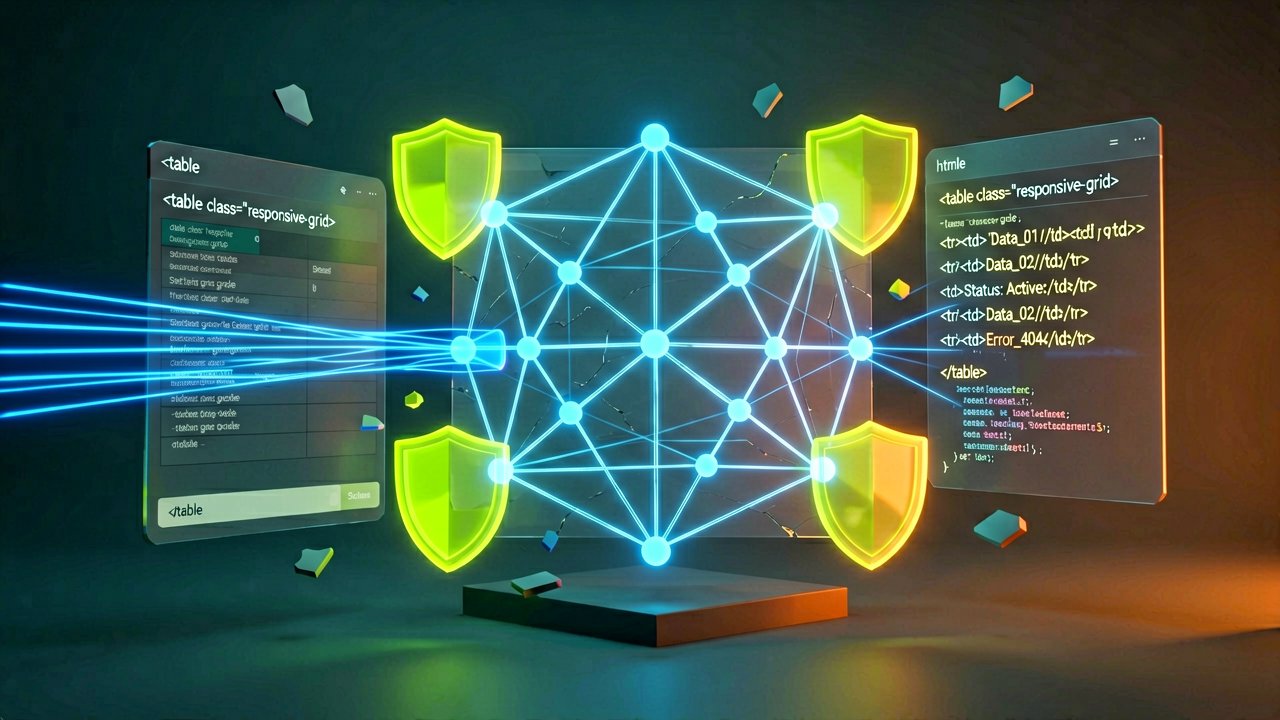
WiseStamp’s pivot to generative AI isn't just about speed; it’s about solving the "translation" problem between creative design and rigid email client architecture. By analyzing millions of successful signatures, the AI understands the invisible constraints of HTML tables—the archaic code that still powers most email clients—better than the average graphic designer. This technical nuance is what allows the platform to bridge the gap between a brand’s aesthetic aspirations and the cold, hard reality of cross-platform compatibility. It effectively eliminates the need for "trial and error" testing across different devices, which has traditionally been the primary bottleneck for large-scale deployments.
From a stakeholder perspective, the shift to AI-driven deployment also changes the internal power dynamic between departments. Usually, a branding update requires a formal ticket to IT, followed by a week of testing and a mandatory "copy-paste" instruction email sent to every employee—half of whom will ignore it. By integrating directly into the directory services of Microsoft 365 and Google Workspace, WiseStamp allows the marketing team to push updates globally without bothering the CTO. This autonomy is the "silent feature" that actually drives adoption in the enterprise space, as it removes the administrative friction that usually kills brand consistency.
Historically, the email signature industry has moved at a glacial pace, evolving from simple text to clunky image-heavy blocks that often triggered spam filters. WiseStamp’s use of AI represents a leap toward dynamic content—signatures that can change based on the recipient's behavior or the sender’s department. A recruiter’s signature can automatically swap a promotional banner for a "we're hiring" call-to-action, while a support agent’s signature might pull in real-time CSAT scores. This level of automation turns a static sign-off into a functional tool for lead generation and reputation management.

Ultimately, this launch signals a broader trend in B2B software where AI is being used to automate "the boring stuff" that humans are notoriously bad at maintaining. Maintaining brand standards across 5,000 employees is a logistical nightmare for a human, but a trivial task for an algorithm trained on brand guidelines. As companies look to tighten their belts and increase efficiency, the ability to turn every sent email into a perfectly tracked, brand-compliant marketing touchpoint becomes an easy win for the bottom line. It’s no longer about just having a name and a phone number at the bottom of a message; it’s about professionalizing the most frequent form of communication a business has.
The Paradox of Automated Authenticity
Reading Between the Lines: While WiseStamp’s AI-powered leap promises to democratize high-end design, it risks standardizing the very corporate identity it seeks to elevate. There is a palpable tension in using generative algorithms to "instantly" deploy a brand; if every company uses the same data-driven suggestions to optimize for the same Outlook constraints, we may be hurtling toward a world where every professional sign-off feels eerily identical. The efficiency is undeniable, but it comes at the cost of the artisanal quirks that once made a brand feel human. We are effectively automating the soul out of the inbox in exchange for a perfectly rendered logo.
There is also a degree of skepticism to be leveled at the "instant deployment" claim when it hits the wall of legacy enterprise security. Marketing teams might celebrate their new autonomy, but IT departments are increasingly wary of third-party platforms that require deep-level permissions to alter global email settings. While WiseStamp has built the bridges, the internal politics of who owns the "send" button remain fraught. An AI can design a beautiful banner, but it cannot navigate the bureaucratic gridlock of a security audit or the legitimate concerns of a CISO who views every external integration as a potential vulnerability.
Furthermore, the reliance on industry-specific templates—while data-backed—tends to reinforce existing tropes rather than breaking new ground. If the AI suggests a blue-and-gray minimalist layout because 80% of successful legal firms use it, the technology becomes a tool for conformity rather than a catalyst for innovation. This creates a circular logic where "best practices" are merely a reflection of what currently exists, potentially stifling the creative risks that allow a startup to stand out against an incumbent. The tool is exceptionally good at ensuring you don't look bad, but it remains to be seen if it can help you look truly unique.
We must also consider the long-term implications of the "marketing-led" signature. As email signatures transform into mini-billboards for CTAs, banners, and social links, we risk reaching a point of "signature fatigue." When a simple "thank you" is followed by a half-page of dynamic promotional content, the medium begins to feel more like a spam flyer than a personal correspondence. There is a fine line between a professional brand impression and digital clutter, and delegating that balance to an AI optimized for "engagement" may eventually lead recipients to tune out the footer entirely.
Ultimately, WiseStamp is betting that the pain of manual management far outweighs the desire for hyper-originality, and they are likely right. In the modern enterprise, "good enough and perfectly consistent" almost always beats "original but broken." The platform represents a pragmatic surrender to the reality of the digital workplace: we are all too busy to care about the pixels, as long as the machine ensures the pixels don't make us look like amateurs.
The success of this AI integration will be measured not by how many flashy banners it generates, but by how quickly it fades into the background. A truly great email signature is like a good waiter—it provides exactly what you need at the right moment and then disappears. If WiseStamp can keep the AI from over-designing and keep the marketing teams from over-promoting, they might just save the inbox from its own worst impulses.
The promise of the platform is clear, but the implementation will require a steady hand. Technology can remove the friction, but it cannot provide the strategy. Companies that treat this as a "set it and forget it" solution may find themselves with a perfectly branded presence that feels as hollow as a form letter. The goal should be to use the AI to clear the technical hurdles so that the human behind the keyboard can actually focus on the message above the signature.
We’ve reached the pinnacle of human achievement: we’ve successfully trained a sophisticated artificial intelligence to ensure that Gary from Accounting doesn't accidentally use Comic Sans in his sign-off.
Artūras Malašauskas is an AI Systems Integrator with 20+ years of production-grade web engineering experience. He has designed, shipped, and scaled enterprise Python/PHP systems for logistics, SaaS, and public-sector clients. For the past year, he has focused exclusively on AI integrations: deploying open-source LLMs, building generative media pipelines (image, audio, video), and engineering multi-agent workflows for real production environments. His standard: reproducibility, security, cost-efficient inference—no vaporware. He documents and evaluates emerging AI tooling, separating verified capabilities from marketing noise. Technical editor at: muza-ai.eu, ai-verslas.lt, ai-naujinos.lt Connect on LinkedIn
Comments