Show-Me the Future: Governor Kehoe Taps Missouri S&T for AI and Data Infrastructure Forum
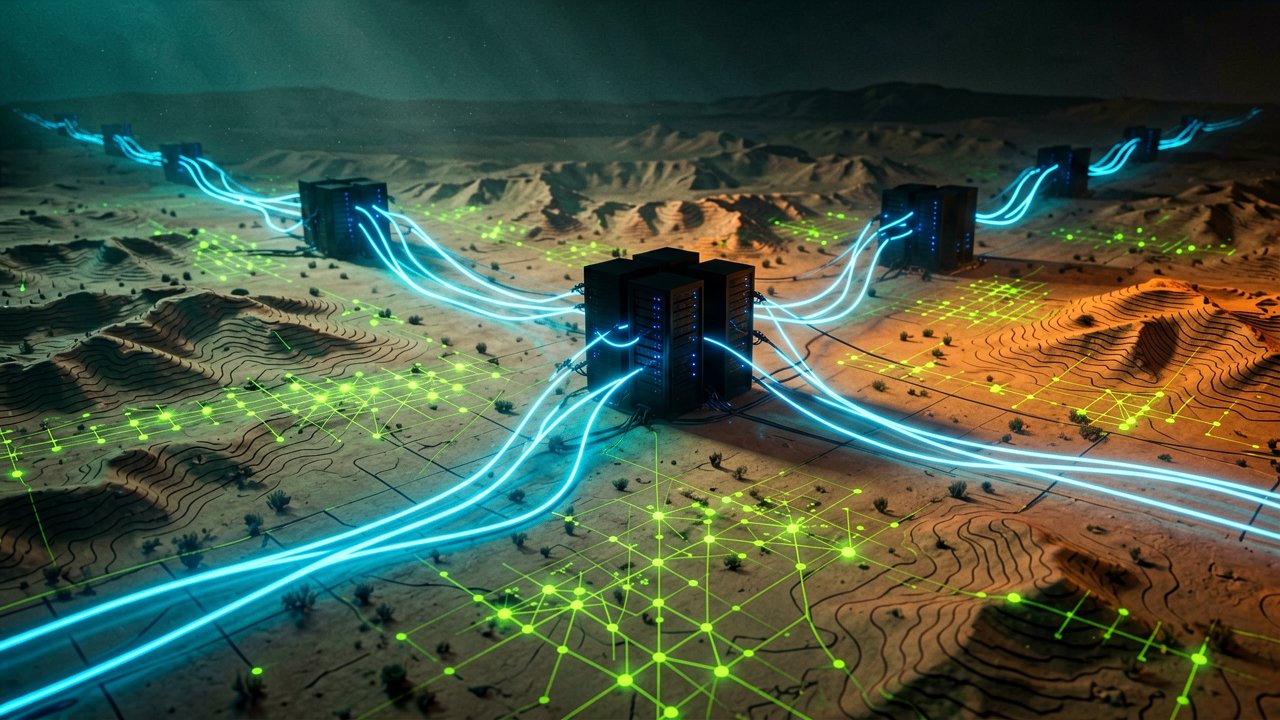
Missouri is planting a flag in the digital frontier, and it’s doing so in the heart of Rolla. Governor Mike Kehoe has called for a high-stakes summit on artificial intelligence and data centers, set to take place at the Missouri University of Science and Technology on June 18, 2026. This isn’t just another ribbon-cutting photo op; it’s a strategic pivot designed to reconcile the state's aggressive tech ambitions with the very real, very "analog" concerns of the communities that will host these massive facilities. Between the power-hungry nature of modern AI and the localized pushback seen in places like Festus, the Governor is clearly looking for a middle ground that keeps Missouri competitive without blowing out the electrical grid.
The choice of venue is as deliberate as the guest list. Missouri S&T’s new Missouri Protoplex will serve as the backdrop for a day-long deep dive into workforce development and infrastructure reliability. According to reports from Missouri S&T News, the forum aims to assemble a "brain trust" of state leaders, researchers, and industry heavyweights to figure out how to build a talent pipeline that doesn't just use AI, but helps define its next iteration. It's a tall order for a state that's currently juggling an Executive Order calling for a statewide AI framework while simultaneously facing legislative pressure to protect utility ratepayers from "unjust or unreasonable" infrastructure costs.
The Power Struggle and the Talent Pipeline
At the core of this discussion is a fundamental tension: everyone wants the jobs, but nobody wants the surge in their electric bill. Hyperscale data centers are notorious energy hogs, and in Missouri, the debate has already turned heated. Lawmakers have been eyeing regulations that would force these facilities to pay for their own infrastructure upgrades upfront rather than passing the buck to residential consumers. The Rolla forum is expected to tackle these "energy boom" logistics head-on, leveraging S&T’s expertise in intelligent infrastructure to find sustainable paths forward.
Beyond the hardware, there's the human element. Chancellor Mohammad Dehghani has been vocal about the need for graduates to be fluent in these technologies before they even hit the job market. The goal is to move beyond the hype and toward a practical, "anti-hype" approach that treats AI as a foundational tool for the state’s economic future. By bringing together the Public Service Commission and the Department of Economic Development under one roof, the Governor is betting that Missouri can become a hub for responsible, regulated, and—most importantly—profitable innovation.
The Strategic Gamble in the Heartland
The Real Tension Under the Surface: While the official press releases paint a picture of seamless technological progress, the Missouri S&T forum is actually a high-wire act balancing economic desperation with resource scarcity. Governor Kehoe isn't just looking for innovation; he’s looking for a way to safeguard Missouri’s electrical grid from the insatiable appetite of generative AI. For decades, the Midwest’s primary draw for data centers was cheap, reliable coal and nuclear power, but the sheer scale of the power demand coming from today’s GPU clusters is threatening to outpace the state’s current generation capacity. This forum represents the first time state leadership is forced to sit in a room with utility regulators and tech lobbyists to decide who gets priority when the local transformers start to sweat.
Historical context tells us that Missouri has long lived in the shadow of more established tech hubs like Northern Virginia or even neighboring Iowa, which successfully courted Meta and Google years ago. However, the "Show-Me State" has a unique hurdle: a fragmented patchwork of rural electric cooperatives that are wary of large-scale industrial projects. These cooperatives fear that a single massive data center could effectively monopolize local power supply, leading to brownouts or spikes in household utility rates. By centering the conversation at Missouri S&T, the administration is attempting to use academic credibility to soothe these populist concerns, framing the expansion not as a corporate giveaway, but as a scientific necessity.
The "Protoplex" facility itself serves as a metaphor for this transition. It is designed to be a hub for advanced manufacturing, a sector that has been the backbone of Missouri’s economy for a century. The seasoned reporter knows the real story here is the convergence of "Old Missouri" manufacturing and "New Missouri" data processing. If the state can successfully integrate AI into its existing factory floors—essentially teaching old robots new tricks—it creates a defensive moat against the offshoring of jobs. This is why the involvement of the Department of Economic Development is so critical; they aren't just looking for IT professionals, they are looking to retool the entire industrial workforce to survive in an automated decade.
Stakeholders from the Public Service Commission are expected to be the most "difficult" guests at the table. Their mandate is to protect the consumer, and they have been under immense pressure following recent legislative sessions where data center tax breaks were hotly contested. There is a growing movement in the state capital to mandate that any new data center must provide its own "behind-the-meter" power solutions, such as dedicated solar farms or small modular reactors. The forum will likely serve as a testing ground for these policies, determining if Missouri will follow the "tax-break-at-all-costs" model or a more sustainable, self-sufficient infrastructure approach that prioritizes long-term grid stability.
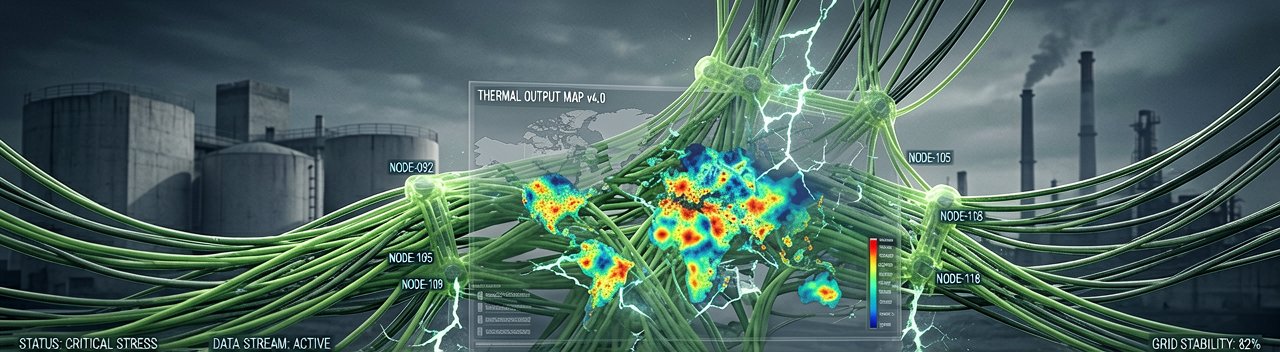
Ultimately, the success of this summit won't be measured by the number of jobs promised, but by the technical standards established for land use and water consumption. Data centers require millions of gallons of water for cooling, a fact often glossed over in high-level economic forums. In a state that prides itself on its agricultural output, the competition for water rights between tech giants and local farmers is a looming crisis that the Governor’s office is desperately trying to head off. By bringing these disparate groups together in Rolla, Kehoe is attempting to engineer a consensus before the first shovel even hits the ground, ensuring that the AI boom doesn't turn into a resource bust.
The AI Hype Cycle vs. The Utility Bill Reality
Reading Between the Lines: The enthusiasm radiating from the Governor’s office suggests a frictionless transition into the "Silicon Prairie," but this optimism ignores a glaring contradiction in the state’s current energy policy. Missouri remains a state heavily reliant on traditional baseload power, yet the very AI models being championed at S&T require a level of grid elasticity that the Show-Me State simply hasn't built yet. We are effectively inviting the world’s most power-hungry tenants into a house with 1970s wiring and expecting the lights not to flicker. There is a legitimate concern among analysts that the state is over-promising on infrastructure to attract big tech signatures while under-delivering on the regulatory safeguards needed to prevent industrial energy demands from cannibalizing the residential supply.
There is also a palpable irony in holding this forum at a university that has historically been the vanguard of Missouri’s engineering pragmatism. While the Missouri S&T campus is the ideal place to discuss the "how" of AI, the "why" remains tethered to a precarious economic incentive structure. Most reports focus on the high-paying jobs these centers bring, yet industry data frequently shows that once a data center is built, it functions more like a massive, automated warehouse with a skeleton crew. The projection of a massive employment boom might be a convenient political narrative that masks a more sobering reality: data centers are great for tax revenue and construction hours, but they are far from the labor-intensive job engines that the manufacturing sector once provided.
Furthermore, the skepticism surrounding "responsible AI" frameworks often hits a wall when it meets the sheer speed of private sector deployment. While the Governor’s forum aims to draft a roadmap for ethical and reliable use, the technology moves faster than the state’s legislative cycle can blink. By the time Missouri formalizes its 2026 AI strategy, the hardware architectures discussed in Rolla will likely be on the verge of obsolescence. This creates a risk of "policy debt," where the state finds itself locked into supporting yesterday’s infrastructure requirements with tomorrow’s tax dollars, all while trying to satisfy a public that is increasingly wary of the "black box" algorithms making decisions on everything from their credit scores to their crop yields.
Looking forward, the true test of this initiative will be whether the Missouri Public Service Commission can resist the siren song of corporate subsidies in favor of long-term grid resilience. If the state grants too many exemptions to data center operators, it risks a populist backlash from a voting base that isn't particularly interested in "Large Language Models" if they result in double-digit increases on their monthly Ameren bill. The political cost of being a tech hub might eventually outweigh the economic gain, especially if the promised "talent pipeline" ends up being a one-way street for Missouri’s brightest engineers to head toward the coasts, leaving the state with the server farms but none of the fruit.
In the end, we are essentially building the world’s most expensive air conditioners and hoping they occasionally spit out a useful line of code—just as long as the neighbors don't mind their porch lights dimming every time someone asks a chatbot to write a poem.
Artūras Malašauskas is an AI Systems Integrator with 20+ years of production-grade web engineering experience. He has designed, shipped, and scaled enterprise Python/PHP systems for logistics, SaaS, and public-sector clients. For the past year, he has focused exclusively on AI integrations: deploying open-source LLMs, building generative media pipelines (image, audio, video), and engineering multi-agent workflows for real production environments. His standard: reproducibility, security, cost-efficient inference—no vaporware. He documents and evaluates emerging AI tooling, separating verified capabilities from marketing noise. Technical editor at: muza-ai.eu, ai-verslas.lt, ai-naujinos.lt Connect on LinkedIn
Comments