The $50 Million Gamble: How Strauss Zelnick Saved Borderlands from the "Bland" Abyss
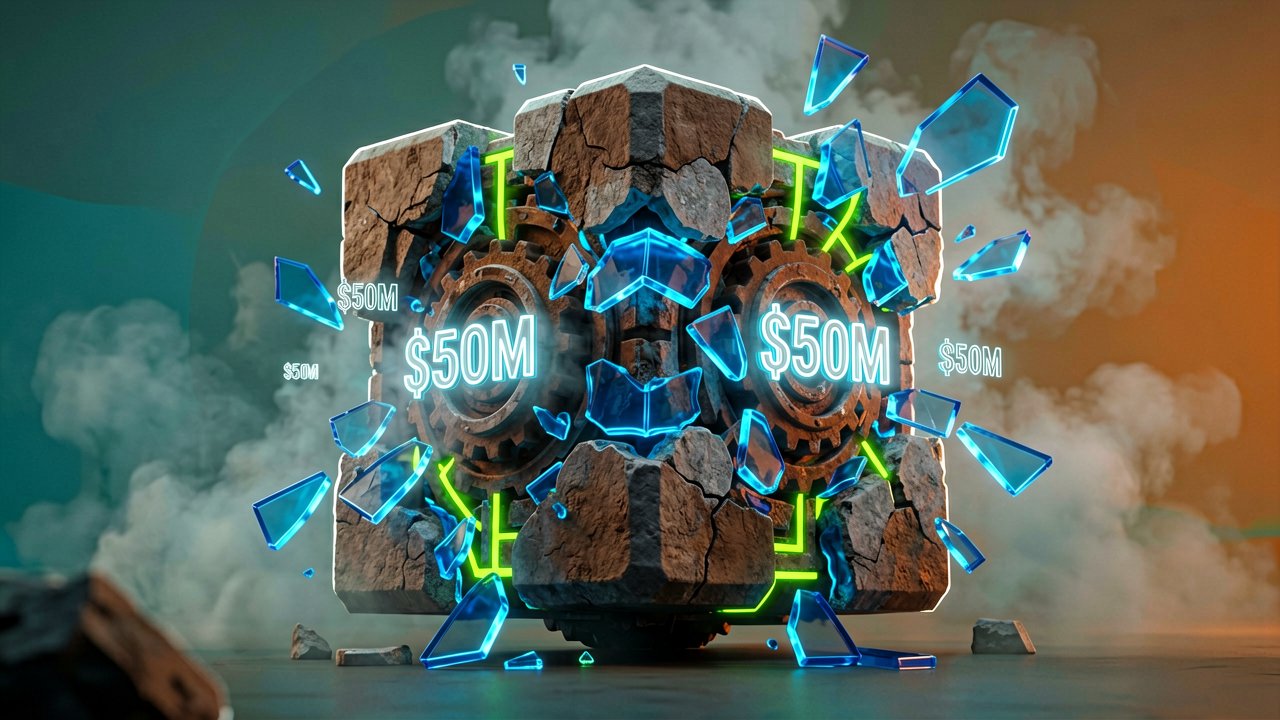
In the high-stakes world of triple-A publishing, changing your mind two months before a game hits the shelves is usually a recipe for a corporate funeral. But for Take-Two CEO Strauss Zelnick, it was the "non-obvious" pivot that birthed a multibillion-dollar franchise. Speaking in a recent interview, Zelnick revealed that the decision to scrap the original, hyper-realistic visuals of the first Borderlands for its iconic cel-shaded look came with a staggering $50 million price tag and a full-year delay. It was a move he claims "no one else in the business" would have dared to make at the time, especially since the game was technically finished and the company's capital was razor-thin.
The eleventh-hour intervention happened when an executive walked into Zelnick’s office and admitted the team had "screwed up." According to reports from GamesRadar, the concern was that the game’s dour, realistic palette—standard for the mid-2000s—made it look like every other generic shooter on the market. Zelnick didn't just see a budget sink; he saw the difference between a forgotten flop and a cultural phenomenon. He bet the farm on differentiation, and the gamble paid off, transforming what could have been a "realistic" footnote into the stylized, neon-soaked looter-shooter we know today.
Contextualizing the Cost of Creativity
While $50 million sounds like an astronomical sum for a "coat of paint," the cost reflected more than just new textures. It meant a year of holding an entire studio together while they effectively rebuilt the game’s identity from the ground up. As noted by PC Gamer, this sum is particularly eye-popping considering Gearbox’s Randy Pitchford once estimated the entire development of Borderlands 2 at only $35 million. The massive investment underscores just how much Zelnick trusted his creative leads' assessment that the original product simply wasn't "differentiated" enough to survive the competitive landscape of 2009.
Looking back, it’s clear this wasn't just about aesthetics; it was about brand survival. The cel-shaded style didn't just make the game stand out—it gave Borderlands a timeless quality that allowed it to age far more gracefully than its gritty, brown-and-grey contemporaries. Zelnick’s willingness to eat that initial $50 million loss stands as a rare example of a suit prioritizing creative vision over immediate quarterly returns. Without that last-minute "insane" decision, the vault-hunting craze might have never even made it past the loading screen.
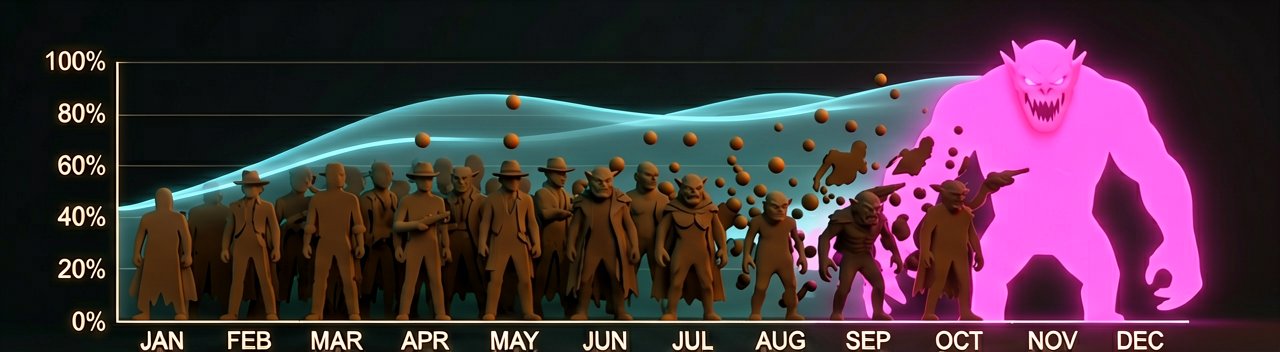
In the high-stakes world of triple-A publishing, changing your mind two months before a game hits the shelves is usually a recipe for a corporate funeral. But for Take-Two CEO Strauss Zelnick, it was the "non-obvious" pivot that birthed a multibillion-dollar franchise. Speaking in a recent interview, Zelnick revealed that the decision to scrap the original, hyper-realistic visuals of the first Borderlands for its iconic cel-shaded look came with a staggering $50 million price tag and a full-year delay. It was a move he claims "no one else in the business" would have dared to make at the time, especially since the game was technically finished and the company's capital was razor-thin.
The eleventh-hour intervention happened when an executive walked into Zelnick’s office and admitted the team had "screwed up." According to reports from GamesRadar, the concern was that the game’s dour, realistic palette—standard for the mid-2000s—made it look like every other generic shooter on the market. Zelnick didn't just see a budget sink; he saw the difference between a forgotten flop and a cultural phenomenon. He bet the farm on differentiation, and the gamble paid off, transforming what could have been a "realistic" footnote into the stylized, neon-soaked looter-shooter we know today.
The Anatomy of a Corporate Pivot
What Most Reports Miss: The "comic book" aesthetic wasn't just a stylistic whim; it was a desperate defensive maneuver against a market saturated with military realism. In 2009, the industry was obsessed with "brown and grey" shooters like Gears of War and Call of Duty: Modern Warfare. Gearbox’s original prototype for Borderlands looked remarkably similar to Fallout 3 or Rage, risking total invisibility upon release. Zelnick’s willingness to swallow a $50 million pill was essentially an admission that being "good but generic" was a more expensive failure than being "expensive but unique."
The internal tension at Gearbox Software during this transition was palpable, as artists had to essentially re-illustrate an entire world that had already been built. This wasn't a simple filter applied over existing assets; it was a fundamental shift in the game's DNA. This overhaul gave the game its "concept art come to life" feel, which famously frustrated some of the original design team who had spent years perfecting realistic grit. Yet, it was this specific friction—the marriage of serious RPG mechanics with a loony, illustrative mask—that created the tonal dissonance fans eventually fell in love with.

From a financial perspective, Zelnick's narrative highlights a rare moment of long-term thinking in an industry often driven by immediate quarterly earnings. By delaying the game a full year, Take-Two missed its projected revenue windows and faced intense skepticism from shareholders. As noted by PC Gamer, the investment proved that "standing out" is a tangible asset worth more than the raw cost of development. This decision fundamentally shifted how publishers view art direction as a marketing tool rather than just a technical requirement.
The legacy of this pivot is seen in how Borderlands has aged. While its 2009 contemporaries look dated and muddied by the limitations of seventh-generation hardware, the original Borderlands remains visually striking and playable today. The cel-shaded outlines mask lower polygon counts and give the environment a timeless, illustrative quality. Zelnick essentially bought the franchise a decade of visual relevance, ensuring that the IP would survive long enough to spawn three sequels, a pre-sequel, and various spin-offs that have collectively moved over 80 million units.
Ultimately, the $50 million price tag represents one of the most expensive "saves" in entertainment history. It serves as a reminder that in the creative arts, the most logical business decision—releasing the product you've already paid for—is often the most disastrous. Zelnick’s gamble proved that in a crowded room, the person shouting in neon colors is the only one who gets heard, even if it costs a fortune to buy the paint. This pivot didn't just change a game; it established the blueprint for the modern looter-shooter genre.
In the high-stakes world of triple-A publishing, changing your mind two months before a game hits the shelves is usually a recipe for a corporate funeral. But for Take-Two CEO Strauss Zelnick, it was the "non-obvious" pivot that birthed a multibillion-dollar franchise. Speaking in a recent interview, Zelnick revealed that the decision to scrap the original, hyper-realistic visuals of the first Borderlands for its iconic cel-shaded look came with a staggering $50 million price tag and a full-year delay. It was a move he claims "no one else in the business" would have dared to make at the time, especially since the game was technically finished and the company's capital was razor-thin.
The eleventh-hour intervention happened when an executive walked into Zelnick’s office and admitted the team had "screwed up." According to reports from GamesRadar, the concern was that the game’s dour, realistic palette—standard for the mid-2000s—made it look like every other generic shooter on the market. Zelnick didn't just see a budget sink; he saw the difference between a forgotten flop and a cultural phenomenon. He bet the farm on differentiation, and the gamble paid off, transforming what could have been a "realistic" footnote into the stylized, neon-soaked looter-shooter we know today.
The Anatomy of a Corporate Pivot
What Most Reports Miss: The "comic book" aesthetic wasn't just a stylistic whim; it was a desperate defensive maneuver against a market saturated with military realism. In 2009, the industry was obsessed with "brown and grey" shooters like Gears of War and Call of Duty: Modern Warfare. Gearbox’s original prototype for Borderlands looked remarkably similar to Fallout 3 or Rage, risking total invisibility upon release. Zelnick’s willingness to swallow a $50 million pill was essentially an admission that being "good but generic" was a more expensive failure than being "expensive but unique."
The internal tension at Gearbox Software during this transition was palpable, as artists had to essentially re-illustrate an entire world that had already been built. This wasn't a simple filter applied over existing assets; it was a fundamental shift in the game's DNA. This overhaul gave the game its "concept art come to life" feel, which famously frustrated some of the original design team who had spent years perfecting realistic grit. Yet, it was this specific friction—the marriage of serious RPG mechanics with a loony, illustrative mask—that created the tonal dissonance fans eventually fell in love with.
From a financial perspective, Zelnick's narrative highlights a rare moment of long-term thinking in an industry often driven by immediate quarterly earnings. By delaying the game a full year, Take-Two missed its projected revenue windows and faced intense skepticism from shareholders. As noted by PC Gamer, the investment proved that "standing out" is a tangible asset worth more than the raw cost of development. This decision fundamentally shifted how publishers view art direction as a marketing tool rather than just a technical requirement.
Reading Between the Lines
Reading Between the Lines: While Zelnick presents this as a masterclass in executive intuition, the revisionist history glosses over the sheer terror that likely gripped the boardroom. Attributing a $50 million pivot to a sudden epiphany of "differentiation" is a convenient retrospective for a CEO who survived the fallout. In reality, the gaming landscape of 2009 was a graveyard of realistic shooters that failed to find an audience, and this "gamble" was likely less about bold creative leadership and more about a frantic realization that the product, as it stood, was functionally unsellable. The narrative of the visionary leader often obscures the fact that the original realistic direction was also a corporate-approved choice that nearly sank the ship.
There is also a notable contradiction in the industry’s celebration of this pivot. We laud Zelnick for his courage to delay and reinvest, yet the modern triple-A machine is now so bloated that such a pivot today would cost closer to $200 million and potentially bankrupt a mid-sized publisher. The Borderlands miracle happened in a specific window where the cost of being wrong was still survivable. Today, most executives would rather ship a polished failure than risk a decade of profit on a last-minute art overhaul, making Zelnick’s anecdote a relic of a more flexible era rather than a repeatable strategy for modern development.
Furthermore, the projection that Borderlands would have failed without the change ignores the game's core loop—the looter-shooter mechanics—which were revolutionary in their own right. By crediting the visual style as the sole savior, the editorial narrative risks reducing game design to mere optics. It implies that a mediocre game can be saved by a radical art style, which is a dangerous lesson for an industry already obsessed with surface-level aesthetics over mechanical depth. Zelnick’s $50 million bought the game a seat at the table, but the gunplay and the loot are what kept players sitting there for fifteen years.
In the video game industry, $50 million is a very expensive way to admit your original plan was boring, but compared to the cost of being forgotten, it’s practically a clearance-rack bargain.
Artūras Malašauskas is an AI Systems Integrator with 20+ years of production-grade web engineering experience. He has designed, shipped, and scaled enterprise Python/PHP systems for logistics, SaaS, and public-sector clients. For the past year, he has focused exclusively on AI integrations: deploying open-source LLMs, building generative media pipelines (image, audio, video), and engineering multi-agent workflows for real production environments. His standard: reproducibility, security, cost-efficient inference—no vaporware. He documents and evaluates emerging AI tooling, separating verified capabilities from marketing noise. Technical editor at: muza-ai.eu, ai-verslas.lt, ai-naujinos.lt Connect on LinkedIn
Comments