Beyond the Loot Box: The New Realities of Mobile Game Monetization
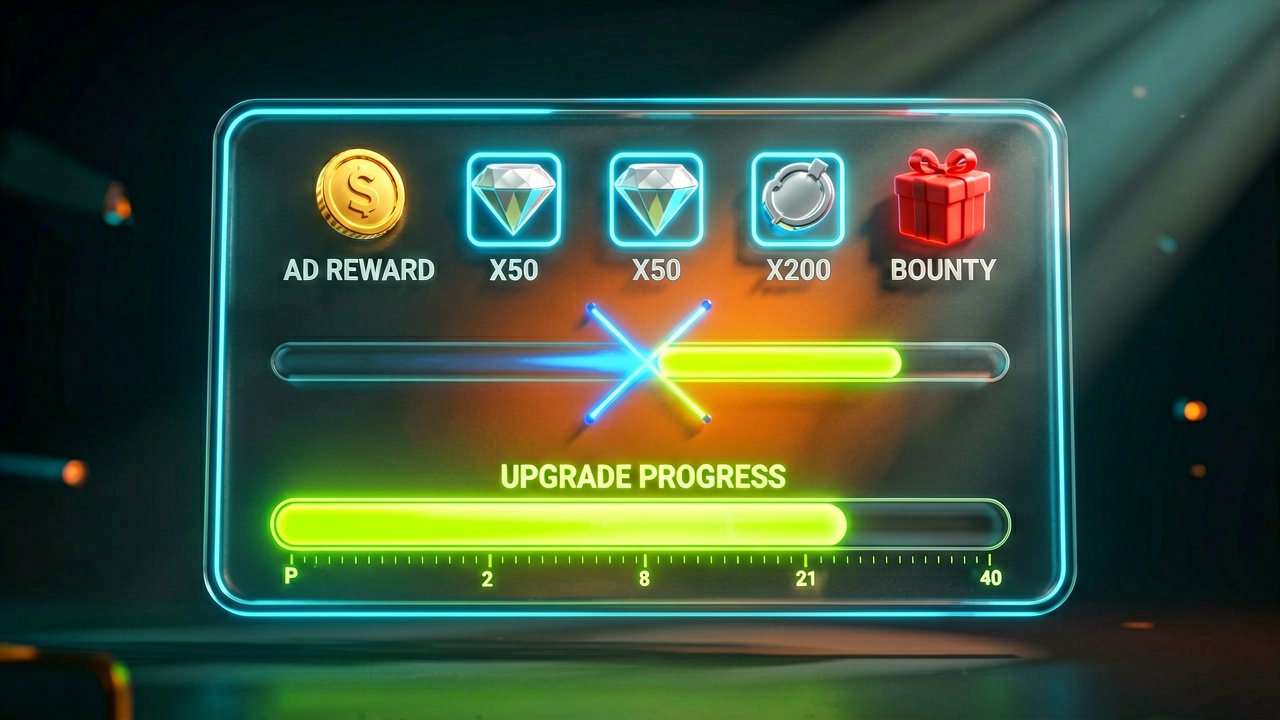
The days of relying on a single "whale" to carry your game’s entire economy are fading into the rearview. Today’s mobile market is a different beast entirely, where developers are forced to balance the delicate act of keeping players engaged while actually turning a profit. According to analysts at Sensor Tower, in-app purchase revenue climbed by 4% in 2024, despite a general dip in total downloads. This tells us one thing: the players who are sticking around are more invested than ever, but they’re also getting pickier about how they spend their hard-earned cash.
What we're seeing now is a shift away from aggressive, "pay-to-win" mechanics toward more sophisticated, value-driven systems. Developers aren't just selling power anymore; they're selling status, convenience, and a sense of progression that feels earned rather than bought. This evolution has birthed the "hybrid-casual" era, where simple mechanics are paired with mid-core monetization layers, creating a sustainable loop that caters to both the casual tapper and the dedicated grinder.
The Rise of the Hybrid Model
The most successful titles in 2025 aren't picking sides between ads and purchases—they're doing both. Hybrid monetization has become the gold standard because it effectively monetizes the 95% of players who will never touch a "Buy" button. By integrating rewarded video ads, developers can offer a "value exchange" where players trade 30 seconds of their time for a second chance at a level or a boost in currency. Data from Unity shows that rewarded video engagement is surging, particularly in genres like RPGs and casual puzzles, where players actually appreciate the optional help.
Subscriptions and the Battle Pass Boom
Stability is the name of the game, and nothing provides a steady heartbeat for a studio quite like recurring revenue. The "Battle Pass" has migrated from hardcore PC shooters to almost every corner of the mobile world. It works because it solves the engagement problem; you’re not just buying a skin, you’re buying a reason to log in every day for a month. Reports from Tenjin highlight that while the platform split remains relatively stable, the focus on live services and seasonal passes is what keeps the revenue charts from flatlining between major content drops.

Diversifying Beyond the App Store
Smart developers are also looking for ways to bypass the "app store tax." We're seeing a significant uptick in direct-to-consumer (D2C) web shops where players can buy currency or items at a discount while the developer keeps a larger slice of the pie. This "off-platform" strategy is becoming a crucial tool for high-revenue games that want to reclaim their margins from the traditional 30% commission models. It’s a bold move that requires a loyal community, but for those who can pull it off, it’s a game-changer for the bottom line.
The Hidden Mechanics of Modern Retention
What Most Reports Miss: The shift in mobile monetization isn't just about the "how" of the transaction, but the psychological engineering of the "when." Seasoned product managers are moving away from the old-school philosophy of immediate conversion, opting instead for a "long-tail" engagement strategy. This approach treats the player journey as a narrative arc where monetization points are carefully woven into emotional high points or moments of friction that feel organic rather than forced. It is a transition from being a digital vending machine to acting as a sophisticated service provider that understands player fatigue better than the players do themselves.
Stakeholders across the industry are increasingly obsessed with "LiveOps" as the primary engine for sustainable growth. In the early days of the App Store, a game was a static product you launched and walked away from; today, it is a living entity that requires constant pulse checks. This means the editorial calendar of a game—its events, seasonal shifts, and limited-time offers—is now more important than the core gameplay loop itself. From a reporter's perspective, the real story is how studios have transformed into data-driven newsrooms, reacting in real-time to player behavior metrics to keep the ecosystem from stagnating.
Historical context reveals that we are currently in the third major epoch of mobile spending. First came the premium era of the 99-cent app, followed by the wild-west period of unregulated loot boxes that eventually drew the ire of European regulators. We are now firmly in the age of transparency and "ethical monetization." Developers are finding that clearly defined value propositions, such as the direct-purchase "Battle Pass" or cosmetic-only skins, generate significantly higher brand loyalty and lower churn rates than the predatory gacha mechanics of the mid-2010s. This shift is largely driven by a more sophisticated audience that has grown up with mobile gaming and can spot a "dark pattern" from a mile away.

The role of external web shops is perhaps the most disruptive development for the established platform holders. By leveraging "Web-to-Store" funnels, developers are effectively treating Apple and Google as discovery engines while keeping the actual financial relationship on their own turf. According to industry analysis from GamesIndustry.biz, this bypass is not just about saving on commissions; it is about owning the first-party data that is increasingly hard to track on-device following major privacy updates. This data ownership allows for hyper-personalized offers that were previously impossible under the restrictive guidelines of traditional app stores.
Finally, there is the growing influence of the "creator economy" within the game client itself. Modern monetization is beginning to look like social media, where players aren't just consumers but also influencers within their own circles. Referral programs and social-proof mechanics—where a player’s purchase is broadcasted to their guild or friend group—create a ripple effect of spending that is far more effective than any banner ad. This community-driven commerce turns monetization into a collective experience, further blurring the lines between social interaction and financial transaction in the digital space.
The Friction Between Growth and Sustainability
Reading Between the Lines: The industry’s pivot toward "ethical" monetization is often framed as a moral awakening, but a colder analysis suggests it is a survival tactic born of necessity. As user acquisition costs skyrocket and privacy regulations like Apple's ATT framework continue to blindfold marketers, the old strategy of "burning through users" is no longer fiscally viable. Developers aren't necessarily becoming more altruistic; they are simply realizing that in a saturated market, it is far cheaper to keep an existing player happy for three years than it is to buy a new one every three weeks. This shift toward long-term retention is a pragmatic response to an ecosystem where the cost of entry has become prohibitively expensive for anyone without a massive war chest.
There is also a glaring contradiction in the rise of the "Hybrid-Casual" model that few in the executive suites want to acknowledge. While these games promise the best of both worlds—ads for the masses and IAPs for the dedicated—they often create a fractured player experience that satisfies neither. By trying to serve two masters, developers risk diluting the core gameplay to the point of irrelevance, turning what should be a fun diversion into a cluttered mess of progress bars, "watch-to-win" prompts, and premium currencies. The industry touts this as sophisticated design, but from a skeptical distance, it often looks like a frantic attempt to squeeze blood from a stone in a market that is increasingly suffering from player burnout.
Projecting forward, the aggressive push into off-platform web shops and direct-to-consumer models may lead to a scorched-earth legal battle with platform titans that small-to-mid-sized studios are ill-equipped to survive. While the "30% tax" is a convenient villain, the infrastructure provided by the major app stores—security, global distribution, and trust—is something most developers cannot replicate on their own. The implication is a looming balkanization of the mobile market, where only the top 1% of games have the brand power to pull players away from the convenience of a centralized store, potentially leaving the rest of the industry to fight over the scraps of a diminishing traditional marketplace.
Furthermore, the obsession with data-driven LiveOps creates a dangerous feedback loop where creative risk is sacrificed at the altar of "safe" incremental gains. When every decision is dictated by what the A/B test says will maximize this week’s Average Revenue Per Daily Active User (ARPDAU), the result is a sea of indistinguishable clones that lack soul or innovation. We are reaching a point of diminishing returns where the math is perfect, but the magic is gone, leading to a landscape where games are no longer viewed as artistic endeavors but as highly optimized financial instruments disguised as entertainment.
Designing a mobile game economy today is less like making art and more like running a casino where the house is terrified the gamblers might actually leave and find a hobby that doesn’t require a Wi-Fi connection or a credit card on file.
Artūras Malašauskas is an AI Systems Integrator with 20+ years of production-grade web engineering experience. He has designed, shipped, and scaled enterprise Python/PHP systems for logistics, SaaS, and public-sector clients. For the past year, he has focused exclusively on AI integrations: deploying open-source LLMs, building generative media pipelines (image, audio, video), and engineering multi-agent workflows for real production environments. His standard: reproducibility, security, cost-efficient inference—no vaporware. He documents and evaluates emerging AI tooling, separating verified capabilities from marketing noise. Technical editor at: muza-ai.eu, ai-verslas.lt, ai-naujinos.lt Connect on LinkedIn
Comments