Beyond the Aesthetics: Runloop-Powered ION Wants Vibe-Coded Sites to Actually Convert

For a while now, we’ve been living in the era of "vibe coding"—that magical, slightly chaotic frontier where you can prompt an AI to spit out a gorgeous landing page in the time it takes to brew a Chemex. It’s an incredible breakthrough for speed, but let’s be honest: looking good is just the floor. A site that looks like a million bucks but converts like a hobby blog is just digital wallpaper. That’s the gap Yahoo Finance reports ION is looking to bridge with its new conversion platform, backed by the enterprise-grade infrastructure of Runloop.
The problem with most vibe-coded sites is that they’re static snapshots of a feeling rather than living business tools. They don't iterate. ION changes the math by deploying a "team" of AI agents that don't just build the site—they live in it. These agents are constantly poking and prodding at search rankings, ad performance, and conversion rates, running experiments at a volume that would make a human marketing team’s head spin. By partnering with Runloop, ION managed to shave six months off its time-to-market, providing a secure, scalable sandbox for these agents to operate without the usual infrastructure headaches.
Winning Through Constant Experimentation
A winning website is never an accident; it's a series of successful experiments. Traditionally, this required a small army of designers and data scientists tweaking variables over the course of years. ION’s approach automates that grind. Early beta results are already turning heads, with some customers reporting conversion jumps of over 200% and hundreds of thousands in new revenue. It’s a move from "vibe" as a static aesthetic to "vibe" as a high-performance engine, proving that when AI agents have the right foundation, they can do more than just follow instructions—they can drive outcomes.
What Most Reports Miss: The shift from generative design to generative performance represents the "second act" of the AI web revolution. We’ve spent the last eighteen months obsessed with how AI can replicate the look of a premium design agency, but we’re finally hitting the ceiling of what visual novelty can achieve. ION isn’t just adding a layer of polish; it’s treating the website as a dynamic software product that rewrites its own DNA based on user behavior. This is a fundamental departure from the "set it and forget it" mentality that has dominated small business and startup web presence for a decade.
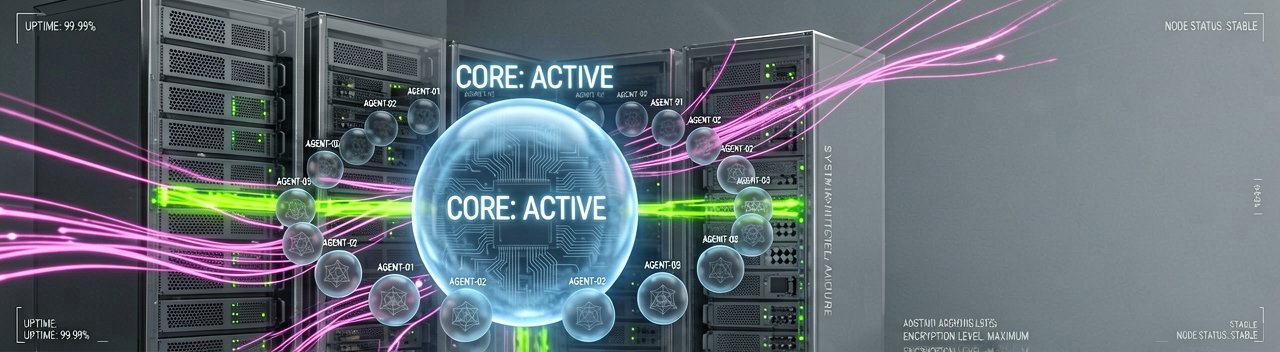
The technical backbone here—the partnership with Runloop—is more than just a convenient cloud hosting arrangement. For a seasoned observer, the real story is in the sandboxing. Running autonomous AI agents that have the authority to change site code or ad spend in real-time is a security nightmare if not handled correctly. By leveraging Runloop's specialized infrastructure, ION provides these agents with a "safe space" to execute complex tasks without risking the broader integrity of the client’s digital ecosystem. This allows for a level of autonomy that was previously too risky for enterprise deployment.
Stakeholders in the performance marketing space are watching this closely because it solves the "creative fatigue" problem. Humans are great at high-level strategy, but we are notoriously slow at A/B testing localized ad copy or adjusting button placements across five different demographics simultaneously. ION’s agents operate with a relentless, 24/7 curiosity. They don't get tired of checking if a slightly different shade of blue improves the click-through rate on a mobile device in Tokyo versus a desktop in New York.
Historically, this level of optimization was the exclusive playground of the "Big Tech" elite—the Googles and Amazons of the world who had the data science budget to build proprietary optimization engines. ION is essentially democratizing that power. It’s taking the "vibe" that makes a brand unique and marrying it to the cold, hard logic of data-driven iteration. For the average business owner, this means the website finally stops being a cost center and starts functioning as a proactive salesperson that learns more about its customers every single day.
Looking ahead, the success of platforms like ION suggests a future where "coding" a website becomes a secondary skill to "prompting" a business objective. The role of the developer and designer is shifting toward being a curator of the AI’s output rather than the primary producer. As more companies move toward this autonomous model, the competitive advantage will no longer be who has the prettiest site, but who has the smartest agents working under the hood to ensure that beauty translates into a bottom line.

The Infrastructure of Autonomy
The transition to agentic web design requires a massive amount of compute and a very specific type of environment where AI can "think" and "do" concurrently. The collaboration between ION and Runloop highlights a growing trend in the industry: the rise of specialized environments designed specifically for AI agents to operate. Without this specialized layer, the latency and security risks of real-time site modification would likely keep "vibe coding" in the realm of aesthetic experimentation rather than serious commercial application.
Reading Between the Lines: While the promise of a self-optimizing, vibe-heavy internet is seductive, we have to acknowledge the looming "uncanny valley" of algorithmic marketing. The assumption that AI agents will always choose the "best" version of a site assumes that conversion metrics are the only metric that matters. There is a very real risk of architectural cannibalization—where agents, in their relentless pursuit of a 0.5% uptick in clicks, eventually strip away the very brand soul and "vibe" that made the site attractive in the first place. A website tuned to the absolute peak of clinical efficiency often loses the human friction that builds long-term brand loyalty.
There’s also a significant contradiction in the "democratization" narrative. While ION and Runloop make high-tier optimization accessible to smaller players, they simultaneously trigger an AI arms race. If every competitor in a niche is using the same autonomous agents to chase the same local maxima of conversion, the digital landscape risks becoming a homogenized blur of "perfect" layouts. When everyone has an agentic salesperson that never sleeps, the competitive advantage doesn't vanish; it simply migrates back to whoever has the largest budget for the underlying compute or the most proprietary data to feed the machine.
Furthermore, the reliance on infrastructure like Runloop raises questions about digital monocultures. We are moving toward a web where a handful of specialized "agent-hosting" environments dictate the operational logic of thousands of businesses. If the logic governing these agents develops a bias or a systemic flaw, the impact isn't limited to a single broken link—it’s an automated, multi-site collapse of conversion funnels. The industry is currently prioritizing speed and scale over the "slow" safety of human-in-the-loop oversight, betting everything on the idea that the agents will remain more rational than the humans who prompted them.
Ultimately, the move toward agentic web presence reflects our broader obsession with removing human friction from commerce. It’s a bold bet that the "vibe" can be quantified, bottled, and then endlessly refined by a processor that doesn't actually understand what a vibe is. We are effectively handing the keys of our digital storefronts to very sophisticated calculators. Success in this new era won't just be about who has the best agents, but who knows when to tell their agents to stop optimizing and just let the brand breathe.
The Paradox of Automated Authenticity
The tech world is currently obsessed with the idea that authenticity can be engineered. By using Runloop to power ION’s vision, the industry is proving that we can indeed automate the appearance of a high-touch, bespoke experience. However, true "vibe-coded" success requires a level of serendipity and "cool" that usually defies data. If an AI agent optimizes a cult-favorite streetwear brand until it looks like a high-converting insurance landing page, the conversion rate might go up in the short term, but the brand’s cultural capital will vanish. Balancing the agent's logic with a human’s instinct for what is actually "cool" remains the unsolved variable in the ION equation.
The future of the web apparently involves a world where AI agents spend all day frantically rearranging furniture to get us to click "buy," while we, the humans, spend all day using other AI agents to block their ads and hide our data—a perfectly efficient circle of digital life that ensures the only ones truly getting rich are the people selling the electricity.
Artūras Malašauskas is an AI Systems Integrator with 20+ years of production-grade web engineering experience. He has designed, shipped, and scaled enterprise Python/PHP systems for logistics, SaaS, and public-sector clients. For the past year, he has focused exclusively on AI integrations: deploying open-source LLMs, building generative media pipelines (image, audio, video), and engineering multi-agent workflows for real production environments. His standard: reproducibility, security, cost-efficient inference—no vaporware. He documents and evaluates emerging AI tooling, separating verified capabilities from marketing noise. Technical editor at: muza-ai.eu, ai-verslas.lt, ai-naujinos.lt Connect on LinkedIn
Comments