The "Digital Twin" of Operations: Aeries Technology Debuts AI-Powered A1 GCC
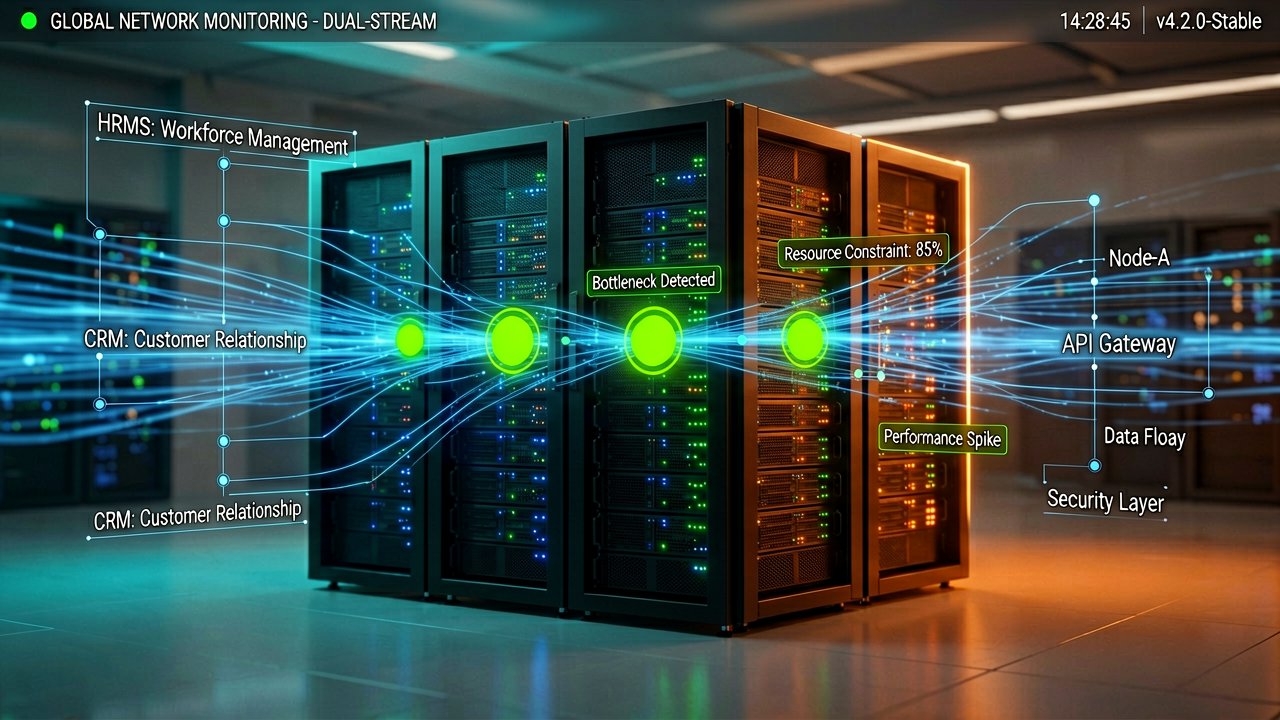
Global Capability Centers (GCCs) have long been the backbone of offshore strategic functions, but managing them has traditionally been a mess of fragmented spreadsheets and disconnected ERPs. That era is coming to a close. Aeries Technology has officially pulled the curtain back on A1 GCC, a proprietary platform designed to act as a "digital twin" for GCC operations. It’s not just another layer of bureaucracy; it’s an agentic AI-driven environment that sits on top of your existing tech stack—think CRMs and HRMS—to unify planning, workforce management, and governance into one cohesive view.
What makes A1 GCC stand out in a crowded enterprise market is its focus on "Agentic AI." Instead of just fetching data, the platform uses function-specific AI agents to handle the heavy lifting of coordination and decision support. According to StreetInsider, these capabilities are rolling out in stages, covering everything from initial setup milestones to real-time hiring metrics and operational issue resolution. It’s a bold move to replace the "manual tracker" culture with automated, data-driven oversight.
Closing the Visibility Gap
For private equity firms and North American companies, the appeal is clear: speed and control. The platform doesn't ask you to rip and replace your current systems. Instead, it integrates with them, providing a unified operating layer that simplifies complex global workflows. By centralizing workforce visibility and governance, Aeries is betting that leaders would rather have a single source of truth than chase down progress reports across multiple time zones. As organizations continue to scale their global footprint, tools like A1 GCC might just be the bridge between "managing" a center and actually optimizing it.
The Strategic Pivot Toward Agentic Governance
The Real Story Behind the Software: While press releases often lean into the buzzwords of "efficiency" and "automation," the launch of A1 GCC represents a deeper, more fundamental shift in how multinational leadership views the offshore model. For decades, Global Capability Centers were seen as cost-savings vehicles where "no news was good news." If the reports arrived on time, the board was happy. However, as these centers have evolved from back-office support into high-value hubs for R&D and proprietary tech development, the old way of managing—essentially flying blind and relying on monthly PDF updates—has become a massive liability for stakeholders.
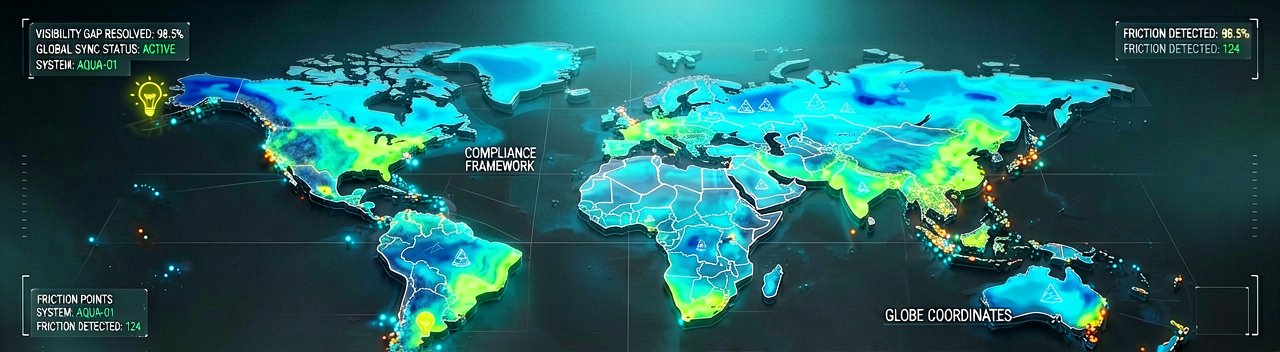
Aeries Technology is positioning this platform to solve what industry veterans call "the visibility tax." When a private equity firm or a mid-market enterprise expands into India or Mexico, they often lose a granular pulse on their talent pipeline and operational friction points. By deploying agentic AI, A1 GCC isn't just flagging that a hiring goal was missed; it’s designed to identify the bottleneck in the onboarding workflow before it hits the bottom line. This level of proactive intervention is what differentiates a modern "Digital Twin" approach from the static dashboards of the mid-2010s.
The move also signals a maturation of the "as-a-service" model for GCCs. Traditionally, companies had to choose between the DIY approach, which is fraught with compliance risks, or a fully outsourced model that sacrifices control. Aeries is carving out a middle ground where technology provides the guardrails. According to Aeries Technology, the platform enables a "plug-and-play" infrastructure that allows Western firms to scale without needing to build their own bespoke management tools from scratch, effectively lowering the barrier to entry for global expansion.
From a stakeholder perspective, the timing is perfect. We are seeing a global tightening of operational budgets where every headcount and every square foot of office space must be justified by real-time data. The "A1" in the name isn't just branding; it’s a nod to the "Agent-First" philosophy that Aeries believes will define the next decade of enterprise software. Instead of managers spending hours aggregate data from Workday or SAP, the platform’s agents do the heavy lifting, allowing human leaders to focus on high-level strategy rather than administrative troubleshooting.
Historical context suggests that platforms like this often become the industry standard once they prove they can reduce "operational noise." In the early 2000s, CRM did this for sales; in the 2020s, Aeries is betting that AI-driven operations platforms will do the same for the global workforce. By creating a unified operating layer, they are essentially providing a roadmap for how the next generation of Fortune 500 companies will manage talent across borders without losing the agility that made them successful in the first place.
The Friction of Implementation vs. The AI Promise
Reading Between the Lines: The industry’s rush toward "agentic" solutions assumes that the underlying data in these Global Capability Centers is actually worth processing. There is a persistent, uncomfortable truth in enterprise tech: AI is only as sharp as the messy, human-entered data it feeds on. While Aeries Technology promises a "digital twin" of operations, the reality of global management often involves manual workarounds and "shadow systems" that exist precisely because the official ERP or HRMS is too clunky to use. For A1 GCC to truly act as a single source of truth, it will have to overcome the institutional inertia of middle managers who have spent years perfecting the art of the creative spreadsheet.
There is also a notable tension between the desire for "plug-and-play" automation and the high-touch reality of international compliance. Aeries asserts that their platform can manage everything from setup milestones to real-time governance, yet the regulatory landscapes in emerging GCC hubs are famously metamorphic. Relying on an AI agent to navigate the nuances of local labor laws or tax incentives sounds efficient on paper, but it risks creating a "black box" where leadership assumes compliance right up until a local auditor proves otherwise. The challenge for Aeries will be demonstrating that their agents can handle the "grey areas" that define global business.
Furthermore, the move to automate oversight might inadvertently create a psychological distance between the home office and the offshore team. If North American executives can monitor every metric via a dashboard, the incentive to physically visit centers or build cultural bridges often evaporates. We’ve seen this movie before with early-stage remote management tools; they solve for visibility but can accidentally erode the "human capital" they are designed to optimize. A1 GCC’s success will likely be measured not by how many dashboards it generates, but by whether it facilitates actual collaboration or simply turns global employees into data points on a screen.
Ultimately, the projection for A1 GCC is a high-stakes gamble on the maturity of "Agentic AI" in a corporate setting. If the platform can truly synthesize disparate data streams from StreetInsider reported sources into actionable intelligence, it sets a new benchmark for the sector. If it doesn't, it risks becoming just another expensive piece of "shelfware" that looks great in a boardroom demo but struggles to account for the chaotic reality of human-led operations in different time zones. The gap between a digital twin and a digital mirage is often thinner than the marketing suggests.
The dream of managing a thousand-person global operation with the click of a button is beautiful, provided you don't mind the occasional reminder that humans are significantly more difficult to debug than code.
Artūras Malašauskas is an AI Systems Integrator with 20+ years of production-grade web engineering experience. He has designed, shipped, and scaled enterprise Python/PHP systems for logistics, SaaS, and public-sector clients. For the past year, he has focused exclusively on AI integrations: deploying open-source LLMs, building generative media pipelines (image, audio, video), and engineering multi-agent workflows for real production environments. His standard: reproducibility, security, cost-efficient inference—no vaporware. He documents and evaluates emerging AI tooling, separating verified capabilities from marketing noise. Technical editor at: muza-ai.eu, ai-verslas.lt, ai-naujinos.lt Connect on LinkedIn
Comments