Ixigo Rebuilds Its Core Around Conversational AI: The Era of the Agentic Traveler

For years, planning a trip has felt like a part-time job—endless tabs, filtering for "window seats but not over the wing," and the frantic refresh of a flight status page. Ixigo is betting that we’re done with that manual labor. At its flagship NEXT event, the travel tech giant unveiled a top-to-bottom redesign of its mobile app, positioning it as a fully "AI-native" platform. This isn’t just a chatbot slapped onto a legacy interface; it’s a fundamental pivot where conversational agents handle the heavy lifting while you just talk—or type—about where you want to go. According to reporting from Moneycontrol, this move signals a shift from traditional transactional booking toward a more intuitive, "agent-led" future.
At the center of this overhaul is TARA, a multimodal assistant that’s been promoted from a simple help-desk bot to a full-blown travel companion. TARA now understands intent in English, Hindi, and "Hinglish," allowing users to ditch the rigid search filters for natural requests. Want a hotel in Dubai with an infinity pool and a view of the Burj Khalifa? You just ask. It’s a bold play by CEOs Rajnish Kumar and Aloke Bajpai to reduce the "travel anxiety" that comes with navigating dozens of screens just to get a flight confirmed. By integrating TARA into the core system, the assistant can tap into your booking history and preferences to offer advice that actually feels personal, rather than just another algorithmic suggestion.
But the real "wow" factor here is the introduction of agentic travel flows. These are background AI agents designed to act on your behalf without you ever needing to check a box. They monitor flight schedules for delays, handle the headache of cancellation refunds, and even coordinate with hotels to ensure your room is ready before you land. For those actually on the move, a new "Trip Mode" consolidates everything—boarding passes, gate changes, and baggage belt info—into a single, real-time view. It’s clear that Ixigo isn’t just trying to be a better travel agent; it’s trying to be the only one you’ll ever need to talk to.
Beyond the Search Bar: How TARA Learns Your Vibe
The new architecture moves away from the "keyword-and-filter" era. TARA isn't just looking for matches; it’s parsing complex queries like "I forgot my anniversary, help me!" to surface curated experiences. Because the assistant is multimodal, users can switch between voice, text, and tap-based inputs seamlessly, making it far more flexible for someone juggling bags at an airport terminal. As noted by Hindustan Times, the goal is to eliminate the need to jump between multiple booking screens entirely.
Agentic AI: The Invisible Travel Concierge
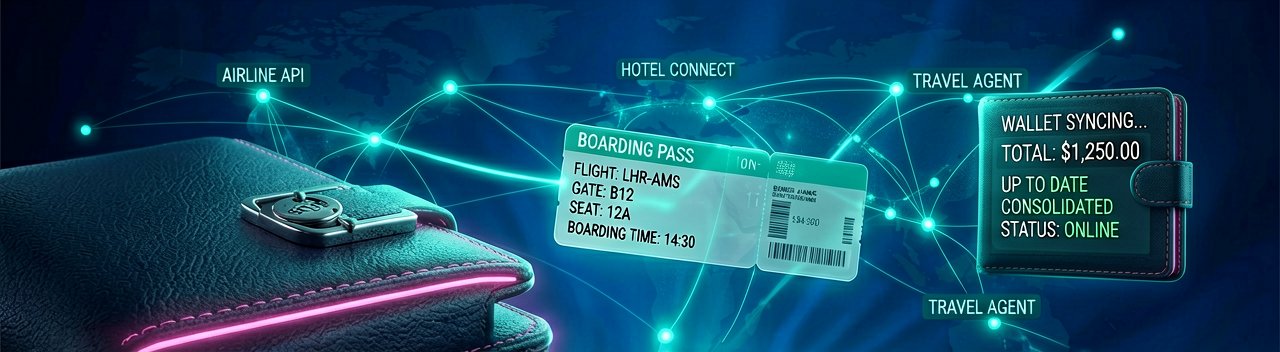
Ixigo’s "agentic" approach means the app takes proactive steps that used to require human intervention. These agents can automatically push boarding passes to WhatsApp, sync them with Apple or Google Wallets, and even interface with DigiYatra for a smoother airport walkthrough. If your gate changes while you’re grabbing a coffee, the digital pass in your wallet updates instantly. By managing these micro-tasks in the background, the platform is attempting to transform the smartphone from a tool you use into a partner that works for you.
Behind the Scenes: The Engineering Shift Toward Autonomous Travel
The Architectural Gamble: What most surface-level reports miss is the sheer technical audacity required to move from a deterministic UI—where clicking button A always leads to screen B—to a stochastic, agent-led model. Ixigo isn't just skinning their app with a new look; they are rewiring the plumbing. In the old world, the user was the orchestrator, manually syncing their calendar, checking their email for PNR status, and monitoring gate changes. In this new "agentic" framework, the AI acts as the primary layer of the operating system. This requires a massive investment in low-latency processing to ensure that TARA doesn't just provide a smart answer, but executes a series of API calls across disparate airline and hotel systems in real-time without timing out.
Historically, the travel industry has been held back by fragmented legacy systems—GDS databases that feel like they belong in the 1990s. Ixigo’s pivot reflects a broader industry realization that the bottleneck isn't the data itself, but the "cognitive load" placed on the consumer to interpret that data. By utilizing Large Language Models (LLMs) tuned specifically for travel intent, they are attempting to bridge the gap between human language and machine-readable booking codes. For a seasoned traveler, this means the end of "Hinglish" translation errors where a bot fails to understand a casual request for a "subah ki flight" (morning flight). The engineering team has clearly prioritized natural language understanding as a core utility rather than a gimmick.
From a stakeholder perspective, founders Aloke Bajpai and Rajnish Kumar are playing a long game against global giants like Google Travel and Expedia. While the big players have massive datasets, Ixigo has the advantage of hyper-localization. Their focus on the Indian "Next Billion Users" segment means the app must perform flawlessly on mid-range hardware and inconsistent 4G networks. The decision to integrate the "Trip Mode" into the system-level wallet and WhatsApp is a strategic move to capture the user where they already live, rather than forcing them to stay inside the Ixigo app. This creates a "sticky" ecosystem where the utility of the agent exceeds the utility of the booking price alone.

There is also a subtle but significant shift in how "proactive" AI is being handled. Most bots wait for a prompt; Ixigo’s agents are designed to be "event-driven." When an airline announces a delay, the agent doesn't just notify the user; it calculates the impact on the rest of the itinerary. If a traveler has a tight connection, the agent can theoretically surface alternative options before the traveler even realizes they are going to miss their flight. This moves the needle from reactive customer support to predictive logistics, a transition that has been the "holy grail" of travel tech for a decade but was only made possible with the recent advancements in agentic workflows.
Finally, the "multimodal" aspect—switching between voice, text, and visual cues—is a direct response to how humans actually plan. We often start with a vague idea, look at photos, and then ask questions about the logistics. By allowing TARA to "see" and "hear" across these different modes, Ixigo is attempting to mimic the experience of walking into a physical travel agency. It’s a return to a high-touch service model, ironically delivered through a high-tech interface. This human-centric design suggests that the future of travel isn't about more screens, but about fewer, smarter interactions that respect the user’s time and mental energy.
Reading Between the Lines: The Friction of Frictionless Travel
The Paradox of Automation: While Ixigo’s pivot to an "agentic" interface is being hailed as a win for user experience, it creates an interesting tension between convenience and control. The industry assumption is that travelers want to delegate every micro-decision to an AI, yet travel is inherently a high-stakes activity where the cost of a "hallucination" isn't just a typo—it’s a missed connection in a foreign city. By moving the user away from the raw data of flight grids and into a conversational bubble, Ixigo is asking for a massive leap of faith. There is a risk that the transparency of the "DIY" era is being traded for a "black box" experience where the traveler no longer sees the full range of options, but only what the agent deems relevant.
Furthermore, the financial incentive of an OTA (Online Travel Agency) often sits at odds with the pure neutrality of an AI assistant. If TARA recommends a specific hotel because it fits your "vibe," a skeptical user must wonder if that recommendation is truly personalized or if it is being pushed because of higher commission margins or strategic partnerships. Building an AI-native app requires navigating this ethical minefield; if the assistant begins to feel like a salesperson in a digital mask, the trust required for an agentic relationship will evaporate. The challenge for Ixigo will be maintaining the integrity of the "concierge" while satisfying the bottom-line demands of a publicly traded company.
There is also the technical reality of India’s diverse digital landscape. While conversational AI works beautifully on high-end devices with stable fiber connections, the "agentic" dream relies on constant, high-speed data exchange between the app and various cloud-based LLMs. For a traveler on a patchy 3G network in a Tier-3 city, a heavy conversational interface could become a liability compared to a lightweight, static HTML page. Ixigo’s promise of "reducing anxiety" could backfire if the AI-driven "Trip Mode" fails to load at the exact moment a traveler needs to show their boarding pass at a security gate. Proving that this system is more robust—not just more "magical"—is the hurdle the company has yet to clear.
Finally, we have to look at the "platform lock-in" implication. By integrating so deeply with WhatsApp and system-level wallets, Ixigo is effectively trying to become an invisible layer of the smartphone’s OS. This is a brilliant defensive move against Google, which has been trying to bypass OTAs by showing flight results directly in search. However, if every travel app follows suit, we may end up in a world of competing "agents" that refuse to talk to one another. The traveler might find themselves managing an AI agent for their flight, another for their hotel, and a third for their ground transport, inadvertently recreating the very fragmentation these tools were supposed to solve.
"Ultimately, the goal of travel AI is to handle all the boring stuff so you can focus on the fun parts—which, as any veteran traveler knows, usually involves standing in a slightly different line while wondering why the 'smart' gate won't scan your perfectly digital face."
Artūras Malašauskas is an AI Systems Integrator with 20+ years of production-grade web engineering experience. He has designed, shipped, and scaled enterprise Python/PHP systems for logistics, SaaS, and public-sector clients. For the past year, he has focused exclusively on AI integrations: deploying open-source LLMs, building generative media pipelines (image, audio, video), and engineering multi-agent workflows for real production environments. His standard: reproducibility, security, cost-efficient inference—no vaporware. He documents and evaluates emerging AI tooling, separating verified capabilities from marketing noise. Technical editor at: muza-ai.eu, ai-verslas.lt, ai-naujinos.lt Connect on LinkedIn
Comments