Aderant Rewrites the Legal Tech Playbook with Amazon Quick
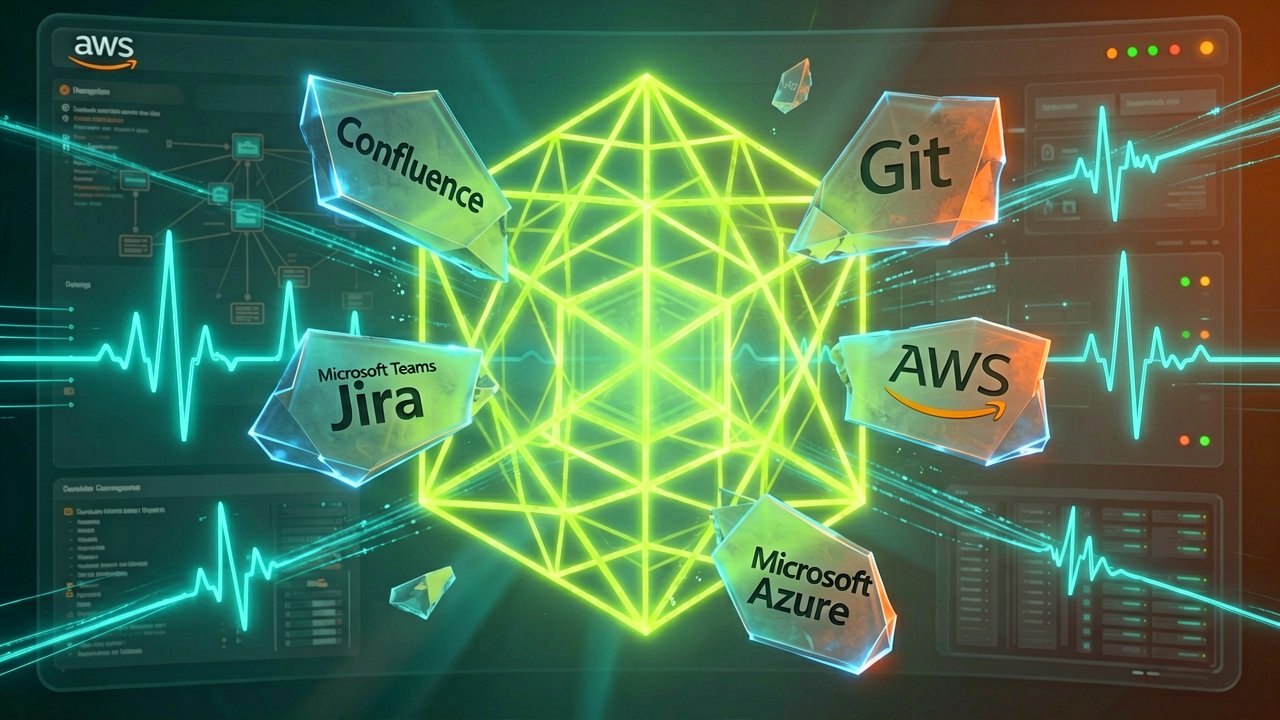
Aderant, a titan in the legal practice management space, has officially traded traditional manual troubleshooting for an AI-driven overhaul of its cloud operations. By integrating Amazon Quick, the company has tackled the "scattered data" problem that plagues most enterprise-scale legal software providers. Previously, engineers supporting Aderant’s flagship Expert Sierra platform were forced to hunt through six disconnected knowledge systems—ranging from Confluence to Jira—costing them up to 45 minutes per task. The shift to a unified, AI-powered search interface has reportedly slashed these search times by 90 percent.
This transformation isn't just about faster searches; it’s a structural pivot toward what Aderant calls "human-in-the-loop" automation. Beyond merely finding data, the system now automates the creation of knowledge base articles through Amazon Quick Flows. This move has condensed an hour-long documentation process into a brisk 15-minute exercise. For an organization managing over 200 support tickets daily, this 75 percent reduction in documentation overhead allows its 38-person engineering team to focus on proactive platform health rather than administrative backlog.
What Most Reports Miss: The Backend Reality
Behind the Scenes: The real victory here isn't the shiny "AI" label, but the tactical dismantling of institutional silos that have existed for years. While standard industry reporting focuses on the speed of the bot, the deeper story lies in how Aderant successfully mapped six distinct vendor systems—including Microsoft Teams and Git repositories—into a single, secure environment using pre-built integrations. This allowed them to become operational in weeks, bypassing the months of custom development that usually kills digital transformation projects before they even start.
From a stakeholder perspective, this rollout was a calculated risk that paid off. By starting with a focused pilot for the CloudOps team in October 2025 and rapidly expanding to the broader Product Support organization by February 2026, Aderant avoided the "boil the ocean" trap. This phased approach allowed them to refine CloudOps Helper into a tool that engineers actually want to use, rather than a top-down mandate. The inclusion of pattern discovery tools also means the team can now see exactly what documentation is missing based on what their own engineers are asking the bot, creating a self-healing knowledge loop.
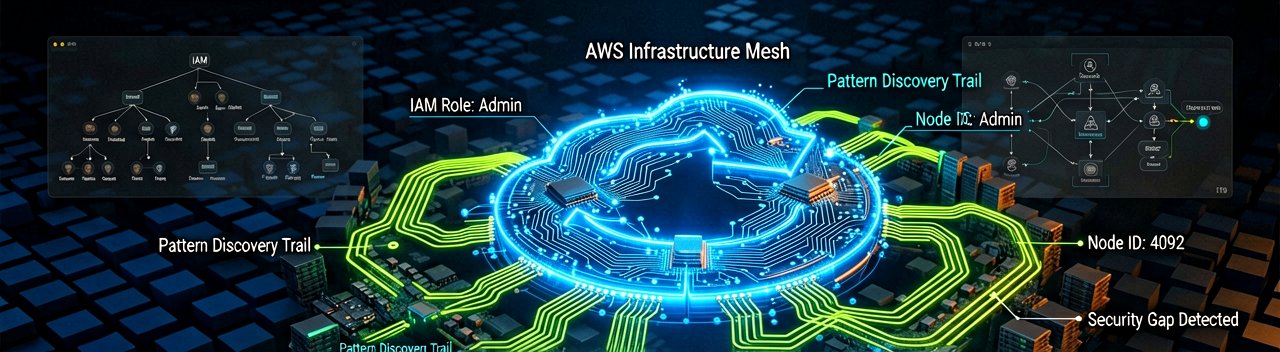
Historically, legal tech has been notoriously slow to adopt cutting-edge cloud infrastructure due to extreme security and compliance requirements. Aderant’s decision to lean heavily into the AWS ecosystem specifically addresses this "trust gap." By utilizing built-in security management like Okta SSO and IAM, they managed to modernize their internal workflows without compromising the rigid data isolation standards required by their high-profile law firm clients.
The implications for the broader legal sector are significant. We are seeing a shift where the "back office" of legal tech providers is becoming as sophisticated as the client-facing AI tools they sell. As Aderant CEO Chris Cartrett has noted in recent industry updates, the goal is a "frictionless cloud experience." By optimizing their internal infrastructure, Aderant is effectively proving that the same AI efficiencies they promise law firms are actually being used to keep those very firms' systems running smoothly.
Ultimately, this case study serves as a blueprint for how legacy software providers can pivot. It’s a move away from "keeping the lights on" via manual labor and toward a model where engineers are analysts rather than search engines. As the legal industry reaches a critical mass in cloud adoption, the providers that win will be those who can maintain 24/7 global support without the linear headcount growth that traditionally accompanied it.
Aderant, a titan in the legal practice management space, has officially traded traditional manual troubleshooting for an AI-driven overhaul of its cloud operations. By integrating Amazon Quick, the company has tackled the "scattered data" problem that plagues most enterprise-scale legal software providers. Previously, engineers supporting Aderant’s flagship Expert Sierra platform were forced to hunt through six disconnected knowledge systems—ranging from Confluence to Jira—costing them up to 45 minutes per task. The shift to a unified, AI-powered search interface has reportedly slashed these search times by 90 percent.

This transformation isn't just about faster searches; it’s a structural pivot toward what Aderant calls "human-in-the-loop" automation. Beyond merely finding data, the system now automates the creation of knowledge base articles through Amazon Quick Flows. This move has condensed an hour-long documentation process into a brisk 15-minute exercise. For an organization managing over 200 support tickets daily, this 75 percent reduction in documentation overhead allows its 38-person engineering team to focus on proactive platform health rather than administrative backlog.
What Most Reports Miss: The Backend Reality
Behind the Scenes: The real victory here isn't the shiny "AI" label, but the tactical dismantling of institutional silos that have existed for years. While standard industry reporting focuses on the speed of the bot, the deeper story lies in how Aderant successfully mapped six distinct vendor systems—including Microsoft Teams and Git repositories—into a single, secure environment using pre-built integrations. This allowed them to become operational in weeks, bypassing the months of custom development that usually kills digital transformation projects before they even start.
From a stakeholder perspective, this rollout was a calculated risk that paid off. By starting with a focused pilot for the CloudOps team in October 2025 and rapidly expanding to the broader Product Support organization by February 2026, Aderant avoided the "boil the ocean" trap. This phased approach allowed them to refine CloudOps Helper into a tool that engineers actually want to use, rather than a top-down mandate. The inclusion of pattern discovery tools also means the team can now see exactly what documentation is missing based on what their own engineers are asking the bot, creating a self-healing knowledge loop.
Historically, legal tech has been notoriously slow to adopt cutting-edge cloud infrastructure due to extreme security and compliance requirements. Aderant’s decision to lean heavily into the AWS ecosystem specifically addresses this "trust gap." By utilizing built-in security management like Okta SSO and IAM, they managed to modernize their internal workflows without compromising the rigid data isolation standards required by their high-profile law firm clients.
The Skeptical Lens on Efficiency
Reading Between the Lines: While a 90% reduction in search time makes for a stellar press release, seasoned cloud architects know that efficiency gains in one area often migrate bottlenecks elsewhere. The assumption that reclaiming 40 minutes per ticket automatically results in "proactive innovation" overlooks the reality of corporate inertia. If the engineering culture remains reactive, these reclaimed hours might simply be absorbed by a higher volume of low-value tasks rather than the architectural breakthroughs the market expects. It remains to be seen if Aderant can truly convert "saved time" into "better code."
There is also the quiet contradiction of the "human-in-the-loop" philosophy. By automating documentation to this extent, Aderant risks creating a knowledge base that is technically accurate but contextually shallow. If the AI is essentially summarizing the shorthand of a tired engineer, the resulting knowledge bank might lack the nuanced "why" behind specific fixes. This creates a potential technical debt where the support team understands the *what* of a solution through the bot, but loses the deep tribal knowledge required to troubleshoot unprecedented system failures.
Looking at the broader implications, this move signals an escalating arms race in legal SaaS where "operational excellence" is no longer a differentiator but a survival requirement. By tethering so tightly to Amazon Quick and the broader AWS stack, Aderant has effectively locked its operational destiny to Amazon’s product roadmap. While this provides immediate speed, it limits the company's ability to remain cloud-agnostic in a world where multi-cloud resiliency is becoming a demand for the largest global law firms. The efficiency is undeniable today, but the strategic flexibility may be the price paid tomorrow.
It’s a classic tech irony: we’ve finally built a machine to find the answers in minutes, only to realize that the most difficult part of the job is still figuring out if we asked the right question in the first place.
Aderant, a titan in the legal practice management space, has officially traded traditional manual troubleshooting for an AI-driven overhaul of its cloud operations. By integrating Amazon Quick, the company has tackled the "scattered data" problem that plagues most enterprise-scale legal software providers. Previously, engineers supporting Aderant’s flagship Expert Sierra platform were forced to hunt through six disconnected knowledge systems—ranging from Confluence to Jira—costing them up to 45 minutes per task. The shift to a unified, AI-powered search interface has reportedly slashed these search times by 90 percent.
This transformation isn't just about faster searches; it’s a structural pivot toward what Aderant calls "human-in-the-loop" automation. Beyond merely finding data, the system now automates the creation of knowledge base articles through Amazon Quick Flows. This move has condensed an hour-long documentation process into a brisk 15-minute exercise. For an organization managing over 200 support tickets daily, this 75 percent reduction in documentation overhead allows its 38-person engineering team to focus on proactive platform health rather than administrative backlog.
What Most Reports Miss: The Backend Reality
Behind the Scenes: The real victory here isn't the shiny "AI" label, but the tactical dismantling of institutional silos that have existed for years. While standard industry reporting focuses on the speed of the bot, the deeper story lies in how Aderant successfully mapped six distinct vendor systems—including Microsoft Teams and Git repositories—into a single, secure environment using pre-built integrations. This allowed them to become operational in weeks, bypassing the months of custom development that usually kills digital transformation projects before they even start.
From a stakeholder perspective, this rollout was a calculated risk that paid off. By starting with a focused pilot for the CloudOps team in October 2025 and rapidly expanding to the broader Product Support organization by February 2026, Aderant avoided the "boil the ocean" trap. This phased approach allowed them to refine CloudOps Helper into a tool that engineers actually want to use, rather than a top-down mandate. The inclusion of pattern discovery tools also means the team can now see exactly what documentation is missing based on what their own engineers are asking the bot, creating a self-healing knowledge loop.
Historically, legal tech has been notoriously slow to adopt cutting-edge cloud infrastructure due to extreme security and compliance requirements. Aderant’s decision to lean heavily into the AWS ecosystem specifically addresses this "trust gap." By utilizing built-in security management like Okta SSO and IAM, they managed to modernize their internal workflows without compromising the rigid data isolation standards required by their high-profile law firm clients.
The implications for the broader legal sector are significant. We are seeing a shift where the "back office" of legal tech providers is becoming as sophisticated as the client-facing AI tools they sell. As Aderant CEO Chris Cartrett has noted in recent industry updates, the goal is a "frictionless cloud experience." By optimizing their internal infrastructure, Aderant is effectively proving that the same AI efficiencies they promise law firms are actually being used to keep those very firms' systems running smoothly.
Ultimately, this case study serves as a blueprint for how legacy software providers can pivot. It’s a move away from "keeping the lights on" via manual labor and toward a model where engineers are analysts rather than search engines. As the legal industry reaches a critical mass in cloud adoption, the providers that win will be those who can maintain 24/7 global support without the linear headcount growth that traditionally accompanied it.
The Skeptical Lens on Efficiency
Reading Between the Lines: While a 90% reduction in search time makes for a stellar press release, seasoned cloud architects know that efficiency gains in one area often migrate bottlenecks elsewhere. The assumption that reclaiming 40 minutes per ticket automatically results in "proactive innovation" overlooks the reality of corporate inertia. If the engineering culture remains reactive, these reclaimed hours might simply be absorbed by a higher volume of low-value tasks rather than the architectural breakthroughs the market expects. It remains to be seen if Aderant can truly convert "saved time" into "better code."
There is also the quiet contradiction of the "human-in-the-loop" philosophy. By automating documentation to this extent, Aderant risks creating a knowledge base that is technically accurate but contextually shallow. If the AI is essentially summarizing the shorthand of a tired engineer, the resulting knowledge bank might lack the nuanced "why" behind specific fixes. This creates a potential technical debt where the support team understands the *what* of a solution through the bot, but loses the deep tribal knowledge required to troubleshoot unprecedented system failures.
Looking at the broader implications, this move signals an escalating arms race in legal SaaS where "operational excellence" is no longer a differentiator but a survival requirement. By tethering so tightly to Amazon Quick and the broader AWS stack, Aderant has effectively locked its operational destiny to Amazon’s product roadmap. While this provides immediate speed, it limits the company's ability to remain cloud-agnostic in a world where multi-cloud resiliency is becoming a demand for the largest global law firms. The efficiency is undeniable today, but the strategic flexibility may be the price paid tomorrow.
It’s a classic tech irony: we’ve finally built a machine to find the answers in minutes, only to realize that the most difficult part of the job is still figuring out if we asked the right question in the first place.
Artūras Malašauskas is an AI Systems Integrator with 20+ years of production-grade web engineering experience. He has designed, shipped, and scaled enterprise Python/PHP systems for logistics, SaaS, and public-sector clients. For the past year, he has focused exclusively on AI integrations: deploying open-source LLMs, building generative media pipelines (image, audio, video), and engineering multi-agent workflows for real production environments. His standard: reproducibility, security, cost-efficient inference—no vaporware. He documents and evaluates emerging AI tooling, separating verified capabilities from marketing noise. Technical editor at: muza-ai.eu, ai-verslas.lt, ai-naujinos.lt Connect on LinkedIn
Comments