Beyond the Buzz: How Luke AFB Is Putting AI to Work in the Trenches
The conversation around artificial intelligence in the military often drifts into sci-fi territory, but at Luke Air Force Base, the reality is far more grounded—and arguably more impressive. Rather than waiting for a top-down mandate from the Pentagon, a small, agile team of Airmen has been pioneering the integration of AI into the grind of daily operations. It is a grassroots effort to solve the "death by a thousand clicks" that plagues modern administrative and maintenance workflows, proving that the most effective innovation often comes from those closest to the problems. As reports, the goal isn't to replace the human element, but to liberate it from the repetitive tasks that throttle mission effectiveness.
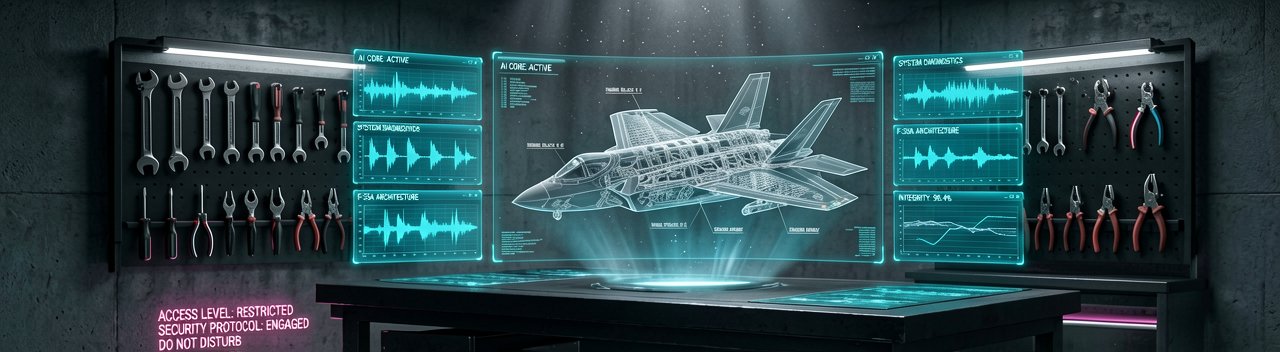
The initiative took flight through a dedicated AI Task Force, which quickly moved from theoretical study to practical execution. By surveying over 170 Airmen, the team identified a critical gap: while the hunger for smarter tools was high, uncertainty regarding authorized platforms and security guidelines was holding people back. To bridge this, the task force began experimenting with large language models and automation tools to handle everything from transcribing public affairs interviews to streamlining maintenance data analysis for the F-35A Lightning II fleet. This pragmatic approach shifts AI from an abstract concept into a tangible force multiplier that helps keep jets in the air and Airmen focused on high-level decision-making.
What Most Reports Miss: The Cultural Friction of Innovation
The Real Bottleneck: While the technology itself is moving at breakneck speed, the true challenge at Luke AFB hasn't been the code—it’s been the culture. For decades, military operations have relied on rigid, manual processes that offer a sense of security through tradition. Introducing AI requires a fundamental shift in how "work" is defined. Senior leaders and NCOs are finding that the biggest hurdle isn't teaching an algorithm to recognize a maintenance discrepancy; it’s convincing a workforce that using these tools is not only allowed but essential for maintaining a competitive edge. This is a nuanced battle for trust, where the fear of "hallucinating" data or compromising operational security often stalls progress more than any technical bug.
Interestingly, the task force discovered that some Airmen were already using unapproved, consumer-grade AI tools out of sheer necessity to manage their workloads. This "shadow IT" scenario presented a major security risk that the leadership at Luke chose to address with transparency rather than punishment. By creating a sandbox for approved tools, they have started turning that rogue innovation into a deliberate, mission-focused strategy. This transition from informal use to a governed framework is what separates a gimmick from a lasting operational shift. It is about creating a baseline of AI literacy so that every Airman, from the flight line to the front office, understands the "why" behind the tool.
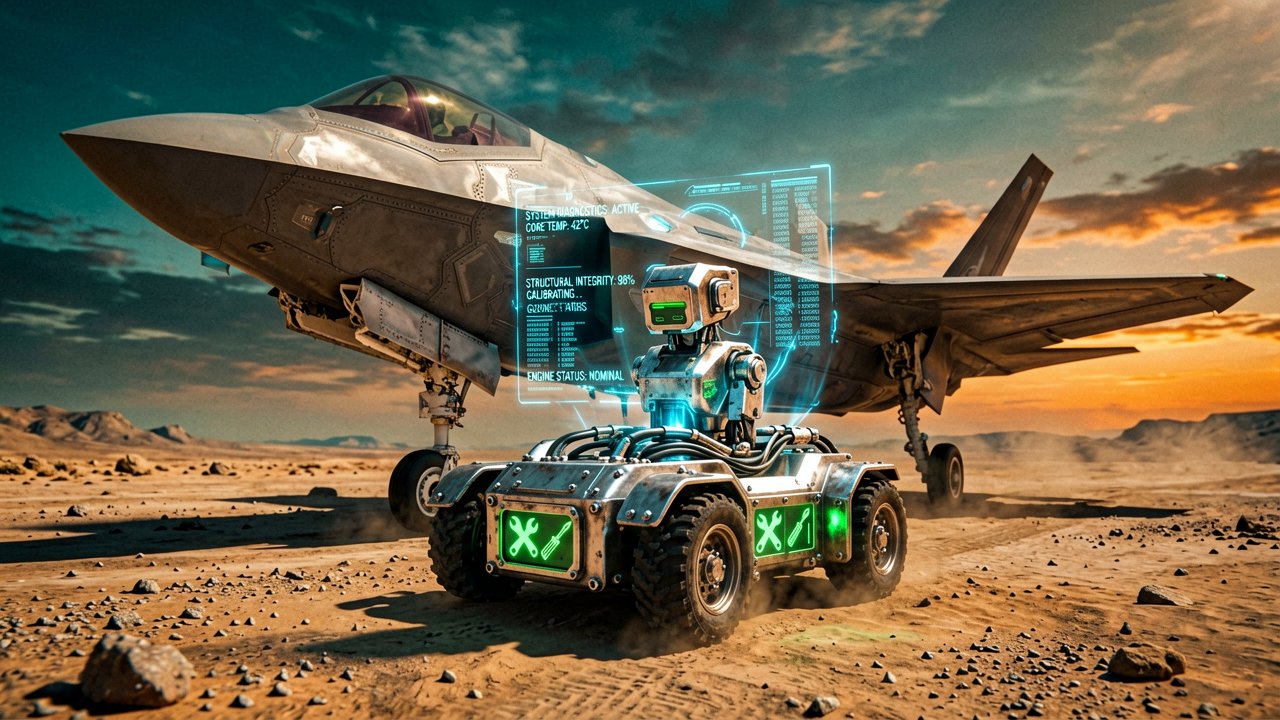
The flight line itself is seeing a physical manifestation of this digital shift through the introduction of autonomous robots. Developed by the base’s Spark Cell, these machines—designed for tool delivery and foreign object debris (FOD) removal—are expected to be fully operational by early 2026. According to reporting from Luke AFB News, these robots are meant to reclaim hundreds of man-hours. When a maintainer can stay under the wing of a jet instead of walking back and forth for a forgotten tool, the cumulative impact on sortie generation is massive. It turns the flight line into a high-tech ecosystem where humans manage the complex systems while machines handle the logistical legwork.
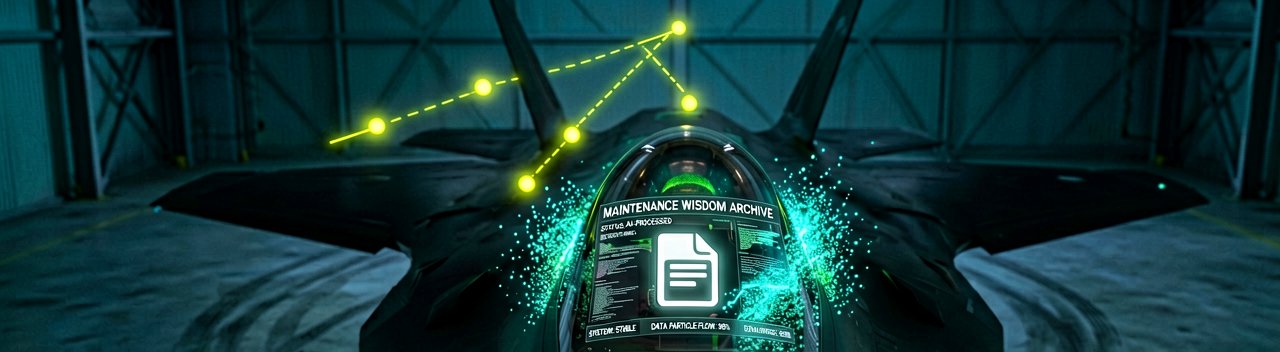
Stakeholders are also keeping a close eye on how this local success can be scaled. The "Luke model" is increasingly seen as a blueprint for the wider Air Force, especially as the service pushes toward its goal of being AI-competitive by 2027. The integration of AI into maintenance analysis for the F-35A, for instance, isn't just a Luke-specific win; it’s a data point that could redefine fleet management globally. The ability to preserve institutional knowledge as veteran Airmen transition out—capturing their expertise within AI-supported databases—ensures that the next generation of warfighters doesn't have to start from zero. This preservation of "grey matter" is perhaps the most understated yet vital aspect of the entire project.
Looking forward, the roadmap involves moving beyond these initial "sprints" into a permanent state of AI-enabled readiness. This means more than just having a chatbot for emails; it involves deeply embedding machine learning into battle management and command structures. As the Air Education and Training Command (AETC) notes on AETC.af.mil, the ultimate objective is "human-machine teaming" where the AI provides the options and the human provides the intent. At Luke, they aren't just waiting for the future to arrive; they are building the infrastructure to make sure they are ready when it does.
The conversation around artificial intelligence in the military often drifts into sci-fi territory, but at Luke Air Force Base, the reality is far more grounded—and arguably more impressive. Rather than waiting for a top-down mandate from the Pentagon, a small, agile team of Airmen has been pioneering the integration of AI into the grind of daily operations. It is a grassroots effort to solve the "death by a thousand clicks" that plagues modern administrative and maintenance workflows, proving that the most effective innovation often comes from those closest to the problems. As AF.mil reports, the goal isn't to replace the human element, but to liberate it from the repetitive tasks that throttle mission effectiveness.
The initiative took flight through a dedicated AI Task Force, which quickly moved from theoretical study to practical execution. By surveying over 170 Airmen, the team identified a critical gap: while the hunger for smarter tools was high, uncertainty regarding authorized platforms and security guidelines was holding people back. To bridge this, the task force began experimenting with large language models and automation tools to handle everything from transcribing public affairs interviews to streamlining maintenance data analysis for the F-35A Lightning II fleet. This pragmatic approach shifts AI from an abstract concept into a tangible force multiplier that helps keep jets in the air and Airmen focused on high-level decision-making.
What Most Reports Miss: The Cultural Friction of Innovation
The Real Bottleneck: While the technology itself is moving at breakneck speed, the true challenge at Luke AFB hasn't been the code—it’s been the culture. For decades, military operations have relied on rigid, manual processes that offer a sense of security through tradition. Introducing AI requires a fundamental shift in how "work" is defined. Senior leaders and NCOs are finding that the biggest hurdle isn't teaching an algorithm to recognize a maintenance discrepancy; it’s convincing a workforce that using these tools is not only allowed but essential for maintaining a competitive edge. This is a nuanced battle for trust, where the fear of "hallucinating" data or compromising operational security often stalls progress more than any technical bug.
Interestingly, the task force discovered that some Airmen were already using unapproved, consumer-grade AI tools out of sheer necessity to manage their workloads. This "shadow IT" scenario presented a major security risk that the leadership at Luke chose to address with transparency rather than punishment. By creating a sandbox for approved tools, they have started turning that rogue innovation into a deliberate, mission-focused strategy. This transition from informal use to a governed framework is what separates a gimmick from a lasting operational shift. It is about creating a baseline of AI literacy so that every Airman, from the flight line to the front office, understands the "why" behind the tool.
The flight line itself is seeing a physical manifestation of this digital shift through the introduction of autonomous robots. Developed by the base’s Spark Cell, these machines—designed for tool delivery and foreign object debris (FOD) removal—are expected to be fully operational by early 2026. According to reporting from Luke AFB News, these robots are meant to reclaim hundreds of man-hours. When a maintainer can stay under the wing of a jet instead of walking back and forth for a forgotten tool, the cumulative impact on sortie generation is massive. It turns the flight line into a high-tech ecosystem where humans manage the complex systems while machines handle the logistical legwork.
Stakeholders are also keeping a close eye on how this local success can be scaled. The "Luke model" is increasingly seen as a blueprint for the wider Air Force, especially as the service pushes toward its goal of being AI-competitive by 2027. The integration of AI into maintenance analysis for the F-35A, for instance, isn't just a Luke-specific win; it’s a data point that could redefine fleet management globally. The ability to preserve institutional knowledge as veteran Airmen transition out—capturing their expertise within AI-supported databases—ensures that the next generation of warfighters doesn't have to start from zero. This preservation of "grey matter" is perhaps the most understated yet vital aspect of the entire project.
Looking forward, the roadmap involves moving beyond these initial "sprints" into a permanent state of AI-enabled readiness. This means more than just having a chatbot for emails; it involves deeply embedding machine learning into battle management and command structures. As the Air Education and Training Command (AETC) notes on AETC.af.mil, the ultimate objective is "human-machine teaming" where the AI provides the options and the human provides the intent. At Luke, they aren't just waiting for the future to arrive; they are building the infrastructure to make sure they are ready when it does.
Reading Between the Lines: The Peril of the "Polished" Pilot
The Productivity Trap: There is a seductive narrative that AI will automatically result in a more lethal fighting force, but history suggests technology often just changes the nature of the labor. While Luke AFB is successfully offloading mundane tasks like transcription and data entry, there is a risk that the bureaucracy will simply expand to fill the newly created vacuum. If an Airman saves four hours a week via AI automation, the military's inherent tendency is to fill those four hours with four more hours of higher-level administrative requirements. We have to be careful that we aren't just building a faster treadmill, where the "efficiency gain" is immediately absorbed by a hungrier system of oversight.
Furthermore, the reliance on LLMs for decision support introduces a subtle but dangerous contradiction in military training. The Air Force prides itself on the "OODA loop"—Observe, Orient, Decide, Act—which relies on high-speed human intuition forged in the fires of experience. If we outsource the "Orient" and "Decide" phases to an algorithm too early in an Airman’s career, we might inadvertently stifle the development of that very intuition. There is a fine line between a tool that assists a master and a crutch that prevents a novice from ever learning the fundamentals of the craft. Ensuring that AI remains a co-pilot rather than the sole navigator is a pedagogical challenge the task force hasn't fully solved yet.
Finally, we must acknowledge the "fragility of the shiny." The current AI success at Luke relies on a stable, high-bandwidth digital environment that mimics the civilian sector. In a contested peer-to-peer conflict, those clouds might go dark and those data links might be severed. If a generation of Airmen becomes overly dependent on AI-optimized logistics and maintenance schedules, the return to "analog" operations during a crisis could be jarring. The true test of Luke’s AI integration won't be how much time it saves during a peaceful Tuesday in Arizona, but whether the force remains resilient when the algorithms are no longer there to hold their hands.
"We’ve finally reached the point where the machines can handle the paperwork that used to bore us to tears, which is great news for everyone—except perhaps for the people whose entire job description was being bored by paperwork."
Artūras Malašauskas is an AI Systems Integrator with 20+ years of production-grade web engineering experience. He has designed, shipped, and scaled enterprise Python/PHP systems for logistics, SaaS, and public-sector clients. For the past year, he has focused exclusively on AI integrations: deploying open-source LLMs, building generative media pipelines (image, audio, video), and engineering multi-agent workflows for real production environments. His standard: reproducibility, security, cost-efficient inference—no vaporware. He documents and evaluates emerging AI tooling, separating verified capabilities from marketing noise. Technical editor at: muza-ai.eu, ai-verslas.lt, ai-naujinos.lt Connect on LinkedIn
Comments