The $50 Million Facelift: Strauss Zelnick on the Gamble That Saved Borderlands
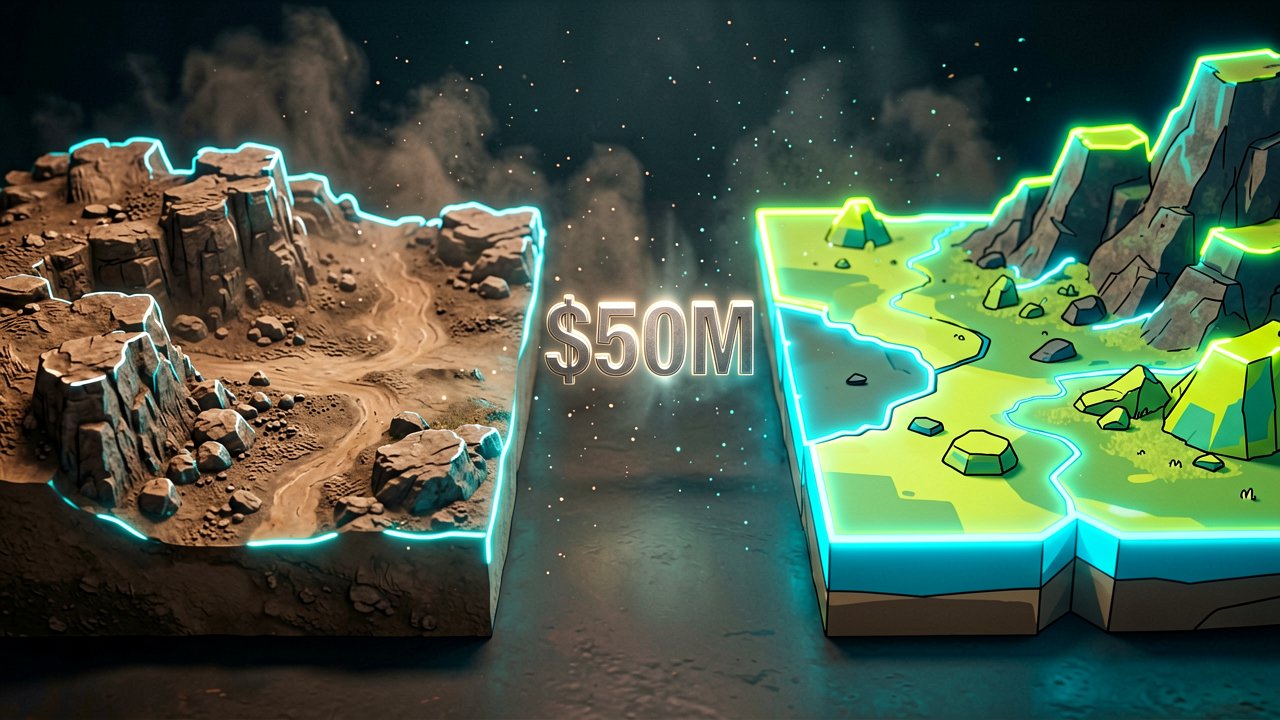
Before it became the neon-soaked, loot-obsessed juggernaut we know today, the original Borderlands was staring down a very different, and likely much duller, fate. Speaking in a recent interview, Take-Two CEO Strauss Zelnick dropped a bombshell about the franchise's origin story, revealing that the decision to ditch its realistic graphics for a cel-shaded look at the eleventh hour cost the company a staggering $50 million. It wasn't just a simple texture swap; the pivot required an entire extra year of development just as the game was supposed to be wrapping up. According to Zelnick, without that massive financial injection and the courage to start over, the franchise wouldn't have been a hit—it likely would have flopped.
The gaming landscape of the late 2000s was a sea of "brown and grey" shooters, and Borderlands was initially on track to be just another generic face in the crowd. As reported by PC Gamer, Zelnick recalled a moment just two months before the planned release when a Gearbox executive walked into his office with a terrifying admission: the game’s art style simply wasn't right. It lacked the visual "hook" necessary to stand out. At a time when Take-Two was still finding its footing and capital was scarce, approving a $50 million redo was anything but a safe bet.
High Stakes and "CEO Math"
While the $50 million figure sounds astronomical—especially considering Gearbox later estimated the entire development of Borderlands 2 at roughly $35 million—it likely encompasses more than just artist salaries. Industry watchers at IGN and GamesRadar suggest the cost includes the massive marketing overhaul, the overhead of keeping a full studio running for an unplanned year, and the lost opportunity cost of delaying a major release. Zelnick himself claims that "no one else in the business" would have made the choice to spend that much to fix a game that was essentially finished, but his trust in the developers ultimately birthed an iconic aesthetic that has defined the series for nearly two decades.
The High-Stakes Gamble: To understand why a $50 million pivot was so radical, one has to look at the climate of the industry in 2008. Gearbox Software was primarily known for Brothers in Arms, a series rooted in gritty, historical realism. When they first showed Borderlands to the press, it looked like a sci-fi extension of that same DNA—muted tones, realistic lighting, and a visual palette that felt indistinguishable from Fallout 3 or Rage. The decision to scrap that progress wasn't just a technical hurdle; it was a psychological one that risked the studio's reputation and its relationship with a then-struggling Take-Two.
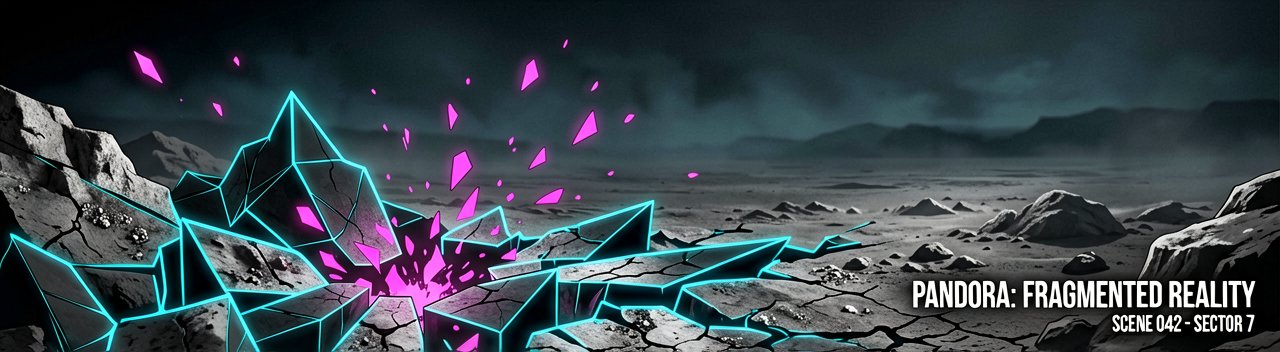
The internal tension at Gearbox during this transition was palpable. Legend has it that the "Concept Artist" style—later dubbed "Comic-Style" or "Ink-Shaded"—was discovered almost by accident when an artist applied heavy outlines to a character model. When the team saw how the bold, black lines made the alien landscape of Pandora pop, the momentum shifted instantly. However, this meant re-rendering every asset, from the smallest piece of loot to the sprawling desert vistas. It was a race against a clock that had already run out, requiring a level of crunch and creative conviction that few modern studios could survive without significant fallout.
From Zelnick’s perspective, this was a moment of "creative bravery" that defied the spreadsheets. As a CEO, he was looking at a game that was technically "done" but artistically "dead." The $50 million investment was effectively a bet on soul over status quo. By authorizing the delay, he wasn't just paying for new art; he was paying for a brand identity. If Borderlands had launched in its realistic form, it likely would have been buried under the hype of Modern Warfare 2. Instead, the vibrant, edgy aesthetic created a "visual shorthand" that told players exactly what to expect: chaos, humor, and stylized violence.
The ripple effects of this decision changed how publishers view "stylized" games today. Before the success of Borderlands, there was a prevailing myth in AAA development that realistic graphics were a mandatory requirement for commercial success. Zelnick’s willingness to eat the $50 million cost proved that a unique visual hook can be a more valuable asset than raw graphical fidelity. This pivot didn't just save a game; it established a template for the "Looter Shooter" genre, proving that if you want a player to spend 100 hours in your world, that world needs to look like nothing else on the market.
While some skeptics suggest the $50 million figure might be slightly inflated by "executive memory," the long-term ROI is undeniable. The franchise has since moved over 80 million units, generating billions in revenue. When viewed through that lens, the massive upfront cost to fix the art style wasn't just an expensive mistake—it was perhaps the most profitable "course correction" in the history of interactive entertainment. It remains a case study in why the most important tool in a publisher's arsenal isn't a bigger budget, but the gut instinct to know when a project lacks a pulse.

A Legacy of Aesthetic Risk
The success of the Borderlands overhaul paved the way for subsequent titles to lean even harder into the "playable cartoon" vibe. We see this influence today in everything from Fortnite to Hi-Fi Rush, where art direction is used as a primary marketing tool. By choosing to be different rather than "better" in a traditional sense, Gearbox and Take-Two secured a spot in gaming history that a generic, realistic shooter never could have occupied. It serves as a reminder that in an industry obsessed with the next technological leap, sometimes the best move is to step back and pick up a digital ink pen.
The Cost of Revisionism: While Zelnick’s $50 million figure makes for a gripping headline, a seasoned analyst has to wonder how much of that "cost" is literal cash burn versus a retrospective accounting of missed opportunities. In the world of corporate earnings calls, attributing a massive sum to a "creative pivot" can often serve as a convenient umbrella for broader development inefficiencies or the simple reality that the game wasn't fun in its original state. The claim that the game would have certainly flopped without the cel-shaded facelift is a classic bit of narrative-building; it frames an expensive management gamble as an act of visionary genius rather than a desperate attempt to rescue a project that was failing its focus tests.
There is also a glaring contradiction in the timeline often cited by the parties involved. Gearbox has historically downplayed the "last-minute" nature of the change, with former lead artists suggesting the transition happened closer to mid-development rather than the "two months before release" window Zelnick recently described. If the pivot happened as late as the CEO suggests, the technical debt incurred by swapping an entire rendering pipeline would have likely broken the game's engine beyond repair. This discrepancy suggests that the $50 million might be a "blended" figure, incorporating the marketing spend required to re-educate the public on what Borderlands actually was after its initial, realistic reveal at Gamescom years prior.
Furthermore, the long-term implications for Take-Two’s internal culture are worth scrutinizing. By lionizing a $50 million course correction, the company inadvertently signaled to its other studios that "finding the fun" can happen at any price point, provided the results are spectacular. This mindset is a double-edged sword; it fosters creative excellence, but it also creates a financial environment where projects like Grand Theft Auto VI or BioShock 4 can balloon into decade-long development cycles with budgets that dwarf some small nations' GDPs. It sets a precedent where perfectionism isn't just encouraged—it's subsidized at an unsustainable scale.
Even the aesthetic itself—the "cel-shaded" look—is often misunderstood as a performance-saving measure, when in reality, the heavy black outlines and hand-drawn textures were notoriously demanding on the hardware of the era. The irony is that the style which saved the game commercially actually made it a much harder project to optimize for the Xbox 360 and PlayStation 3. Zelnick’s narrative glosses over the technical nightmare this shift must have been for the rank-and-file developers, focusing instead on the bravery of the executive suite in writing the check. It’s a reminder that in the AAA space, "artistic vision" is often just the polite term for an expensive, high-velocity collision between creative chaos and corporate capital.
Ultimately, the Borderlands pivot remains an outlier in an industry that is increasingly risk-averse. Today, most publishers would rather cancel a project and take the tax write-off than invest another $50 million into a fundamental aesthetic overhaul of a finished product. Zelnick’s anecdote is a relic of a time when the gap between a "hit" and a "miss" was measured in style rather than live-service retention metrics. Whether this brand of expensive intuition can survive in an era of data-driven development remains the industry’s most expensive mystery, especially as the costs of failure continue to climb toward the billion-dollar mark.
The ROI of Identity
The true takeaway from the Borderlands saga isn't that money buys quality, but that money buys the time required to develop a personality. In a market saturated with "hyper-realistic" assets that age poorly within three years, the $50 million spent on Pandora’s cartoonish grime bought the franchise a decade of visual relevance. It was a calculated trade: short-term fiscal pain for long-term brand equity. While the spreadsheets may have bled in 2009, the resulting aesthetic turned Borderlands into a rare piece of IP that is instantly recognizable from a single screenshot, a feat that no amount of realistic "brown and grey" textures could ever achieve.
"It turns out that in the high-stakes world of interactive entertainment, the difference between a forgotten relic and a billion-dollar franchise is often just fifty million dollars and the willingness to admit your game looks like a wet cardboard box."
Artūras Malašauskas is an AI Systems Integrator with 20+ years of production-grade web engineering experience. He has designed, shipped, and scaled enterprise Python/PHP systems for logistics, SaaS, and public-sector clients. For the past year, he has focused exclusively on AI integrations: deploying open-source LLMs, building generative media pipelines (image, audio, video), and engineering multi-agent workflows for real production environments. His standard: reproducibility, security, cost-efficient inference—no vaporware. He documents and evaluates emerging AI tooling, separating verified capabilities from marketing noise. Technical editor at: muza-ai.eu, ai-verslas.lt, ai-naujinos.lt Connect on LinkedIn
Comments