Play, Not Prey: The Ethical Games Initiative Unveils a New Moral Compass for the Industry

For years, the video game industry has operated like the Wild West—massive, lawless, and occasionally prone to shooting itself in the foot. But today, the dust is starting to settle as the Ethical Games group officially pulled the curtain back on a comprehensive proposed code of ethics. This isn't just another dry corporate manifesto; it’s a research-backed framework designed to tackle everything from the soul-crushing "crunch" culture in studios to the predatory "dark patterns" that make microtransactions feel less like fun and more like a shakedown. According to the latest reports from GamesBeat, the code is intended to serve as a voluntary North Star for developers, publishers, and even influencers who want to prove they give a damn about more than just their quarterly earnings.
The initiative, led by heavy hitters like UX strategist Celia Hodent and academic researchers, doesn’t pull any punches. It draws a hard line under social harm, demanding that players be able to enjoy their digital worlds without being bombarded by harassment or toxic ideologies. It’s a tall order in an era of "GamerGate 2.0," but the group argues that proactive design—rather than reactive ban-hammers—is the only way forward. By grounding their principles in cognitive science and social psychology, as detailed on the Ethical Games official site, they’re trying to move the conversation from "moral panic" to evidence-based safeguards that actually protect vulnerable players.
Cleaning Up the Workshop
While player safety usually grabs the headlines, this code of ethics looks inward at the people actually making the magic happen. It specifically addresses the professional risk faced by marginalized employees and calls for studio leadership to "role model" responsible work habits. We’ve all heard the horror stories of abusive managers and unsustainable development cycles that burn out the industry’s best talent before they hit thirty. The proposed standards suggest a radical shift: managers found to be abusive should face immediate removal, and studios should prioritize the mental health and professional growth of their staff as a core business metric. It’s an ambitious attempt to codify decency in a sector where "passion" has too often been used as an excuse for exploitation.
Transparency in the Pocketbook
Money is where things usually get murky, and the Ethical Games group isn't afraid to get its hands dirty. The code suggests that games should clearly communicate exactly how much a player has spent on microtransactions directly from the home screen—no more hiding the "whale" spend behind layers of obfuscated menus. It also takes aim at "pay-to-remove-friction" mechanics and the psychological manipulation of FOMO (Fear Of Missing Out), which can be particularly damaging to younger audiences. As noted in recent workshops hosted at the GDC Vault, the goal is to create a business case for ethics, proving that long-term player trust is actually more profitable than a short-term cash grab built on trickery.
The Hidden Architecture of Accountability
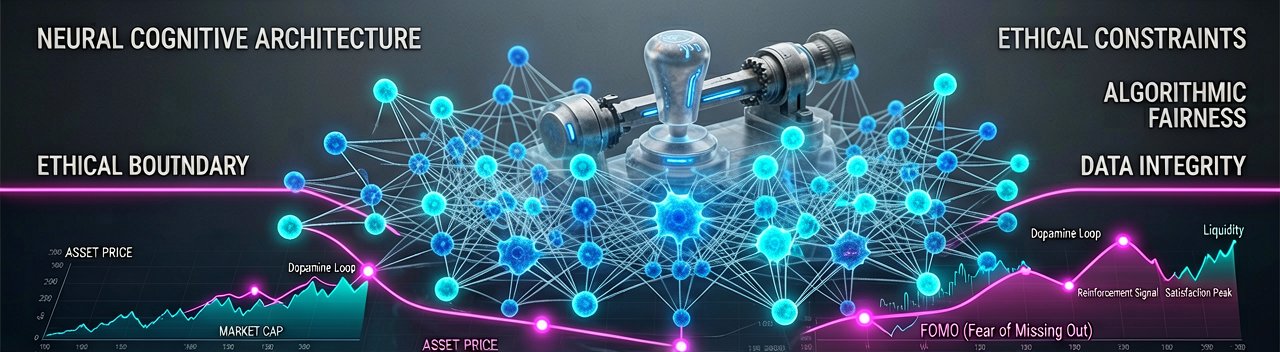
Beyond the Press Release: The real genius of the Ethical Games code isn't just that it tells people to be "good," but that it defines the specific cognitive levers used to exploit players. While most mainstream coverage fixates on the broad strokes of "toxic behavior," seasoned industry observers know the devil is in the dopamine loops. The framework identifies how specific game mechanics can bypass rational decision-making, effectively moving the needle from leisure to compulsion. By bridging the gap between clinical psychology and game design, the group is forcing a conversation about the "invisible" harms that regulators have struggled to articulate for years.
Stakeholders across the board are watching this closely, but the reaction is understandably mixed. On one side, indie developers and mid-sized studios often lack the legal or HR infrastructure to draft these kinds of policies from scratch, making a pre-made "moral template" a massive asset. On the other side, the industry’s giants—the Goliaths with billion-dollar live-service titles—face a much harder sell. For these entities, adopting the code could mean a fundamental restructuring of their monetization engines. It’s one thing to sign a pledge; it’s quite another to tell shareholders that you’re disabling the psychological triggers that have historically driven record-breaking microtransaction revenue.
Historical context tells us that self-regulation in this industry is usually a defensive maneuver to ward off government intervention. We saw this in the early 90s with the creation of the ESRB following the Mortal Kombat hearings, and we see it now as European nations begin to crack down on loot boxes and "dark patterns." The Ethical Games initiative represents a proactive attempt to let the industry set its own high-water mark before politicians—who often lack a nuanced understanding of the medium—do it for them. It’s a race against time to prove that the gaming world can police itself effectively.
What sets this particular proposal apart is its insistence on the "human cost" of development. For decades, the "crunch" was seen as a badge of honor or an inevitable byproduct of creative genius. This code reframes it as a systemic ethical failure. By linking the quality of the work environment to the ethics of the final product, the group argues that a game made under duress is inherently flawed. This holistic view challenges the "art at any cost" mentality that has plagued AAA development since the dawn of the 3D era, suggesting that sustainable creation is the only way to ensure the industry's longevity.

Transparency also takes center stage in a way that will likely make many marketing departments sweat. The proposal calls for clear disclosure of data-sharing practices and the use of AI in player monitoring. In an age where games are increasingly becoming data-mining platforms disguised as entertainment, this push for clarity is vital. It’s about returning agency to the player and ensuring that the "magic circle" of play isn't secretly a one-way mirror for corporate surveillance. The push for ethical AI specifically addresses concerns about automated moderation systems that can sometimes do more harm than good through biased algorithms.
Ultimately, the success of this code will depend entirely on adoption and enforcement. Without a centralized body to verify compliance, it risks becoming another set of "empty promises" that companies use for positive PR while changing nothing behind the scenes. However, the involvement of academic researchers and respected UX veterans provides a level of intellectual rigor that previous industry-led initiatives lacked. This isn't just a list of suggestions; it's a technical manual for a more sustainable, more humane future for digital play, provided the industry has the courage to follow it.
The Friction Between Virtue and Value
Reading Between the Lines: There is a glaring paradox at the heart of any voluntary code of ethics in a capitalist framework: the better the code works for the player, the worse it often works for the bottom line. The Ethical Games group is essentially asking corporations to voluntarily dismantle the very "engagement" hooks that have made gaming the most profitable entertainment sector on the planet. While the proposal is intellectually sound, it ignores the brutal reality of fiduciary duty. A CEO who chooses to disable a high-performing—but psychologically manipulative—loot box system may be heralded as a moral hero by the Ethical Games group, but they could just as easily be shown the door by a board of directors demanding "growth at all costs."
Furthermore, the reliance on "proactive design" over "reactive bans" sounds noble in theory, but it underestimates the sheer velocity of internet toxicity. By suggesting that developers can design their way out of human malice, the initiative might be placing an unfair burden on the creators themselves. There is a risk that "ethical design" becomes a convenient scapegoat for platforms to avoid the expensive, messy work of human-led moderation. If a system fails to prevent harassment, the code suggests it’s a design flaw, yet even the most thoughtfully architected digital space can be weaponized by a sufficiently motivated bad actor. Skepticism is warranted regarding whether any framework can truly "engineer" out the darker impulses of a global, anonymous user base.
The implications for the indie scene are equally complicated. While the code provides a much-needed roadmap for small teams, the "transparency" requirements could unintentionally create a high barrier to entry. A three-person studio operating on a shoestring budget likely doesn’t have the resources to conduct the rigorous cognitive impact assessments or the detailed data-privacy audits the code implies. We could see a future where "Ethical Gaming" becomes a luxury brand—a certification that only wealthy, established studios can afford to maintain, while smaller developers are left to operate in a moral gray zone simply because they lack the administrative overhead to prove their virtue.
There is also the matter of international fragmentation. Ethical standards are rarely universal, and what a researcher in Paris or San Francisco deems a "dark pattern" might be seen as standard operating procedure in the massive mobile markets of East Asia. If the Ethical Games code remains a Western-centric project, it risks becoming an echo chamber of ideals that fails to influence the global giants who actually control the majority of the market's cash flow. Without a way to reconcile these cultural differences in how "fun" and "fairness" are defined, the initiative may find itself preaching to a choir that was already converted long ago.
Ultimately, the most significant test will be whether this code remains a living document or a digital paperweight. The industry has a long history of adopting flashy ethics committees during times of public scrutiny, only to let those committees quietly expire once the headlines fade. For this to work, it needs more than just academic rigor; it needs a mechanism for public shaming or, better yet, a way for players to vote with their wallets. Until we see a "Made Ethically" sticker on a digital storefront actually driving sales over the latest unethically-produced blockbuster, the document remains a beautifully written wish list rather than a transformative force.
Designing a game that is both financially lucrative and ethically irreproachable is a bit like trying to host a wild bachelor party in a public library; eventually, someone is going to have to decide whether they’re there to make a noise or keep the peace.
Artūras Malašauskas is an AI Systems Integrator with 20+ years of production-grade web engineering experience. He has designed, shipped, and scaled enterprise Python/PHP systems for logistics, SaaS, and public-sector clients. For the past year, he has focused exclusively on AI integrations: deploying open-source LLMs, building generative media pipelines (image, audio, video), and engineering multi-agent workflows for real production environments. His standard: reproducibility, security, cost-efficient inference—no vaporware. He documents and evaluates emerging AI tooling, separating verified capabilities from marketing noise. Technical editor at: muza-ai.eu, ai-verslas.lt, ai-naujinos.lt Connect on LinkedIn
Comments