A New Blueprint for Humanity: Inside Seed’s Planet-Scale Ambition

There’s a specific kind of hubris usually reserved for sci-fi authors and tech billionaires, but the Berlin-based studio Klang Games is making a serious run for it. They aren’t just building a game; they’re building Avesta, a persistent, shardless planet designed to host an entire digital civilization. Unlike the static loops of modern MMOs, Seed is an always-on society simulator where your characters—known as Seedlings—don’t just vanish when you log off. They keep living, working, and making arguably questionable social choices while you’re busy with your actual life. It’s an ambitious gamble that trades traditional direct control for a "managerial" relationship, more akin to The Sims on a global, political scale than your typical sword-and-board fantasy.
The technical backbone here is what makes the industry sit up and take notice. By leveraging Google Cloud’s infrastructure and specialized AI models, Klang Games is attempting to simulate hundreds of thousands of autonomous Seedlings that remember their interactions and learn from their environments. It’s a massive step away from scripted NPCs toward something more emergent. You might set your Seedling to run a bakery, but if the local player-run government hikes the grain tax, you’ll find your digital avatar struggling to make ends meet by the time you check back in on the companion app. This level of persistent cause-and-effect creates a living economy where player-led businesses and laws are the primary drivers of gameplay.
The EVE Online DNA
It’s no accident that Seed feels like a more approachable cousin to EVE Online. With former CCP Games veterans at the helm, the project carries that familiar obsession with player-driven markets and political intrigue. However, Seed softens the blow of "spreadsheets in space" by wrapping its complexity in a low-poly, vibrant aesthetic that feels remarkably human. According to reports from GamesIndustry.biz, the goal is to see if tens of thousands of players can actually coexist without descending into immediate anarchy—or at least, to see what kind of fascinating laws they’ll invent to try and prevent it.
Life in the Shardless Wilds
In most multiplayer games, "servers" act as separate islands. In Seed, every player exists on the same version of Avesta. This "single-shard" approach means your colony’s success or failure has real, ripple effects across the entire planet’s ecosystem. If a group of players decides to hoard a specific resource or tank a currency, everyone feels the pinch. It’s a bold experiment in digital sociology that moves the focus from individual mastery to collective survival. Whether we end up with a utopia or a cautionary tale remains to be seen, but the sheer scale of the attempt is enough to make any simulation fan pay attention.
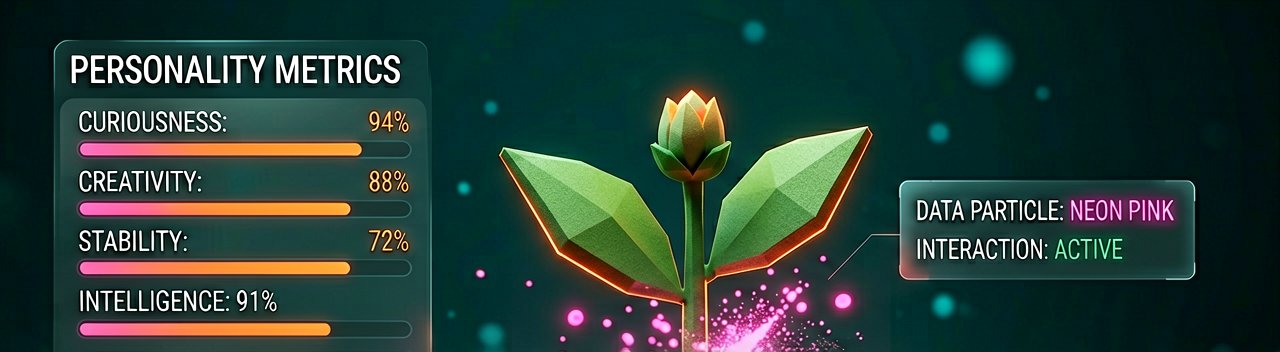
There’s a specific kind of hubris usually reserved for sci-fi authors and tech billionaires, but the Berlin-based studio Klang Games is making a serious run for it. They aren’t just building a game; they’re building Avesta, a persistent, shardless planet designed to host an entire digital civilization. Unlike the static loops of modern MMOs, Seed is an always-on society simulator where your characters—known as Seedlings—don’t just vanish when you log off. They keep living, working, and making arguably questionable social choices while you’re busy with your actual life. It’s an ambitious gamble that trades traditional direct control for a "managerial" relationship, more akin to The Sims on a global, political scale than your typical sword-and-board fantasy.
The technical backbone here is what makes the industry sit up and take notice. By leveraging Google Cloud’s infrastructure and specialized AI models, Klang Games is attempting to simulate hundreds of thousands of autonomous Seedlings that remember their interactions and learn from their environments. It’s a massive step away from scripted NPCs toward something more emergent. You might set your Seedling to run a bakery, but if the local player-run government hikes the grain tax, you’ll find your digital avatar struggling to make ends meet by the time you check back in on the companion app. This level of persistent cause-and-effect creates a living economy where player-led businesses and laws are the primary drivers of gameplay.
The EVE Online DNA
It’s no accident that Seed feels like a more approachable cousin to EVE Online. With former CCP Games veterans at the helm, the project carries that familiar obsession with player-driven markets and political intrigue. However, Seed softens the blow of "spreadsheets in space" by wrapping its complexity in a low-poly, vibrant aesthetic that feels remarkably human. According to reports from GamesIndustry.biz, the goal is to see if tens of thousands of players can actually coexist without descending into immediate anarchy—or at least, to see what kind of fascinating laws they’ll invent to try and prevent it.
Life in the Shardless Wilds
In most multiplayer games, "servers" act as separate islands. In Seed, every player exists on the same version of Avesta. This "single-shard" approach means your colony’s success or failure has real, ripple effects across the entire planet’s ecosystem. If a group of players decides to hoard a specific resource or tank a currency, everyone feels the pinch. It’s a bold experiment in digital sociology that moves the focus from individual mastery to collective survival. Whether we end up with a utopia or a cautionary tale remains to be seen, but the sheer scale of the attempt is enough to make any simulation fan pay attention.

Behind the Scenes: The Fragile Math of Digital Autonomy
What Most Reports Miss: While the marketing focus remains on the "collaborative" nature of Avesta, the true challenge lies in the terrifying reality of a single-shard economy. In a world where every item is player-crafted and every currency is player-managed, the specter of hyperinflation isn't just a theoretical risk—it's an inevitable hurdle. Traditional MMOs solve this with "gold sinks" like NPC vendors or repair costs, but Seed leans into the friction. If a player-led central bank prints too much currency to fund a massive infrastructure project, the value of every Seedling’s hard-earned savings could plummet overnight, forcing players to navigate real-time fiscal crises.
This volatility is compounded by the threat of resource monopolies. On a shardless planet, a single well-organized "Cultivator" group could realistically seize control of the only viable iron mines or fertile valleys. Unlike scripted games where resources respawn on a timer regardless of ownership, Seed's persistence means physical control is absolute. Veteran developers from the project have hinted that the counter-balance isn't a developer reset, but the Seedlings themselves. These AI-driven inhabitants have their own needs and thresholds for "happiness," and a monopoly that starves the population might trigger a mass exodus or a systemic revolt that the players can't simply click away.
The role of generative AI here acts as a "chaos monkey" for economic stability. Because Seedlings possess unique personalities and memories, they don't behave like predictable market bots. They might form brand loyalties, refuse to work for "tyrannical" player-governments, or hoard goods out of simulated fear. This adds a layer of psychological complexity that most economic simulators lack. Stakeholders at Klang Games are betting that this human-like unpredictability will prevent any single player from truly "solving" the game's economy, as the social cost of a monopoly might outweigh the financial gain.
Ultimately, the experiment hinges on whether players can build institutions robust enough to survive their own greed. In most virtual spaces, when the economy breaks, the developers step in to fix the numbers. In the wilds of Avesta, the "devs" are effectively hands-off, leaving the task of stabilizing a planet-wide market to the very people most likely to disrupt it. It’s a high-stakes social engineering project masked as a videogame, where the most valuable skill isn't fast reflexes, but the ability to negotiate a trade treaty that keeps the bread flowing and the lights on.
There’s a specific kind of hubris usually reserved for sci-fi authors and tech billionaires, but the Berlin-based studio Klang Games is making a serious run for it. They aren’t just building a game; they’re building Avesta, a persistent, shardless planet designed to host an entire digital civilization. Unlike the static loops of modern MMOs, Seed is an always-on society simulator where your characters—known as Seedlings—don’t just vanish when you log off. They keep living, working, and making arguably questionable social choices while you’re busy with your actual life. It’s an ambitious gamble that trades traditional direct control for a "managerial" relationship, more akin to The Sims on a global, political scale than your typical sword-and-board fantasy.
The technical backbone here is what makes the industry sit up and take notice. By leveraging Google Cloud’s infrastructure and specialized AI models, Klang Games is attempting to simulate hundreds of thousands of autonomous Seedlings that remember their interactions and learn from their environments. It’s a massive step away from scripted NPCs toward something more emergent. You might set your Seedling to run a bakery, but if the local player-run government hikes the grain tax, you’ll find your digital avatar struggling to make ends meet by the time you check back in on the companion app. This level of persistent cause-and-effect creates a living economy where player-led businesses and laws are the primary drivers of gameplay.
The EVE Online DNA
It’s no accident that Seed feels like a more approachable cousin to EVE Online. With former CCP Games veterans at the helm, the project carries that familiar obsession with player-driven markets and political intrigue. However, Seed softens the blow of "spreadsheets in space" by wrapping its complexity in a low-poly, vibrant aesthetic that feels remarkably human. According to reports from GamesIndustry.biz, the goal is to see if tens of thousands of players can actually coexist without descending into immediate anarchy—or at least, to see what kind of fascinating laws they’ll invent to try and prevent it.
Life in the Shardless Wilds
In most multiplayer games, "servers" act as separate islands. In Seed, every player exists on the same version of Avesta. This "single-shard" approach means your colony’s success or failure has real, ripple effects across the entire planet’s ecosystem. If a group of players decides to hoard a specific resource or tank a currency, everyone feels the pinch. It’s a bold experiment in digital sociology that moves the focus from individual mastery to collective survival. Whether we end up with a utopia or a cautionary tale remains to be seen, but the sheer scale of the attempt is enough to make any simulation fan pay attention.
Behind the Scenes: The Fragile Math of Digital Autonomy
What Most Reports Miss: While the marketing focus remains on the "collaborative" nature of Avesta, the total challenge lies in the terrifying reality of a single-shard economy. In a world where every item is player-crafted and every currency is player-managed, the specter of hyperinflation isn't just a theoretical risk—it's an inevitable hurdle. Traditional MMOs solve this with "gold sinks" like NPC vendors or repair costs, but Seed leans into the friction. If a player-led central bank prints too much currency to fund a massive infrastructure project, the value of every Seedling’s hard-earned savings could plummet overnight, forcing players to navigate real-time fiscal crises.
This volatility is compounded by the threat of resource monopolies. On a shardless planet, a single well-organized "Cultivator" group could realistically seize control of the only viable iron mines or fertile valleys. Unlike scripted games where resources respawn on a timer regardless of ownership, Seed's persistence means physical control is absolute. Veteran developers from the project have hinted that the counter-balance isn't a developer reset, but the Seedlings themselves. These AI-driven inhabitants have their own needs and thresholds for "happiness," and a monopoly that starves the population might trigger a mass exodus or a systemic revolt that the players can't simply click away.
The role of generative AI here acts as a "chaos monkey" for economic stability. Because Seedlings possess unique personalities and memories, they don't behave like predictable market bots. They might form brand loyalties, refuse to work for "tyrannical" player-governments, or hoard goods out of simulated fear. This adds a layer of psychological complexity that most economic simulators lack. Stakeholders at Klang Games are betting that this human-like unpredictability will prevent any single player from truly "solving" the game's economy, as the social cost of a monopoly might outweigh the financial gain.
Ultimately, the experiment hinges on whether players can build institutions robust enough to survive their own greed. In most virtual spaces, when the economy breaks, the developers step in to fix the numbers. In the wilds of Avesta, the "devs" are effectively hands-off, leaving the task of stabilizing a planet-wide market to the very people most likely to disrupt it. It’s a high-stakes social engineering project masked as a videogame, where the most valuable skill isn't fast reflexes, but the ability to negotiate a trade treaty that keeps the bread flowing and the lights on.
Reading Between the Lines: The Ghost in the Simulation
Reading Between the Lines: The industry’s fascination with "emergent gameplay" often ignores the reality that human behavior in digital spaces tends to gravitate toward the most efficient path of exploitation rather than the most noble path of cooperation. By removing the safety rails of traditional server sharding and scripted NPCs, Klang Games is essentially asking us to believe that a community can self-regulate better than a code-enforced ruleset. History suggests otherwise; in every shardless sandbox since the days of Ultima Online, the "societal" aspect has frequently been a polite euphemism for the dominance of the most aggressive 1% of the player base.
There is also a profound contradiction in the promise of Seedlings as autonomous agents. If these digital characters are smart enough to have opinions on labor conditions and tax brackets, they are also complex enough to become a source of immense player frustration. The gap between a player's strategic vision and an AI's "stubborn" refusal to execute it could alienate the very audience that enjoys simulation games for the sense of control they provide. We are moving away from the fantasy of being a god toward the bureaucracy of being a middle manager, which is a hard sell for anyone looking to escape their nine-to-five.
Furthermore, the reliance on high-level AI to drive the simulation introduces a "black box" problem. When a colony fails, will players be able to trace that failure back to a specific policy choice, or will they simply blame an opaque algorithm that decided their Seedlings were too depressed to harvest wheat today? Without absolute transparency in how these AI "moods" are calculated, the studio risks creating a world that feels arbitrary rather than organic. Persistence is a double-edged sword; it grants weight to your actions, but it also means that a single bad week of AI processing could leave a year’s worth of community building in permanent ruins.
Building a perfect digital society is easy; it’s the residents who keep ruining the neighborhood. If history is any guide, we’ll probably spend more time debating the legality of pixel-bread taxes than actually settling the stars, but at least the bureaucracy will be beautifully rendered.
Artūras Malašauskas is an AI Systems Integrator with 20+ years of production-grade web engineering experience. He has designed, shipped, and scaled enterprise Python/PHP systems for logistics, SaaS, and public-sector clients. For the past year, he has focused exclusively on AI integrations: deploying open-source LLMs, building generative media pipelines (image, audio, video), and engineering multi-agent workflows for real production environments. His standard: reproducibility, security, cost-efficient inference—no vaporware. He documents and evaluates emerging AI tooling, separating verified capabilities from marketing noise. Technical editor at: muza-ai.eu, ai-verslas.lt, ai-naujinos.lt Connect on LinkedIn
Comments