Beyond the Script: The AI Powerhouses Rewriting the Rules of Gaming in 2026
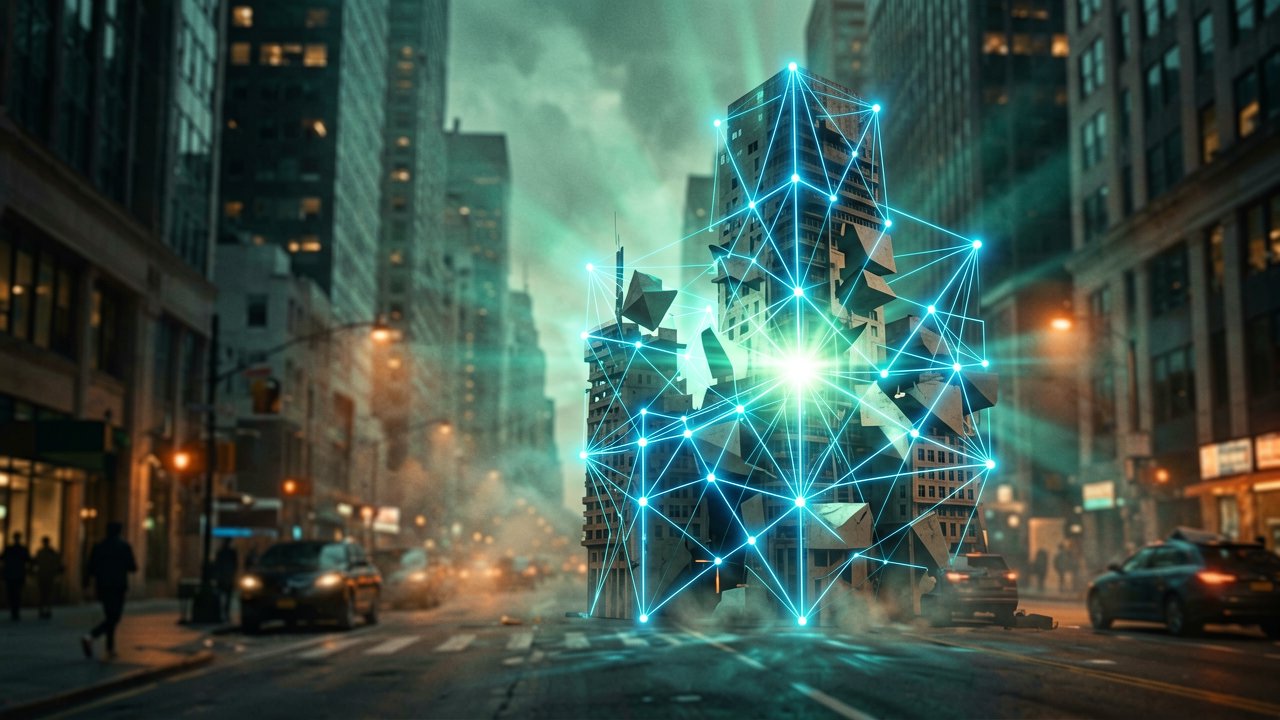
For decades, we’ve been chasing the "holistic" gaming experience—that mythical moment where a digital world finally stops feeling like a collection of triggers and starts feeling alive. In 2026, we’re not just chasing it anymore; we’re living it. The heavy hitters of the industry have pivoted from using AI as a mere optimization tool to making it the very heartbeat of the player experience. We’ve moved past simple upscaling and into the era of "agentic AI," where characters remember your insults and game worlds adapt to your specific brand of chaos in real-time.
Leading this charge isn’t just about having the biggest GPU anymore, though hardware certainly helps. It’s about who can bridge the gap between "generative" and "playable" without breaking the immersion. From silicon giants to legacy publishers, the race to own the "AI-first" console generation is officially in high gear, and the results are finally hitting our living rooms in ways that make the rigid NPCs of the past look like cardboard cutouts.
NVIDIA: The Silicon Architect of Neural Worlds
You can’t talk about gaming tech without starting at the House of Green. While some worried that NVIDIA was drifting too far into data center territory, their performance at NVIDIA Developer has proven they’re still obsessed with the player. Their DLSS 4.5 doesn't just fake frames anymore; it uses "neural rendering" to reconstruct entire scenes with path-traced accuracy that would have melted a rig just two years ago. More importantly, their ACE (Avatar Cloud Engine) has gone mobile, allowing developers to bake unscripted, voice-reactive NPCs directly into mid-range hardware. It’s a seismic shift that’s turning every NPC from a quest-marker with legs into a dynamic conversationalist.
Microsoft: The Rise of the Gaming Copilot
Redmond is playing a different game, focusing on the ecosystem rather than just the pixels. With the rollout of the "Gaming Copilot" across the Outlook Respawn reports, Microsoft has effectively given every Xbox player a personal strategist. This isn't just a voice-activated manual; it’s an AI that understands the game state. If you’re stuck on a boss in Diablo IV, the Copilot doesn't just give you a walkthrough—it analyzes your current gear and suggests a specific rotation to survive the next phase. It’s a "sidekick" philosophy that’s making high-skill gaming more accessible without stripping away the challenge.

Ubisoft: Mastering the Art of the "NEO" NPC
While others build tools, Ubisoft is building souls. Their "Project NEO NPC" has finally graduated from a tech demo to a core feature of their 2026 lineup. According to deep dives from Ubisoft News, the company is using generative AI to create "Teammates" that don't just follow you—they collaborate. These AI companions possess "contextual awareness," meaning they’ll comment on the specific way you botched a stealth mission or offer tactical advice based on the terrain you’re currently standing on. By blending narrative craft with machine learning, Ubisoft is ensuring that the "lonely" open-world game is a thing of the past.
The Hidden Architecture: How Algorithmic Sovereignty is Reshaping Dev Cycles
What Most Reports Miss: The real revolution isn't just happening on the player's screen; it’s happening in the brutal, often invisible grind of the development pipeline. For years, "crunch culture" was the industry’s open secret, a byproduct of the exponential demand for higher fidelity and larger maps. In 2026, the integration of generative AI into proprietary engines like Unreal Engine 6 and Unity’s specialized AI suites has fundamentally altered the math of game creation. We are seeing a shift from manual asset placement to "procedural curation," where developers act more like high-level directors than digital bricklayers, overseeing AI systems that can generate a forest’s worth of unique, interactable flora in the time it used to take to render a single tree.
This shift has sparked a fascinating, albeit tense, tug-of-war between studio bean counters and creative leads. From a stakeholder perspective, the efficiency gains are undeniable. Large-scale RPGs that once required seven-year dev cycles are now being prototyped in eighteen months. However, veteran level designers argue that "algorithmic drift" can lead to a loss of the "human touch"—those intentional, quirky design choices that lead to environmental storytelling. The challenge for 2026’s top companies has been training their models on internal, ethically sourced data to ensure that the AI mirrors the specific artistic DNA of the studio rather than outputting a generic, averaged version of the entire internet.
Historical context is vital here, as we’ve seen similar "extinction scares" before. When motion capture first arrived, purists claimed it would kill the art of hand-keyed animation; instead, it became a tool that elevated cinematic storytelling. Today, AI-driven animation rigging—where characters automatically adjust their gait based on uneven terrain or emotional states—is following that same trajectory. Companies like Electronic Arts have leaned into this, utilizing deep learning to simulate realistic muscle deformation and cloth physics on the fly. It’s no longer about pre-baked animations; it’s about a living system that reacts to the physics of the world, making the connection between the controller and the character feel more tactile than ever before.
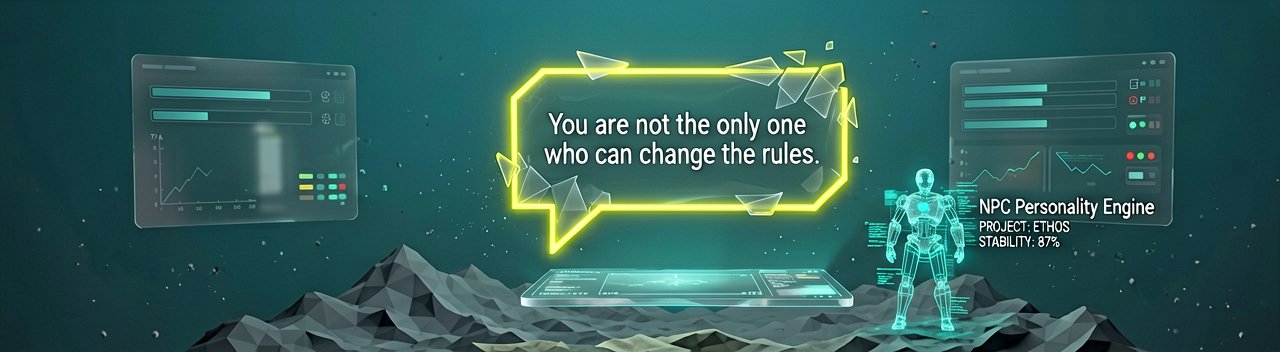
There is also the burgeoning "Agentic Middleware" market, a sector that barely existed five years ago but now commands billion-dollar valuations. Startups and established giants alike are licensing specialized "personality engines" that sit on top of the game code. These engines manage the long-term memory of NPCs, ensuring that if you burn down a village in the first act, the survivors you encounter in the third act carry that trauma in their dialogue and trade prices. This persistent state of being is the new benchmark for immersion, moving the industry away from the "reset button" mentality that has defined gaming since the 8-bit era.
Finally, we have to address the hardware parity gap. While cloud-based AI allows for massive compute power, the 2026 landscape is defined by "Edge AI"—sophisticated models running locally on consoles and high-end handhelds. This is where the competition gets fierce, as seen in The Verge's coverage of early digital human tech. By moving the processing to the local machine, developers have eliminated the latency issues that plagued early AI experiments. The result is a seamless loop of action and reaction that feels instantaneous, proving that the future of gaming isn't just in the cloud, but in the silicon sitting right under our televisions.
The Ghost in the Machine: Skepticism Amidst the Hype
Reading Between the Lines: We are currently being sold a vision of infinite variability, but the industry’s pivot to AI-driven depth might actually be a masked play for radical consolidation. While the marketing suggests "every player has a unique story," the underlying reality is that these experiences are still bounded by the weights and biases of the models they run on. There is a looming risk of "content homogeny," where games from vastly different genres start to feel strangely similar because they are all tapping into the same three or four dominant "personality engines." If every NPC in every open-world title is powered by the same foundational logic, the soul of distinct studio identities could be at stake.
Furthermore, the "democratization" of development through AI is a double-edged sword that most executives are hesitant to discuss openly. While it lowers the barrier to entry for indie creators, it also creates an arms race of sheer data volume. The massive publishers who own decades of proprietary motion-capture data and dialogue scripts have an insurmountable lead over newcomers who have to scrape the public commons. We might be heading toward a future where the "innovation" isn't in the game design itself, but in who owns the most exclusive training set, effectively turning creative competition into a legal battle over data sovereignty.
The technical "magic" of 2026 also comes with a hidden infrastructure cost that threatens the very accessibility AI is supposed to champion. Running local LLMs and neural rendering suites is an energy sink that taxes the thermal limits of even the most advanced hardware. There’s a glaring contradiction in a gaming culture that increasingly demands sustainability while simultaneously requiring every consumer to run a mini-datacenter in their living room to get a "realistic" conversation with a shopkeeper. The industry has yet to reconcile this thirst for complexity with the looming reality of energy costs and hardware longevity.
Finally, we have to talk about the "uncanny valley" of agency. When a game offers infinite choices, it often loses its narrative arc. A human-authored story has a point; a machine-generated sandbox often has a drift. There is a legitimate fear among narrative designers that we are trading emotional resonance for mechanical novelty. If a character can say anything, then nothing they say is specifically tailored by a writer to break your heart at a specific moment. The risk is that we end up with worlds that are ten miles wide but only an inch deep, filled with perfectly simulated people who have absolutely nothing meaningful to tell us.
The data from Bloomberg suggests that while investors are pouring billions into these tools, the players themselves remain wary of "AI-slop." The industry is betting that we won't notice the difference, or that the convenience will outweigh the art. But gaming has always been about the intentionality of the challenge, and if the AI is constantly "adjusting" the world to keep us engaged, we might eventually find ourselves playing a game that is essentially just a very expensive, high-fidelity version of a participation trophy.
In the end, we’re spending billions to teach machines how to simulate the chaotic spark of human creativity, largely so we can spend our weekends talking to robots because we’re too exhausted to talk to our actual neighbors.
Artūras Malašauskas is an AI Systems Integrator with 20+ years of production-grade web engineering experience. He has designed, shipped, and scaled enterprise Python/PHP systems for logistics, SaaS, and public-sector clients. For the past year, he has focused exclusively on AI integrations: deploying open-source LLMs, building generative media pipelines (image, audio, video), and engineering multi-agent workflows for real production environments. His standard: reproducibility, security, cost-efficient inference—no vaporware. He documents and evaluates emerging AI tooling, separating verified capabilities from marketing noise. Technical editor at: muza-ai.eu, ai-verslas.lt, ai-naujinos.lt Connect on LinkedIn
Comments