Cracking the Black Box: How Class-Association Manifold Learning is Humanizing Medical AI

For years, the "black box" problem has been the elephant in the room of clinical AI. We’ve had models capable of spotting malignancies with superhuman precision, yet they couldn't tell a doctor why they made a specific call. This interpretability gap isn’t just a technical hurdle; it’s a massive roadblock to clinical trust. If a surgeon can’t verify the logic behind a machine’s recommendation, they aren’t going to bet a patient’s life on it. But according to a groundbreaking study published in Nature Biomedical Engineering, a new framework called class-association manifold learning might finally be handing clinicians the "decoder ring" they’ve been waiting for.
Most traditional explainable AI (XAI) tools, like heatmaps or saliency maps, show you where a model is looking, but they rarely explain the underlying medical logic. It’s like a GPS highlighting a turn without explaining that the bridge ahead is out. Class-association manifold learning goes deeper by mapping high-dimensional data into low-dimensional "manifolds" that humans can actually visualize. By clustering these data points based on their association with specific clinical classes, the system doesn't just provide a vague "hunch"—it reveals the hidden global decision rules that the AI has quietly mastered. This allows doctors to explore the model's reasoning in a way that aligns with their own expert knowledge, transforming a mysterious algorithm into a transparent collaborator.
From Visualizing Pixels to Understanding Patterns
The beauty of this manifold-based approach lies in its ability to bridge the divide between raw data and diagnostic insight. Unlike post-hoc methods that often feel tacked on, this framework ensures that the model’s internal representations are intrinsically tied to medical concepts. As noted by researchers in the arXiv preprint repository , moving toward global interpretability is essential for moving AI out of the lab and into the ER. When the AI can show a pathologist how a specific cluster of cells relates to a broader "manifold" of known disease stages, it’s no longer just a calculator—it’s a digital second opinion that speaks the language of medicine.
Ultimately, the goal isn't just to make AI smarter, but to make it more accountable. By using class-association manifold learning, developers are building a future where AI alignment isn't just a buzzword, but a verifiable reality. It’s a shift from "trust me because I’m accurate" to "trust me because you can see my work." This shift is what will finally turn medical AI from a promising novelty into a standard of care that physicians can actually stand behind.
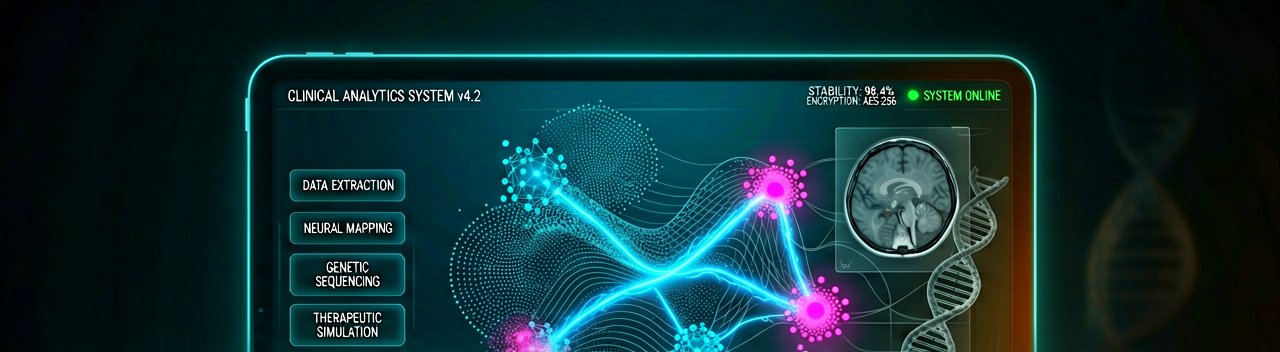
Next Step: Explore how multimodal data integration—combining MRI scans with genomic sequences—is currently being tested within these manifold frameworks to further refine diagnostic transparency.
Behind the Scenes: The High-Stakes Battle for Algorithmic Transparency
What Most Reports Miss: The pivot toward class-association manifold learning isn't just a win for mathematics; it’s a direct response to the "saliency map" crisis that has plagued medical imaging for years. For a long time, we relied on heatmaps to highlight pixels, but researchers eventually realized these maps were often showing the AI’s obsession with background noise—like a hospital’s specific watermarking or the angle of a patient’s bed—rather than actual pathology. This realization sent shockwaves through the industry, forcing developers to look for ways to extract deeper, conceptual patterns from the latent space of neural networks. Manifold learning provides that missing link by forcing the AI to organize its thoughts into structured, navigable landscapes.
From the perspective of a veteran radiologist, the current shift feels like moving from a cryptic oracle to a legible map. In traditional deep learning, the "features" the model learns are often abstract gibberish to a human. By leveraging class-association manifolds, we are essentially asking the model to sort its library so that similar medical conditions are shelved together. This allows a clinician to see not just the final diagnosis, but where that specific patient sits in relation to thousands of others. If a model flags a lung nodule, the manifold can show exactly how that nodule’s features "bend" the data toward a malignant cluster versus a benign one.
This approach also addresses a massive legal and ethical bottleneck. Regulators at the FDA and EMA have been increasingly vocal about the "right to explanation" in healthcare software. Stakeholders in hospital boardrooms are no longer satisfied with high AUROC scores if the liability trail is cold. By projecting high-dimensional medical data into these associative manifolds, developers are creating a "paper trail" of logic that can be audited. This is crucial for rare diseases where data is scarce; being able to see that a model is basing its decision on a legitimate clinical manifold rather than a statistical fluke provides the confidence needed to authorize treatment.
Historically, the tension between model performance and interpretability was seen as a zero-sum game—you could have a powerful "black box" or a simple, readable "glass box," but never both. Manifold learning breaks this dichotomy. It preserves the raw predictive power of complex architectures like Transformers or ResNets while adding a topographical layer of understanding. As highlighted by experts at Nature Biomedical Engineering, this structural transparency is what transforms a tool from a statistical curiosity into a robust clinical instrument.
The human element in this technological leap cannot be overstated. When we talk about "bridging the gap," we are talking about the psychological comfort of the user. A surgeon who understands the manifold geometry behind an AI's warning is more likely to act decisively in the operating room. This is the ultimate goal of the next generation of medical AI: to create a symbiotic relationship where the human provides the context and the machine provides the superhuman pattern recognition, both operating on a shared, visualizable map of clinical reality.
Next Step: Review the latest clinical trial outcomes where manifold-based AI was used in real-time surgical assistance to see if interpretability directly improved patient recovery rates.
Reading Between the Lines: The Mirage of Perfect Clarity
The Reality Check: While class-association manifold learning is being hailed as the panacea for AI’s transparency woes, we must be careful not to mistake a cleaner visualization for an objective truth. There is a seductive quality to a well-organized manifold; it looks logical, structured, and inherently "correct." However, the skepticism that seasoned tech journalists apply to any "silver bullet" solution must be doubled here. A manifold is still a projection—a compressed version of a model’s internal logic. If the underlying data is biased or the model has learned a "shortcut" that happens to cluster neatly on a map, we risk creating a more sophisticated way to be confidently wrong. We are essentially building a better dashboard for a car that might still have a fundamental engine flaw.
There is also the uncomfortable contradiction of "interpretability for whom." Developers often build these manifold visualizations with other engineers in mind, yet the end-user is a physician who likely hasn't touched a linear algebra textbook in a decade. If the manifold requires a PhD to navigate, the "gap" hasn't been bridged; it has just been moved to a different neighborhood. We see a recurring tension where the complexity required to make an AI accurate makes the explanation so dense that it becomes its own kind of black box. Simplification is necessary for clinical speed, but every time we flatten a high-dimensional manifold into something a human can view on a tablet, we are losing the nuance that made the AI powerful in the first place.
Furthermore, the legal implications of these "interpretable" maps remain a minefield. If a doctor follows a model’s logic—clearly visualized through a class-association manifold—and the outcome is catastrophic, where does the blame lie? If the logic was "transparent," the defense of "we didn't know how it worked" disappears, potentially exposing clinicians to higher standards of scrutiny. This creates a paradox where transparency might actually make practitioners more hesitant to use AI, fearing that their oversight of a visible (but ultimately flawed) manifold cluster will be viewed as professional negligence rather than a technical glitch.
Looking forward, the true test won't be whether we can draw pretty clusters, but whether these manifolds can survive the messiness of real-world biological variation. Biology is rarely as discrete as a manifold suggests. Patients don't always fit into "classes"; they exist on a messy, overlapping spectrum. As noted in the technical critiques within the arXiv repository regarding latent space representations, forcing clinical data into rigid associative structures might ignore the very outliers that medical experts are trained to spot. The industry’s rush toward visual transparency must be tempered with the realization that some medical mysteries are complex for a reason, and no amount of manifold "bending" will change that.
"We’ve spent decades worrying that AI would be too mysterious to trust, only to realize that once we finally see how the digital sausage is made, we might find ourselves wishing for the mystery back—especially if the 'logic' turns out to be three statistical shortcuts in a lab coat."
Next Step: Investigate the liability frameworks being drafted by medical malpractice insurers to handle cases where interpretable AI outputs directly influence surgical complications.
Artūras Malašauskas is an AI Systems Integrator with 20+ years of production-grade web engineering experience. He has designed, shipped, and scaled enterprise Python/PHP systems for logistics, SaaS, and public-sector clients. For the past year, he has focused exclusively on AI integrations: deploying open-source LLMs, building generative media pipelines (image, audio, video), and engineering multi-agent workflows for real production environments. His standard: reproducibility, security, cost-efficient inference—no vaporware. He documents and evaluates emerging AI tooling, separating verified capabilities from marketing noise. Technical editor at: muza-ai.eu, ai-verslas.lt, ai-naujinos.lt Connect on LinkedIn
Comments