The Visibility Trap: Squiz and the High-Stakes Game of AI Search Optimization
For years, the digital marketing mantra was simple: "rank or die." But in 2026, the goalposts haven't just moved; the entire stadium has been rebuilt. As generative AI transforms how we find information, the old obsession with the ten blue links on a Google result page is giving way to a new, more existential anxiety: "Are we even visible to the bots?" It’s a question Squiz is looking to answer with the launch of its new Content Intelligence tool, a strategic addition to its Digital Experience Platform (DXP) designed specifically to audit and optimize content for the AI search era.
The core problem, as Squiz sees it, is that most enterprise websites were built for human eyes and traditional search crawlers, not for large language models (LLMs) that synthesize information into direct answers. If an AI agent can't parse your data or finds it fragmented, it simply skips you, or worse, hallucinate an answer based on your competitors. According to recent insights from Squiz, visitors coming from AI platforms actually convert at three times the rate of traditional search, making "invisible" content a massive missed opportunity for revenue.
From Keywords to Questions: The New Content Audit
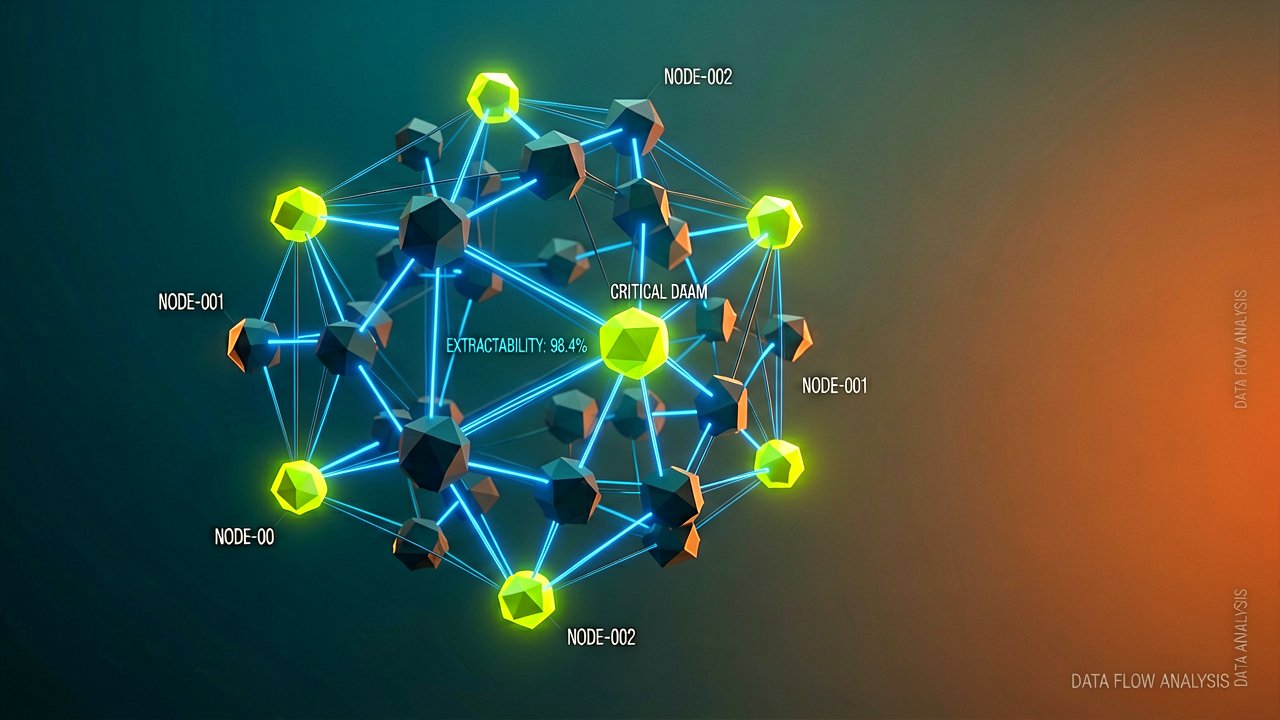
The standout feature of this new release is the AI Readiness Auditor. Think of it as a stress test for your content's "extractability." It doesn't just look for keywords; it scans your site and uses AI to simulate how different search models would answer common user questions based on your existing pages. It’s a clever bit of "fighting fire with fire," using generative AI to tell you exactly where your content is failing to provide the semantic completeness that systems like Perplexity or Gemini demand.
What I find particularly practical is how the tool prioritizes fixes. Most SEO tools dump a thousand "high-priority" errors in your lap and wish you luck. Squiz’s platform aims to identify "content gaps" where an organization is either misrepresented or totally missing from AI-generated summaries. It then provides step-by-step guidance on how to restructure that data—often moving away from buried PDFs and toward structured, bite-sized "answerable" segments that bots love to cite.

Building the "Answer Engine"
This launch isn't happening in a vacuum. It ties directly into Squiz Conversational Search, an earlier feature that allows organizations to host their own governed, AI-driven search experiences. By using a Retrieval-Augmented Generation (RAG) framework, Squiz ensures that the AI answers provided on a company's own site are drawn strictly from verified, internal sources rather than the wild west of the open web. It's about maintaining that elusive "single source of truth" in an era where misinformation is the default setting for many generic LLMs.
As we move deeper into 2026, the "AI Reckoning" is forcing brands to decide if they want to be part of the conversation or just a footnote. Tools like Squiz Content Intelligence aren't just about technical SEO anymore; they’re about brand survival. If you aren't visible to the engines that are increasingly making decisions for consumers, you effectively don't exist. It’s a bold move by Squiz to tackle the "invisible" problem head-on, turning what used to be a dark art of data science into an actionable editorial workflow.
Are you ready to see how your site stacks up in an AI-simulated audit, or should we look into how these "AI visibility scores" actually compare to traditional SEO metrics?
The Real Friction Point: While the press release paints a picture of seamless optimization, any veteran of the "CMS wars" knows that the real hurdle isn't the technology—it’s the legacy data debt sitting in your archives. For most enterprise-level organizations, content isn't just sitting in a clean DXP; it’s scattered across prehistoric PDFs, locked behind gated portals, or buried in unstructured blog posts from 2014. Squiz’s play here isn’t just about "visibility"; it’s a calculated bet that they can convince CIOs to finally clean up their digital attic in exchange for AI relevance.

Historically, SEO was a game of trickery—meta tags, backlink strategies, and keyword density. But AI search models function more like high-level researchers than simple indexers. A seasoned editor knows that an LLM values the "intent" of a paragraph over the presence of a specific phrase. The stakeholder perspective here is shifting; marketing teams are realizing that if their content is too fluffy or lacks authoritative data points, the AI simply won't "cite" them as a source. This creates a fascinating new power dynamic where the technical architecture of a site finally has to align perfectly with the editorial quality of the writing.
The "RAG" Revolution and Data Sovereignty
What most superficial reports miss is the massive risk of "data leakage" when training AI. Squiz is leaning heavily into the Retrieval-Augmented Generation (RAG) architecture because it offers a "safe harbor" for sensitive corporate info. By keeping the LLM’s focus on a curated index rather than allowing it to wander, they are addressing the primary fear of the C-suite: that their proprietary data will end up in the training set of a competitor’s model. This isn’t just a content tool; it’s a compliance shield dressed up in marketing clothing.
Furthermore, we are seeing the death of the "click-through." In the old world, success was measured by how many people landed on your page. In the AI search world, success might mean the user never visits your site at all—they get the answer directly from the AI agent. This "Zero-Click" reality is terrifying to many, but Squiz is positioning its tool to ensure that even if the user stays on the search page, the *answer* they receive is explicitly branded and sourced from your organization. It's a pivot from "traffic generation" to "authority management."
The long-term play for Squiz is to bridge the gap between the "headless" CMS crowd and the traditional "monolithic" DXP users. By offering these AI-readiness audits, they are providing a bridge for older enterprises to modernize without having to rebuild their entire tech stack from scratch. It’s a pragmatic approach to a very complex problem: how to make a twenty-year-old university website or a massive government portal understandable to a bot that was born six months ago.
Should we look at the specific technical requirements for a "RAG" setup, or are you more interested in how this shift might change your internal content production workflows?
The Paradox of Optimization: We are rapidly approaching a bizarre digital loop where AI-generated content is being audited by AI tools to ensure it is readable by AI search engines. It sounds efficient on paper, but for anyone who has watched the internet evolve, it smells like a recipe for a "homogenization crisis." If every enterprise uses the same Squiz-driven metrics to polish their content into bot-friendly "answerable segments," we risk a future where corporate communication loses its human soul entirely. We are optimizing for the machine's convenience at the potential expense of the reader's engagement.
There is also a glaring contradiction in the "Zero-Click" defense strategy. Squiz promises that their tool ensures your brand remains the "source of truth" in AI summaries, but this assumes the LLMs will play fair. History suggests otherwise. Just as Google began scraping snippets to keep users on its own results page, AI providers are incentivized to provide a seamless answer without bothering to send a single visitor your way. Investing heavily in "AI visibility" might just be a sophisticated way of paying to help train the very models that will eventually replace your traffic. It is a defensive play, certainly, but one that feels like building a better gate for a house the neighborhood has already decided to bypass.
The Ghost in the Machine: Accuracy vs. Authority
Furthermore, we need to talk about the "hallucination gap." Squiz’s RAG-based approach is designed to prevent AI from making things up, but it can only be as accurate as the source material it’s fed. If an organization has conflicting data across different departments—a common reality in the enterprise world—the AI Readiness Auditor might identify the content as "extractable," but it won't necessarily know which version is true. There is a dangerous temptation to trust the "Intelligence" in the tool's name more than the humans responsible for the actual facts. Automation of visibility does not equal automation of truth.
Then there is the question of the "small player." While Squiz targets the mid-to-large enterprise market, this level of AI-readiness requires a technical overhead that could further widen the gap between the digital "haves" and "have-nots." If the barrier to entry for search visibility now includes a specialized DXP and a fleet of auditing bots, we are effectively moving toward a "pay-to-play" information ecosystem. The open web was supposed to be a meritocracy of ideas; in the AI search era, it’s looking more like a meritocracy of infrastructure.
Ultimately, the Squiz Content Intelligence tool is a symptom of a broader shift in our relationship with information. We are no longer writing to be read; we are writing to be processed. While the ROI of being the "cited source" is currently high, the long-term sustainability of this model remains unproven. Organizations must ask themselves if they are building a lasting digital legacy or simply feeding a beast that has a notoriously short memory and an insatiable appetite for free data.
Would you like to dive into the cost-benefit analysis of these enterprise DXP upgrades, or should we examine how the "human-in-the-loop" editorial process can survive this level of automation?
In the end, we’re all just working unpaid internships for the bots, tidying up our data so they can tell our customers exactly what we meant to say, but with fewer adjectives and significantly less personality. It’s the ultimate irony of the information age: we’ve finally perfected the art of communication, just in time for no one to actually have to read it.
Artūras Malašauskas is an AI Systems Integrator with 20+ years of production-grade web engineering experience. He has designed, shipped, and scaled enterprise Python/PHP systems for logistics, SaaS, and public-sector clients. For the past year, he has focused exclusively on AI integrations: deploying open-source LLMs, building generative media pipelines (image, audio, video), and engineering multi-agent workflows for real production environments. His standard: reproducibility, security, cost-efficient inference—no vaporware. He documents and evaluates emerging AI tooling, separating verified capabilities from marketing noise. Technical editor at: muza-ai.eu, ai-verslas.lt, ai-naujinos.lt Connect on LinkedIn
Comments