The Quantum Great Wall: China’s Standards-First Innovation Blitz

For years, the narrative surrounding Chinese tech was one of mimicry—a "fast-follower" ecosystem that could scale existing ideas better than anyone else, but rarely birthed them. Those days are officially in the rearview mirror. As we move through 2026, the data confirms what's been visible on the ground: China has successfully pivoted from a manufacturing hub to a global innovation engine. According to the World Intellectual Property Organization, China broke into the global top 10 innovation rankings for the first time in late 2025, signaling a permanent seat at the high-stakes table of frontier technology.
The Powerhouse Under the Hood
If you want to see this surge in action, look no further than the asphalt. China’s dominance in the electric vehicle (EV) sector isn't just about volume; it’s about a relentless pursuit of "impossible" specs. In early 2026, researchers in Shanghai and Tianjin unveiled an all-weather electrolyte that could effectively double EV ranges to over 600 miles while operating in temperatures as low as -94°F, as reported by Interesting Engineering. It’s a breakthrough that solves the "cold-weather range anxiety" that has long plagued the industry in Northern Europe and North America.
The scale of this operation is staggering. Industry leaders like CATL aren't just suppliers; they’ve become "ingredient brands" as vital to the auto industry as Intel is to PCs. By the end of 2025, China's installed power battery capacity hit a massive 769.7 GWh, a 40% jump year-on-year, according to data cited by News18a. This isn't just local growth—it’s a global supply chain takeover. From BMW to Tesla, the world’s most iconic carmakers are increasingly reliant on Chinese "cell power" to fuel their own electric transitions.
Quantum Leaps and AI Ambitions
Beyond the physical world of batteries and assembly lines, China is carving out a massive lead in the ethereal realm of quantum computing. The "Hanyuan-2," a dual-core 200-qubit quantum computer unveiled in May 2026, represents a shift from laboratory curiosity to "real computing infrastructure," as highlighted by . While the U.S. remains a formidable rival, China’s ability to "marshal resources"—as noted by analysts in the State Council Information Office—allows it to pool quality resources into specific hubs like Hefei and Wuhan, accelerating the path to commercialization.

In the AI arena, the "leap" is equally pronounced. By the close of 2025, Chinese open-source models from firms like DeepSeek and Alibaba’s Qwen family were frequently topping global leaderboards. This isn't just about writing clever code; it’s about an integrated "intelligent economy." China’s core AI industry surpassed 1.2 trillion yuan in 2025, with authorities projecting that figure to hit 10 trillion by 2030, according to Xinhua. The goal is 90% penetration of AI agents across all sectors, making intelligent terminals a primary growth driver for the nation.
From Lab to Global Market
What makes this surge different this time around is its outward-facing nature. China is no longer content with being a closed-loop success story. The country has established sci-tech cooperation ties with over 160 countries, ensuring that "innovation results from Chinese laboratories are reaching the global market," as observed by experts at Xinhua. We’re seeing a transition from China being a "testing ground" to becoming the "global source" of innovation itself.
Ultimately, the "Made in China 2025" plan—once a controversial blueprint—has largely succeeded in its core mission. As U.S.-China Economic and Security Review Commission reports have noted, the country has built globally competitive capabilities across nearly all strategic tech sectors. For the rest of the world, the challenge is no longer about competing with China’s labor costs, but with its patents, its PhDs, and its increasingly sophisticated vision for the future.
What Most Reports Miss: The race for quantum supremacy isn't just about who builds the fastest computer; it's about who writes the rules of the invisible world. While headlines focus on qubit counts and cryogenic cooling, a far more quiet and consequential struggle is unfolding in the sterile boardrooms of international standards-setting bodies. China has realized that in the 21st century, geopolitical preeminence is often dictated by those who control the technical blueprints of emerging infrastructure.
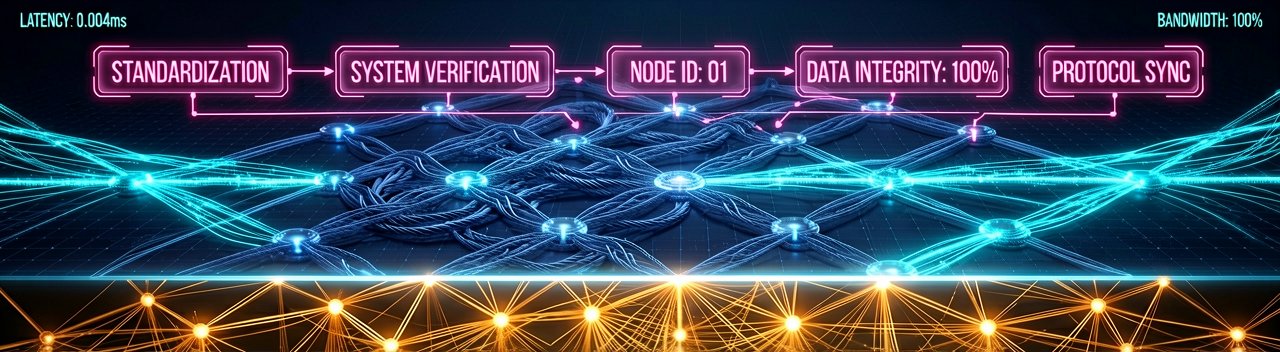
For decades, Western nations dominated organizations like the International Organization for Standardization (ISO) and the International Telecommunication Union (ITU). However, as noted by the DiploFoundation in May 2026, China has emerged as a formidable force in these arenas. By aggressively proposing standards for quantum key distribution (QKD) and post-quantum cryptography, Beijing is effectively attempting to "export" its domestic technological ecosystem into the global architecture of future security.
The Sovereignty of the "Unhackable" Network
At the heart of this strategy is the concept of technological self-reliance. Beijing’s massive $15 billion public investment—a figure highlighted by PatentPC as the highest government spend globally—has fueled the development of "unhackable" communication networks. These aren't just academic exercises; they are the bedrock of what Chinese officials call "Chinese wisdom" in tackling global security challenges. By setting the standards for how these networks operate, China ensures its homegrown hardware remains the "gold standard" for any nation looking to insulate itself from traditional electronic eavesdropping.
This push for standard-setting has triggered what some analysts call a "technological bifurcation." We are witnessing the early stages of a decoupled world: one ecosystem built on Western-led superconducting architectures and another following the Chinese lead in photonic and QKD-based systems. As Elias X. Huber observes in his recent analysis of the "China-Quantum" nexus, export controls and outbound investment restrictions are supercharging this localization effort, forcing Chinese innovators to invent around external constraints rather than simply adapting to them.
A Shift in the Geopolitical Balance
Historically, the U.S.-China relationship was defined by a massive flow of talent and "forced" technology transfers, as documented by Wikipedia's deep-dive into bilateral relations. But the tide has turned. Today, the asymmetry has flipped; while Western researchers often find themselves locked out of China's most sensitive quantum labs, Chinese breakthroughs like the "Micius" satellite and the "Jiuzhang 3" photonics computer—which reports can handle far more simultaneous computations than traditional superconducting models—are setting the pace for the global community.
The stakes couldn't be higher. If China succeeds in making its quantum protocols the global norm, it won't just be a win for their tech giants—it will be a fundamental shift in how power is projected. As the Quantum Economic Development Consortium points out, standards-setting is now a primary conduit for geopolitical preeminence. In this new era, the country that defines how the world encrypts its data and calculates its most complex problems isn't just a market leader; they are the architects of the new global order.
Reading Between the Lines: The prevailing narrative suggests a binary choice between China’s state-led "mega-projects" and the West’s "vibrant startup ecosystem," but this clean distinction is starting to fray at the edges. As we move deeper into 2026, the real story isn't just about who has more qubits or deeper pockets—it’s about a messy, high-stakes collision of two entirely different philosophies of innovation. While Beijing’s $15 billion war chest—a figure that dwarfs the U.S. government's $4 billion commitment according to PatentPC—buys a lot of laboratory floor space, it also risks creating an echo chamber where "success" is measured by meeting five-year plan quotas rather than surviving market pressures.
There is a growing skepticism among tech circles regarding the "industrialization" of Chinese quantum research. Reports from the U.S.-China Economic and Security Review Commission highlight a critical contradiction: despite massive state subsidies, China’s quantum progress remains heavily dependent on imported cryogenic and control components. The flashy breakthroughs often mask a fragile supply chain. Meanwhile, the "exit" of major Chinese hyper-scalers like Alibaba and Baidu from direct quantum hardware development suggests that even within China, the private sector is wary of the long, expensive road to commercialization that only the state seems willing to pave.
The West’s Pragmatic Pivot
In response, Western startups are undergoing a fundamental transformation. They aren't just "innovating"; they are "allying." We are seeing a surge in public-private partnerships designed to bridge the funding gap without surrendering the agility that state-run labs lack. In 2025 alone, private venture capital into quantum hit $4.9 billion, a staggering 192% increase year-over-year, as documented by Peony Ink. Startups like PsiQuantum and Quantinuum are securing "mega-rounds" that allow them to operate with a scale previously reserved for government agencies, effectively turning Silicon Valley into a decentralized Department of Quantum.
This "technological statecraft," as described by the International Institute for Strategic Studies, represents a new middle ground. Western firms are no longer competing in a vacuum; they are increasingly integrated into national security frameworks and allied supply networks. The assumption that "free markets" can't keep pace with "state capital" is being challenged by the realization that market-driven competition often produces more robust, error-corrected systems than top-down mandates. While China may lead in the sheer volume of patents, the China Daily itself admits that the U.S. and Japan still lead in total authorized patent portfolios, suggesting a "quality over quantity" gap that persists.
The ultimate implication is a fragmented future. We are likely heading toward a world of "quantum islands," where different regions operate on incompatible standards and hardware. The irony is that for all the talk of "global breakthroughs," the more advanced quantum technology becomes, the more localized and secretive it seems to get. The innovation surge is real, but it’s increasingly being funneled into digital fortresses. The race isn't just about reaching the finish line first; it's about making sure that when you get there, you're the only one who knows how to open the door.
"In the end, we might find that quantum supremacy is a bit like teenage dating: everyone is talking about it, nobody really knows how to do it yet, and those who claim to be experts are usually just getting the most funding from their parents—or in this case, their central governments."
Artūras Malašauskas is an AI Systems Integrator with 20+ years of production-grade web engineering experience. He has designed, shipped, and scaled enterprise Python/PHP systems for logistics, SaaS, and public-sector clients. For the past year, he has focused exclusively on AI integrations: deploying open-source LLMs, building generative media pipelines (image, audio, video), and engineering multi-agent workflows for real production environments. His standard: reproducibility, security, cost-efficient inference—no vaporware. He documents and evaluates emerging AI tooling, separating verified capabilities from marketing noise. Technical editor at: muza-ai.eu, ai-verslas.lt, ai-naujinos.lt Connect on LinkedIn
Comments