The Silicon Gamble: DeepMind’s High-Stakes Play for Asia’s Climate Future
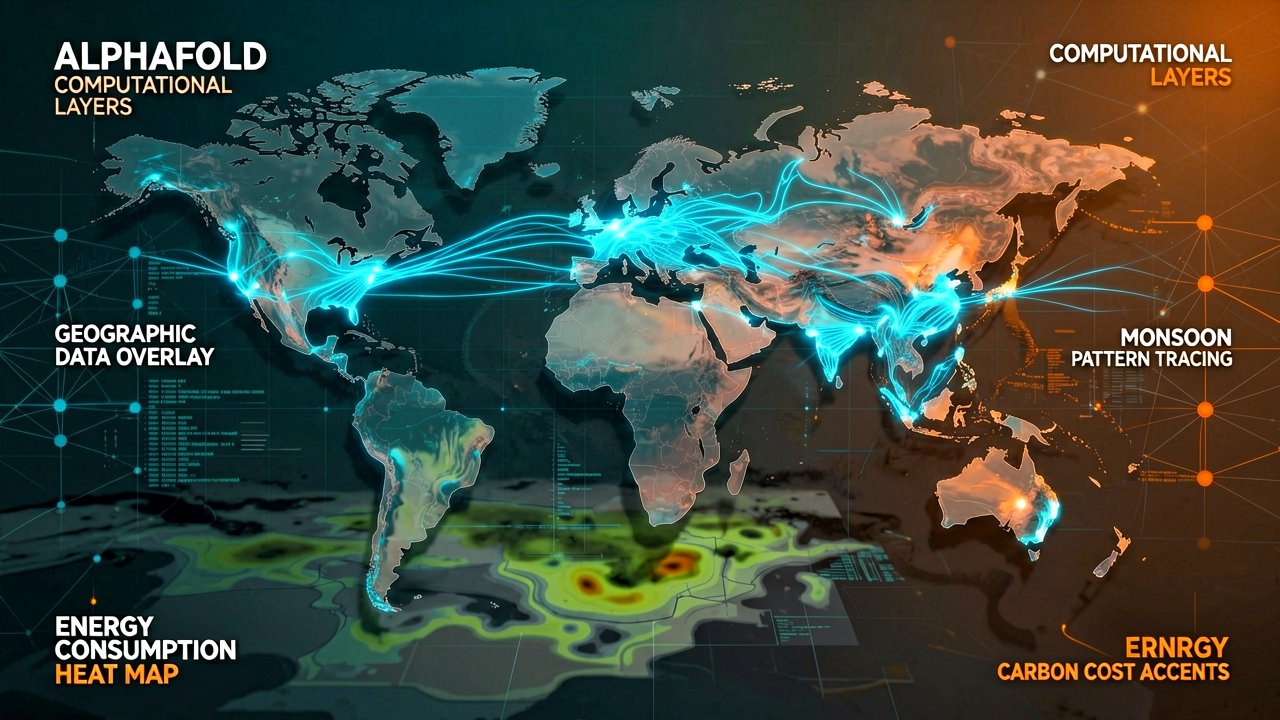
The era of "AI for the sake of AI" is officially over, and frankly, it’s about time. We’ve moved past the novelty of chatbots that can write mediocre poetry into a phase where the stakes are significantly higher—specifically, the survival of our planet. Google DeepMind is leaning hard into this shift with the launch of its inaugural APAC Accelerator focused on “AI for the Planet.” It’s a strategic pivot that acknowledges a sobering reality: while the Asia-Pacific region is a global engine for economic growth, it is also uniquely vulnerable to the escalating risks of climate change, from erratic monsoon patterns to rising sea levels.
From Research Papers to Real-World Impact
What makes this program noteworthy isn't just the "Google" brand name; it’s the DeepMind involvement. For years, DeepMind was the ivory tower of AI—producing world-class research like AlphaGo but often feeling a step removed from the messy, day-to-day grind of commercial application. This three-month accelerator, as reported by Google Blog, signals a desire to get those hands dirty. By opening the doors to startups, research teams, and nonprofits across the region, they aren't just looking for "cool" tech; they’re looking for deployable solutions in agriculture, energy, and conservation.
The logistics are what you’d expect from a tech giant: a hybrid model starting with an in-person bootcamp in Singapore. Participants get the usual perks—mentorship, technical support, and access to Google’s massive cloud infrastructure. But the real "secret sauce" is the promise of help integrating "frontier AI and science AI models" directly into their products. It’s an attempt to solve the "scaling gap" where promising green technologies exist but lack the computational muscle or data refinement to survive the jump from lab to market.
The Competitive Landscape of Climate Tech
Of course, DeepMind isn't operating in a vacuum. Industry watchers at TechBuzz AI note that competitors like Microsoft have been running "AI for Earth" initiatives for years. However, DeepMind’s specific edge lies in its research credibility. If you’re a startup trying to optimize a renewable energy grid, having the team that cracked protein folding (AlphaFold) looking over your shoulder is a decent competitive advantage.
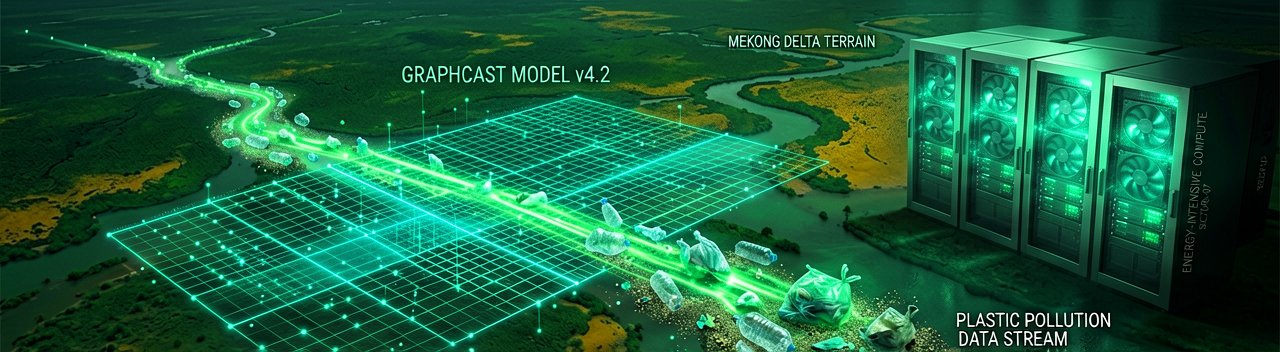
It’s a high-stakes test for the region. As highlighted by Hive Life Magazine, APAC is the epicenter of some of the world's most pressing environmental challenges, including the fact that most river-borne plastic in the ocean originates from just a handful of Asian rivers. The region doesn't need more flashy demos or speculative white papers; it needs AI systems that can help a farmer in Vietnam predict a drought or a city planner in Manila mitigate flood risks. If this accelerator can bridge that gap, it won't just be a win for Google’s PR department—it might actually move the needle for the planet.
Which specific climate sector—such as regenerative agriculture or renewable energy storage—do you believe is most ready for an AI-led breakthrough?
The Hard Pivot Beyond the Hype: While the press release paints a picture of seamless corporate altruism, seasoned observers know that this move is a calculated response to a decade of "solutionism" that often missed the mark. For years, Silicon Valley attempted to solve global problems with a "move fast and break things" mentality that rarely survived contact with the complex regulatory and physical infrastructure of the Asia-Pacific. This accelerator represents a shift toward a more humble, localized approach—one that prioritizes the "Science AI" that DeepMind has spent billions perfecting over the last five years.
The Weight of the 'Science AI' Strategy
What most surface-level reports miss is the distinction between Generative AI—the kind that writes emails—and Science AI, which predicts physical phenomena. DeepMind isn't sending mentors to teach these startups how to build better chatbots; they are exporting the architecture behind AlphaFold and GraphCast. For a climate-tech startup in Indonesia or Thailand, the bottleneck isn't usually the lack of an idea; it’s the astronomical cost of simulating weather patterns or chemical reactions. By providing "frontier model" access, Google is effectively subsidizing the R&D costs that typically kill green-tech hardware before it ever reaches a Series A funding round.
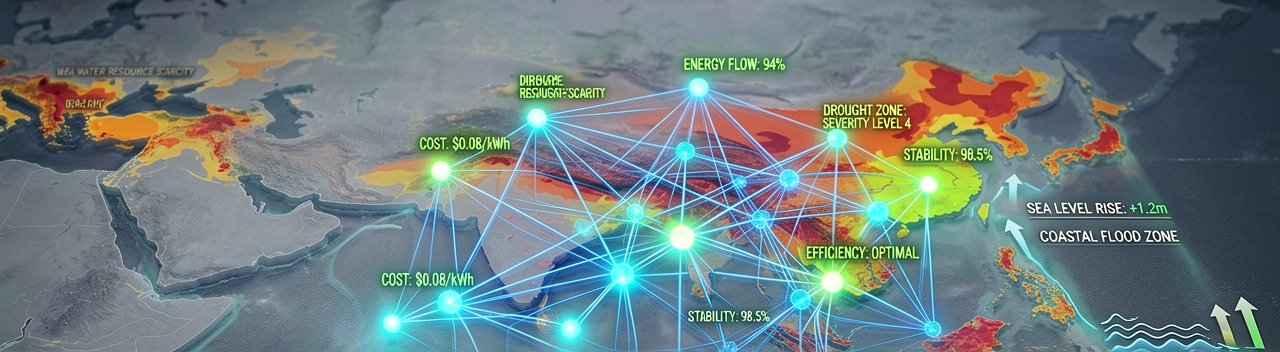
Historically, Google’s relationship with the APAC region has been dominated by consumer services and cloud market share. However, as Google Blog hints, this initiative is part of a broader "AI for Science" roadmap. By embedding themselves in the environmental solutions of the region, DeepMind gains something arguably more valuable than goodwill: high-fidelity, localized environmental data. In the AI arms race, the entity that possesses the most accurate data on soil salinity in the Mekong Delta or wind speeds in the Gobi Desert holds the keys to the next generation of predictive modeling.
A Diplomatic and Industrial Tightrope
There is also a geopolitical undercurrent here that few tech journalists are willing to say out loud. As the U.S. and China race for AI supremacy, the APAC region has become the ultimate testing ground for whose technology will underpin the "Green Revolution." By launching a dedicated accelerator, Google is planting a flag, signaling to regional governments that Western AI can be a partner in national resilience strategies. It’s a soft-power play disguised as a startup incubator, aiming to ensure that the infrastructure of the future is built on Google’s frameworks rather than domestic or rival alternatives.
Ultimately, the success of this program won't be measured by the number of participants, but by whether these startups can survive the "Valley of Death" between a successful pilot and large-scale industrial adoption. Industry veterans at TechBuzz AI are watching closely to see if Google will leverage its massive corporate network to actually buy the solutions these startups produce. Without a clear path to procurement, even the most sophisticated AI model is just another expensive academic exercise in a world that is rapidly running out of time.
Do you think tech giants like Google should be required to open-source climate-saving AI models, or does the incentive of proprietary profit drive faster innovation?
The Paradox of the Green Algorithm: It is impossible to ignore the elephant in the server room: the staggering energy cost of the very AI tools Google DeepMind is deploying to "save" the planet. While this accelerator seeks to optimize carbon footprints across the APAC region, the underlying compute required to train and run frontier models remains a massive, carbon-intensive beast. There is a palpable tension in a strategy that effectively says we must burn significant amounts of energy today to develop the efficiency models of tomorrow. It’s a high-stakes gamble on "net-positive" innovation that assumes the breakthroughs discovered in this three-month sprint will eventually outweigh the massive hardware overhead of the Google Cloud infrastructure that powers them.
The Problem with Regional Homogeneity
Critically, we must question the "APAC" label itself—a massive, diverse umbrella that covers everything from the hyper-dense urban centers of Tokyo to the rural agricultural heartlands of Vietnam. A common failure in Silicon Valley-led initiatives is the assumption that a model optimized for one market can be "reskinned" for another with a few tweaks to the training data. For the DeepMind accelerator to be more than a vanity project, it must navigate the jarring contradictions of the region, such as the fact that some of the countries most desperate for climate AI are also the ones most heavily reinvesting in coal to meet their immediate energy demands. AI cannot solve a lack of political will, and it certainly can't "optimize" its way out of a national energy policy that prioritizes cheap fossil fuels over experimental green tech.
Furthermore, there is the lingering question of "exit strategy" for these startups. In the current economic climate, the most likely outcome for a successful climate-tech participant isn't a massive public offering or a standalone revolution—it’s an acquisition. When a tech giant provides the mentorship, the models, and the cloud credits, they aren't just nurturing a partner; they are conducting an extended job interview. We risk a future where the most vital climate solutions are locked behind proprietary silos, owned by the very companies whose data centers are straining the global grid. If the "AI for the Planet" mission is to be taken seriously, Google will eventually have to address whether it’s building a public utility for global survival or simply a more efficient pipeline for its own corporate interests.
At the end of the day, using the world's most sophisticated artificial intelligence to figure out how to stop the seas from rising is a bit like using a literal rocket ship to go buy a more efficient lightbulb—it’s brilliant, it’s expensive, and you really have to hope the engine doesn’t set the house on fire before you get back.
Artūras Malašauskas is an AI Systems Integrator with 20+ years of production-grade web engineering experience. He has designed, shipped, and scaled enterprise Python/PHP systems for logistics, SaaS, and public-sector clients. For the past year, he has focused exclusively on AI integrations: deploying open-source LLMs, building generative media pipelines (image, audio, video), and engineering multi-agent workflows for real production environments. His standard: reproducibility, security, cost-efficient inference—no vaporware. He documents and evaluates emerging AI tooling, separating verified capabilities from marketing noise. Technical editor at: muza-ai.eu, ai-verslas.lt, ai-naujinos.lt Connect on LinkedIn
Comments