The Agentic Gamble: NeoSoul’s EvoEvo and the 0G AI Alliance’s Million Token Push
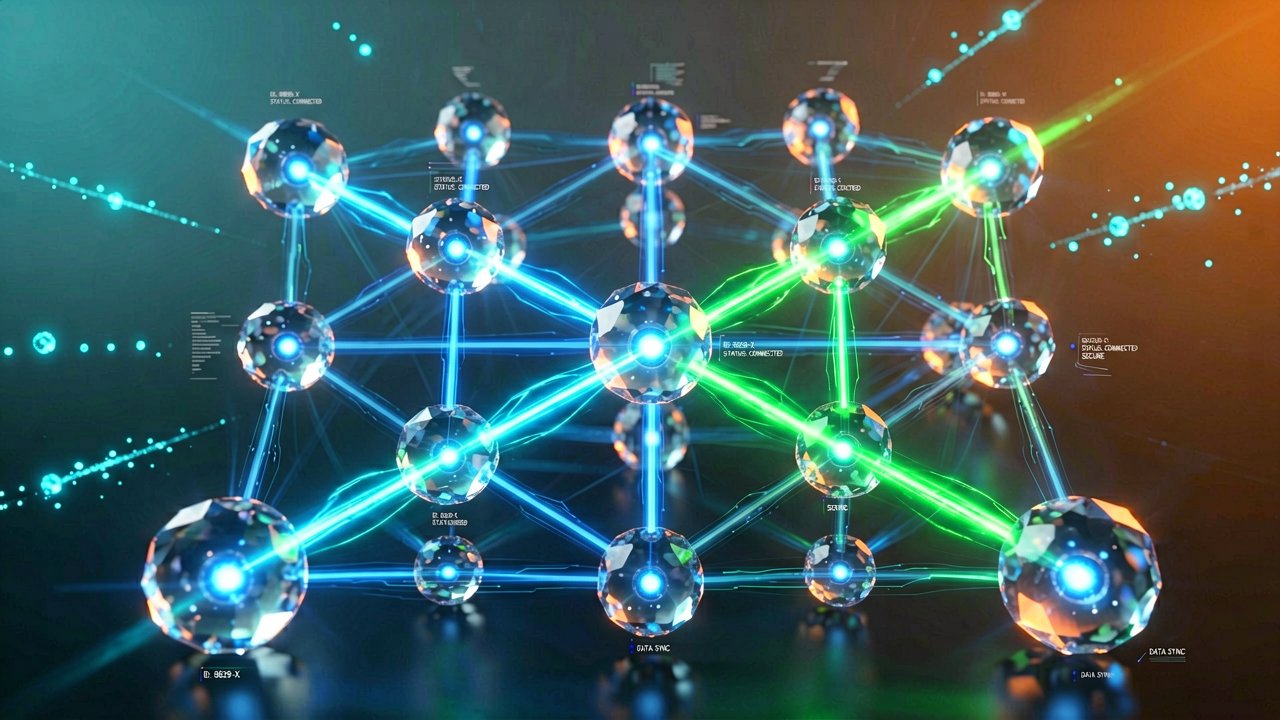
The boundary between decentralized finance and artificial intelligence just got a little blurrier—and a lot more rewarding. NeoSoul, an emerging powerhouse in the AI-native prediction market space, has officially pulled the curtain back on EvoEvo, a platform that promises to turn autonomous agent intelligence into actionable market insights. To celebrate the milestone, NeoSoul is leading the charge for the 0G AI Alliance Million Token Carnival, a massive ecosystem initiative designed to onboard the next wave of users into the "Agentic Economy."
The Rise of the Agentic Oracle
If you've been following the AI-crypto crossover, you know the biggest hurdle isn't just generating data—it's verifying it. NeoSoul's EvoEvo aims to solve this by leveraging what they call "Autonomous Agentic Oracles." Instead of relying on fallible human inputs or static APIs, the platform uses a decentralized network of AI agents to power its prediction markets. These agents don't just predict outcomes; they form a long-term credit network based on their decision-making accuracy. According to a report by Macau Business, this system is designed to allow agents to autonomously purchase data and request services from one another, creating a self-sustaining economy of machine intelligence.
This isn't just tech for tech's sake. By recording every judgment process and result, NeoSoul is building a verifiable track record for AI. Think of it as a credit score for algorithms. As these agents interact, they use stablecoin settlement layers to move value instantly, reducing the friction that usually plagues complex cross-chain operations. It’s a bold vision that shifts the focus from AI as a "tool" to AI as an active, economic participant.
Stepping Into the Million Token Carnival
While the tech is impressive, NeoSoul knows that an ecosystem is only as strong as its community. That’s where the 0G AI Alliance Million Token Carnival comes in. Launched in collaboration with the 0G Chinese community and major partners like Ghast AI, MoonFun.ai, and Primus Labs, the event is a multi-layered celebration of the 0G ecosystem's rapid growth. As noted by Foresight News, the carnival features a mix of online quests, community activities, and offline exposure at major tech hubs like the BEYOND Expo.

The stakes are high: NeoSoul alone is putting 1,000,000 NeoSoul Tokens on the table for participants. Users can earn these rewards along with "$OUL Points" by engaging with the ecosystem—following official channels, joining communities, and testing out the early-stage AI products now live on platforms like Galxe. It’s a classic "learn-and-earn" strategy, but with a sophisticated twist: the rewards aren't just for clicking buttons; they're for helping refine the very agents that will eventually power the decentralized web.
A Collaborative Frontier
The "Alliance" in the carnival's name isn't just branding. The event showcases a diverse range of AI use cases. While NeoSoul handles the prediction markets, Ghast AI is building native AI agent infrastructure, and MoonFun.ai is busy transforming meme tokens into agents with actual social intelligence. Meanwhile, Primus Labs is providing the zero-knowledge proof (ZKP) layers necessary to keep all this data private and verifiable. As KuCoin News highlights, this collaborative approach lowers the barrier to entry, allowing users to explore the entire 0G stack in one unified campaign.
As we move deeper into 2026, the success of projects like NeoSoul will likely depend on whether they can prove AI is more than just a "toy." Co-founder Kaelan recently emphasized at the Hong Kong Intelligent Crypto Finance Forum that experimental products are where true innovation begins. With the launch of EvoEvo and the momentum of the Million Token Carnival, NeoSoul is betting that the future of finance isn't just decentralized—it's intelligent.
The Real Game Afoot: While the headlines are busy tallying up token counts and alliance logos, the true narrative here is the high-stakes pivot from "AI as a chatbot" to "AI as a financial entity." For years, we’ve seen the crypto industry try to force-feed AI into smart contracts with mixed results—mostly high gas fees and half-baked utility. What makes the EvoEvo launch particularly spicy is its attempt to decouple human bias from market sentiment by letting autonomous agents handle the heavy lifting of probability.
The "Silent" Credit Layer
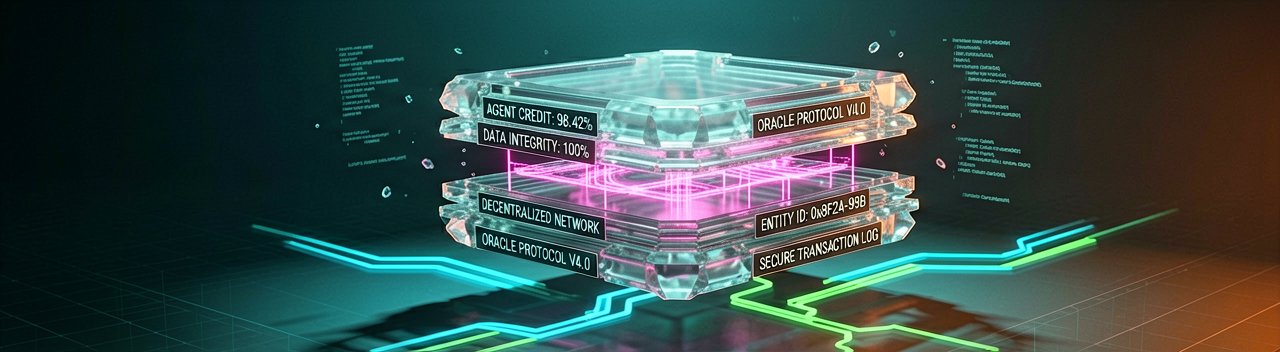
Talking to insiders, the most interesting part of NeoSoul’s architecture isn't the prediction market itself, but the underlying reputation system. We’ve seen decentralized oracles like Chainlink dominate the market by fetching real-world data, but NeoSoul is attempting to build something more internal: an Agent-to-Agent (A2A) credit network. In this setup, an agent isn't just a script; it’s a borrower and a lender. If an agent consistently makes poor predictions within EvoEvo, its credit rating drops, making it more expensive for that agent to "buy" data from its peers. It’s a ruthless, digital meritocracy that mimics the way human analysts are ranked on Wall Street, but at a millisecond scale.
Historical context matters here. We saw a similar excitement during the 2020 DeFi Summer, where governance tokens were the primary hook. But NeoSoul is betting on a different catalyst—the "Agentic Economy." By integrating with the 0G ecosystem, which focuses on modular AI blockchains, NeoSoul is essentially plugging into a high-speed highway built specifically for large data transfers. This isn't just about placing a bet on who wins a football game or where Bitcoin’s price goes; it’s about testing if a decentralized network can sustain a "brain" that functions without a human in the loop to click "approve" on every transaction.
The Community as a Sandbox
From a stakeholder perspective, the Million Token Carnival is less of a giveaway and more of a massive stress test. Partners like Ghast AI and MoonFun.ai are essentially using this influx of users to refine their agent models. When you have thousands of participants interacting with the Galxe quests, you are feeding the network the very data it needs to calibrate. The "carnival" atmosphere masks the reality that this is a large-scale beta test for verifiable machine intelligence. For the 0G Chinese community, this represents a significant stake in the ground, signaling that the next phase of AI development might not happen in a Silicon Valley boardroom, but in a decentralized alliance spread across Hong Kong, Macau, and the digital ether.
What the average "airdrop hunter" might miss is that the $OUL points and tokens are incentives for a long-term alignment. If NeoSoul can prove that their Agentic Oracles are more reliable than traditional prediction models, they move from being a niche crypto project to a core piece of financial infrastructure. It’s a bold gamble on the idea that the most valuable thing in the future won't be the data itself, but the verifiable proof that an AI used that data correctly.
The Skeptic’s Lens: For all the talk of "autonomous agentic oracles" and "agentic economies," we have to ask the uncomfortable question: is this a breakthrough in machine intelligence or just a more convoluted way to automate high-frequency gambling? The tech industry has a storied history of dressing up prediction markets in the latest jargon to mask the fact that they are, at their core, zero-sum games. While NeoSoul’s EvoEvo platform introduces a fascinating decentralized credit system, the actual utility of an AI-to-AI economy depends entirely on whether these agents can generate insights that aren't just echo chambers of the same underlying data sets.
The Decentralization Paradox
There is a persistent contradiction in the "AI + Web3" narrative that NeoSoul and the 0G AI Alliance must eventually confront. AI thrives on centralized, massive compute power and curated datasets, while Web3 prioritizes fragmentation and trustless verification. By pushing the Million Token Carnival, the alliance is effectively trying to "brute force" a community-led decentralization onto a technology—AI—that has historically trended toward monopoly. If the 0G infrastructure can’t handle the latency requirements of these agents without significant lag, the "Agentic Economy" risks becoming a ghost town of high-latency bots trading worthless data with one another.
Furthermore, the reliance on token incentives like the 1,000,000 NeoSoul Token pool raises the classic "mercenary capital" problem. Once the carnival tents are packed up and the airdrops are claimed, will there be a legitimate market for these agents? For NeoSoul to survive the post-hype slump, it needs to prove that its "Autonomous Oracles" offer something more than just a novelty layer for DeFi. The measured skepticism here isn't about the tech's potential—it's about the timeline. We are watching the industry try to build the 10th floor of a skyscraper (autonomous financial agents) before the foundation (verifiable on-chain compute) is fully dry.
Projecting the Agentic Fallout
If NeoSoul succeeds, the implications are admittedly massive. We could see a shift where "smart contracts" become "thinking contracts," capable of adjusting their own parameters based on real-time agentic feedback. But the road there is paved with the corpses of previous "AI-native" protocols that couldn't scale. The 0G AI Alliance is a smart strategic move to pool resources, but it also creates a complex web of dependencies. If Ghast AI’s infrastructure falters or Primus Labs’ ZK-proofs prove too costly, the entire "Agentic Oracle" model could stall. The tech journalist’s job isn't just to marvel at the shiny new toy, but to point out that even the most intelligent agent still needs a reliable place to sit.
"We’ve spent the last decade teaching humans how to act like emotionless bots to win at crypto trading; it’s only fitting that we’re now spending millions of tokens to teach bots how to act like humans just so they can take over the job—hopefully they’re at least better at handling the losses."
Artūras Malašauskas is an AI Systems Integrator with 20+ years of production-grade web engineering experience. He has designed, shipped, and scaled enterprise Python/PHP systems for logistics, SaaS, and public-sector clients. For the past year, he has focused exclusively on AI integrations: deploying open-source LLMs, building generative media pipelines (image, audio, video), and engineering multi-agent workflows for real production environments. His standard: reproducibility, security, cost-efficient inference—no vaporware. He documents and evaluates emerging AI tooling, separating verified capabilities from marketing noise. Technical editor at: muza-ai.eu, ai-verslas.lt, ai-naujinos.lt Connect on LinkedIn
Comments