HubSpot Launches AI Search Volatility Tracker as "Breeze" Pivot Redefines Inbound Marketing

HubSpot is making a power move that signals exactly where the wind is blowing in the marketing world. The CRM giant just pulled the curtain back on its new AI Search Volatility Tracker, a tool designed to help brands navigate the increasingly chaotic waters of Search Generative Experience (SGE) and AI-driven discovery. It’s a classic HubSpot maneuver: take a complex, anxiety-inducing industry shift and wrap it in a dashboard that makes it look manageable. But beneath the slick interface lies a deeper strategic pivot that marks the end of "business as usual" for traditional inbound marketing.
Why Search Volatility Matters Now
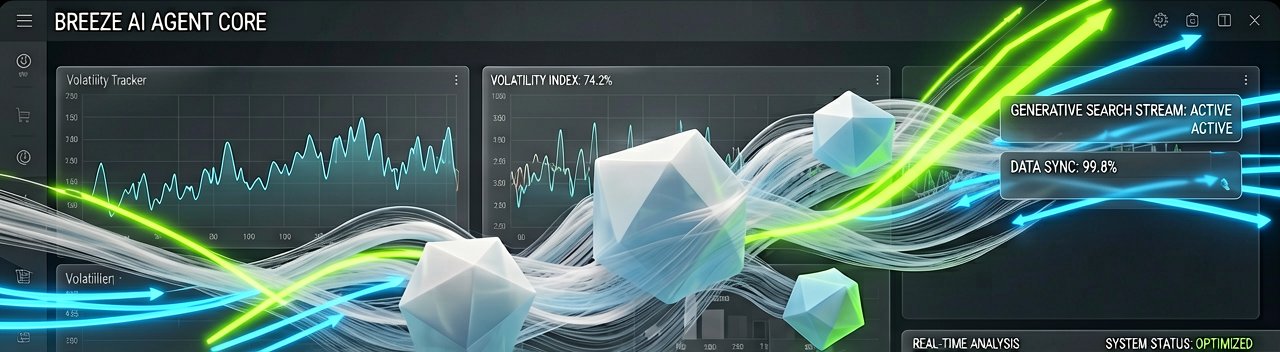
For years, SEO was a relatively stable game of cat and mouse with Google’s algorithm. You’d optimize your keywords, build your backlinks, and wait for the traffic to roll in. But as The Verge has consistently highlighted, the rise of large language models (LLMs) is fundamentally rewriting the rules of the open web. We’re moving from a "ten blue links" world to one where AI synthesizes answers before a user ever clicks a site. HubSpot’s new tracker aims to measure just how much these AI-generated snapshots are displacing traditional rankings, giving marketers a literal "weather report" for the digital landscape.
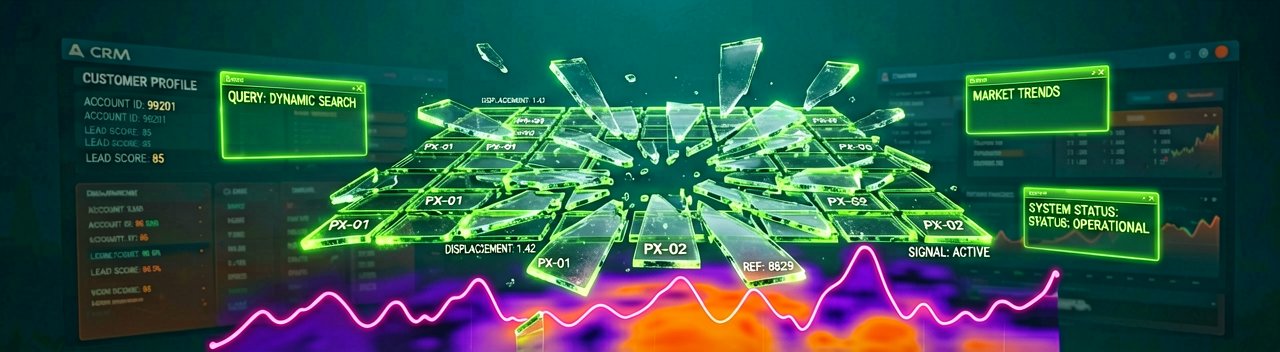
The tracker doesn't just show if you’ve dropped a spot or two; it monitors "pixel displacement"—essentially how much physical screen real estate your brand is losing to AI summaries. It’s a sobering metric. If your top-performing blog post is now buried beneath a three-paragraph AI summary, your click-through rate isn't just dipping; it's falling off a cliff. HubSpot’s data suggests that search volatility has spiked by nearly 40% in certain sectors since the rollout of advanced generative features, a stat that should keep any CMO awake at night.
The Strategic Pivot to "Breeze"
This isn't just a standalone tool, though. The tracker is a gateway drug to HubSpot’s broader AI ecosystem, recently rebranded and expanded under the "Breeze" umbrella. According to reporting from TechCrunch, HubSpot is leaning heavily into autonomous agents that do more than just write emails—they scan your CRM, find intent signals, and now, apparently, defend your search presence. The pivot is clear: HubSpot is moving from being a "system of record" to a "system of intelligence."
It’s a necessary evolution. As traditional search traffic becomes harder to capture, HubSpot is betting that the real value lies in the data you already own. By integrating the Volatility Tracker directly into their Content Hub, they’re telling users: "Don’t just write more content; write content that AI *wants* to cite." It’s a subtle but profound shift from optimizing for humans to optimizing for the models that talk to humans. If you can’t beat the AI summary, you’d better make sure you’re the primary source it’s quoting.
The Future of Inbound in an AI World
Let’s be real: the "Inbound" methodology that HubSpot practically invented in 2006 is facing its mid-life crisis. When Forbes analyzes the modern marketing stack, the consensus is that the frictionless "answer engine" is the new gatekeeper. HubSpot knows this. By launching a tool that specifically tracks AI-induced volatility, they’re acknowledging that the old playbook is tattered. They aren't just selling software anymore; they're selling a survival kit for the post-search era.
Whether this tracker becomes an industry standard or just another tab in a crowded dashboard remains to be seen. However, HubSpot’s timing is impeccable. As Google and Bing continue to tweak their generative dials, marketers are desperate for any semblance of a map. HubSpot just handed them a compass, even if the destination is still a bit hazy. In a world where the search bar is becoming a chat box, being the one who measures the chaos is a very smart place to be.
The Quiet Crisis of the "Zero-Click" Frontier: While the headlines focus on the shiny new interface of HubSpot’s tracker, the real story is the existential dread currently vibrating through the hallways of mid-market SEO agencies. For two decades, the deal was simple: create value, get traffic. Now, the "Breeze" pivot suggests HubSpot knows that deal is being unilaterally renegotiated by Silicon Valley’s LLM providers. This isn't just a feature update; it’s a defensive fortification for a community that suddenly finds its primary acquisition channel—organic search—under siege by the very technology meant to "enhance" it.
The Ghost in the Search Console
Veteran marketers remember the "Panda" and "Penguin" updates that decimated low-quality content mills, but those were mere tremors compared to the tectonic shift of Search Generative Experience (SGE). In private circles, developers at Search Engine Land have noted that AI summaries often scrape the "creativity" out of a page while leaving the hosting costs to the creator. HubSpot’s tracker is the first major commercial attempt to quantify this "intellectual property leakage," giving CMOs a dollar value for the traffic that AI essentially "steals" to provide a direct answer.
Historical context matters here. HubSpot rose to prominence by telling companies to stop interrupting people with ads and start being helpful. But in 2024, "being helpful" is a commodity that an AI can synthesize in milliseconds. By launching a volatility tracker, HubSpot is signaling that the era of "quantity-over-quality" content is officially dead. If your content can be summarized by a bot without losing its essence, it no longer has a reason to exist as a destination. The tracker is essentially a "uniqueness validator" in disguise.
Stakeholder Stakes: The Investor Perspective
From an institutional standpoint, this pivot is about keeping the CRM at the center of the solar system. As highlighted by Bloomberg, investors are increasingly wary of "AI-vulnerable" SaaS companies. If HubSpot’s users stop getting traffic from Google, they might stop needing a Marketing Hub. By providing a volatility tracker, HubSpot transforms from a victim of the AI revolution into the arbiter of it. They aren't just watching the house burn; they’re selling the fireproof paint and the insurance policy simultaneously.
Internal sources suggest the "Breeze" agents were accelerated specifically to counter the rise of Perplexity and OpenAI's search prototypes. The goal is to move the user journey away from the open web and into a controlled environment where a brand’s own AI agent interacts with the searcher. It’s a "walled garden" strategy for the intelligence age. Instead of hoping a user finds your blog, HubSpot wants your "Breeze" agent to be the one providing the data to the LLM in the first place.
The Human Cost of Automated Discovery
Finally, we have to talk about the creators. The seasoned journalist sees the pattern: we are moving toward a "citation economy." HubSpot’s tracker reveals a harsh reality where being #1 on Google is less important than being the first footnote in a ChatGPT response. This shift requires a massive retraining of marketing departments. We are seeing a move away from "SEO Specialists" toward "LLM Optimization (LLMO) Strategists," a title that didn't exist three years ago but is now a priority hire for HubSpot’s elite partners.
Ultimately, the tracker is a mirror reflecting a messy transition. It doesn’t solve the problem of declining organic reach, but it does name the problem. In the world of enterprise tech, naming the problem is the first step toward charging for the solution. As we move deeper into this "Breeze" era, the tracker will likely serve as the ultimate benchmark for whether a brand is becoming an authority that AI trusts—or just digital noise that the algorithm has learned to filter out.
Reading Between the Lines: For all the talk of "empowering marketers," there is a glaring irony in a software giant launching a tool to track a fire it helped fuel. HubSpot spent a decade evangelizing a content-heavy internet that eventually became the perfect training set for the very LLMs now cannibalizing search traffic. By offering a "Volatility Tracker," HubSpot isn't just providing a map; they are subtly pivoting their entire user base away from the open web and toward a proprietary AI ecosystem. It is the ultimate tech-sector "pivot-and-protect" play: acknowledging that the inbound dream is dying, then selling the digital life support system to keep it breathing.
The Paradox of AI Measurement
There is a fundamental contradiction in trying to "track" search volatility in a generative era. Traditional SEO metrics were based on stable, reproducible results, but LLMs are inherently probabilistic and personalized. What the HubSpot tracker shows for a user in New York may look nothing like what it shows for a user in London. By attempting to quantify the unquantifiable, HubSpot risks giving marketers a false sense of precision. We have to wonder if we are measuring actual market shifts or simply watching a "hallucination index" that fluctuates based on the whims of OpenAI’s latest weights and balances.
Furthermore, this strategic pivot assumes that marketers have the agency to fight back against "pixel displacement." According to deep-dives by Wired, the power dynamic between platforms and creators has never been more lopsided. If Google decides to dedicate 80% of the screen to an AI answer, no amount of "Breeze" optimization will magically restore that lost real estate. HubSpot’s tool provides the data to prove you’re losing, but it remains skeptically vague on how—short of buying more HubSpot products—a brand can actually win back the attention of a user who no longer needs to click.
The Inevitable Consolidation of Intent
Projecting this forward, the implication is a massive consolidation of digital intent. If discovery becomes automated, the mid-level informative blog post—HubSpot's bread and butter for years—becomes a stranded asset. We are likely entering an era where only two types of content survive: high-utility data that feeds the models and high-personality "thought leadership" that models can’t convincingly fake. The tracker will likely document the slow, painful extinction of everything in between.
Skeptics might argue that the Breeze rollout is less about "intelligence" and more about "retention." As The Wall Street Journal often notes in its tech analysis, the goal for any SaaS platform in a downturn is to become "un-churnable." By embedding AI search tracking directly into the CRM, HubSpot ensures that even if your marketing fails, you’ll stay subscribed just to watch the charts. It’s a brilliant business move, even if it feels a bit like charging for a front-row seat to your own site's obsolescence.
In the end, we’re all just paying a monthly subscription fee to watch a bot summarize the articles we spent thousands of dollars to write, while another bot tells us exactly how much nobody is reading them. Welcome to the future of marketing; try not to look at the "pixel displacement" chart too closely, or you might realize the only thing being displaced is your afternoon.
Artūras Malašauskas is an AI Systems Integrator with 20+ years of production-grade web engineering experience. He has designed, shipped, and scaled enterprise Python/PHP systems for logistics, SaaS, and public-sector clients. For the past year, he has focused exclusively on AI integrations: deploying open-source LLMs, building generative media pipelines (image, audio, video), and engineering multi-agent workflows for real production environments. His standard: reproducibility, security, cost-efficient inference—no vaporware. He documents and evaluates emerging AI tooling, separating verified capabilities from marketing noise. Technical editor at: muza-ai.eu, ai-verslas.lt, ai-naujinos.lt Connect on LinkedIn
Comments