The Junior Bottleneck: San Diego’s Tech Coast Reams with AI Displacement
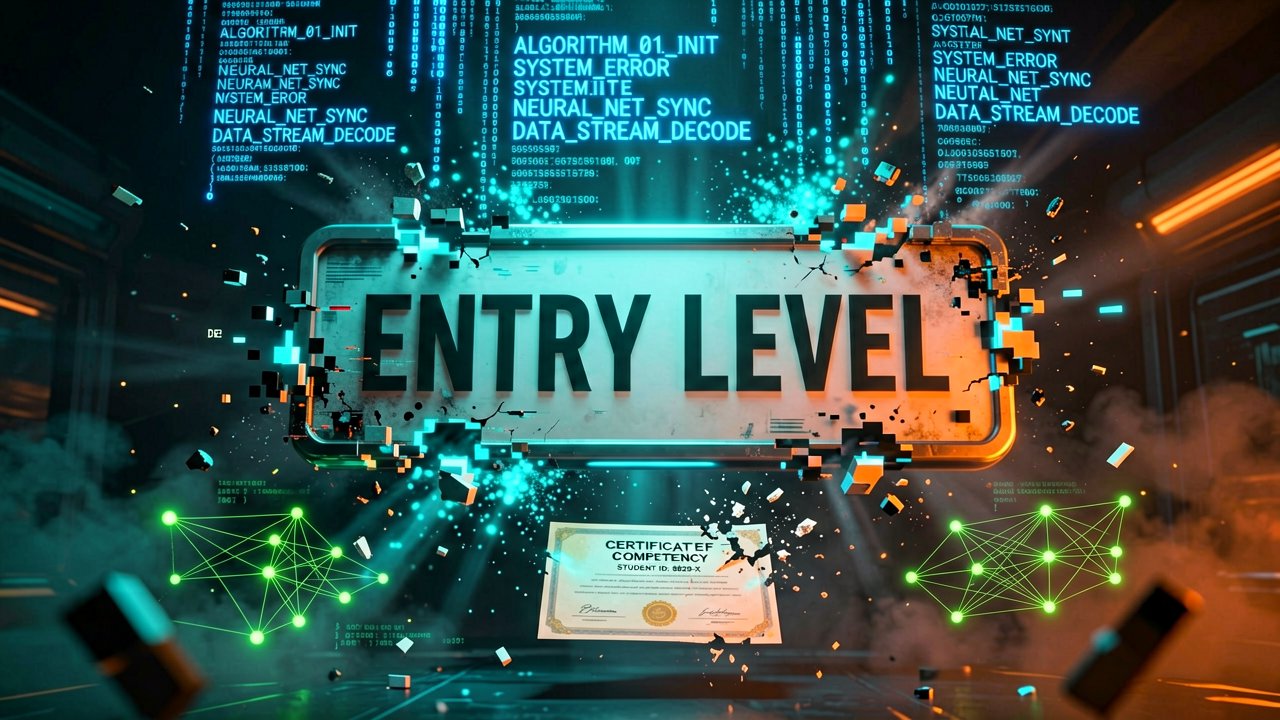
The "Junior" Problem: When the First Rung Disappears
For decades, the deal for San Diego graduates was simple: grind through four years at UCSD or SDSU, snag a degree, and land an entry-level role at a biotech firm in Sorrento Valley or a tech hub downtown. But for the Class of 2025, that ladder is missing its bottom rungs. A brutal cocktail of high-interest rates and the rapid-fire integration of generative AI has turned a once-reliable pipeline into a "black hole," as some frustrated job seekers have told NBC News. It’s not just that hiring has slowed; it’s that the very nature of "entry-level" work is being automated out of existence.
The numbers aren't exactly doing anyone any favors. National data shows that while overall unemployment remains relatively low, the rate for recent graduates has climbed to a sobering 7.2 percent, according to the New York Reserve Bank. In San Diego, specifically, a recent ADP study ranked the city near the bottom of the nation for young adults trying to secure that critical first job. This local squeeze is compounded by a 13 percent drop in junior job listings within AI-exposed fields like coding and data analysis—the very sectors San Diego’s "Tech Coast" was built on, as noted by the .
It’s a classic Catch-22: companies now want two to three years of experience for "entry-level" roles because they’re using AI to handle the "grunt work" that used to train the rookies. Anthropic’s CEO, Dario Amodei, hasn’t minced words, suggesting that AI could eliminate half of all white-collar entry-level jobs within five years, a sentiment echoed by analysis from Al Jazeera. In this environment, a degree is no longer a ticket; it’s just a prerequisite to enter a lottery where the odds are increasingly stacked against those without a portfolio of real-world projects.
The Ghost in the Hiring Machine
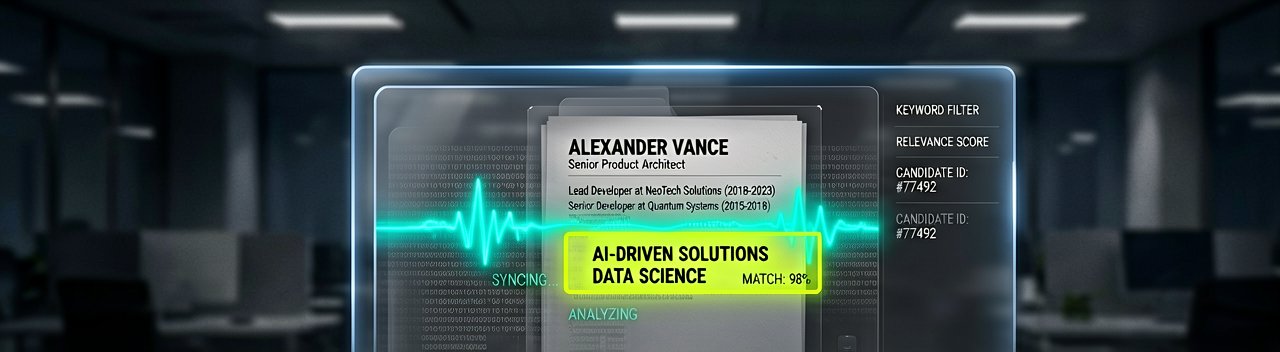
Even getting an interview has become a high-stakes game of "beat the bot." Roughly 70 percent of companies are expected to use AI in their hiring processes by the end of 2025, according to Fast Company. We’re talking about algorithms that scan resumes for keywords, AI-driven tests, and even "virtual interviewers" that evaluate a candidate’s tone and facial expressions. For a graduate who hasn't yet learned the unspoken "corporate speak" of their industry, this impersonal gauntlet can feel impossible to navigate.
However, there is a counter-movement brewing. Career experts in San Diego are beginning to preach a return to "radical humanity." As Dr. Riley pointed out in a recent segment for CBS 8 San Diego, AI speaks in simplistic, predictable patterns. To stand out, graduates have to be more than just a list of skills on a screen; they need to show warmth, empathy, and the kind of critical thinking that a Large Language Model can't mimic. The advice for today’s job seeker is simple but daunting: "Be human."
There are still bright spots for those willing to pivot. While tech and finance are in a defensive crouch, industries like healthcare and social assistance in San Diego are showing resilience, as highlighted by UC San Diego Extended Studies. The current crisis isn't necessarily a permanent end to hiring, but it is a massive restructuring. The Class of 2025 isn't just entering a new job market; they're the first generation tasked with defining what a career looks like when the machine can do the heavy lifting, but not the heavy thinking.
The Hidden Cost of Efficiency: What Most Reports Miss
Beyond the Algorithm: While the headlines focus on the sheer speed of AI adoption, seasoned observers in the San Diego tech corridor see a more subtle, corrosive trend: the erosion of the "tacit knowledge" pipeline. In the old world, a junior dev at a firm in UTC would spend their first year fixing minor bugs—busy work, sure, but work that taught them the underlying architecture of a complex system. By automating these "grunt" tasks, companies are inadvertently cutting off the developmental oxygen that produces the next generation of senior architects.
Local career consultants are noticing a growing disconnect between HR departments and engineering leads. Recruiters are being told to use AI filters to find "day-one ready" talent, but as San Diego Union-Tribune commentators have noted, this creates a vacuum where mid-level talent used to be. The irony is palpable: firms are using AI to save money on entry-level salaries today, only to face a massive, expensive talent shortage five years from now because no one was trained to take the reins.
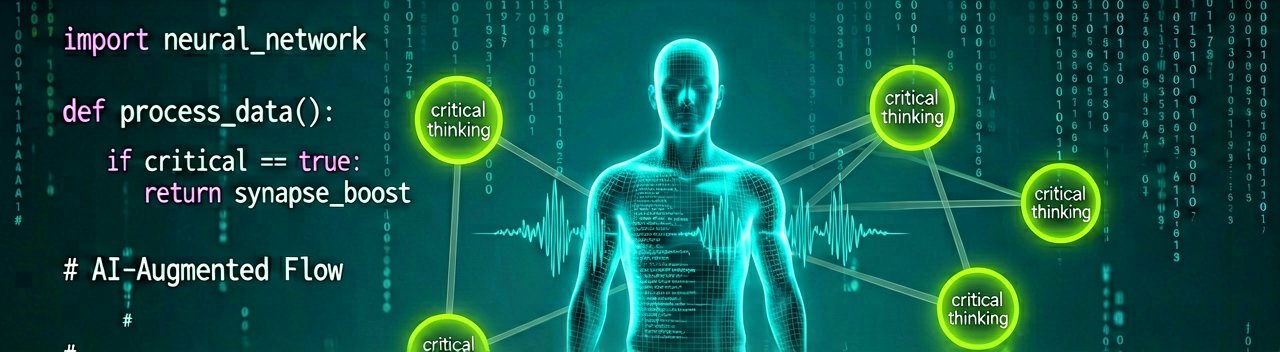
History tells us this isn't the first time San Diego's economy has had to reinvent itself on the fly. We saw it when the defense industry contracted after the Cold War and again during the 2008 crash. However, those were cyclical shifts; this is structural. The transition is forcing a "skills-based" revolution where the name of the school on the diploma matters less than a verified GitHub repository or a portfolio of AI-augmented projects. It's a shift from "Who do you know?" and "Where did you go?" to "What can you prompt and verify?"
The Human-Centric Pivot
In the high-stakes laboratories of Torrey Pines, the sentiment is shifting toward "Augmentation over Automation." Forward-thinking hiring managers are starting to look for what they call "hybridity." They aren't just looking for a biologist who can use an AI sequencer; they want someone who understands the biological nuances enough to know when the AI is hallucinating. This "human-in-the-loop" requirement is becoming the gold standard for surviving the initial resume cull.
This creates a massive burden on San Diego’s academic institutions to move at "silicon speed." Traditionally, university curricula take years to update, but the tools graduates are using change every six months. The most successful students are those treating their education as a dual track: getting the foundational theory from the classroom while aggressively pursuing "micro-internships" and independent AI research on the side to stay relevant in a market that doesn't wait for graduation day.
Ultimately, the current friction in the job market is a loud, messy signal that the era of the "generalist" junior is over. The graduates who are breaking through aren't the ones trying to compete with AI on speed or volume; they are the ones leaning into the messy, subjective, and highly contextual problems that algorithms still can't solve. It’s a tough break for the Class of 2025, but for those who can navigate the transition, they won't just be employees—they’ll be the ones auditing the machines.
The Efficiency Trap: Reading Between the Lines
The Productivity Paradox: There is a seductive, yet potentially flawed, assumption currently gripping C-suites from Carlsbad to the Gaslamp Quarter: that an AI-native junior is inherently more valuable than a traditional one. On paper, the math is irresistible. Why hire three junior analysts when one graduate armed with a suite of LLMs can churn out the same volume of reports? However, this "efficiency" ignores a looming intellectual debt. We are currently witnessing a massive experiment in outsourcing the foundational "learning by doing" phase of a career to black-box algorithms, and the long-term cost of that trade-off remains entirely uncalculated.
The contradiction at the heart of the current San Diego hiring crisis is that while firms demand "AI-savvy" recruits, they are simultaneously terrified of the security and intellectual property risks those same recruits pose. It’s a schizophrenic landscape; companies want the speed of automation but are increasingly implementing "human-only" redlines for sensitive projects. This leaves the recent graduate in a precarious position—penalized if they don't use AI to meet impossible production quotas, yet vulnerable to termination if the algorithm they rely on inadvertently leaks proprietary code or data into a public model training set.
Furthermore, the "soft skills" pivot being championed by career coaches feels increasingly like a desperate hedge. We tell graduates to focus on "empathy" and "critical thinking" as if those are magic shields against automation, but we must be skeptical. In a high-pressure corporate environment, empathy is often the first thing sacrificed at the altar of quarterly margins. If a San Diego biotech startup can use a specialized agent to handle 90% of its client interactions with "perfect" simulated empathy, the human element becomes a luxury rather than a necessity. The "human-centric" job market may end up being much smaller—and more elite—than the optimistic forecasts suggest.
There is also the historical reality of the "hiring freeze" to consider. Markets tend to overcorrect. Just as the 1990s saw a rush to outsource IT only for firms to realize they had lost their competitive edge, the current rush to "AI-source" entry-level work may eventually hit a wall of mediocrity. When every company’s output looks, sounds, and thinks like the same base model, the "human error" of a creative, unpolished graduate might actually become the most valuable asset in the room. For now, however, that remains a speculative consolation prize for the thousands of San Diegans currently staring at "Application Under Review" status symbols.
"Welcome to the modern workforce, where you need a four-year degree to prove you’re smarter than the robot, and then spend the next forty years trying to prove you’re cheaper to keep around than its monthly subscription fee."
Artūras Malašauskas is an AI Systems Integrator with 20+ years of production-grade web engineering experience. He has designed, shipped, and scaled enterprise Python/PHP systems for logistics, SaaS, and public-sector clients. For the past year, he has focused exclusively on AI integrations: deploying open-source LLMs, building generative media pipelines (image, audio, video), and engineering multi-agent workflows for real production environments. His standard: reproducibility, security, cost-efficient inference—no vaporware. He documents and evaluates emerging AI tooling, separating verified capabilities from marketing noise. Technical editor at: muza-ai.eu, ai-verslas.lt, ai-naujinos.lt Connect on LinkedIn
Comments