The Concierge Era: Why OpenAI and Anthropic Are Swapping Algorithms for Armies
If you’ve been waiting for the AI hype cycle to settle into something resembling a business plan, the last week of May 2026 just handed it to you. For years, we’ve watched OpenAI and Anthropic play a high-stakes game of "my model is bigger than yours," but the battleground has shifted. It’s no longer about who has the most parameters; it’s about who can actually get this tech to work inside a Fortune 500 company without it hallucinating the quarterly earnings or blowing the entire IT budget by lunch.
The headline act is the birth of the OpenAI Deployment Company (or "DeployCo" for those who enjoy corporate shorthand). Backed by a staggering $4 billion in initial investment and a partner roster that reads like a Davos guest list—think Goldman Sachs and Bain Capital—this isn't just another API update. OpenAI is essentially building a specialized army of "Forward Deployed Engineers" (FDEs) to physically or virtually embed within enterprises. The goal? To stop being a vendor and start being the architect of a company’s entire workflow.
The Rise of the Forward Deployed Engineer
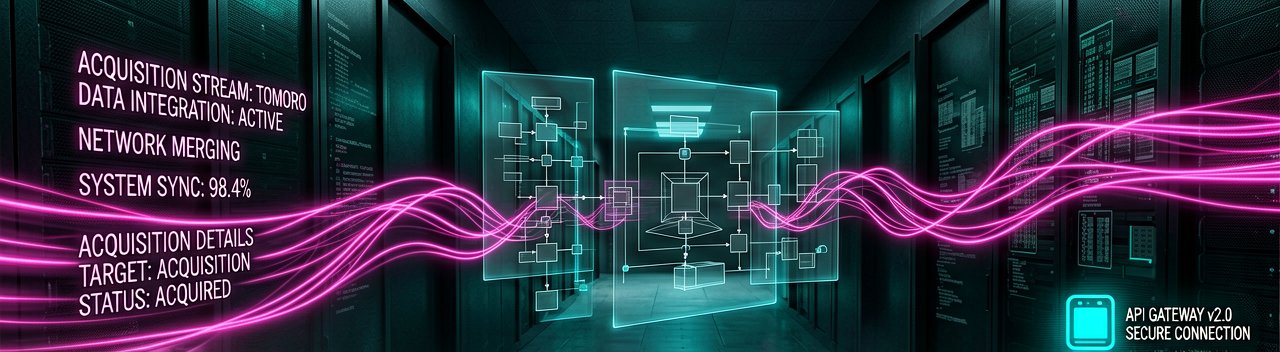
There’s a certain irony in the fact that the companies building "labor-replacing" AI are now hiring humans at a breakneck pace. By acquiring the consulting firm Tomoro, OpenAI instantly gained 150 of these FDEs. These aren't your typical customer support reps; they are hybrid creatures—part software engineer, part management consultant—tasked with ripping out legacy processes and rebuilding them around agentic reasoning. It’s a move straight out of the Palantir playbook, signaling that "selling software" is dead; "delivering outcomes" is the new mandate.
Anthropic, predictably, isn't sitting this one out. While OpenAI is leaning into massive joint ventures, Anthropic is double-downing on what it calls "Claude for Enterprise." They’ve launched their own services arm, backed by heavyweights like Blackstone and Hellman & Friedman, specifically targeting mid-sized businesses that feel left behind by the Silicon Valley giants. According to CIO, this new entity will focus on helping companies move Claude into core operations, moving beyond the "experimental pilot" phase that has plagued the industry for the last two years.
The urgency here is partly driven by some terrifying math. We recently saw reports of Uber engineers burning through an entire year’s AI budget in just four months because Anthropic's Claude Code was so efficient at writing commits that it effectively "out-worked" the finance department's projections. When an AI agent can perform thousands of tasks a minute, the old "pay-per-seat" model falls apart. Companies need engineers on the ground to set guardrails—not just for safety, but for fiscal survival.
Breaking the Cloud Chains
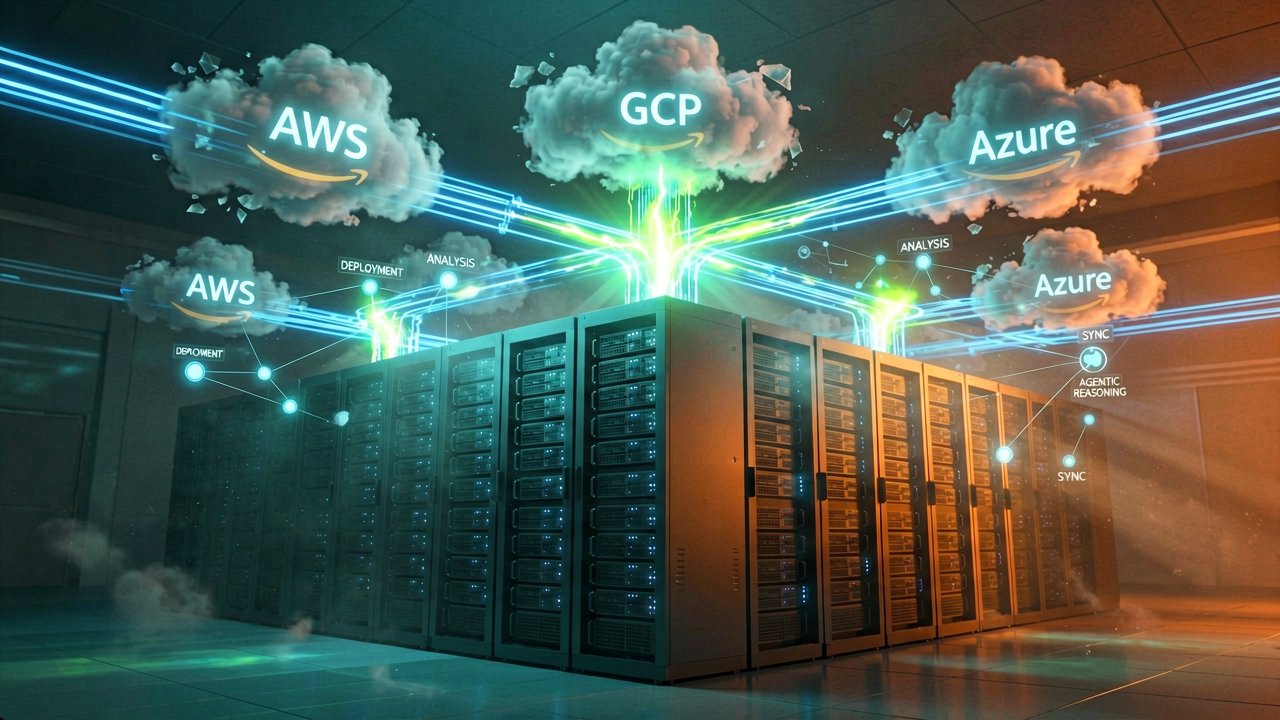
Perhaps the most seismic shift for the "big labs" is their newfound independence. We’ve seen OpenAI and Microsoft fundamentally restructure their partnership, effectively ending the exclusive cloud lock-in. For a business, this means you can finally deploy OpenAI models on AWS or Google Cloud if that’s where your data already lives. It’s a "multi-cloud" era that favors the customer, allowing for the kind of flexible, scalable infrastructure that enterprise IT directors have been demanding since 2023.
What we're witnessing is the professionalization of the AI era. The "toy" phase—where we all marveled at a chatbot writing a poem about a toaster—is officially over. Between OpenAI's $10 billion deployment giant and Anthropic's workflow-centric services, the message to the corporate world is clear: the tools are ready, but you're going to need an expert to help you hold them. The race to 2027 isn't about who builds the smartest AI, but who manages to weave it into the fabric of the global economy first.
Would you like to explore the specific technical requirements for hiring Forward Deployed Engineers, or should we look at how these new deployment companies are affecting the traditional consulting market?

The Quiet Pivot: While the flashy press releases focus on multi-billion dollar valuations and "agentic workflows," the real story is the sudden death of the "hands-off" Silicon Valley dream. For decades, the SaaS model was built on the idea of high-margin, self-service software—you build it once, and a million companies subscribe to it. But these latest moves from OpenAI and Anthropic are a tacit admission that LLMs are not "plug-and-play." They are closer to nuclear reactors than spreadsheets; they require a dedicated crew of specialists to keep them from melting down or simply draining the corporate coffers without delivering a return on investment.
This shift toward "embedding" engineers directly into client offices is a fascinating historical echo of the early 2000s ERP boom. Just as companies like SAP and Oracle once required an army of consultants to configure complex back-end systems, OpenAI’s DeployCo is signaling that AI is the next great infrastructure project. The "Forward Deployed Engineer" is becoming the most valuable player in the ecosystem, acting as a translator between the ethereal logic of a transformer model and the messy, disorganized reality of corporate data silos. According to CIO, this hands-on approach is the only way to bridge the "deployment gap" that has left many AI pilots gathering digital dust.
The Shadow War for Implementation Talent
Behind the scenes, this has triggered a talent war that makes the previous "AI researcher" gold rush look tame. It’s one thing to hire a PhD to train a model; it’s quite another to hire an engineer who understands both latent space and the intricacies of supply chain logistics. By acquiring Tomoro and building massive services arms, these labs are effectively trying to corner the market on the people who actually know how to make AI *do* something. Industry veterans note that OpenAI's aggressive hiring strategy is putting massive pressure on traditional firms like McKinsey and Accenture, who now find themselves competing for talent against the very companies whose tools they were supposed to be implementing.
Stakeholders are also keeping a wary eye on the "black box" nature of these partnerships. When an OpenAI engineer is the one building your internal automation, who owns the intellectual property? Anthropic has tried to differentiate itself here by leaning into the "constitutional" side of the fence, promising deeper transparency for highly regulated industries like banking and healthcare. As TechRepublic points out, the "Enterprise AI Race" is increasingly becoming a trust exercise. Companies are essentially handing over the keys to their operational logic in exchange for a seat at the frontier of intelligence.
Ultimately, this deep-dive into deployment marks the end of the "miracle software" era and the beginning of the "industrial AI" era. We are moving past the honeymoon phase where a clever prompt was enough to impress a board of directors. Now, the metrics are brutal: latency, cost-per-inference, and measurable productivity gains. The labs that survive won't just be the ones with the smartest models, but the ones with the most boots on the ground, making sure those models don't just speak human, but speak "Business."
Should we examine how this new "embedded engineer" model is impacting the stock prices of legacy consulting firms, or would you prefer a breakdown of the specific security protocols being used in these on-site deployments?
Reading Between the Lines: For all the talk of "democratizing intelligence," the pivot toward massive, human-led deployment arms reveals a glaring contradiction in the AI narrative. If these models were truly as intuitive and revolutionary as the marketing suggests, they wouldn't require a $10 billion concierge service just to get them through the front door. We are witnessing the birth of "High-Maintenance Automation"—a paradox where the technology designed to reduce headcount requires a secondary army of six-figure engineers just to keep the primary AI from hallucinating a new company policy or bankrupting the department through runaway API calls.
There is also the uncomfortable reality of the "Consultancy Trap." By embedding their own engineers into the heart of the Fortune 500, OpenAI and Anthropic are effectively becoming the "gatekeepers of efficiency." This creates a precarious dependency; if your entire automated supply chain is optimized by a specialized OpenAI team, switching to a competitor becomes an architectural nightmare. Despite the industry’s newfound love for "multi-cloud" flexibility, the true lock-in isn't the server—it’s the bespoke, unrecorded logic these engineers weave into your business. We are trading software-as-a-service for a kind of "intelligence-as-an-addiction."
The ROI Mirage
Furthermore, the financial math behind these deployment launches feels increasingly like a defensive crouch. As Anthropic's recent efficiency gains show, the more capable these models become, the more likely they are to "break" traditional budgeting. Skeptics are rightly asking whether the productivity gains will actually outpace the astronomical costs of the implementation teams and the compute they consume. If a company spends $50 million to save $40 million in labor, it hasn't achieved an AI revolution; it has simply performed a very expensive magic trick for its shareholders.
The ultimate irony may be that the "AI Revolution" ends up looking remarkably like the 1990s IT revolution: a few tech giants getting very rich by selling a solution to the complexity they created in the first place. As Microsoft and OpenAI recalibrate their relationship to chase this enterprise gold, the average business owner might find that the "autonomous future" still requires a surprising amount of human hand-holding—and a very large checkbook.
"We were promised a digital god that would do our chores; what we got was a brilliant but temperamental intern who needs a team of three bodyguards and a personal accountant just to send an email."
Would you like to analyze the specific 'kill switches' being built into these enterprise contracts, or should we look at the emerging 'shadow AI' movement where employees bypass these corporate deployment arms altogether?
Artūras Malašauskas is an AI Systems Integrator with 20+ years of production-grade web engineering experience. He has designed, shipped, and scaled enterprise Python/PHP systems for logistics, SaaS, and public-sector clients. For the past year, he has focused exclusively on AI integrations: deploying open-source LLMs, building generative media pipelines (image, audio, video), and engineering multi-agent workflows for real production environments. His standard: reproducibility, security, cost-efficient inference—no vaporware. He documents and evaluates emerging AI tooling, separating verified capabilities from marketing noise. Technical editor at: muza-ai.eu, ai-verslas.lt, ai-naujinos.lt Connect on LinkedIn
Comments