The Pedagogical Pivot: Navigating the High-Stakes Integration of AI in the Classroom
Walk into any faculty lounge today and you’ll hear the same low-frequency hum of anxiety. It’s not just the standard complaints about grading loads or budget cuts; it’s the looming shadow of Large Language Models. We’ve moved past the initial panic of "how do I stop them from cheating?" and into a much thornier reality: figuring out where AI actually adds value to the classroom without eroding the very soul of education. It’s a classic tech-journalist’s dilemma, but for teachers, the stakes are significantly higher than just a buggy software rollout.
The "Outsourcing" Litmus Test
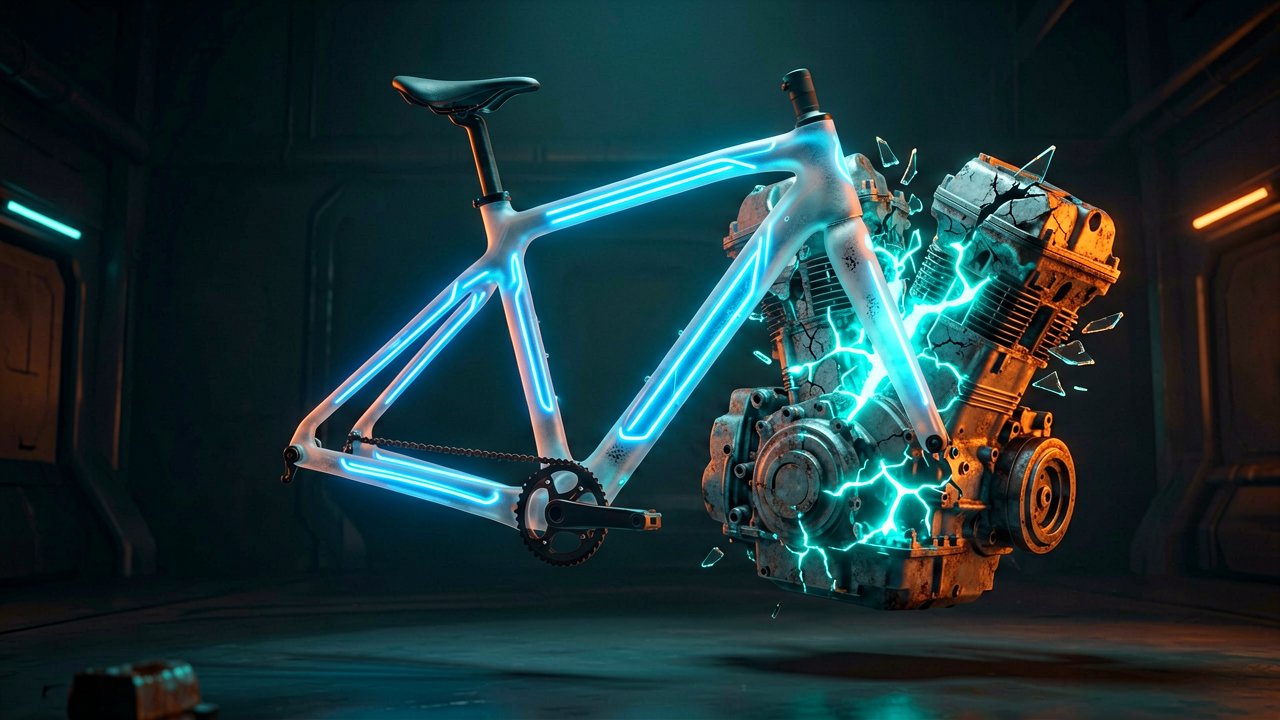
The first rule of thumb for any educator should be identifying whether the AI is acting as a bicycle for the mind or a replacement for the engine. According to research highlighted by Harvard Business Review, AI excels at "jagged frontier" tasks—things like brainstorming or summarizing—but it can stumble when deep, contextual reasoning is required. If a student uses AI to outline an essay, they’re still doing the heavy lifting of synthesis. If they use it to generate the final draft, the learning process has been outsourced entirely. The evidence suggests we should integrate AI when it lowers the barrier to entry for creative work, but keep it far away from the core cognitive milestones that define a subject.
I’ve seen this play out in real-time. When teachers use AI as a "simulated peer," it works wonders. Imagine a high school history class where students "debate" a GPT-4 instance programmed to take the perspective of a 19th-century labor leader. As noted by Education Week, these interactive simulations can drive engagement in ways a textbook never could. The key is that the AI isn't providing the answer; it's providing the friction that forces a student to think. That’s the sweet spot.
Personalization vs. Homogenization
One of the biggest selling points for AI in schools is "personalized learning." It sounds great on paper—every kid gets a tutor that never gets tired. However, we have to be careful that we don't trade human nuance for a digital average. Expert analysis from MIT Technology Review warns that AI tutors, if left unchecked, tend to steer students toward the most statistically likely paths, potentially stifling unconventional brilliance. We should use AI to scale feedback—giving students instant corrections on math problems, for instance—but we can't let it become the sole architect of a student's intellectual journey.

There's also the "boring work" factor. Ask any teacher what they hate most, and they’ll say administrative drudgery. This is where AI is an undisputed champion. Guidelines from UNESCO suggest that teachers who offload lesson planning and rubric generation to AI actually spend more time on high-value interactions with their students. It turns out that when you aren't drowning in paperwork, you're a better mentor. If AI can reclaim fifteen hours of a teacher's week, it belongs in the classroom, if only to save the humans at the front of it.
The Verdict: A Moving Target
Ultimately, the decision to integrate AI isn't a one-time toggle switch. It’s a dial we have to adjust constantly. The most successful implementations I’ve covered aren’t the ones that go "all-in" on the latest tools, but the ones that treat AI as a transparent part of the curriculum. We need to teach students how to audit these systems, as Wired often points out, because a "magic box" that gives answers is a trap, while a tool that requires a skeptical operator is an asset.
So, should we integrate AI into our teaching? Yes, but with a healthy dose of cynicism. Use it to automate the mundane, to simulate the impossible, and to bridge the gap for students who need a little extra help. But the moment it starts replacing the struggle of learning with the convenience of an output, it’s time to pull the plug. Education is about the transformation of the student, and that’s a process that still requires a human touch.
Beyond the Silicon Hype: The real tension in the AI-classroom nexus isn't found in the lines of code, but in the generational shift of what we define as "mastery." For decades, we’ve measured intelligence by a student's ability to retrieve and reassemble information—a skill set that AI has essentially commoditized overnight. As a reporter who watched the calculator wars of the 80s and the Wikipedia panic of the early 2000s, I see a familiar pattern: we are once again confusing the medium with the message. The evidence suggests that the "when" of AI integration depends entirely on whether we are testing for information or for wisdom.
The Ghost in the Machine: Stakeholder Skepticism
If you talk to veteran educators on the ground, their skepticism isn't just about Luddism; it’s about "epistemic encroachment." There is a documented fear that over-reliance on generative tools will lead to a generation of "prompt-monkeys" who can navigate a software interface but lack the foundational scaffolding to know when the machine is lying. This isn't a theoretical concern. As The Atlantic has noted, the "death of the take-home essay" is forcing a pivot back to oral exams and blue-book handwriting, a historical regression sparked by cutting-edge tech.
From the student perspective, the pressure is equally immense. In a hyper-competitive academic environment, the "arms race" of AI use creates a bizarre paradox where students feel they must use AI just to keep up with the volume of work, even if it degrades their own interest in the subject. This creates a feedback loop of mediocrity. Evidence-based guidelines from Nature suggest that when AI is used as a "crutch" rather than a "prosthetic," cognitive load decreases so much that long-term retention plummets. We’re essentially risking a form of intellectual muscle atrophy.
Historical Echoes and the Human Premium
We’ve been here before. When the printing press first made its way into European life, scholars feared that the "art of memory" would die out. It did, but it was replaced by the art of analysis. The current transition is similar but moves at warp speed. The seasoned reporter’s view is that we are entering an era of the "Human Premium"—where the most valuable parts of an education will be the things AI cannot simulate: empathy, ethical judgment, and the ability to hold a room’s attention during a difficult conversation. Guidelines from The New York Times editorial board emphasize that the "soft skills" are now the "hard skills."
Finally, we have to address the "black box" problem. Most AI integration guidelines focus on the output, but the process is where the bias lives. When we bring these tools into schools, we are bringing in the cultural and linguistic biases of the datasets they were trained on. Research from The Guardian highlights how AI often erases regional dialects and non-Western rhetorical styles in favor of a "Standard English" corporate tone. Deciding "when" AI belongs must include a rigorous audit of whether the tool is expanding a student's worldview or quietly narrowing it to fit a Silicon Valley template.
The Productivity Paradox: We are currently operating under the collective delusion that "more content" equals "better education." The push for AI integration often masks a deeper, more cynical drive toward academic industrialization. If an AI can help a student produce a 2,000-word report in thirty seconds, and a teacher can use AI to grade that report in ten, we haven't actually facilitated a transfer of knowledge; we’ve simply automated a hollow transaction. The contradiction is glaring: we are using high-tech tools to accelerate a process that, by its very nature, requires slow, deliberate, and often frustrating human effort.
The Myth of the Neutral Tool
There is a comforting lie that AI is just a more sophisticated hammer. But hammers don't have built-in hallucinations or a tendency to mirror the subconscious biases of their creators. When we integrate these systems, we aren't just adding a utility; we are inviting a third party into the pedagogical relationship—one that doesn't care about truth, only probability. According to analysis from The Economist, the "black box" nature of these models means we are effectively outsourcing the cognitive development of our youth to proprietary algorithms that even their engineers can't fully explain. That’s not a tool; that’s an unsupervised substitute teacher.
The long-term implication is a bifurcation of the workforce. We are staring down a future where the elite are taught to think critically without digital assistance—relying on expensive, human-centric "boutique" education—while the rest are trained to "co-pilot" with algorithms. This creates a new kind of digital divide. As noted by The New Yorker, the real luxury of the 21st century may be the absence of AI. If the evidence shows that human-to-human mentorship is the gold standard for learning, then every step toward AI integration must be viewed with a healthy amount of suspicion. We might be streamlining the "delivery" of education while accidentally gutting the substance of it.
Projecting the Intellectual Cost
What happens to the student who never experiences the "productive struggle"? Education experts often point to the "desirable difficulty" concept, where the very act of struggling to understand a concept is what makes it stick. By removing the friction of writing, coding, or problem-solving, we risk creating a generation of "expert beginners"—individuals who can produce sophisticated results without understanding the underlying logic. If we aren't careful, the integration of AI will succeed in making classrooms more efficient at the cost of making the students less capable.
"We’ve reached a fascinating point in human history where we’re using millions of dollars of hardware to help a student avoid writing a five-paragraph essay that the teacher is going to use a different set of hardware to avoid reading. It’s the ultimate efficiency: a world where the homework does itself and nobody has to learn anything at all."
Artūras Malašauskas is an AI Systems Integrator with 20+ years of production-grade web engineering experience. He has designed, shipped, and scaled enterprise Python/PHP systems for logistics, SaaS, and public-sector clients. For the past year, he has focused exclusively on AI integrations: deploying open-source LLMs, building generative media pipelines (image, audio, video), and engineering multi-agent workflows for real production environments. His standard: reproducibility, security, cost-efficient inference—no vaporware. He documents and evaluates emerging AI tooling, separating verified capabilities from marketing noise. Technical editor at: muza-ai.eu, ai-verslas.lt, ai-naujinos.lt Connect on LinkedIn
Comments