Ooma’s New AI Suite: The End of the "Missed Call" or the Death of the Personal Touch?
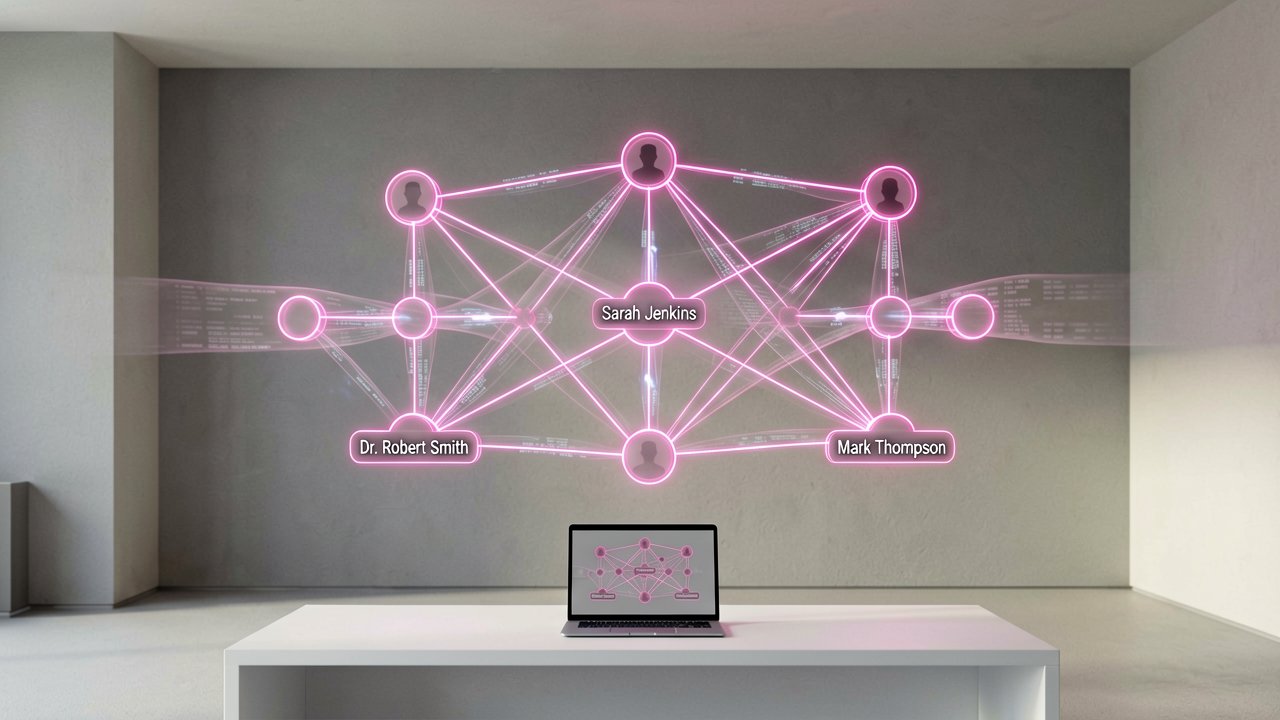
Ooma Brings the Brains: Why the New AI Suite is a Game-Changer for Small Business
If you've ever called a local business only to be met with a generic, soulless voicemail, you know the frustration of the "black hole" of customer service. For the business owner, that missed call isn't just a nuisance; it's a lost lead. Ooma, a company that’s long played the role of the scrappy underdog in the VoIP space, is looking to end that cycle. On May 12, 2026, the company officially pulled the curtain back on the Ooma AI Suite, a collection of tools designed to bring enterprise-level intelligence to the local hardware store or the boutique law firm.
The tech world is currently drowning in "AI for the sake of AI," but Ooma’s approach feels refreshingly grounded. They aren't trying to build a sentient phone system; they’re trying to solve the very human problem of being too busy to pick up the phone. According to reports from AIM Media House, the suite focuses on five core pillars: transcription, answering services, a beta "AI Receptionist," sentiment insights, and a clever integration with OpenAI. It’s a full-stack attempt to manage the entire lifecycle of a phone call without requiring a human to be tethered to a desk.
Automating the Front Line
The standout feature here—at least for those of us who hate taking notes—is AI Transcriptions. Included with the Ooma Office Pro Plus plan, it doesn’t just spit out a block of text; it identifies speakers and provides searchable summaries. Imagine being able to "Control-F" your last three months of client calls to remember a specific price quote. It’s the kind of feature that makes you wonder how we ever survived on scribbled Post-it notes, as noted by industry watchers at Dealroom.co.
Then there’s the AI Answering Service, which targets the "missed call" epidemic. For about $15 a month per license, businesses get a voice agent that does more than record audio. It can actually provide company info, answer basic FAQs, and capture specific customer details for follow-up. It’s essentially a filter that ensures when you finally do call a customer back, you actually know what they want. For those needing even more heavy lifting, the beta AI Receptionist ($49.99/license) steps up to handle complex routing and—the holy grail of small business automation—appointment booking.
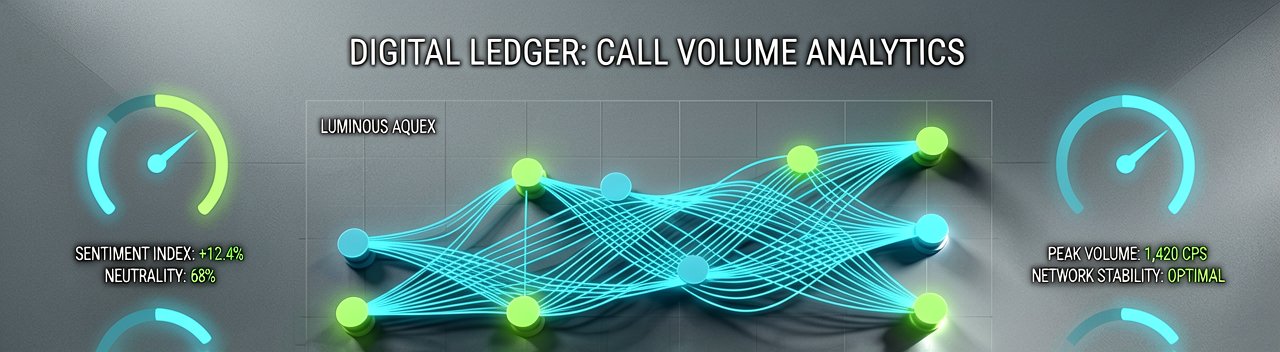
What really ties this together is the "AI Insights" dashboard. We often talk about "big data," but small businesses have data too; it’s just usually locked away in unmonitored phone calls. By analyzing sentiment and surfacing trends, Ooma is giving owners a bird's-eye view of why people are calling and how they feel about the service they're getting. As Dennis Peng, Ooma’s SVP of Product Management, put it in a statement shared by Yahoo Finance, this isn't just about adding features—it’s about transforming how teams make decisions. If the tech works as promised, the "sorry we missed you" era of business might finally be coming to a close.
Would you trust an AI receptionist to handle your customer bookings, or do you think the human touch is still irreplaceable for your specific industry?
The Strategy Behind the Static: Why Ooma is Doubling Down Now
Beyond the Spec Sheet: While the headline features of the Ooma AI Suite might seem like a natural evolution, there is a deeper chess game being played here. For years, the VoIP industry has been locked in a race to the bottom on pricing, treating voice as a mere commodity. By pivoting toward an integrated AI layer, Ooma is attempting to shift the narrative from "how much does your dial tone cost?" to "how much time does your phone system save you?" It’s a classic move from a hardware-centric past into a software-as-a-service future where the value isn't the call itself, but the data harvested from it.
Veteran observers will notice that Ooma isn't just throwing these tools at the wall to see what sticks. They’ve tiered the rollout with surgical precision. By including basic transcriptions in the Pro Plus tier while walling off the high-intensity AI Receptionist behind a premium $49.99 license, they are acknowledging a fundamental truth about their customer base: the local plumber has very different needs than a multi-office dental practice. This isn't a "one size fits all" AI dump; it’s a modular ecosystem designed to scale with a business's complexity.

Historically, Ooma built its reputation on the "Telo" box—the consumer-friendly device that promised free home phone service for life after the initial purchase. That legacy of simplicity is a double-edged sword. To win over larger enterprise clients or even sophisticated startups, Ooma has to prove that its "AI Receptionist" isn't just a glorified IVR (Interactive Voice Response) system from the 90s. The integration of OpenAI’s models suggests they are leveraging external LLM horsepower to ensure the interactions feel less like a robot and more like a competent assistant, a distinction that Ooma's Investor Relations emphasizes as a core competitive advantage.
There’s also the "silent" stakeholder to consider: the exhausted office manager. In the world of small business, the phone is often the greatest source of cognitive load. By automating the transcription and sentiment analysis, Ooma is essentially offering a digital "second brain." For a seasoned tech reporter, the most interesting part isn't the AI’s ability to book an appointment—it’s the "Sentiment Insights." If a business owner can see a spike in "frustrated" calls on a Tuesday afternoon, they can diagnose operational bottlenecks that were previously invisible. It turns the phone system into a diagnostic tool for the entire company.
Ultimately, Ooma is betting that the small business sector is finally ready to embrace automation, provided it doesn't require a PhD to configure. If they can bridge the gap between "high tech" and "highly usable," they might just outmaneuver the giants of the industry who often overlook the needs of the Main Street shop. The coming months will be the real test: will customers feel the "uncanny valley" of a digital receptionist, or will they simply be happy that someone—or something—finally answered the phone?
Do you think small business owners will be more concerned about the cost of the premium AI tiers or the potential learning curve of managing these new automated workflows?
The Uncanny Valley of the Small Business Dial Tone
Reading Between the Lines: We’ve been promised the "death of the receptionist" for decades, but Ooma’s latest pivot raises a thorny question: is the average small business actually ready for the friction that AI creates? While the $49.99 AI Receptionist sounds like a bargain compared to a human salary, it assumes a level of digital hygiene that many local businesses simply don't possess. An AI can only book an appointment if the business’s underlying calendar is perfectly synced and managed—a big "if" for a mechanic who still keeps a paper ledger under the counter.
There is also a palpable tension between Ooma’s "sentiment analysis" and the reality of customer service. It’s one thing for an LLM-powered dashboard to flag a caller as "angry"; it’s quite another to do something about it. There is a risk that these tools will provide a veneer of sophistication while masking a decline in actual service quality. If a business owner uses AI insights merely to watch a dashboard of unhappy icons rather than picking up the phone to fix the problem, the technology becomes a high-tech voyeur rather than a productivity tool.
Furthermore, the reliance on OpenAI's infrastructure introduces a layer of third-party dependency that small businesses might not be prepared for. When the LLM "hallucinates" or the API experiences latency, the local florist isn't just dealing with a glitch—they’re dealing with a confused bride-to-be on the other end of the line. Ooma is essentially asking its users to bet their brand reputation on the reliability of generative models that were never originally designed for the rigid precision required by a professional phone system.
The contradiction at the heart of this suite is the "human touch" paradox. Small businesses often win against big-box retailers specifically because they aren't automated; they offer a person who knows your name. By replacing that person with a voice agent that "identifies speakers and provides searchable summaries," Ooma is pushing small businesses toward the very corporate sterility they usually try to avoid. It’s a gamble that efficiency will outweigh the loss of personal connection.
As this tech rolls out, the real metric of success won't be the number of transcriptions generated, but whether these businesses can maintain their soul while outsourcing their ears. If the AI becomes just another layer of "press 1 for frustration," then Ooma hasn't solved the missed call problem—they’ve just digitized it. The industry is watching to see if this is a genuine leap forward or just a very expensive way to tell a customer that no one is actually in the office.
Given the privacy concerns surrounding AI, do you think customers will be comfortable knowing their "sentiment" is being analyzed by an algorithm during a private business call?
"At the end of the day, we’re hurtling toward a future where an AI bot will call a business to negotiate a price with another AI bot, while the two humans involved are both off getting coffee—blissfully unaware that their digital shadows are currently arguing over the cost of a leaking pipe."
Artūras Malašauskas is an AI Systems Integrator with 20+ years of production-grade web engineering experience. He has designed, shipped, and scaled enterprise Python/PHP systems for logistics, SaaS, and public-sector clients. For the past year, he has focused exclusively on AI integrations: deploying open-source LLMs, building generative media pipelines (image, audio, video), and engineering multi-agent workflows for real production environments. His standard: reproducibility, security, cost-efficient inference—no vaporware. He documents and evaluates emerging AI tooling, separating verified capabilities from marketing noise. Technical editor at: muza-ai.eu, ai-verslas.lt, ai-naujinos.lt Connect on LinkedIn
Comments