The All-at-Once Revolution: Why CRAISEE is Betting Everything on Creative Consolidation
The Creative "Chaos" Killer: Flux AI Asia Unleashes CRAISEE on the Global Stage
Let’s be honest: the current AI landscape is a mess of open tabs and forgotten subscriptions. If you’re a creator, you’ve likely spent half your morning jumping between a text generator, a separate image tool, and a specialized audio app just to get one decent draft out. It’s exhausting, and it's exactly the friction that Flux AI Asia is aiming to erase. With the official global launch of Campaign Brief Asia, the company is positioning CRAISEE as the first "all-at-once" creative operating system, promising to turn a fragmented nightmare into a single, unified flow.
The vision behind CRAISEE didn't just appear out of thin air; it’s the brainchild of industry veterans who’ve spent decades in the trenches of global creative agencies like Cannes Lions and D&AD. CEO Julie Jihyun Kang realized that while AI capabilities were exploding, the actual usability for marketers and planners was lagging behind. You shouldn’t need a degree in prompt engineering or five different browser windows to bring an idea to life. CRAISEE's answer? A signature "Single Prompt Box" that connects users to over 100 different AI models across text, image, video, and audio from one starting point.
What sets CRAISEE apart isn't just the sheer number of models—it’s how they talk to each other. The platform introduces "Simultaneous Multi-Generation," which is tech-speak for "you don't have to wait." You can fire off a prompt for a video while an image is still rendering, or test the same concept across multiple models in parallel. It’s a workflow designed for the fast-paced K-content era, where speed and visual impact are everything. In fact, though the platform is built for a global audience with an English-first interface, it leans heavily into the high digital adaptability and execution speed that defines the Campaign Brief Asia production sensibility of the Korean market.
It’s not just for solo freelancers, either. While the individual creator plans are already making waves—with early adopters snagging "all-you-can-eat" access—Flux AI has already signaled its intent to conquer the corporate world. The recent rollout of Detroit Free Press (CRAISEE Teams Enterprise) suggests that the goal is to replace the "AI tool chaos" currently plaguing marketing departments. By consolidating thousands of models into a collaborative hub, they’re betting that businesses will choose simplicity and scalability over managing a dozen separate bills every month.
As we watch the platform move from its successful alpha phase on Product Hunt to this full-scale global release, the question isn't whether we need AI—it’s how much longer we’re willing to work for the tools instead of making the tools work for us. CRAISEE feels like the first real attempt to put the "creative" back in front of the "AI," and if their early momentum is any indication, the days of the tab-switching shuffle might finally be numbered.
What Most Reports Miss: The Architect’s Gamble
Beyond the press release buzz, the real story of CRAISEE isn't just about aggregating algorithms; it’s about a fundamental shift in how we perceive the "blank page." Most platforms treat AI as a vending machine—you put in a coin, you get a candy bar. But Flux AI Asia, under the sharp eye of Julie Jihyun Kang, is betting on a "multi-lane" highway approach. By allowing creators to trigger text, image, and video outputs from a single conceptual spark, they are effectively trying to collapse the distance between a strategist's thought and a designer's execution. This isn't just faster; it changes the cognitive load of creativity.
From a historical lens, this move feels like the "Adobe-ification" of the generative era. In the early 90s, creative software was fragmented until suites brought everything under one roof. We are seeing that history repeat itself, but at ten times the speed. Stakeholders within the K-tech ecosystem have whispered that the true power of CRAISEE lies in its "Simul-Gen" architecture. While a solo artist might use it to save $50 on subscriptions, a global agency can use it to A/B test entire campaign visual directions in the time it takes to finish a single cup of coffee. That kind of efficiency is a terrifying prospect for traditional billable-hour models, but a goldmine for the modern attention economy.
There is also a subtle, culturally rooted edge to this launch. Flux AI Asia isn't shy about its roots in the high-octane Korean digital landscape. In Seoul, "fast" is a baseline, not a feature. By exporting this "Bali-Bali" (hurry-hurry) culture through a global, English-first interface, CRAISEE is challenging Western platforms that have traditionally focused on deep, single-model refinement. They aren't just selling a tool; they are selling a pace of work that most global firms haven't yet mastered. It's a strategic move to set the tempo for the next phase of the AI arms race.
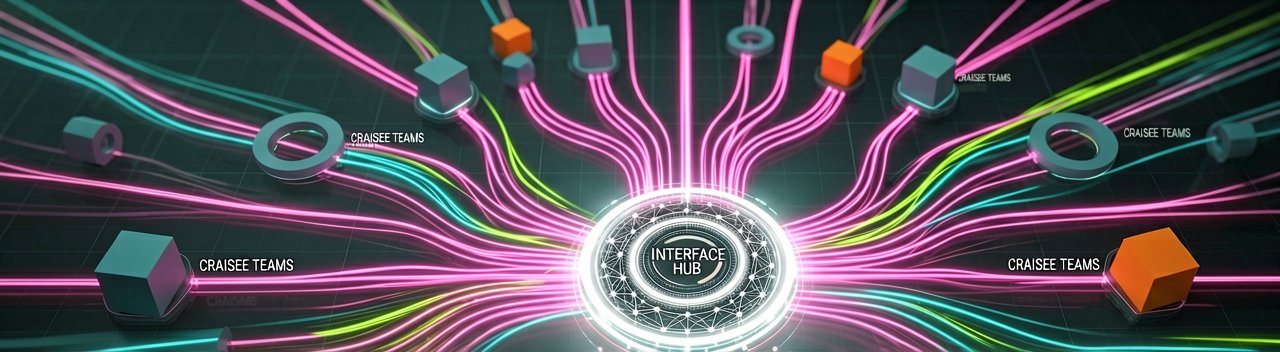
Ultimately, the industry’s reaction to the "Teams Enterprise" tier will be the ultimate litmus test. Industry veterans are watching closely to see if CRAISEE can solve the "walled garden" problem—where data and assets are stuck in individual silos. If Flux AI can successfully convince CMOs that their platform is the "secure, unified vault" for all brand-trained AI assets, they won’t just be a player in the market; they will be the market’s infrastructure. For now, the global launch serves as a loud, clear invitation to leave the browser-tab chaos behind and step into a more streamlined, albeit high-velocity, creative future.
Reading Between the Lines: The Integration Paradox
The promise of an "all-at-once" platform sounds like a dream, but for the battle-hardened creative lead, it also raises a familiar red flag: the "jack of all trades, master of none" problem. While Flux AI Asia is shouting from the rooftops about their 100+ models, there is a lingering tension between quantity and quality. In a world where Midjourney still reigns supreme for hyper-realistic lighting and Sora looms over the video horizon, can a unified dashboard really squeeze the best out of every disparate engine? Or are we trading the "chaos" of multiple tabs for the "mediocrity" of a standardized interface that might strip away the granular controls professional power-users demand?
There is also the thorny issue of the "Single Prompt Box" logic. It assumes that a prompt meant for a snappy marketing headline can—and should—be the same seed used to generate a 4K cinematic trailer. Any prompt engineer worth their salt will tell you that talking to a Large Language Model (LLM) is a completely different dialect than coaxing a Diffusion model into not mangling human fingers. By streamlining this process into a one-size-fits-all entry point, CRAISEE risks oversimplifying the creative craft. It’s a bold bet that the industry prefers "good enough and fast" over "perfect and laborious." Given the current trajectory of the attention economy, they might be right, but it’s a move that may alienate the high-end purists.
Furthermore, the pivot to "Teams Enterprise" reveals a calculated play for corporate compliance that might clash with the freewheeling nature of AI experimentation. Flux AI is pitching a unified vault, but in doing so, they become the ultimate gatekeeper of a company’s creative DNA. If an agency moves its entire workflow into CRAISEE and the platform experiences a hiccup—or worse, a pricing pivot—the "all-in-one" convenience quickly turns into a "single-point-of-failure" nightmare. It’s the classic SaaS trap: the more helpful the tool, the more painful the handcuffs.
Projecting forward, the success of CRAISEE hinges on whether it can maintain its speed advantage without becoming a bloated legacy system itself. As more models are added, the "simultaneous generation" feature will face massive compute pressures. Will users see a degradation in speed as the platform scales globally? Flux AI Asia is sprinting at a K-pop tempo, but the global enterprise market is a marathon that eats "disruptors" for breakfast if their backend can’t keep up with the hype. It is a high-stakes gamble on the idea that the future of creativity isn't about the brush, but the person who owns the gallery.
"We were told AI would give us more free time; instead, it just gave us the ability to make five times as many mistakes in half the time—at least now, thanks to CRAISEE, we can do it all in a single browser tab without the dignity of a coffee break."
Artūras Malašauskas is an AI Systems Integrator with 20+ years of production-grade web engineering experience. He has designed, shipped, and scaled enterprise Python/PHP systems for logistics, SaaS, and public-sector clients. For the past year, he has focused exclusively on AI integrations: deploying open-source LLMs, building generative media pipelines (image, audio, video), and engineering multi-agent workflows for real production environments. His standard: reproducibility, security, cost-efficient inference—no vaporware. He documents and evaluates emerging AI tooling, separating verified capabilities from marketing noise. Technical editor at: muza-ai.eu, ai-verslas.lt, ai-naujinos.lt Connect on LinkedIn
Comments