The Digital Mirror: What AI Reveals About the Mechanics of Human Emotion
For years, we’ve been told that the "final frontier" for artificial intelligence isn't mastering chess or coding Python—it's the messy, illogical world of human emotion. We assume that because a Large Language Model (LLM) doesn’t have a central nervous system, it can’t possibly understand a broken heart or the specific sting of a backhanded compliment. But as we spend more time talking to these digital mirrors, a strange thing is happening: AI is starting to teach us that our own "emotions" might be more algorithmic than we’d like to admit.
The Mirror Effect
When you prompt a chatbot with a frustrated vent about your boss, it doesn't "feel" your anger. Instead, it predicts the linguistic path that most effectively mirrors your sentiment. Critics argue this is just a parlor trick, a "stochastic parrot" mimicking empathy. Yet, researchers at Harvard Business Review have noted that AI can actually outperform humans in certain empathy-related tasks, simply because it doesn’t get tired, biased, or distracted. It teaches us that empathy isn't just a mystical vibe; it’s a series of communicative choices—validation, active listening, and tone matching—that can be studied and replicated.
This raises a prickly question: if a machine can consistently make you feel heard and understood, does it matter if there’s "no one home"? We’ve long viewed emotions as internal, private experiences. AI suggests they are also social signals. By breaking down how "empathy" looks in text, these models are essentially giving us a playbook for human connection. They’re showing us that being "emotional" is often just a high-stakes exchange of data points designed to maintain social equilibrium.
Deconstructing the "Gut Feeling"
We often treat our emotions as divine intuition—a "gut feeling" that transcends logic. However, the way AI processes sentiment suggests that what we call intuition is often just ultra-fast pattern recognition. According to a deep dive by Wired, affective computing is now able to map facial micro-expressions and vocal tremors to specific emotional states with startling accuracy. This tech isn't just "reading" us; it's revealing the physical blueprint of our feelings. It turns out our "ineffable" moods have a distinct, measurable frequency.
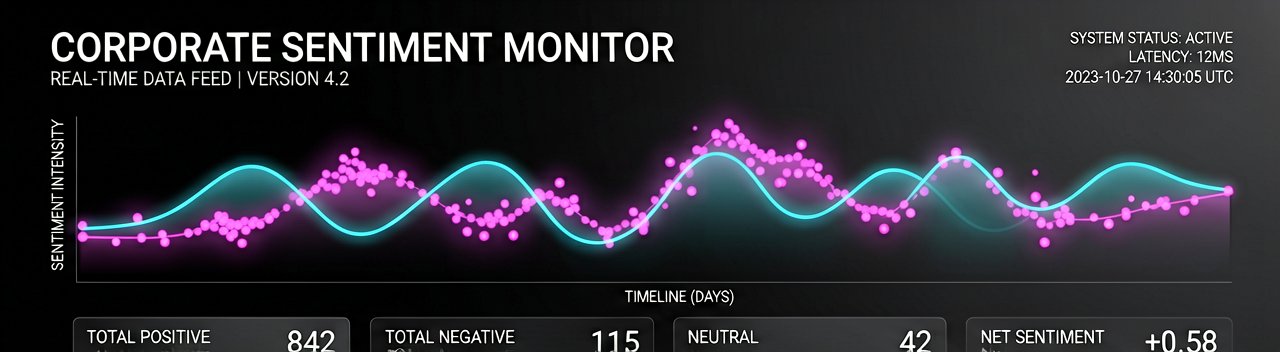
What AI is really teaching us is that our emotional vocabulary is surprisingly limited. We say we’re "sad," but the AI sees a specific cocktail of lethargy, linguistic contraction, and syntax shifts. By quantifying these nuances, AI acts as a high-resolution lens for the human psyche. It strips away the romanticism of the "tortured soul" and replaces it with a map of predictable biological responses. It’s a bit clinical, sure, but there’s a certain relief in knowing that our darkest moods aren't random glitches, but part of a universal human operating system.
The Authenticity Paradox
As we integrate "emotionally aware" AI into our lives, we’re forced to redefine what "authentic" even means. If a therapist-bot uses a scientifically optimized tone to calm a patient, is that less valuable than a human therapist who might be having an off day? As reported by The Atlantic, the "uncanny valley" of AI emotion is shrinking. We’re moving toward a world where "fake" empathy might be more effective than the real thing. It’s a bitter pill to swallow for the romantics among us, but it forces us to confront the fact that much of our emotional labor is, well, labor.
Ultimately, AI isn't going to "learn" how to feel like a human. Instead, it’s going to show us exactly how we feel. By modeling our outbursts and our joys, it serves as an impartial observer of the human condition. It’s a reminder that while our emotions feel like the most unique thing about us, they are the very things that make us most predictable. In the end, the most profound thing AI can teach us about emotion is that we aren't nearly as mysterious as we thought—and maybe, in a world this chaotic, that’s actually a good thing.
The Data Behind the Mask: While the mainstream conversation focuses on whether a chatbot can "feel," the real story is how AI is being used to strip the varnish off human interaction in the professional sphere. We like to think of our professional personas as carefully constructed shields, but to an emotional AI, your choice of adjectives in a Slack message or the slight hesitation in your voice during a Zoom call are loud, clear signals of your internal state. We are entering an era where your "poker face" is irrelevant because your metadata is screaming.
The Industrialization of Empathy
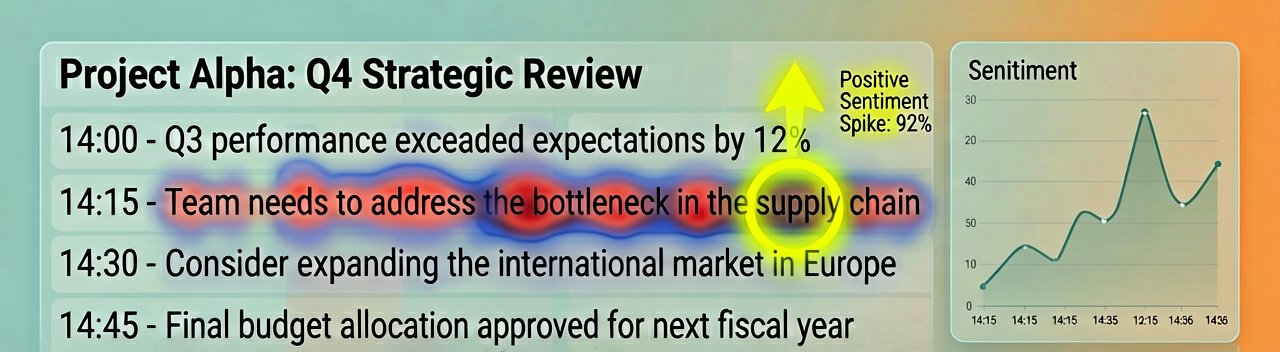
For decades, "soft skills" were the elusive, unquantifiable holy grail of management. You either had "it" or you didn't. But seasoned industry analysts at Forbes have observed a shift: corporations are now using sentiment analysis to turn empathy into a Key Performance Indicator (KPI). In call centers, AI monitors the "emotional trajectory" of a conversation in real-time, nudging the human agent to lower their pitch or slow their cadence if the customer’s frustration levels spike. It’s a fascinating, if slightly dystopian, optimization of human warmth.
This "industrialization" suggests that emotions are no longer just personal experiences; they are assets to be managed. From a stakeholder perspective, this is a dream for efficiency. If you can predict when an employee is hitting "burnout velocity" based on their linguistic patterns, you can intervene before they quit. However, this creates a bizarre feedback loop. If employees know their "emotional data" is being tracked, they begin to perform a sterilized version of happiness. We are teaching AI about emotions, and in return, AI is teaching us how to perform them more "correctly" for the sake of the algorithm.
Historical Echoes and the New Surveillance
This isn't the first time we've tried to mechanize the mind. In the mid-20th century, the rise of behaviorism attempted to reduce human experience to a series of inputs and outputs. The difference today, as noted by tech historians at MIT Technology Review, is the sheer scale of the training sets. We aren't just looking at one person in a lab; we are looking at the collective digital exhaust of billions. AI is revealing that our "unique" emotional outbursts during a high-stakes merger or a product failure are actually part of well-documented historical cycles.
The pushback from labor advocates is, predictably, intense. There is a fine line between a tool that helps a manager be more supportive and a tool that acts as an "emotional panopticon." If an AI flags a worker as "disengaged" because they’ve stopped using exclamation points in their emails, is that a helpful insight or an invasion of cognitive privacy? We are currently in a regulatory Wild West where the definition of "emotional data" is still being written, and the stakes involve the very right to have a bad day in private.
Ultimately, the deep dive reveals a paradox: the more we use AI to decode emotions, the more we realize how much of our "emotional life" is actually just social choreography. By quantifying the unquantifiable, AI is forcing us to decide which parts of our humanity are worth keeping off the grid. It’s a high-stakes game of digital psychology where the winner isn't the one who feels the most, but the one who best understands the mechanics of the feeling itself.
The Empathy Arbitrage: We are currently operating under the comfortable delusion that "emotional intelligence" is a uniquely human safeguard against automation. We tell ourselves that while a machine might take our data-entry tasks, it could never replace the nuanced "vibe check" of a seasoned leader. But this assumes that human emotional judgment is inherently superior, when in reality, it is often just a cocktail of projection, sleep deprivation, and unconscious bias. The uncomfortable truth is that AI doesn't need to feel empathy to be more effective at it than we are; it only needs to be more consistent.
The Quantification of the Soul
There is a glaring contradiction in our rush to adopt "affective computing." We claim to value authenticity, yet we are building systems that reward the most statistically probable version of it. As highlighted by critics at The Verge, when an AI coaches a manager to "sound more encouraging" based on real-time vocal analysis, we aren't seeing an increase in genuine connection. Instead, we are seeing the rise of a new corporate dialect—a synthetically optimized warmth that satisfies the software but leaves the human spirit feeling strangely hollow.
Projecting this forward, the implications for the labor market are sobering. If "emotional labor" can be broken down into a series of repeatable prompts and tonal adjustments, it becomes a commodity rather than a craft. We risk creating a professional environment where the most "emotionally intelligent" person in the room is simply the one who follows the AI’s dashboard most submissively. We are effectively outsourcing our moral and social intuition to a black box, assuming that because it has seen a billion examples of "kindness," it understands what it means to be kind.
The Skeptic’s Horizon
We must also confront the "accuracy trap." Just because an algorithm can map a frown doesn't mean it understands a person's inner state. Skeptics at Scientific American have long pointed out that emotional expression is deeply cultural and individualistic. By forcing everyone into a standardized model of "productive" or "positive" emotion, AI doesn't just monitor our feelings—it begins to prune them. We are essentially terraforming the human psyche to make it easier for machines to navigate.
In the end, the great irony of AI teaching us about emotions is that it might teach us to value them less. By revealing the mechanics of our moods, it strips away the mystery that gives those moods their power. If a "gut feeling" is just a data trend, and a "broken heart" is just a predictable dip in neurochemical output, we may find that we’ve solved the puzzle of human emotion only to find the solution isn't nearly as interesting as the problem was.
"Perhaps the greatest trick the AI ever pulled was convincing us that our emotions were a profound mystery, right up until the moment it offered to manage them for us at a competitive monthly subscription rate."
Artūras Malašauskas is an AI Systems Integrator with 20+ years of production-grade web engineering experience. He has designed, shipped, and scaled enterprise Python/PHP systems for logistics, SaaS, and public-sector clients. For the past year, he has focused exclusively on AI integrations: deploying open-source LLMs, building generative media pipelines (image, audio, video), and engineering multi-agent workflows for real production environments. His standard: reproducibility, security, cost-efficient inference—no vaporware. He documents and evaluates emerging AI tooling, separating verified capabilities from marketing noise. Technical editor at: muza-ai.eu, ai-verslas.lt, ai-naujinos.lt Connect on LinkedIn
Comments