The Shadow AI Paradox: Why Your Best Employees Are Your Biggest Security Risks
We’ve all seen the flashy keynotes promising a frictionless future where AI handles the drudgery, but the reality on the ground is looking a lot messier—and frankly, more dangerous. A startling new survey has pulled back the curtain on "Shadow AI," revealing that a massive 68% of employees are now using unsanctioned AI tools to get their jobs done. It’s the ultimate workplace open secret: while IT departments are busy drafting restrictive policies, the workforce has already moved on, dragging sensitive client data into the wild west of open-source and unauthorized models.
The numbers, highlighted in recent reporting from HRM Online, suggest we’ve reached a breaking point. It’s not just that people are using these tools; it’s that 57% of them are feeding confidential corporate information directly into prompts. In industries where "confidentiality" isn’t just a buzzword but a legal requirement, this is the equivalent of leaving the office safe wide open on a busy street corner.
The Privacy Paradox in Professional Services
For the legal and financial sectors, the stakes couldn't be higher. We’re seeing a growing trend where even the most cautious firms are being undermined from within. According to a deep dive by Today’s Conveyancer, the use of unauthorized AI isn't just a technical glitch; it's a fundamental breach of client trust. When a junior associate or a financial analyst plugs a sensitive contract into a free, open-source model to "summarize the key points," they might as well be publishing it on a public forum.
The legal community is already feeling the sting. As noted by Norton Rose Fulbright , recent court guidance has sent shockwaves through the industry by suggesting that the use of open-source AI can actually waive legal professional privilege. Once that data is out there—used to train someone else’s model or sitting in an unvetted server—you can't just "un-ring" that bell. The protection is gone, and the liability remains.

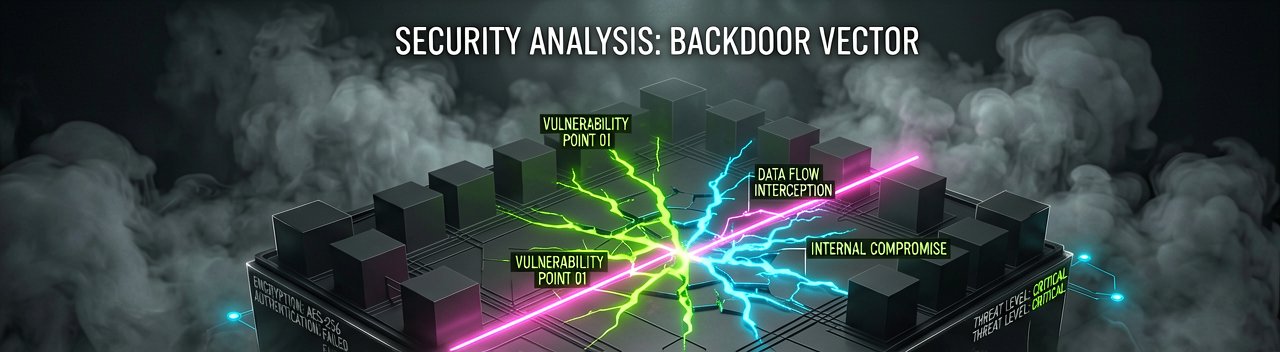
This isn't just about accidental leaks, either. The technical risks inherent in open-source AI are becoming increasingly difficult to ignore. Experts writing for MDPI have pointed out that many of these models are riddled with vulnerabilities, from data leakage to "backdoor" attacks where malicious code is hidden within the model's architecture. For an enterprise, relying on these tools is like building a skyscraper on quicksand.
The "Shadow AI" Culture Gap
So, why is this happening? It’s a classic case of the "productivity trap." Employees feel the squeeze to deliver faster and better, and they see AI as their secret weapon. A report from SQ Magazine found that the average cost of a data breach involving shadow AI has climbed to a staggering $4.2 million. Yet, 60% of employees admit they’ll keep using these tools if it helps them meet a deadline. It’s a short-term win for the individual that creates a long-term catastrophe for the organization.
The cultural divide is equally telling. While 91% of executives feel the pressure to implement AI, they aren't providing the training to do it safely. As AmplifAI points out, 70% of frontline agents are using unsanctioned tools, yet less than half feel they've received adequate training. This "don't ask, don't tell" approach to technology is exactly how confidentiality dies in the modern office.
If there's a silver lining here, it's that the "wait and see" era is officially over. Firms can no longer afford to treat AI as a future problem. Whether it's through stricter technical blocks or—more effectively—providing secure, enterprise-grade alternatives, the goal has to be bringing AI out of the shadows. Because right now, the only thing more widespread than AI adoption is the risk that comes with it.
The Quiet Crisis in the Cubicle: What the raw statistics fail to capture is the psychological tug-of-war happening between a worker’s desire to excel and their duty to protect. This isn't a story of malicious actors trying to sell corporate secrets; it's a story of "the helpful employee" who is inadvertently becoming a liability. In the high-pressure corridors of modern professional services, the friction of official procurement—waiting months for a security-cleared AI license—is losing out to the instant gratification of a browser tab and an open-source model.
Historically, we’ve seen this movie before. In the late 2000s, it was "Bring Your Own Device" (BYOD) and the rise of Dropbox. Back then, IT departments tried to ban personal smartphones and consumer cloud storage, only to find that the productivity gains were too intoxicating for the workforce to give up. The difference today is the nature of the "leak." When you put a file on an unauthorized cloud drive, the data just sits there. When you feed it into a generative AI, that data becomes part of a collective "brain," potentially resurfacing in the output of a competitor’s prompt.
The Middle Management Blind Spot
One perspective often overlooked is that of middle management. While C-suite executives focus on quarterly ROI and IT directors focus on firewalls, managers are often the ones quietly encouraging the use of these tools. They are under immense pressure to do more with less, and if a team member produces a flawless report in half the time using an unvetted LLM, many managers are inclined to look the other way. This creates a "culture of plausible deniability" that is incredibly difficult to audit until a breach actually occurs.
Stakeholders in the cybersecurity insurance world are already sounding the alarm. We’re starting to see a shift where insurers are scrutinizing "AI hygiene" during the underwriting process. If a firm can’t prove it has a handle on Shadow AI, they might find themselves uninsurable or facing astronomical premiums. For a law firm or a medical consultancy, the loss of professional indemnity insurance is an existential threat that far outweighs any minor speed boost gained from an unauthorized chatbot.
Ultimately, the "deep dive" reveals that the problem isn't the technology, but the vacuum left by slow-moving corporate policy. Open-source AI offers incredible transparency and customization, but without a sandbox to play in safely, employees are building their own playgrounds in the middle of a minefield. The pivot we are seeing now among savvy tech leaders is a move toward "Private AI"—locally hosted versions of open-source models that offer the same power without the phone-home risk. It’s the only way to satisfy the hunger for innovation while keeping the digital doors locked.
Reading Between the Lines: There is a glaring irony at the heart of this "Shadow AI" panic: the very organizations screaming the loudest about confidentiality are often the ones starving their teams of the resources needed to work securely. We talk about unauthorized use as a failure of employee ethics, but it’s more accurately a failure of infrastructure. Companies are essentially asking their staff to win a Formula 1 race while refusing to provide anything but a bicycle, then acting shocked when the drivers "unlawfully" borrow a sports car from a stranger.
The contradiction becomes even more absurd when you look at how "open source" is being demonized in the boardroom. For years, the tech world has relied on open-source software—from Linux to Apache—to power the global economy. Yet, in the context of AI, "open source" has become shorthand for "insecure." This is a fundamental misunderstanding. The risk isn't necessarily the open-source nature of the model itself, but the lack of a controlled environment to run it. By banning these tools outright rather than hosting them internally, IT departments are actually driving users toward the least secure, public-facing versions of those very same models.
The Illusion of the "AI Ban"
Furthermore, we need to be skeptical of the "total ban" strategy currently favored by risk-averse industries. History tells us that a ban is simply a catalyst for better concealment. When a company blocks ChatGPT on work laptops, employees don't stop using it; they just pull out their personal iPhones. This creates a "black box" of productivity where the work is still being done by AI, but the oversight is zero. The data is still leaving the building—it's just doing so over a 5G connection instead of the corporate Wi-Fi.
The long-term implication isn't just about data leaks; it’s about the erosion of institutional knowledge. If a significant portion of a firm’s output is being generated by unmonitored third-party models, who actually owns the "intelligence" of the company? We are moving toward a future where a company’s most valuable asset—its expertise—is being outsourced, one prompt at a time, to a handful of silicon giants and decentralized model repositories. That is a strategic vulnerability that no firewall can fix.
If we want to get serious about confidentiality, we have to stop treating AI like a naughty hobby and start treating it like the core utility it has become. The measured reality is that you cannot "police" your way out of a technological shift this profound. You can either build a secure pipeline that your employees actually want to use, or you can keep drafting memos while your client data continues its slow, automated migration into the public cloud.
"We’ve reached a point where the 'Official Corporate AI Policy' is basically a beautifully formatted PDF that everyone ignores so they can get their work done before dinner. It’s the digital equivalent of a 'No Swimming' sign at a beach full of people who are already wet."
Artūras Malašauskas is an AI Systems Integrator with 20+ years of production-grade web engineering experience. He has designed, shipped, and scaled enterprise Python/PHP systems for logistics, SaaS, and public-sector clients. For the past year, he has focused exclusively on AI integrations: deploying open-source LLMs, building generative media pipelines (image, audio, video), and engineering multi-agent workflows for real production environments. His standard: reproducibility, security, cost-efficient inference—no vaporware. He documents and evaluates emerging AI tooling, separating verified capabilities from marketing noise. Technical editor at: muza-ai.eu, ai-verslas.lt, ai-naujinos.lt Connect on LinkedIn
Comments