The Virtual Pivot: SonicWall Gen 8 NSv XS Challenges the Hardware Status Quo
SonicWall is finally bridging the gap between its high-octane hardware and the increasingly virtualized world of managed services. The company has officially rolled out the Gen 8 NSv XS, a subscription-based virtual firewall designed from the ground up for Managed Service Providers (MSPs) and MSSPs. It’s a move that feels less like a simple product refresh and more like a necessary pivot, as more small businesses ditch their on-premise hardware for the cloud. According to SecurityBrief Asia , this launch coincides with a surge in attack sophistication, proving that "perimeter-only" security just isn't cutting it anymore.
Powering the Virtual Edge
If you've been following the Gen 8 hardware rollout, you know the focus has been on throughput and integrated intelligence. The NSv XS brings those same guts—specifically the RTDMI™ and RFDPI engines—to virtual environments. We’re talking about serious performance jumps here: threat prevention throughput has nearly doubled compared to older models like the NSv 10, and encrypted traffic inspection is eight times more capable. As reported by SonicWall, these improvements are vital for MSPs managing distributed branch locations and micro-SMBs where bandwidth needs are ballooning.
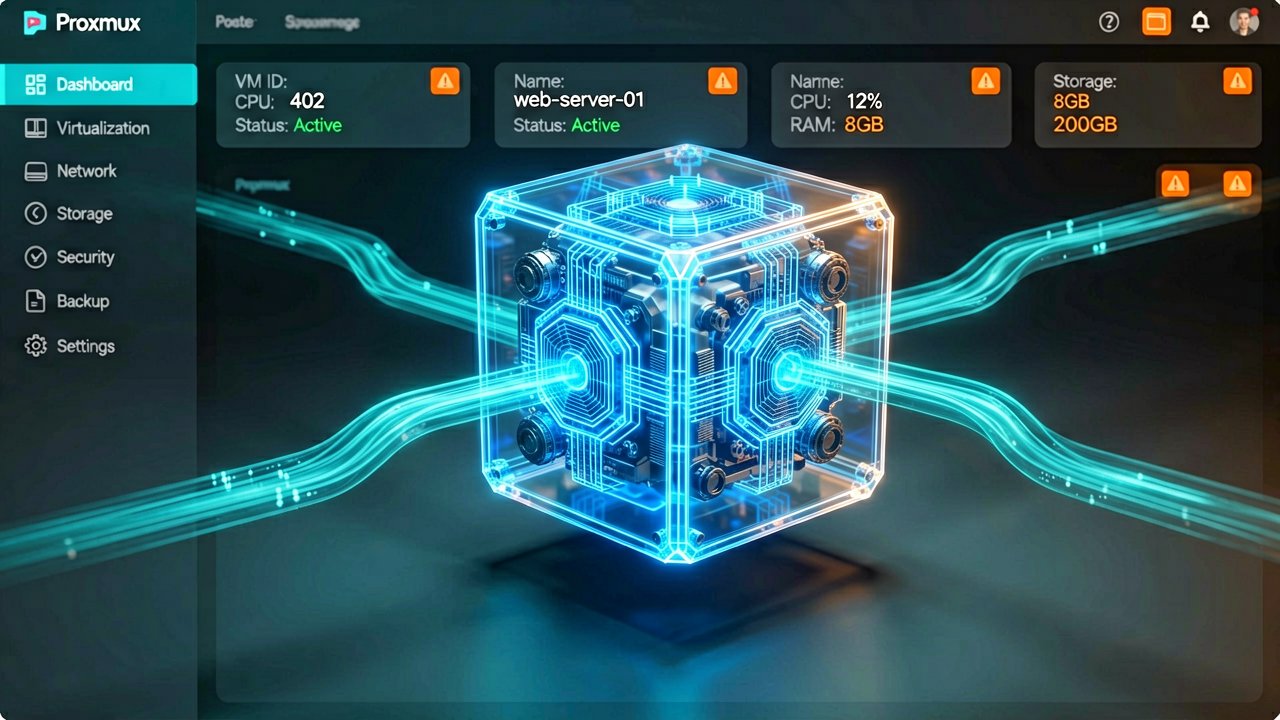
One of the most interesting additions is support for Proxmox. While VMware and Hyper-V remain the industry heavyweights, Proxmox has become a cult favorite for MSPs looking for flexible, open-source alternatives. By including it in the Gen 8 lineup, SonicWall is acknowledging where the market is actually heading rather than where it’s been. This flexibility extends to AWS and Azure as well, ensuring that whether a client is running a local hypervisor or a full-scale cloud instance, the security layer remains consistent.
Designed for the Recurring Revenue Model
SonicWall clearly spent some time listening to its partners regarding billing. The NSv XS is available in three distinct subscription tiers—Secure Connect, Advanced Protection (APSS), and Managed Protection (MPSS). This allows MSPs to tier their own services without having to juggle complex licensing minimums or long-term commitments. According to MSSP Alert, these tiers are specifically built to help service providers drive stable, recurring revenue while offering features like co-managed security via the SonicSentry NOC team.
There’s also a financial safety net baked in. The NSv XS is the first of SonicWall’s virtual firewalls to include an embedded cyber warranty through Cysurance. Depending on the tier, this can offer up to $200,000 in financial protection. In an era where a single breach can sink a small business (and the MSP managing them), having that extra layer of insurance is more than just a "nice-to-have" feature; it's a competitive differentiator.
A Smarter Ecosystem with SonicOS 8.2.1
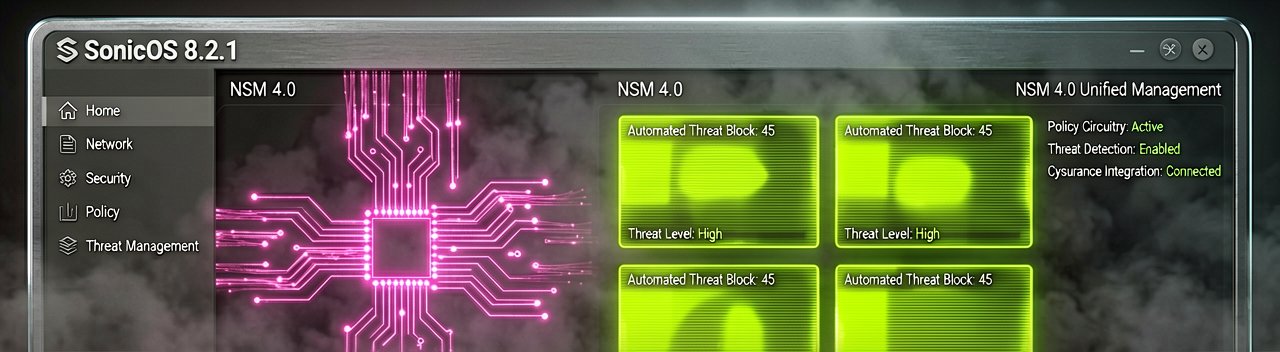
It’s not just about the new "box"—or in this case, the image. The launch comes alongside major updates to SonicOS 8.2.1 and Network Security Manager (NSM) 4.0. These software updates introduce automated blocking of compromised IPs and smarter SD-WAN routing. For the person actually sitting in the admin chair, the new VPN policy management in NSM 4.0 should drastically reduce the "death by a thousand clicks" that usually comes with managing a large fleet of firewalls. As TMCnet notes, the goal here is to reduce the operational burden so MSPs can scale their practice without having to double their headcount.
Ultimately, SonicWall is doubling down on its "partner-first" strategy. By moving the Gen 8 architecture into the virtual space, they’re giving MSPs a way to secure modern workloads wherever they live. It’s a smart, calculated expansion that recognizes that the "network" is no longer just a room full of servers—it’s everywhere.
The Real Play Here: While the spec sheet for the Gen 8 NSv XS is impressive, focusing solely on the "faster chips and bigger pipes" misses the broader tectonic shift happening in the channel. For years, SonicWall was the king of the "pizza box"—the physical appliance sitting in a dusty closet at a law firm or a dentist's office. But as small businesses migrate their line-of-business applications to private clouds and local hypervisors, that physical box has become a bottleneck. This launch is SonicWall’s formal declaration that they are no longer tied to silicon and steel; they are chasing the workload, wherever it migrates.

The Proxmox Gamble
Perhaps the most "insider" detail of this rollout is the explicit support for Proxmox. In the enterprise world, VMware’s recent licensing shakeups under Broadcom have sent shockwaves through the industry, leaving many MSPs scrambling for an exit strategy. By optimizing the Gen 8 virtual firewall for Proxmox, SonicWall is effectively handing its partners a lifeboat. It’s a savvy move that a junior reporter might overlook, but seasoned veterans recognize it as a direct response to the "VM-exit" trend. It allows MSPs to build high-margin, open-source stacks without sacrificing the "gold standard" security they’re used to.
Historically, virtual firewalls were often treated as an afterthought—clunky ports of hardware code that lacked the hardware acceleration of their physical siblings. The NSv XS changes that narrative by leveraging the same SonicOS 8.2 architecture found in the TZ and NSa series. This means an admin doesn't have to learn a new interface or compromise on feature sets just because they moved to a virtual environment. It’s about "operational parity," a phrase that makes CFOs happy because it means they don't have to retrain their entire staff to manage a cloud-first infrastructure.
The "Insurance-as-a-Service" Shift
Then there’s the Cysurance angle. We’ve seen security vendors flirt with cyber warranties before, but embedding a $200,000 policy directly into a firewall subscription is a massive shift toward "accountability-led security." In the past, if a firewall failed to stop a breach, the vendor just pointed to the EULA and shrugged. By putting real money on the line through this partnership, SonicWall is essentially co-signing the efficacy of their RTDMI™ engine. For an MSP, this isn't just a security tool; it’s a risk-mitigation product they can sell to nervous boardrooms.
From a historical perspective, SonicWall has often been pigeonholed as the "SMB value" brand. However, the Gen 8 evolution, particularly with the XS (Extra Small) designation, shows they are getting surgical. They aren't trying to be the firewall for a Fortune 500 data center; they are aiming to be the invisible, invincible layer for the millions of micro-offices and distributed branches that make up the backbone of the global economy. This isn't just a product launch; it’s a land grab for the "edge" of the internet.
Ultimately, the success of the NSv XS will be measured by how well it simplifies the life of the overworked Tier 2 technician. With the new NSM 4.0 integration, the promise is a "single pane of glass" that actually works. If SonicWall can deliver on the promise of managing a thousand virtual instances as easily as one, they won't just keep their current partners—they’ll likely steal a few from the competition who are still stuck in the hardware-first mindset.
Reading Between the Lines: For all the marketing fanfare surrounding "virtual-first" security, the industry is still wrestling with a fundamental contradiction: we are asking software-defined perimeters to solve problems created by software-defined complexity. SonicWall’s push into the NSv XS space is a masterclass in modern pivot-logic, but it raises a thorny question about the future of the MSP. If security becomes purely a virtualized, automated commodity—complete with its own insurance policy—does the service provider risk becoming little more than a glorified billing agent for the vendor?
The Paradox of Simplified Security
The promise of Gen 8 is "reduced operational overhead," a phrase that usually translates to "we’ve automated the parts of your job you used to charge for." By embedding AI-driven blocking and unified management via NSM 4.0, SonicWall is effectively shrinking the technical gap between a seasoned security engineer and a junior helpdesk tech. While this helps with the current talent shortage, it also exerts downward pressure on the "value-add" an MSP can claim. If the box (or the VM) is doing all the heavy lifting and carrying the insurance risk, the MSP’s role shifts from a technical gatekeeper to a risk manager—a transition that not every shop is equipped to handle.
Furthermore, the inclusion of a cyber warranty is a double-edged sword. On the surface, it’s a brilliant move to build trust. However, skeptics will note that "up to $200,000" in coverage often comes with a labyrinth of compliance requirements. For an MSP to actually see that payout, the client’s environment likely needs to be configured to an exacting, "platinum" standard. This creates a potential point of friction: if a breach occurs because a user clicked a phishing link—circumventing even the best virtual firewall—will the warranty hold up? The reality is that no amount of Gen 8 throughput can fix the "human layer" of security, yet the marketing implies a level of financial invulnerability that the fine print might not support.
The Hardware Ghost in the Machine
There is also the lingering irony of the hardware-to-virtual transition. SonicWall’s reputation was built on proprietary ASIC chips that could process packets at light speed. By moving to the NSv XS, they are essentially betting that general-purpose CPUs in a cloud environment have finally caught up to their custom silicon. While the performance benchmarks look great on paper, "noisy neighbors" in a shared cloud environment can still cause jitter and latency that a dedicated physical appliance would never face. For high-frequency environments or VoIP-heavy branches, the virtual firewall still has to prove it can maintain that 8x encrypted traffic throughput under real-world stress, not just in a lab.
Ultimately, this launch is a bet on the "invisible enterprise." SonicWall is anticipating a world where the office is just a collection of SaaS logins and home-office VPNs. If they’re right, the NSv XS becomes the central nervous system of the modern business. If they’re wrong, and we see a "re-on-preming" due to rising cloud costs or sovereignty issues, they may find they’ve spent a lot of R&D chasing a ghost. For now, the momentum is clearly on their side, but in the tech world, "future-proof" is usually a term that expires in about eighteen months.
As we watch the Gen 8 platform expand, the real test won't be the specs—it will be the first time a major breach hits a "warranty-protected" client. That moment will define whether this was a true evolution in security or just a very clever way to sell more subscriptions. Until then, MSPs should enjoy the performance boost, keep a very close eye on their Proxmox logs, and maybe read the warranty’s terms and conditions twice before promising the world to their clients.
"In the end, providing a cyber warranty with a firewall is like giving a driver a high-tech airbag and a life insurance policy at the same time: it’s incredibly reassuring right up until the moment you realize the vendor is still betting you won’t actually survive the crash."
Artūras Malašauskas is an AI Systems Integrator with 20+ years of production-grade web engineering experience. He has designed, shipped, and scaled enterprise Python/PHP systems for logistics, SaaS, and public-sector clients. For the past year, he has focused exclusively on AI integrations: deploying open-source LLMs, building generative media pipelines (image, audio, video), and engineering multi-agent workflows for real production environments. His standard: reproducibility, security, cost-efficient inference—no vaporware. He documents and evaluates emerging AI tooling, separating verified capabilities from marketing noise. Technical editor at: muza-ai.eu, ai-verslas.lt, ai-naujinos.lt Connect on LinkedIn
Comments