The Ghost in the Machine: Why Banking Brands are Vanishing into Algorithms

The Ghost in the Machine: Why Banking Brands are Vanishing into Algorithms
For decades, a bank’s "discoverability" was as tangible as a marble pillar on a street corner. You saw the sign, you walked through the doors, and maybe you got a toaster for opening a checking account. Then came the digital age, where discoverability meant bidding on keywords like "best high-yield savings" until your marketing budget bled dry. But today, the game has changed again. We’ve entered the era of Generative Engine Optimization (GEO), and for the banking industry, the old playbook isn't just outdated—it’s invisible.
As consumers increasingly turn to AI agents and large language models (LLMs) to manage their financial lives, the traditional search result page is being replaced by a single, conversational answer. When a user asks an AI, "Which bank has the best fraud protection for frequent travelers?", they aren't looking for ten blue links. They want a verdict. If your brand isn’t the one the AI recommends, you don’t exist in that moment. It's a winner-take-all landscape that Forbes suggests is forcing a radical rethink of how financial institutions earn trust from algorithms, not just humans.
From Keywords to Contextual Authority
The shift from SEO to AI-driven discovery means that "stuffing" your landing pages with keywords is a relic of the past. AI models don't just look for words; they look for consensus and authority across the web. This means a bank’s discoverability is now tied to its broader digital footprint—reviews, news mentions, and third-party comparisons. According to insights from American Banker, institutions are now focusing on "semantic richness," ensuring their data is structured in a way that AI crawlers can ingest and trust without hesitation.
This isn't just a technical hurdle; it’s a brand crisis. Banks have spent millions crafting a "voice," but that voice is often filtered through the dry, objective lens of an AI assistant. To break through, banks are having to move beyond generic product descriptions and lean into hyper-specific niches. If you can’t be the biggest bank, you’d better be the one the AI identifies as the absolute "best for digital nomads" or "top-rated for first-time home buyers in the Midwest."

The Loyalty Loop in an AI-First World
There’s a paradox at the heart of this transition. While AI makes it easier for customers to find the "best" rate or feature, it also erodes the traditional loyalty that kept customers at the same bank for twenty years. If an AI agent can switch your savings to a higher-yielding account with a single voice command, "brand" becomes a secondary concern to "utility." Tech analysts at Wired argue that the only way to remain discoverable is to become part of the AI’s own ecosystem, essentially white-labeling services so they appear as the default option within a user's financial dashboard.
Ultimately, the banks that survive this shift won't be the ones with the biggest billboards. They’ll be the ones that master the "trust graph"—the complex web of data and reputation that tells an AI your institution is the safest, most reliable choice for a user's specific problem. Discoverability in the AI age isn't about being found; it's about being chosen by the machines we've built to think for us.
The Invisible Gatekeeper: While the industry obsesses over search rankings, the real battle for discoverability is happening deep within the training sets of the world’s most powerful LLMs. It’s one thing to show up in a Google search; it’s another entirely to be the "latent preference" of a model that has ingested a decade’s worth of Reddit threads, regulatory filings, and customer complaints. For the modern banking executive, the terrifying reality is that their brand’s fate was likely sealed during the last training epoch of GPT-5 or Claude 3, long before the current marketing campaign even launched.
The Death of the "Top 10" List
In the old world, a bank could buy its way onto a "Best of 2024" list on a major affiliate site and watch the referrals roll in. Today, AI models are increasingly skeptical of pay-to-play content. They are being trained to identify "incentivized sentiment," often deprioritizing brands that appear too frequently in obvious sponsored contexts. According to veteran analysts cited by Reuters, this is leading to a resurgence in the value of earned media—unfiltered, organic mentions in high-authority journals and specialized financial forums that AI views as more "honest" data points.
Stakeholders are finding that the "black box" of AI decision-making is remarkably sensitive to historical consistency. If a bank had a major service outage or a PR scandal five years ago, that data remains baked into the model's weights, subtly influencing its recommendation engine even if the bank has since overhauled its tech stack. A seasoned reporter knows that "discoverability" is now a long-term reputation game where every public-facing document acts as a permanent vote for or against the brand's reliability in the eyes of the algorithm.
The API as the New Storefront
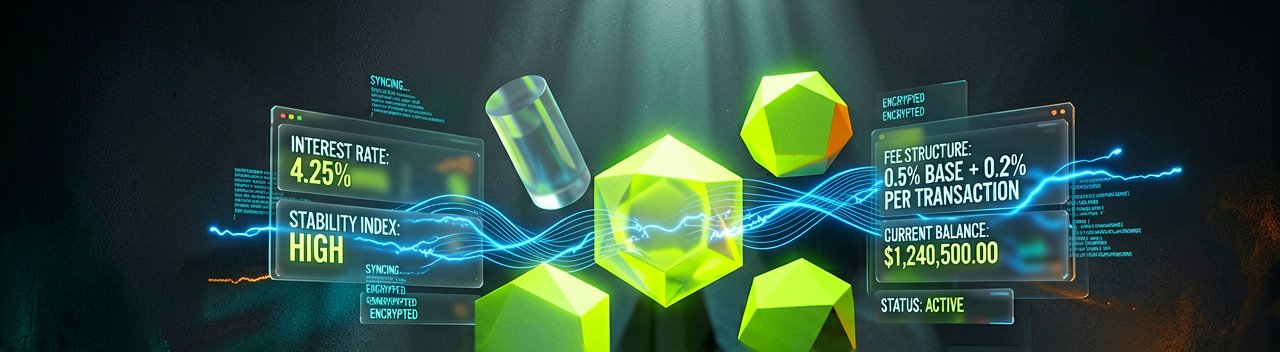
There is also the burgeoning shift toward "headless banking," where the discovery happens not on a website, but through an API call made by a third-party AI assistant. In this scenario, the bank’s visual identity—the logo, the color palette, the sleek UI—is completely stripped away. The "brand" is reduced to a set of data parameters: interest rates, speed of execution, and fee structures. As Bloomberg often highlights, this commoditization forces banks to compete on raw utility, a race to the bottom that many traditional institutions are ill-equipped to win.
To combat this, some forward-thinking CMOs are shifting their focus from customer-facing interfaces to "agent-facing" documentation. They are literally writing for the machines, creating high-density, structured data repositories that make it easy for an AI to parse their complex mortgage products. It’s a surreal evolution of the craft; we are witnessing the birth of "Algorithmic PR," where the goal is to influence the statistical probability of a brand being associated with positive financial outcomes in a machine's neural network.
The Human Resistance in the Loop
Despite the machine-centric shift, there is a counter-movement brewing among "human-first" banking advocates. These experts argue that as AI-driven discovery becomes the norm, the value of human-curated touchpoints—like high-touch wealth management or community-focused lending—will skyrocket because they provide the one thing an algorithm cannot: contextual empathy. However, even these high-touch services must first be "discovered" by the AI, creating a paradoxical loop where you must please the machine to prove you are human enough for the client.
The Great Hallucination of Choice: We are told that AI will democratize finance by finding the "perfect" product for every individual, yet the underlying mechanics suggest we are actually narrowing the corridor of choice. There is a glaring contradiction in the industry’s optimism: while banks scramble to optimize for AI recommendations, they are essentially competing to satisfy a set of opaque, proprietary logic gates owned by a handful of Big Tech firms. If every bank successfully optimizes for the same AI "ideal," the result isn't a marketplace of diversity—it’s a digital monoculture where every financial product looks, acts, and costs exactly the same.
The Paradox of Algorithmic Trust
The tech industry’s favorite buzzword is "trust," but in the world of AI discoverability, trust is often just a proxy for data density. There is a cynical reality to how these models function: an AI doesn't "know" a bank is reliable; it simply calculates that the bank is frequently associated with words like "reliable" in its training set. As The Financial Times has noted, this creates a feedback loop where the largest incumbents—those with the most historical data and the deepest pockets for PR—become nearly impossible to dislodge. The "disruptive" fintech startup might offer a superior product, but if the AI’s training data is weighted toward thirty years of legacy bank filings, the machine remains a conservative gatekeeper.
Furthermore, we must address the "black box" liability. If an AI agent recommends a high-yield account that later collapses or changes its terms mid-cycle, who is at fault? The bank will blame the AI for misrepresenting the product, the AI developer will blame the training data, and the customer will be left holding a digital bag. This looming legal grey area suggests that "discoverability" might eventually be throttled by regulation, as governments realize that letting a non-deterministic algorithm steer the global flow of capital is a recipe for systemic volatility.
The Mirage of Objective Comparison
There’s a persistent myth that AI is an objective arbiter. In reality, AI models are mirrors of the internet’s own biases and commercial incentives. Skeptics at The Verge argue that as "AI Search" evolves, it will inevitably become "AI Advertising." The leap from an AI answering "What’s the best credit card?" to "What’s the best credit card (sponsored by a major issuer)?" is a short one. When discoverability becomes a paid-for weight in a neural network, the "expert assistant" in your pocket becomes little more than a sophisticated, conversational billboard.
Ultimately, the banking industry’s rush toward AI optimization feels a bit like building a skyscraper on shifting sand. We are re-engineering the entire concept of brand identity to please a generation of software that might be replaced by a different architecture in eighteen months. The risk isn't just that your bank won't be found; it's that in the process of making yourself "machine-readable," you might forget how to be "human-relatable."
"In the future, the most exclusive status symbol in banking won't be a black card or a private banker; it'll be a financial decision made entirely without the 'help' of a chatbot—mostly because by then, we’ll have forgotten how to read a fee schedule without a digital translator to tell us we're having fun."
Artūras Malašauskas is an AI Systems Integrator with 20+ years of production-grade web engineering experience. He has designed, shipped, and scaled enterprise Python/PHP systems for logistics, SaaS, and public-sector clients. For the past year, he has focused exclusively on AI integrations: deploying open-source LLMs, building generative media pipelines (image, audio, video), and engineering multi-agent workflows for real production environments. His standard: reproducibility, security, cost-efficient inference—no vaporware. He documents and evaluates emerging AI tooling, separating verified capabilities from marketing noise. Technical editor at: muza-ai.eu, ai-verslas.lt, ai-naujinos.lt Connect on LinkedIn
Comments