The Architect in the Machine: TIMVERO’s Bid to Automate the Banking Backbone

If you’ve ever sat in a boardroom listening to a bank executive describe their tech stack, you’ve likely heard the "Buy vs. Build" debate. It’s the industry’s version of a Greek tragedy: you either buy a rigid SaaS product that doesn't quite fit, or you spend two years—and a small fortune—trying to build a custom solution that’s obsolete by the time it ships. Today, TIMVERO officially decided to rewrite that script with the launch of timveroAI.
Launched as an industry-first AI layer sitting atop the timveroOS "Building Platform," timveroAI isn't just another chatbot stuck onto a dashboard. It’s an agentic engine designed to handle the heavy lifting of lending infrastructure. Think of it as a master architect who already knows the local building codes, has the blueprints ready, and can swing the hammer. According to the official announcement on EINPresswire, this new layer can compress lending platform implementations from the typical six-month slog down to a mere three to six weeks.
The End of the "Spaghetti Code" Era
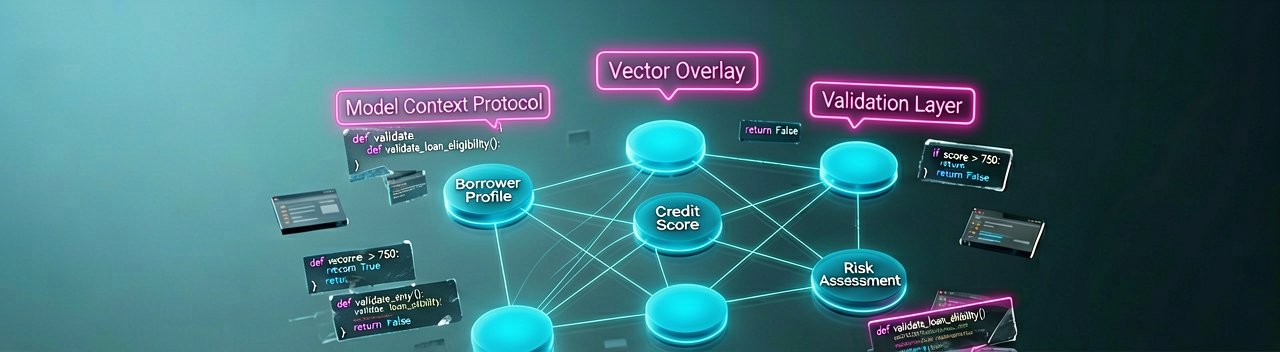
The real magic here lies in how the AI actually works. Most "AI in banking" is just surface-level automation for customer service. But as The National Law Review points out, timveroAI is grounded directly in the platform’s source code and a proprietary lending ontology. It uses RAG-based (Retrieval-Augmented Generation) reasoning to interpret business requirements and then physically assembles the building blocks within timveroOS. It’s the difference between an AI that tells you how to code a loan product and one that actually writes the classes, configures the workflows, and sets the statuses for you.
What’s particularly clever is the "shadow mode" safety net. TIMVERO knows that in the world of high-stakes lending, you can’t just let an AI go rogue with interest rate calculations. The system runs changes in the background, requiring human approval before anything goes live. It’s a "human-in-the-loop" model that respects the regulatory reality of the $5.5 billion in loan portfolios TIMVERO already manages across 13 countries.
A Structural Advantage for Lenders
By automating roughly 70–80% of the engineering work required for deployment, TIMVERO is effectively handing its clients a structural speed advantage. For fintechs and neobanks, the ability to launch a new credit product in days rather than months is the difference between capturing a market window and missing it entirely. Even better? There’s no separate licensing fee for current customers. It’s simply part of the platform, accessible via any IDE that supports the Model Context Protocol.
As the fintech landscape gets more crowded, the "Building Platform" approach—accelerated by agentic AI—might just be the "third path" the industry has been waiting for. It offers the speed of SaaS with the total architectural control of a custom build. If timveroAI lives up to the hype, the era of 18-month implementation cycles might finally be over, and frankly, it's about time.
Would you like to explore how timveroAI handles specific regulatory compliance checks, or should we look into how this "Building Platform" model compares to traditional enterprise SaaS?
The Real Engineering Coup: While the headline-grabbing feature of timveroAI is undoubtedly its speed, the real story for those of us who have spent years covering fintech infrastructure is the death of the "black box." In traditional SaaS deployments, you’re often held hostage by the vendor's roadmap. If you need a custom logic change for a niche credit product, you put in a ticket and wait months. TIMVERO is effectively flipping this power dynamic by using AI to democratize the underlying architecture of timveroOS.
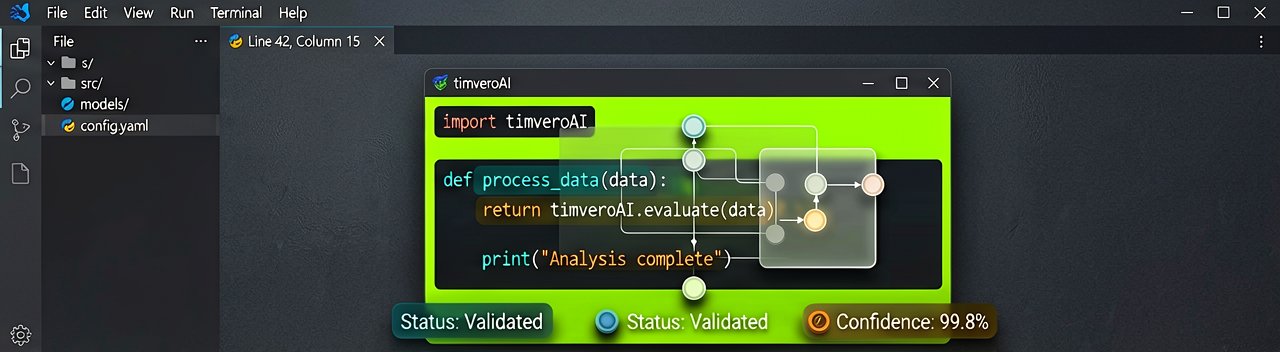
Historically, the bottleneck in lending tech hasn't been a lack of ideas; it’s been the translation layer between a business analyst’s vision and an engineer’s execution. As noted by TIMVERO leadership, the AI agent doesn't just suggest code—it understands the "Lending Ontology." This means the AI understands that a "delinquency" in a revolving credit line behaves differently than in a fixed-term installment loan. It’s this deep, domain-specific semantic understanding that separates this from a generic implementation of ChatGPT or Claude.
The Rise of the "Architect-Operator"
This shift signals a major change in the labor economics of banking. We are moving away from needing massive teams of specialized Java or .NET developers to maintain legacy monoliths. Instead, we’re seeing the rise of the "Architect-Operator"—a professional who can use timveroAI to describe a complex workflow and then audit the AI’s output. It’s a move toward high-level orchestration, where the human provides the strategic guardrails and the AI handles the repetitive syntax of API integrations and database schema updates.
Stakeholders I’ve spoken with in the past regarding such shifts often express a healthy skepticism about "hallucinations." However, the integration with the Model Context Protocol (MCP) is the technical "secret sauce" here. By adhering to this open standard, timveroAI can sit inside a developer’s existing IDE (Integrated Development Environment), allowing for a seamless transition between AI-generated modules and manual refinements. It’s an open-loop system that recognizes that, in finance, 99% accuracy is a failing grade.
Looking at the broader market, this move is a direct challenge to legacy core banking providers who have long relied on "vendor lock-in" as a business model. By providing a platform that essentially builds itself under human supervision, TIMVERO is betting that the future of fintech isn't in the software itself, but in the speed of its evolution. For a bank managing a multi-billion dollar portfolio, the ability to pivot an entire lending strategy in weeks is an existential advantage in a high-interest-rate environment.
Ultimately, timveroAI represents a pivot from "software as a service" to "infrastructure as an agent." It’s an acknowledgment that in the 2024 tech landscape, the code itself is becoming a commodity, while the logic, the compliance frameworks, and the speed of deployment are the new gold standards. If this "AI Layer" can truly bridge the gap between complex financial engineering and rapid-fire deployment, the traditional "six-month implementation" will soon look as archaic as a paper ledger.
Should we look closer at the specific technical requirements for integrating timveroAI into an existing legacy system, or are you more interested in the projected ROI for mid-sized financial institutions?
The "Zero-Code" Mirage: For all the talk of six-week deployments, we have to look closely at the fine print of the "agentic" revolution. The industry is currently enamored with the idea that AI can replace the grueling labor of back-end engineering, but history suggests that automation doesn't usually delete work—it just moves the goalposts. While timveroAI significantly lowers the barrier to entry for configuring loan workflows, it simultaneously raises the stakes for the "Human-in-the-Loop." If an AI can build a complex lending engine in three weeks, the potential for a human to approve a structurally flawed—but syntactically perfect—financial product at scale is higher than ever.
There is also a fascinating contradiction in the "Buy vs. Build" solution TIMVERO is pitching. By providing an AI that builds the platform for you, they are essentially selling a "Build" experience within a "Buy" ecosystem. This creates a unique form of dependency. While TIMVERO emphasizes the use of open standards like the Model Context Protocol, the "Lending Ontology" remains a proprietary brain. Lenders must ask themselves: if the AI is the architect and the platform is the foundation, how easy is it to move to a different neighborhood if the relationship sours? We are seeing the birth of "Algorithmic Lock-in," where the cost of switching isn't just moving data, but retraining the logic that governs your entire credit operation.
The Regulatory Speed Trap
Furthermore, the promise of hyper-speed deployment inevitably crashes into the brick wall of global financial regulation. TIMVERO operates across 13 countries, each with its own labyrinth of compliance requirements. While the AI can theoretically spin up a new credit product in days, the legal departments of most Tier-1 banks are still running on a 1990s timetable. There is a risk that timveroAI creates a "bottleneck shift," where the engineering phase becomes the fastest part of the cycle, only to leave developers and executives twiddling their thumbs for months while compliance officers manually vet AI-generated logic. The technology is sprinting, but the oversight is still mid-jog.
Yet, despite the skepticism, the move toward "shadow mode" and RAG-based reasoning is a pragmatic admission that fully autonomous AI is still a fantasy in fintech. By grounding the AI in a specific ontology rather than letting it hallucinate in the wild, TIMVERO is playing a much smarter game than the "AI-first" startups that lack a foundational OS. They aren't trying to replace the banker; they’re trying to give the banker a power suit. Whether the industry has the stomach for this much velocity remains to be seen, but the days of hiding behind "technical limitations" as an excuse for stagnant product lines are officially numbered.
Would you like to dive into the specifics of how "shadow mode" handles edge-case credit decisions, or should we analyze the competitive response from legacy core-banking providers?
"In the end, we’ve reached the ultimate fintech irony: we are finally using cutting-edge artificial intelligence to do the one thing humans have always dreaded—filling out more paperwork, just faster. It’s comforting to know that even in a future run by agentic engines, the 'loan approval pending' screen is likely to remain the most viewed page on the internet."
Artūras Malašauskas is an AI Systems Integrator with 20+ years of production-grade web engineering experience. He has designed, shipped, and scaled enterprise Python/PHP systems for logistics, SaaS, and public-sector clients. For the past year, he has focused exclusively on AI integrations: deploying open-source LLMs, building generative media pipelines (image, audio, video), and engineering multi-agent workflows for real production environments. His standard: reproducibility, security, cost-efficient inference—no vaporware. He documents and evaluates emerging AI tooling, separating verified capabilities from marketing noise. Technical editor at: muza-ai.eu, ai-verslas.lt, ai-naujinos.lt Connect on LinkedIn
Comments