Samil PwC’s AX Academy: The High-Stakes Bet on Auditable Intelligence

If you've spent any time in a corporate finance department lately, you know the vibe: a relentless mountain of spreadsheets, the looming shadow of audit season, and the growing suspicion that there has to be a better way to handle it all. Samil PwC is betting on that better way. The firm just pulled the curtain back on its "Samil AI Finance Academy," a hands-on training program designed to drag traditional financial organizations into the era of AI transformation (AX).
It’s not just a series of dry lectures. Running from June 8 to June 10, the three-day intensive is leaning hard into the "practical" side of things. Think less "what is a chatbot?" and more "how do I use a Research Agent to automate my competitor analysis?" According to The Asia Business Daily, the curriculum is built around the actual, messy realities of financial data, from preparing messy ledgers for AI ingestion to deploying specialized agents for contract analysis.
Moving Beyond the AI Hype
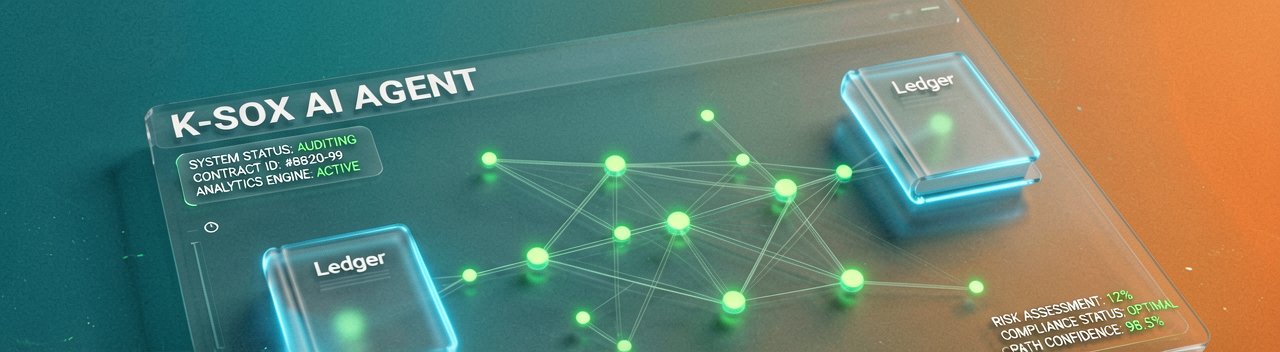
We’ve all heard the buzzwords, but Samil PwC’s specialized "AX Node" unit is looking to prove that AI in finance is finally ready for its "working clothes." Led by Seunghwan Lee, the AX Node leader, the program features a lineup of partners who are neck-deep in digital transformation daily. They aren't just teaching theory; they’re showcasing in-house tools like the "K-SOX AI Agent," which is designed to overhaul internal control assessments—a task that has historically been the bane of many an accountant's existence.
As Kang Mira, CEO of Samil PwC Academy, pointed out, finance isn't an area where you can afford to "move fast and break things." It requires a trifecta of accuracy, auditability, and security. It’s a high-stakes environment where a hallucinating AI isn't just a nuisance; it’s a liability. This program seems specifically engineered to bridge that gap, helping organizations build a realistic AX roadmap that doesn't just chase the latest trend but actually solves for traceability and risk.
For those ready to swap manual data entry for strategic oversight, the program is now accepting applications through the Samil PwC Academy. It’s a fee-based investment, but in a world where AI is rapidly becoming the standard for growth, staying on the sidelines of the AX revolution might be the most expensive choice a finance leader can make.
The Real-World Friction: While the press release paints a picture of a seamless digital transition, any seasoned CFO will tell you that "AX" is often more about culture than it is about code. What most reports miss is that Samil PwC isn't just selling a toolkit; they are attempting to solve the 'Black Box' anxiety that has paralyzed financial leadership for the last two years. In finance, the fear isn't just that AI will be wrong—it's that it will be right for the wrong reasons, leaving a trail of un-auditable logic that would make a regulator’s skin crawl.
This academy marks a pivot from the "experimental" phase of AI to the "industrial" phase. For years, firms tinkered with ChatGPT on the sidelines, but the Samil AI Finance Academy targets the core machinery of the enterprise. By focusing on specific roles—like the specialized "Research Agent" for market analysis—the program acknowledges that a one-size-fits-all AI strategy is a myth. A tax professional needs a completely different set of guardrails than a corporate treasurer, and Samil’s decision to segment training by these "Agent" personas reflects a deep understanding of departmental silos.
The Human-Centric Hurdle
Behind the scenes, the push for AX is as much about talent retention as it is about efficiency. We’re seeing a massive shift where the "Excel Wizards" of yesterday are worried about becoming obsolete. Samil’s curriculum, as noted by The Asia Business Daily, emphasizes hands-on practice, which serves a dual purpose: it builds technical competence while lowering the psychological barrier to entry. When a director sees a "K-SOX AI Agent" handle the grunt work of internal controls, the narrative shifts from "AI is replacing me" to "AI is liberating me from the tasks I hated anyway."

Historically, PwC has leveraged its position as a "Big Four" firm to define what "best practice" looks like, and this move into specialized AX training is a land grab for the future of consultancy. They aren't just teaching clients how to use AI; they are embedding their own proprietary methodologies and agents into the very DNA of these organizations. If a finance team learns to automate their workflow using Samil’s specific framework, they become long-term partners in a way that a simple software license could never achieve.
The stakes for this "practical" approach couldn't be higher. As global markets become more volatile, the speed at which a finance organization can process and interpret data becomes its primary competitive advantage. The Samil PwC initiative suggests that the era of the "Generalist AI" is over. We are entering the age of the "Financial Specialist AI," where the winners will be those who can verify the machine's work as quickly as the machine can perform it.
The Skeptic’s Lens: For all the talk of "liberation" and "efficiency," there is a glaring contradiction at the heart of the AX movement: we are asking the most risk-averse professionals on the planet to outsource their judgment to a statistical probability engine. The Samil AI Finance Academy is essentially trying to sell a safety harness to people who are terrified of heights. While the "K-SOX AI Agent" sounds like a dream for internal controls, the reality is that the more we automate the "grunt work," the less the human workforce understands the underlying data architecture. We risk creating a generation of finance leaders who can operate the dashboard but have no idea what’s happening under the hood.
There is also the matter of the "AI Tax." While these programs promise to slash man-hours, they often neglect to mention the massive surge in technical debt and oversight costs. Implementing a "Research Agent" isn't a set-it-and-forget-it affair; it requires constant tuning, data cleaning, and a level of technical literacy that most finance teams currently lack. Samil PwC is positioning itself as the permanent Sherpa for this climb, but one has to wonder if organizations are simply trading one form of manual labor for another—swapping spreadsheet data entry for AI prompt engineering and output verification.
The Governance Paradox
Furthermore, the push for "Practical AX" assumes that the regulatory landscape is ready for it. It’s one thing to use an AI to summarize a competitor’s annual report; it’s quite another to let an algorithm drive the internal control assessments that a board of directors must sign off on. As Samil PwC pushes these tools into the mainstream, they are effectively betting that regulators will accept "AI-assisted" as a valid standard of care. If the audit standards don't evolve at the same breakneck speed as the tech, these finance organizations might find themselves in a high-tech "compliance trap," where their efficiency is high but their legal defensibility is paper-thin.
Ultimately, the true test of the Samil AI Finance Academy won't be the number of certificates it hands out, but whether its graduates can maintain professional skepticism when the machine delivers a perfectly formatted, highly confident, yet fundamentally flawed projection. The danger isn't that AI will fail; it's that it will be "close enough" most of the time, lulling finance teams into a false sense of security that only breaks when a "black swan" event hits. In the end, AX might not stand for AI Transformation as much as it stands for "Accountability eXtension"—moving the goalposts of who is responsible when the numbers don't add up.
"We’ve spent decades trying to make accountants act more like machines to ensure accuracy; now that we finally have machines that act like accountants, we’re spending millions teaching the accountants how to make sure the machines aren't just making it all up as they go."
Artūras Malašauskas is an AI Systems Integrator with 20+ years of production-grade web engineering experience. He has designed, shipped, and scaled enterprise Python/PHP systems for logistics, SaaS, and public-sector clients. For the past year, he has focused exclusively on AI integrations: deploying open-source LLMs, building generative media pipelines (image, audio, video), and engineering multi-agent workflows for real production environments. His standard: reproducibility, security, cost-efficient inference—no vaporware. He documents and evaluates emerging AI tooling, separating verified capabilities from marketing noise. Technical editor at: muza-ai.eu, ai-verslas.lt, ai-naujinos.lt Connect on LinkedIn
Comments