The Silicon Siege: Why Crypto’s ‘AI vs AI’ Arms Race Is a Fight We’re Underestimating

If you think the biggest threat to your crypto wallet is a forgotten seed phrase or a shady exchange collapse, you haven’t been paying attention to the silicon shadows. For years, the digital asset space has patrolled its borders with code audits and bug bounties, but a new predator has entered the ecosystem. According to a recent deep dive by CoinDesk, the industry is severely underestimating how quickly generative AI is being weaponized to crack wide-open "unbreakable" systems.
The End of Human-Speed Hacking
The traditional cat-and-mouse game between hackers and security teams used to move at human speed. A vulnerability was found, a patch was written, and life went on. But influential analysts are now sounding the alarm: we’ve officially entered what Bloomberg describes as an "AI vs AI arms race." Malicious actors are utilizing Large Language Models (LLMs) to scan smart contracts for logic flaws in seconds—work that used to take a team of elite developers weeks to accomplish.
It’s not just about finding bugs, though. The real terror lies in the automation of social engineering. We're talking about deepfake audio of CEOs authorizing "emergency" transfers or phishing bots that can carry on indistinguishable, highly personalized conversations with DeFi users. As noted by Forbes, the sheer scale of these automated attacks means that the probability of a "black swan" event in crypto security isn't just rising; it's practically guaranteed.
Fighting Fire with Faster Fire
So, how do the good guys respond? They stop bringing a knife to a laser fight. Leading cybersecurity firms are now deploying "guardian" AIs that monitor blockchain traffic in real-time, looking for the tell-tale patterns of machine-led exploits before they can drain a liquidity pool. This is the heart of the "arms race"—it’s no longer about having the smartest humans; it’s about whose algorithm can iterate and react faster than the other.
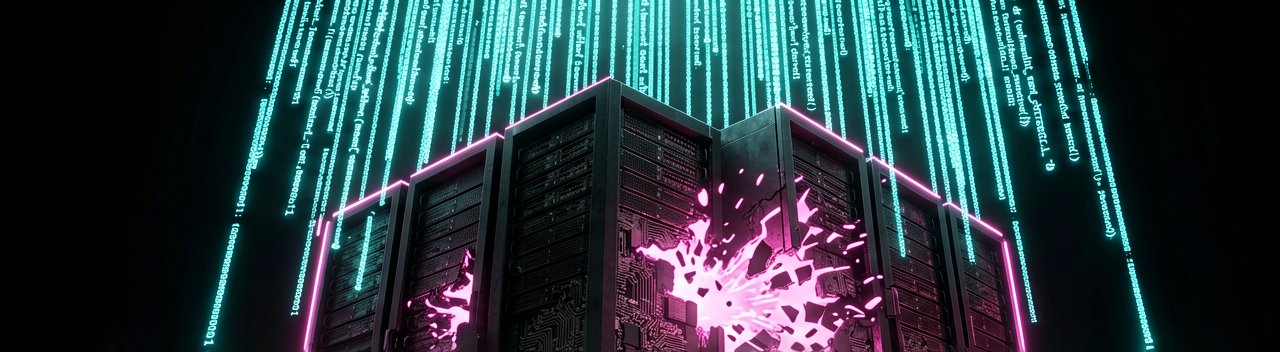
The consensus among the tech elite is clear: the era of passive security is dead. If crypto projects don't integrate AI-driven defense layers immediately, they aren't just vulnerable—they're obsolete. This isn't just another cycle of tech hype; it’s a fundamental shift in the digital battlefield. We’re watching the birth of a world where the only thing standing between your tokens and a total wipeout is a piece of code that thinks faster than you ever could.
The Invisible Frontline: While the headlines focus on the high-level battle of algorithms, the reality on the ground is far more granular and, frankly, a bit more desperate. What most surface-level reports miss is that we aren't just looking at a software upgrade; we are witnessing the total obsolescence of the traditional "security audit." In the old days—meaning eighteen months ago—a protocol would get a stamp of approval from a firm like CertiK or OpenZeppelin and breathe easy for a season. Today, that static report is about as useful as a paper shield in a thunderstorm.
The Democratization of Cyber-Aggression
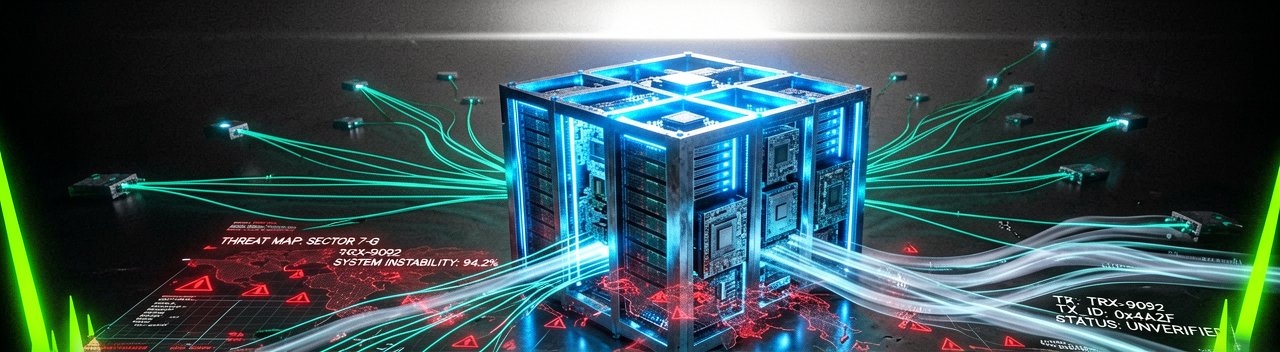
One of the most unsettling shifts identified by industry insiders is the plummeting "cost per attack." Historically, pulling off a complex flash-loan exploit or a sophisticated reentrancy attack required a PhD-level understanding of Solidity. Now, as highlighted by technical analyses in Wired, script kiddies are using fine-tuned AI models to generate exploit code that is terrifyingly effective. This democratization of aggression means that even mid-tier protocols, which previously flew under the radar of elite hackers, are now being peppered with automated salvos 24/7.
This has led to a bizarre paradox in the developer community. On one hand, AI is helping developers write cleaner code faster; on the other, it’s giving their enemies a master key to the back door. It’s a classic "Red Queen’s Race" where everyone is running twice as fast just to stay in the same place. Venture capitalists are starting to take note, too. I’ve heard from several Silicon Valley circles that "AI-resilience" is becoming a mandatory checkbox for Series A funding in the Web3 space. If you can’t prove your protocol can survive a machine-gun burst of AI-generated logic attacks, the money is staying in the vault.
The Human Cost of Machine War
We also have to consider the psychological toll on the "human in the loop." Security researchers are burnt out. Monitoring a bridge or a decentralized exchange used to be a job of vigilance; now it’s a job of managing a dashboard of competing AIs. There is a growing concern that as we hand over the keys to autonomous defense systems, we might lose our ability to understand *why* a system failed when it eventually does. As noted by experts at MIT Technology Review, the "black box" nature of these defensive models makes forensic accounting in the wake of a hack nearly impossible.
Ultimately, the "AI vs AI" era is shifting the crypto ethos from "Don’t Trust, Verify" to "Don’t Trust, Outcompute." The winners won't necessarily be the ones with the most innovative financial products, but the ones with the most robust digital immune systems. We are moving toward a sentient ledger—a blockchain that doesn't just record transactions, but actively fights to keep itself alive. It’s a brave new world, and if you're still relying on a human team to catch every bug, you've already lost the war.
The Paradox of the Algorithmic Fortress: We are currently obsessed with the idea that AI will be the ultimate shield for crypto, but this narrative conveniently ignores a glaring contradiction: the more we rely on autonomous AI to secure decentralized networks, the more centralized those networks actually become. The industry's loudest voices are pushing for a "machine-speed defense," yet they rarely mention that the high-performance computing power required to run these guardian models is currently gatekept by a handful of tech giants. If your "decentralized" protocol relies on a black-box AI hosted on a centralized server to survive, is it still decentralized, or is it just a legacy bank with extra steps?
The Fallacy of the Perfect Patch
There is also a dangerous assumption that AI will eventually "solve" security. This is a technocratic fantasy. History shows us that every leap in defensive capability is met with a pivot in offensive strategy. As noted by analysts at Reuters, we are seeing hackers move away from the code itself and toward the AI training data. If an attacker can "poison" the data a security AI uses to learn what a threat looks like, the AI becomes a Trojan horse. We aren't building a wall; we’re building a more complex maze, and we’re assuming the Minotaur won’t learn how to use a GPS.
Furthermore, we have to look at the economic incentive gap. A hacker only needs to find one flaw once to walk away with millions. A defensive AI has to be right 100% of the time, across every block, forever. The sheer asymmetry of this conflict is staggering. Skeptics within the developer community, often quoted in The Verge, argue that the "arms race" rhetoric is largely a marketing gift for cybersecurity firms looking to inflate their retainer fees. By framing the threat as an unstoppable machine entity, they make human oversight seem quaint and obsolete, justifying eye-watering subscription costs for "AI-enabled" protection that may just be a glorified set of if-then statements.
Governance in the Age of Autonomy
The most profound implication, however, is the death of human governance. DeFi was built on the idea of community consensus, but machines don’t wait for a DAO vote. When an AI detects a "zero-day" exploit and initiates an emergency shutdown or a fund migration, it bypasses the very decentralization it was meant to protect. We are sleepwalking into a reality where the "code is law" mantra is replaced by "the algorithm is judge, jury, and executioner." If the future of crypto security is a battle between two silicon brains in a basement, the human users are relegated to being mere spectators—or worse, collateral damage.
"In the end, we’re all just betting that our digital guard dog is slightly more caffeinated than the digital burglar—but let’s be honest, they’re both probably running on the same Amazon server and charging us for the privilege of the fight."
Artūras Malašauskas is an AI Systems Integrator with 20+ years of production-grade web engineering experience. He has designed, shipped, and scaled enterprise Python/PHP systems for logistics, SaaS, and public-sector clients. For the past year, he has focused exclusively on AI integrations: deploying open-source LLMs, building generative media pipelines (image, audio, video), and engineering multi-agent workflows for real production environments. His standard: reproducibility, security, cost-efficient inference—no vaporware. He documents and evaluates emerging AI tooling, separating verified capabilities from marketing noise. Technical editor at: muza-ai.eu, ai-verslas.lt, ai-naujinos.lt Connect on LinkedIn
Comments