The Identity Crisis: Microsoft Needs to Answer a Simple Question: What Is the Point of Xbox?

There was a time, not so long ago, when the "Console Wars" were a simple, bloody affair. You either bought the black box or the white box, and your choice dictated your social circle for the next five years. But as we drift further into this generation, Microsoft seems to be playing a game of 4D chess where they’ve forgotten to tell the audience—and perhaps themselves—what the winning condition actually is. If you look at the current landscape, the hardware under your TV is increasingly becoming a secondary thought, leaving fans and investors alike asking: What is the point of owning an Xbox?
The Hardware Paradox
Microsoft spent decades trying to win the living room, but the strategy has shifted from "selling consoles" to "selling an ecosystem." While the Xbox Series X is a technical marvel, Microsoft’s recent pivot toward putting its first-party titles on rival platforms like PlayStation and Switch has muddied the waters. According to analysis from The Verge, this "multi-platform" approach suggests that the hardware is no longer the gatekeeper of the brand. If I can play Indiana Jones or Sea of Thieves on a PS5, the incentive to buy a dedicated Xbox box starts to evaporate like mist in the morning sun.
It’s a bold move, sure, but it feels like Microsoft is pulling the rug out from under its most loyal supporters. The "Green Team" stayed through the lean years of the Xbox One era specifically for the promise of a curated, exclusive experience. Now, as IGN has noted in various editorials, the brand's identity is becoming synonymous with a service rather than a machine. This creates a vacuum; if the hardware doesn't matter, then Xbox is just a publisher with a very expensive hobby in manufacturing silicon.
Game Pass: The Golden Cage
Then there’s Game Pass—the "Netflix of Gaming" that was supposed to change everything. And for a while, it did. It’s still arguably the best value in the industry, but even this pillar is showing cracks. With recent price hikes and the restructuring of tiers, the "all-you-can-eat" model is starting to look like a standard cable subscription. As reported by GameSpot, the pressure to maintain growth in subscriber numbers has led to some controversial decisions, including the closure of beloved studios like Tango Gameworks despite their critical successes.

This is where the "point" of Xbox gets really blurry. If the goal is to be everywhere—on your phone, your laptop, your smart TV, and your rival's console—then the Xbox brand risks becoming a nebulous cloud service. While that might please the accountants at Microsoft who want to see software margins grow, it leaves the hardware business in a precarious "zombie" state. You can't tell people hardware is vital while simultaneously telling them they don't actually need it to play your best games.
Searching for a North Star
Phil Spencer often talks about "bringing gaming to everyone," which is a noble sentiment. But "everyone" isn't a strategy; it’s a demographic. Sony knows its point is prestige exclusives and high-end hardware; Nintendo knows its point is whimsical innovation and untouchable IP. Microsoft, meanwhile, seems to be trying to be the "everything store" of gaming. As Bloomberg often points out, Microsoft’s massive acquisitions of Bethesda and Activision Blizzard were meant to provide a "moat," but they’ve instead turned Xbox into a massive publishing house that might be too big to stay exclusive.
Ultimately, Microsoft needs to decide if Xbox is a destination or a distributor. If it's a destination, they need to give us a reason to stay there—exclusive features, unique hardware integration, or a reason to care about the "Xbox" logo on the boot screen. If it's just a distributor, they should probably stop pretending the console sales numbers keep them up at night. Until they pick a lane, the brand will continue to feel like a powerful engine in search of a chassis.
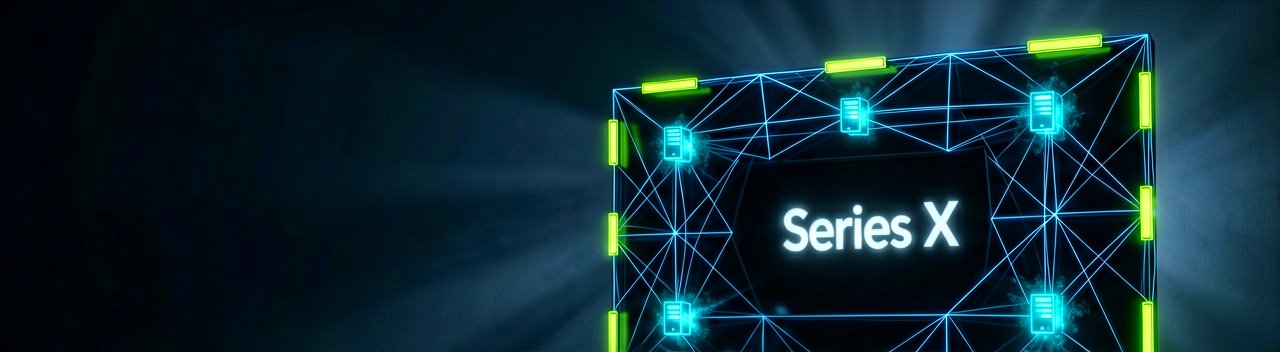
The Quiet Pivot: While the public-facing narrative centers on whether or not you should buy a Series X, the real story is buried in the architectural shift happening within Microsoft’s cloud infrastructure. Behind the scenes, the "point" of Xbox is transitioning from a consumer product to a massive stress test for Microsoft’s Azure cloud capabilities. For Satya Nadella, the console isn't just a gaming machine; it’s a localized node in a global network, a strategy that views the living room as just another edge-computing endpoint.
The Ghost of the "All-in-One" Vision
To understand where we are, we have to look back at the 2013 launch of the Xbox One. Back then, Don Mattrick famously tried to turn the console into a cable box, a move that nearly sunk the brand. It was a disaster of messaging, but the DNA of that "universal" ambition never truly left. Today’s Xbox is effectively the spiritual successor to that vision, but instead of trying to own your TV, they are trying to own the delivery mechanism of interactive media across every screen you own. As long-time observers at Eurogamer have pointed out, the hardware has slowly become a legacy requirement for a future that is entirely digital and platform-agnostic.
This historical context explains why Microsoft feels so comfortable letting "exclusivity" die. In the 90s and 2000s, exclusivity was the only way to build a user base. In 2024, the user base is anyone with a high-speed internet connection. This has created an internal friction between the "Old Guard" of Xbox—the enthusiasts who want a powerful box that feels special—and the "New Guard" of Azure executives who see gaming as the ultimate way to prove that cloud latency is a solved problem. When you see a game like Microsoft Flight Simulator leveraging petabytes of data from the cloud, you're seeing the true point of Xbox: a showcase for cloud-integrated software.
Stakeholder Tension and the Activision Factor
The $69 billion acquisition of Activision Blizzard changed the math permanently. You don't spend that kind of capital to keep Call of Duty locked inside a small ecosystem of 30 million console owners. Investors, as noted by CNBC, are demanding a return on that massive investment that the Xbox hardware alone simply cannot provide. This creates a scenario where the Xbox leadership is essentially forced to be "platform-blind." They have to prioritize the software's reach over the hardware's prestige, turning the Xbox console into more of a "reference design" for what gaming can be, rather than the exclusive home for it.
This leaves the average fan in a strange spot. We are witnessing the slow-motion dismantling of the "platform wall" in real-time. If you talk to developers, many are relieved; they want their work seen by the largest possible audience. But if you talk to the retail sector, the confusion is palpable. Without a clear "Only on Xbox" sticker to drive sales, the retail presence of the brand is shrinking. This isn't just a marketing hiccup; it's a fundamental change in how a multi-billion dollar brand interacts with its physical footprint in the world.
The End of the Traditional Cycle
Perhaps the point of Xbox is to be the first company to admit the traditional console cycle is dead. While Sony prepares for a mid-gen refresh and eventually a PS6, Microsoft’s messaging is increasingly about "Play Anywhere." We are moving toward a world where "Xbox" is an app on your Samsung TV or a handheld device that feels more like a PC than a console. According to reports from Windows Central, the next hardware move might be a handheld, further blurring the lines between PC gaming and the console experience.
If Microsoft can successfully navigate this transition, they won't just be a player in the console wars; they will have transcended them. But the risk is high. By removing the walls of their garden, they might find that users don't just wander out—they leave entirely for platforms that still offer a sense of belonging and identity. The "point" needs to be more than just convenience; it needs to be a community, and that is much harder to build in the cloud than it is on a plastic box under the television.
The Strategic Mirage: For years, we’ve been sold the idea that Microsoft is playing a "bigger game" than its rivals, one where hardware sales are a relic of the past and ecosystem ubiquity is the future. But if we peel back the layers of corporate optimism, a glaring contradiction emerges: Microsoft is essentially asking consumers to invest in a premium ecosystem that is increasingly eager to give away its own value proposition. It’s a retail strategy that borders on the existential—selling a lock while giving away the keys to anyone walking by the gate.
The Myth of the Loss-Leader Console
The industry has long accepted the "razor and blade" model: lose money on the box, make it back on the software. However, Microsoft’s current trajectory threatens to break this cycle without a viable replacement. If the software is available on PlayStation, and Game Pass is accessible via a $50 streaming stick or a web browser, the $500 Series X becomes a luxury item without a purpose. As Polygon has explored, the "Xbox" brand is currently suffering from a brand dilution that no amount of Teraflops can fix. You cannot maintain a prestige hardware brand while simultaneously treating that hardware as an optional accessory.
There is also the matter of the "Game Pass Ceiling." Microsoft’s growth strategy assumes an infinite pool of subscribers, yet recent data suggests that the market for a monthly gaming mortgage has largely been tapped. When growth stalls, the only levers left to pull are price increases or cutting costs—both of which alienate the core base. By pivoting toward a third-party publishing model for its biggest hits, Microsoft isn't just expanding its reach; it’s admitting that the Game Pass subscription model might not be enough to sustain the gargantuan budgets of modern AAA development. It’s a retreat dressed up as an expansion.
Projecting the Invisible Platform
If the implication is that Microsoft eventually exits the traditional hardware space to become the "World's Largest Publisher," the fallout will be more than just a loss of competition. It would represent a fundamental shift in how games are preserved and accessed. As noted by Digital Trends, the disappearance of a dedicated Xbox platform would leave Sony with a functional monopoly on the "high-end" console market, a scenario that historically leads to stagnation and consumer-unfriendly pricing. Microsoft’s "benevolent" move to put games on other platforms might actually be the first step toward a less diverse, more expensive industry for everyone.
The skepticism remains: Can you have a "platform" without a "place"? Microsoft wants Xbox to be a state of mind—a service that floats in the ether of your digital life. But gaming has always been about friction, about the ritual of the boot sequence and the physical presence of the machine. By removing the "point" of the box, Microsoft risks turning their gaming division into a faceless utility. It’s the difference between owning a classic car and having a monthly pass for a generic ride-share service. One is a passion; the other is just a way to get from point A to point B.
Ultimately, Microsoft seems to be building a future where you can play Xbox anywhere, on anything, at any time—except, perhaps, on a compelling reason to actually buy an Xbox.
Artūras Malašauskas is an AI Systems Integrator with 20+ years of production-grade web engineering experience. He has designed, shipped, and scaled enterprise Python/PHP systems for logistics, SaaS, and public-sector clients. For the past year, he has focused exclusively on AI integrations: deploying open-source LLMs, building generative media pipelines (image, audio, video), and engineering multi-agent workflows for real production environments. His standard: reproducibility, security, cost-efficient inference—no vaporware. He documents and evaluates emerging AI tooling, separating verified capabilities from marketing noise. Technical editor at: muza-ai.eu, ai-verslas.lt, ai-naujinos.lt Connect on LinkedIn
Comments