Silicon in the Highlands: Tennessee Tech’s High-Stakes Bet on the AI Market
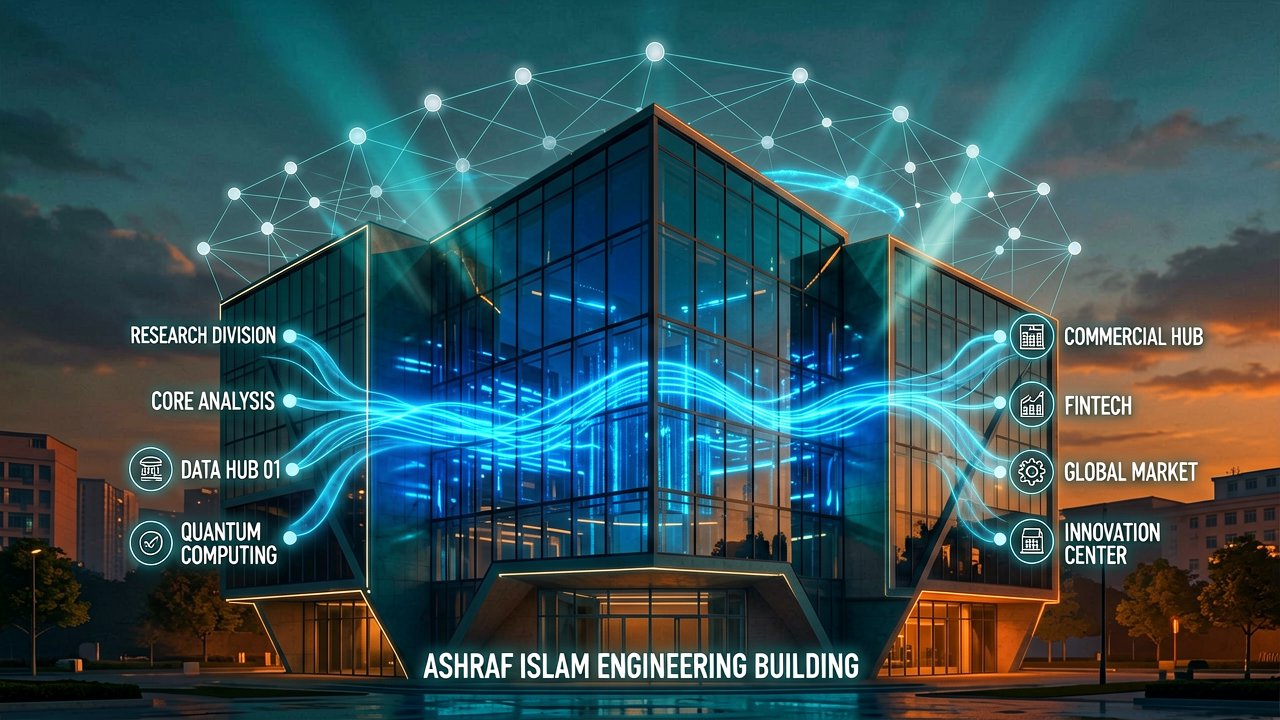
If you’ve been watching the Tennessee tech landscape lately, you know the hum of servers isn’t just coming from the usual hubs in Nashville or Knoxville. This week, the spotlight shifted to Cookeville as Tennessee Tech University opened the doors of its brand-new Ashraf Islam Engineering Building to host the statewide AI summit, Tennessee Tech University reports. Titled "From Lab to Market: Accelerating AI Innovation," the May 19 gathering wasn't just another dry academic meetup; it was a high-stakes play to bridge the gap between ivory-tower research and the cold, hard reality of the commercial market.
The energy on the ground was palpable, fueled by a partnership between TN Tech, the University of Tennessee-Knoxville, and Smith County Insider’s local coverage partners like Launch Tennessee. The goal? Turning the state’s burgeoning AI expertise into a flywheel for economic growth. Michael Aikens, Tech’s acting vice president for research, didn't mince words when he noted that the focus is squarely on how researchers are expanding their work to create "new systems, new companies, and new businesses," as noted by The UC Now.
From Algorithms to Applied Assets
What makes this particular summit stand out in an era of AI fatigue is its grit. We aren't just talking about chatbots that can write mediocre poetry anymore. The discussions in Cookeville delved into high-impact use cases that are already beginning to reshape Tennessee’s core industries. For instance, Aikens highlighted how AI is being baked into mobile apps to revolutionize financial investments and portfolio research—tools that are becoming more sophisticated by the month.
The summit also touched on a shift that’s been happening under our noses: the evolution of customer service AI. According to experts at the event, we’re finally moving past the "press one for sales" era into a world where AI can mimic real human interaction with enough nuance to hold actual conversations. This isn’t just a tech flex; it’s a fundamental change in how businesses operate, and Tennessee Tech is positioning its students to be the ones building those engines.

Speaking of students, Tennessee Tech isn't just hosting the conversation—it’s leading the curriculum. The university is set to launch the state's first bachelor’s degree in AI this fall, a move that signals a serious commitment to workforce development. This follows the 2024 launch of the Machine Intelligence and Data Science (MInDS) Center, which has quickly become the campus hub for everything from research-to-commercialization pathways to startup showcases, according to Tennessee Tech University.
A Statewide 'Radical Collaboration'
If there was a "word of the day," it was collaboration. This event is part of a broader, more aggressive push under the "AI Tennessee" initiative—a statewide mandate to ensure the benefits of AI reach every corner of the Volunteer State, from Memphis to Mountain City. The sentiment echoed earlier sentiments from the broader AI Tennessee Summit in Nashville, where leaders emphasized that "radical collaboration" is the only way to compete on a national stage, as reported by Teknovation.biz.
The roster of speakers at TN Tech reflected this "all-hands-on-deck" approach. It wasn't just computer scientists like Tony Skelljum talking about scalable computing; it was executives from ORNL Federal Credit Union and founders from emerging startups like Authentrics.ai and 9+1AI sharing the stage. They’re looking at the big picture: how to align policy, leadership, and accountability so that AI governance doesn't just look good on paper but actually works in practice, a theme also explored at the Higher Education AI Summit.
Ultimately, the summit at Tennessee Tech proved that the state is tired of being a spectator in the AI race. By focusing on the "Lab to Market" pipeline, they’re betting that the next big breakthrough won’t just live in a research paper—it’ll be a local startup hiring local graduates. It’s an ambitious play, but with the infrastructure being built in Cookeville, it’s one that’s starting to look like a very smart investment.

What Most Reports Miss: While the ribbon-cutting for the Ashraf Islam Engineering Building grabbed the headlines, the real story in Cookeville is the quiet, tectonic shift in how Tennessee is attempting to outmaneuver traditional tech corridors. For years, the "brain drain" was the bogeyman of the Upper Cumberland, with Tech’s brightest engineers packing their bags for Silicon Valley or the Research Triangle the moment they flipped their tassels. This summit wasn't just a networking mixer; it was a localized declaration of interdependence designed to keep that talent within state lines.
The "Lab to Market" theme hits a specific nerve for those who have followed the university’s trajectory. Historically, academic research has been a bit like a message in a bottle—brilliant ideas launched into the void of peer-reviewed journals, rarely reaching the hands of someone who can write a paycheck. By bringing in groups like Launch Tennessee and the MInDS Center, the university is essentially building a "tech transfer" expressway. They are betting that a student from a rural county, equipped with a specialized AI degree, can build a billion-dollar algorithm without ever having to cross the state line.
The Human Element in the Machine
If you look closely at the speaker list, you’ll see a fascinating cross-pollination of old-school industry and new-age tech. It’s one thing for a startup founder to talk about neural networks; it’s quite another to hear a credit union executive discuss the ethical guardrails of automated lending. This highlights a nuanced reality often overlooked in tech journalism: AI isn't just about the code; it’s about the "social license" to operate. As The UC Now observed, the summit leaned heavily into the accountability aspect, recognizing that public trust is the scarcest resource in the AI economy.
There’s also a historical symmetry at play here. Tennessee Tech has long been the state’s "engineering powerhouse," a blue-collar lab where things get built rather than just theorized. By launching the state’s first dedicated AI bachelor’s degree, they are essentially updating their toolkit for the 21st century. It’s a move that mirrors the university’s role during the industrial booms of the past, repositioning the campus as the central nervous system for a new kind of manufacturing—one where the raw material is data rather than steel or timber.
Finally, we have to talk about the "Radical Collaboration" mantra. In most states, universities compete fiercely for grant money and prestige. However, the partnership between TN Tech and UT-Knoxville suggests a "rising tide" philosophy. According to insights from Teknovation.biz, there’s an acknowledgment that Tennessee simply doesn't have the luxury of silos. To compete with the likes of Austin or Boston, the state’s institutions are realizing they have to function as a singular, distributed ecosystem. The Cookeville summit was a proof-of-concept for that unified front, proving that the future of AI isn't just happening in the big cities—it’s taking root in the heart of the Highlands.
Reading Between the Lines: For all the shiny "Lab to Market" branding, we have to ask the uncomfortable question: is Tennessee building a genuine AI ecosystem, or just a very expensive waiting room for big tech acquisition? The rhetoric in Cookeville suggests a future of homegrown unicorns, but the gravitational pull of Silicon Valley’s capital remains a formidable adversary. History is littered with "Silicon Prairies" and "Tech Hollows" that specialized in producing world-class talent only to see it vacuumed up by companies headquartered three time zones away.
The contradiction lies in the tension between "radical collaboration" and the cutthroat nature of venture capital. While Tennessee Tech and UT-Knoxville are playing nice in the sandbox to secure state funding, the startups born from these labs will eventually face a binary choice: scale locally with limited regional capital or chase the venture whales on the coast. For the "AI Tennessee" initiative to truly succeed, the state needs more than just degree programs and summits; it needs a secondary layer of "sticky" capital that keeps founders from jumping ship the moment they hit Series A.
The Ethics Gap and the Degree Gamble
There is also a measured skepticism to be applied to the curriculum rush. Tennessee Tech’s new bachelor’s degree in AI is a bold pedagogical move, but in a field where the "state of the art" changes every six months, there is a legitimate risk of academic lag. By the time a freshman finishes their sophomore year, the foundational models they studied in week one might be obsolete. The challenge for Tech isn't just teaching AI—it’s teaching students how to learn a discipline that is effectively rewriting its own rules in real-time.
Furthermore, the emphasis on "accountability" and "governance" at the summit often feels like a polite nod to a problem no one has actually solved. While credit union executives and university deans discuss ethical guardrails, the technology itself is being deployed at a pace that renders traditional policy-making toothless. The "pragmatic" approach touted at the summit is noble, but it assumes a level of control over algorithmic evolution that even the creators of these systems often admit they don't fully possess.
Ultimately, the success of the Cookeville summit won't be measured by the number of attendees or the square footage of the new engineering building. It will be measured by whether, five years from now, a graduate of the AI program can find a job in the Upper Cumberland that pays as well as a gig in Palo Alto. Until the market side of the "Lab to Market" equation is as robust as the lab side, these summits remain a hopeful, albeit sophisticated, dress rehearsal for a play that hasn't quite opened yet.
"At the end of the day, we’re all just trying to make sure the robots of the future have a slight southern drawl and a healthy respect for state lines—even if we're still not entirely sure how to keep them from hallucinating the directions to the nearest hot chicken joint."
Artūras Malašauskas is an AI Systems Integrator with 20+ years of production-grade web engineering experience. He has designed, shipped, and scaled enterprise Python/PHP systems for logistics, SaaS, and public-sector clients. For the past year, he has focused exclusively on AI integrations: deploying open-source LLMs, building generative media pipelines (image, audio, video), and engineering multi-agent workflows for real production environments. His standard: reproducibility, security, cost-efficient inference—no vaporware. He documents and evaluates emerging AI tooling, separating verified capabilities from marketing noise. Technical editor at: muza-ai.eu, ai-verslas.lt, ai-naujinos.lt Connect on LinkedIn
Comments