The Sovereign Silicon Gamble: Inside Korea’s High-Stakes Quest for AI Independence

If you’ve been watching the Seoul skyline lately, you’ll notice it’s buzzing with more than just the usual K-pop energy. South Korea is currently in the middle of a massive, parabolic AI meltup. We’re talking about a market where the benchmark Kospi index recently surged nearly 31% in a single month—its best performance in almost three decades—driven almost entirely by a global thirst for the hardware that makes AI possible. But behind the eye-watering stock gains and the flurry of new "K-Nvidia" initiatives, a deeper, more anxious conversation is taking hold among the nation's tech elite: the fight for "AI security sovereignty."
The "Sovereign AI" Manifesto
For most countries, the AI race feels like a choice between two giants: the U.S. or China. But Korea is attempting a daring third path. The concept of "Sovereign AI" isn’t just a buzzword here; it’s a survival strategy. As reported by Carnegie Endowment, the Korean government recently launched the "Indigenous AI Foundation Model Project." The goal? To build large language models from scratch by 2027, ensuring the country isn't just renting intelligence from foreign tech titans like OpenAI or Google.
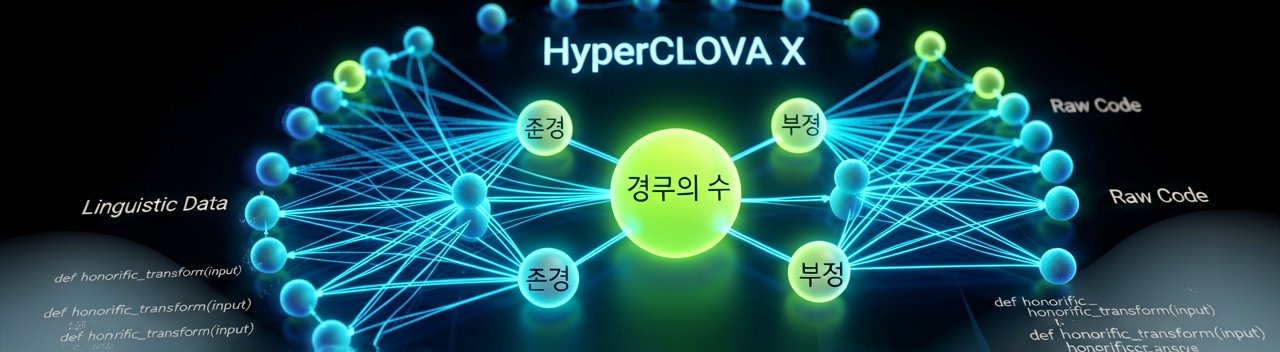
The logic is simple but profound: if your national infrastructure runs on a brain trained in Silicon Valley, your culture, your data, and ultimately your security are no longer entirely your own. Industry leaders like Naver are already leading the charge with HyperCLOVA X, a model specifically tuned to the nuances of the Korean language and cultural norms—something generic global models often miss.
Hardware as a Hedge
You can't have "sovereign" software without the silicon to run it. This is where Korea’s industrial muscle becomes its greatest geopolitical hedge. The Ministry of Science and ICT isn't just writing checks for software; it's pouring billions into a "K-Nvidia" push. According to UPI, the government has earmarked roughly $38 billion for AI and semiconductors, specifically targeting homegrown chip startups like Rebellions and FuriosaAI.
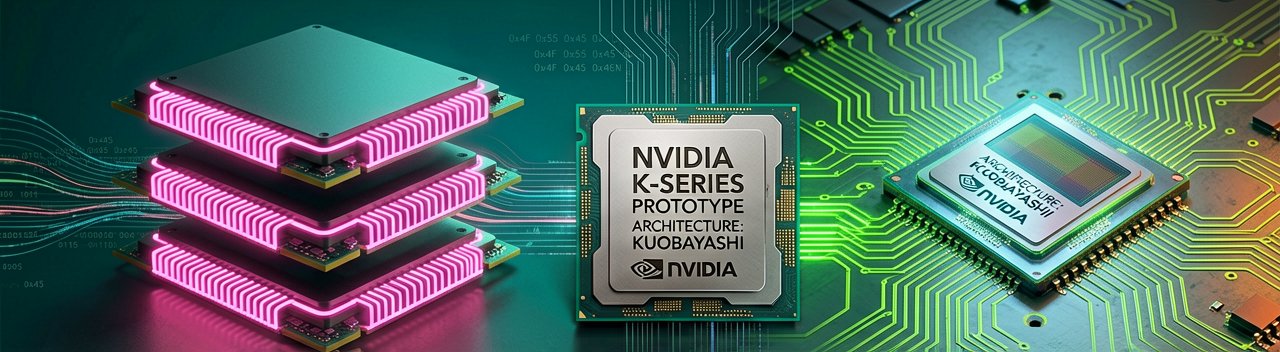
This isn't just about making faster chips; it's about control. By fostering a "full-stack" ecosystem—from the Neural Processing Units (NPUs) designed by startups to the high-bandwidth memory (HBM) produced by Samsung and SK Hynix—Korea is building an AI fortress. As analysts at NOVAsia point out, this strategy shifts the balance of dependence, positioning Korea as an indispensable supplier to the world while securing its own domestic needs.
The Regulatory Balancing Act
But here’s the friction point: how do you regulate a revolution without killing it? The "AI Basic Act," which was officially promulgated in early 2025 and is set to take full effect in January 2026, tries to walk that thin line. As detailed by CSET, the law establishes a framework for AI safety and ethics while offering massive incentives to attract foreign talent.
Yet, the "security" part of the sovereignty debate isn't just about protecting data—it's about geopolitical maneuvering. Korea’s rapid AI ascent is forcing a delicate balancing act between its deep security ties with the U.S. and its complex economic relationship with China. As noted by the East Asia Forum, every leap in Korean AI capability risks complicating these ties, turning a tech boom into a high-stakes diplomatic chess match.
Ultimately, the "AI security sovereignty" debate in Korea is a preview of what every digital-first nation will eventually face. It's the realization that in the age of intelligence, autonomy isn't just about borders—it's about who owns the code, the chips, and the culture of the machines. Korea is betting $38 billion that the answer should be "them."
The Real Friction Point: While headlines obsess over multibillion-dollar government subsidies and skyrocketing stock tickers, the view from the trenches in Pangyo Techno Valley—Korea’s answer to Silicon Valley—is far more complicated. The push for AI security sovereignty isn't just a nationalistic project; it’s a high-stakes gamble against the "digital colonization" of the Korean language and logistical infrastructure. If you talk to the engineers at these local firms, the fear isn't just that U.S. models are better—it's that they are culturally tone-deaf.
The Language Wall and Cultural Integrity
One of the most nuanced arguments for sovereignty centers on "linguistic data equity." Global LLMs are predominantly trained on English-centric datasets, which often leads to "hallucinations" or inaccuracies when applied to the specific legal, social, and honorific structures of the Korean language. As Naver has highlighted, a model that doesn't understand the intricate social hierarchy embedded in Korean grammar can’t be trusted to power a national healthcare bot or a legal assistant. For Korea, losing control of the AI "brain" means losing the ability to interact with its citizens in their own cultural context.
This cultural gap has turned into a strategic opening for local champions. By focusing on "Vertical AI"—models tailored for specific industries like finance or K-content—Korean firms are carving out a niche that Big Tech finds difficult to replicate. It’s a classic David vs. Goliath maneuver: you don't beat OpenAI at being general; you beat them at being local. This hyper-localization is the silent engine behind the domestic boom, ensuring that the technology reflects the society it serves rather than a sterilized version of it.
The "Silent War" for Human Capital
There is also a historical phantom haunting this debate: the memory of the 1997 financial crisis and the subsequent "brain drain" that saw top talent flee to Western tech hubs. Today, the battle for AI sovereignty is being fought in the HR departments of SK Hynix and Samsung. To keep their best minds from being poached by Silicon Valley, the Korean government is experimenting with aggressive "talent-stay" incentives. According to the East Asia Forum, this includes not just tax breaks, but the creation of specialized "AI Research Cities" designed to mimic the collaborative ecosystem of the Bay Area.
However, industry veterans warn that sovereignty is a double-edged sword. If Korea closes its doors too tightly in the name of security, it risks isolation. The challenge for policymakers is to build a "K-AI" fortress that still has enough windows to let global innovation in. It’s a delicate dance of inviting foreign investment while ensuring that the core IP—the "secret sauce" of the NPU designs and the HBM architecture—remains under the lock and key of Seoul.
Geopolitical Tightropes and Supply Chain Realism
Finally, we have to look at the cold, hard reality of the supply chain. Sovereignty sounds great on paper, but Korea is still deeply integrated into a global web. As NOVAsia analysts frequently point out, Korea’s AI chips are often designed using U.S. software and manufactured using Dutch lithography machines. True "security sovereignty" might actually be an impossible dream in a globalized economy, but the pursuit of it gives Korea the leverage it needs to stay at the table.
In the end, the "Rapid AI Boom" is as much about psychological security as it is about economic growth. By positioning itself as a sovereign power in the AI age, Korea is signaling that it will not be a passive consumer of the next industrial revolution. It is asserting that in a world where data is the new oil, Korea intends to own the refinery, the pipeline, and the product.
Reading Between the Lines: For all the talk of "sovereignty," there is a glaring contradiction at the heart of Korea’s AI strategy that most boosters prefer to ignore. You cannot truly claim AI independence while your entire economic model relies on being the world’s primary hardware vendor for the very companies you are trying to "de-risk" from. Korea is effectively trying to build a fortress while simultaneously acting as the chief architect and bricklayer for the rival empires across the Pacific.
The Paradox of the "Nvidia Killer"
The hype surrounding startups like Rebellions and FuriosaAI is intoxicating, but it masks a brutal market reality. These "K-Nvidia" contenders are fighting for inference-side efficiency—basically, the "low-power" end of the pool—while Nvidia continues to own the deep-sea training market where the real "intelligence" is forged. As UPI reports, the state is pouring billions into these domestic chips, but the enterprise world is notoriously conservative. Switching from a global standard like CUDA to a bespoke Korean software stack isn't just a technical hurdle; it’s a business risk that many local conglomerates are still hesitant to take.
This creates a strange domestic tension. While the Ministry of Science and ICT beats the drum for "Sovereign AI," Korea’s corporate crown jewels, Samsung and SK Hynix, are making record profits by fueling the "Non-Sovereign" AI of Silicon Valley. There is a very real risk that the push for independence will be cannibalized by the sheer profitability of dependence. After all, it is hard to convince a company to pivot toward a speculative domestic ecosystem when their current order books for foreign HBM memory are filled through 2027.
The Talent Trap and Regulatory Overreach
There is also the matter of the "AI Basic Act." While meant to provide a "safe" harbor for innovation, history suggests that early regulation in a fast-moving field often acts more like an anchor than a lighthouse. As noted by CSET, the 2025 laws are comprehensive, but they risk creating a bureaucratic labyrinth that only the largest "chaebols" can navigate. If the regulatory burden becomes too high, Korea’s agile AI startups might find it easier to incorporate in Delaware than in Seoul, turning the "sovereignty" project into an expensive lesson in unintended consequences.
Furthermore, the projection of AI sovereignty assumes a static global landscape. But AI is a moving target. By the time Korea perfects its indigenous LLMs to reflect 2025 cultural norms, the frontier models of the U.S. and China may have evolved into multimodal entities that transcend language altogether. The danger is that Korea might win the battle for 20th-century style national resource control just as the digital world moves toward a post-national, decentralized intelligence layer.
Ultimately, the "AI Boom" in Korea looks less like a clean break from global tech and more like an attempt to renegotiate the terms of an inevitable marriage. The success of this movement won't be measured by whether Korea can "go it alone," but by whether it can make itself so essential that "sovereignty" becomes a moot point. Until then, the nation remains in a gilded cage: exceptionally wealthy, technologically peerless, and yet fundamentally tethered to a global supply chain it cannot fully control.
The road ahead is paved with good intentions and very expensive silicon. Whether this leads to true digital autonomy or just a more localized version of the same global headaches remains to be seen. But in the race to build a national soul for the machine, Korea is at least making sure that if the AI takes over, it will at least know how to address the board of directors with the proper honorifics.
"Sovereign AI is essentially the tech equivalent of building your own house because you're tired of the landlord, only to realize you still have to buy the hammers, nails, and electricity from the guy you just moved out on—but at least now you get to choose the wallpaper."
Artūras Malašauskas is an AI Systems Integrator with 20+ years of production-grade web engineering experience. He has designed, shipped, and scaled enterprise Python/PHP systems for logistics, SaaS, and public-sector clients. For the past year, he has focused exclusively on AI integrations: deploying open-source LLMs, building generative media pipelines (image, audio, video), and engineering multi-agent workflows for real production environments. His standard: reproducibility, security, cost-efficient inference—no vaporware. He documents and evaluates emerging AI tooling, separating verified capabilities from marketing noise. Technical editor at: muza-ai.eu, ai-verslas.lt, ai-naujinos.lt Connect on LinkedIn
Comments