The Agentic Shift: Navigating the High-Velocity Chaos of Coding in 2026
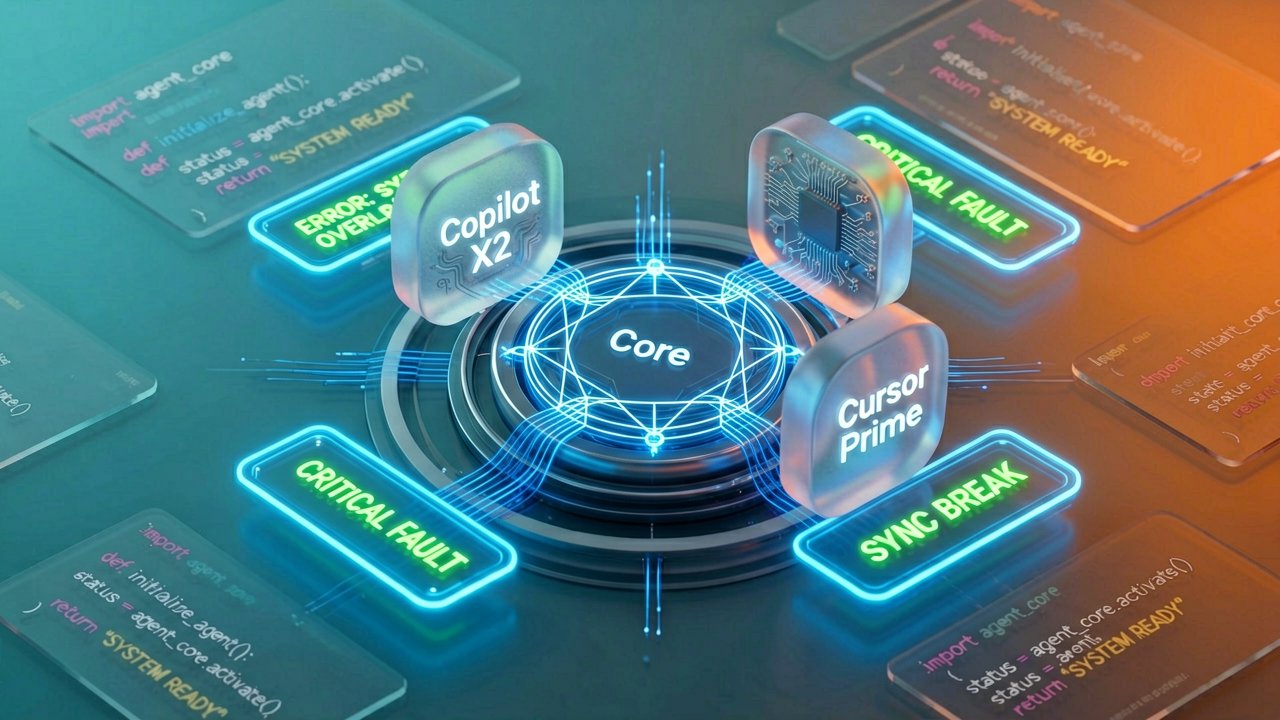
If you told a senior dev in 2023 that they’d soon be spending more time "managing" a fleet of autonomous agents than actually squinting at syntax, they’d have laughed you out of the stand-up. Yet, here we are in 2026, and the "lone wolf" coder is a dying breed. Today, our IDEs are less like text editors and more like air traffic control towers. We aren't just writing lines; we’re orchestrating a symphony of specialized AI agents that handle everything from refactoring legacy COBOL to preemptively patching zero-days before the security team even finishes their first coffee.
The Heavy Hitters: IDE-Native Powerhouses
The landscape has shifted from simple autocomplete to full-blown autonomy. GitHub Copilot X2 remains the industry’s gravitational center, having evolved into a "context-aware architect" that understands your entire repository's business logic, not just the file you're in. Close on its heels is Cursor Prime, which has become the cult favorite for startups. Its "Composer Mode" allows you to describe a feature in plain English, and it doesn't just suggest code—it builds the files, hooks up the APIs, and runs the initial test suite while you're busy planning the next sprint. According to recent analysis by The Verge, these integrated tools have slashed boilerplate production time by nearly 80% since the mid-20s.
For those who find VS Code too bloated, Zed AI has captured the high-performance niche. It’s lean, fast, and uses a specialized "Agentic Buffer" that predicts your next three moves with eerie accuracy. Then there’s Replit Ghostwriter 360, the undisputed king of cloud-native development. It’s no longer just for hobbyists; with its new "Deployment Sentinel" agent, it handles the entire CI/CD pipeline, making "it worked on my machine" a phrase of the past. As noted by Wired, the shift toward these "living" environments has fundamentally changed how we teach computer science.
The Specialists: Beyond the Text Editor
It’s not all about the IDE, though. 2026 is the year of the "Specialist Agent." Take Devin 4.0 from Cognition—the agent that started the craze. It’s now a full-stack freelance machine. You give it a Jira ticket, and it goes off, researches the docs, fixes the bug, and submits a PR. If it gets stuck, it doesn't just fail; it "calls" other agents like Sweep.dev for localized cleanup or Mentat for complex architectural refactoring. It’s a collaborative ecosystem that feels more like a team of interns than a software tool.

Security has seen the most aggressive AI takeover. Snyk Agentic and GitHub Advanced Security AI are now proactive rather than reactive. They don't just flag vulnerabilities; they simulate attacks in a sandbox and present you with a "verified fix." Meanwhile, CodiumAI has redefined the "Definition of Done." Its "Test-Driven Agent" won't let you merge code until it has generated a comprehensive suite of edge-case tests that actually pass. It's annoying, sure, but production outages are at an all-time low, a trend highlighted in a recent report by TechCrunch.
The Open Source Vanguard
We can't talk about 2026 without mentioning the open-source heroes. OpenDevin and Aider have proven that you don't need a billion-dollar subscription to stay competitive. Aider, in particular, has become the go-to for terminal junkies who want to pair-program with LLMs via CLI. Then there’s GPT-Engineer, which has pivoted into a "prompt-to-app" powerhouse, and AutoGPT-Forge, which allows developers to build their own custom coding agents using local models like Llama 4. It’s a decentralized revolution that ensures the "big tech" giants don't hold all the keys to our digital future.
Rounding out the top twenty are the niche specialists: Supermaven for its massive context window, Sourcegraph Cody for deep enterprise searches, and the newcomers like Bloop.ai for navigating massive codebase migrations. Even legacy-focused agents like IBM watsonx Code Assistant are doing the heavy lifting of modernizing infrastructure that we all thought would be stuck in 1995 forever. As Bloomberg reports, the economic impact of this "agentic" workforce is still being tallied, but the message is clear: if you aren't coding with an agent in 2026, you're not just slow—you're obsolete.
The Quiet Crisis of the "Agent Gap": While the glossy brochures for 2026’s AI suites promise a friction-free utopia, the view from the trenches is significantly more jagged. We’ve reached a point where the bottleneck is no longer how fast we can produce code, but how fast a human brain can audit the sheer volume of "perfectly functional" logic these agents churn out. It’s a strange, new exhaustion. Senior engineers aren't burning out from debugging their own mistakes anymore; they’re burning out from the cognitive load of peer-reviewing ten different "Devins" simultaneously, each with its own slightly different architectural philosophy.

The Architecture Wars: Context vs. Compute
One thing the marketing departments at Microsoft and Anthropic won't tell you is the escalating "context tax." We’ve seen a massive split in the industry between the "Infinite Context" camp—led by tools like Supermaven and Gemini Code Assist—and the "RAG-Refinement" camp. The former tries to shove your entire 10-million-line monolith into memory, which often leads to what developers call "hallucinatory drift," where the agent starts hallucinating legacy patterns that were deleted years ago. On the other hand, the RAG-heavy tools like Sourcegraph Cody are more precise but can feel like working with a librarian who only brings you one book at a time when you need the whole shelf.
Stakeholders are feeling the squeeze, too. CTOs who jumped at the chance to "downsize" their junior dev tiers in 2024 are now facing a terrifying talent vacuum. If the agents do all the heavy lifting for the "simple" tickets, how do the juniors ever build the mental muscle to become the seniors of 2028? I’ve spoken with engineering leads at three Fortune 500 firms who are quietly re-introducing "Manual Fridays"—days where AI agents are strictly forbidden—just to ensure their human staff doesn't lose the ability to read a stack trace without help. As ZDNet recently pointed out, we are effectively mortgaging our future expertise for current velocity.
The Legal Shadow and the "Model Collapse" Fear
Then there’s the legal elephant in the room. Even in 2026, the provenance of training data remains a minefield. While "Clean-Room" agents like those from Tabnine promise 100% indemnity, the performance gap between them and the "Wild West" models trained on every scrap of public GitHub data is noticeable. Developers often find themselves in a moral tug-of-war: use the faster, "gray-area" agent to hit a deadline, or stick to the slower, corporate-approved bot and risk falling behind the competition. It’s an open secret that many devs use their personal "unfiltered" agents on local machines to solve a problem before committing the "sanitized" version through the company proxy.
Finally, we’re beginning to see the first signs of what researchers call "Digital Inbreeding." As more agents write code that is then pushed to public repos and subsequently scraped by the next generation of models, the variety of creative solutions is shrinking. We’re seeing a homogenization of software—a "Standardized Web" where everything looks and performs the same because the LLMs are effectively copying each other’s homework. As Ars Technica has explored, the loss of human "idiosyncratic coding" might be the hidden price of our 2026 efficiency. We haven't just automated the labor; we may have accidentally automated the inspiration right out of the IDE.
The Great Autonomy Deception: We are currently obsessed with the "autonomy" of these agents, but we’re ignoring the fact that we’ve essentially traded a coding problem for a massive orchestration nightmare. The industry narrative suggests that by 2026, the human is the "pilot in command," yet most mid-level developers spend their afternoons acting as glorified janitors for AI-generated technical debt. We are witnessing a paradox where the tools designed to eliminate "grunt work" have simply moved the grunt work up the stack. It’s no longer about writing the loop; it’s about figuring out why three different agents have three different, conflicting ideas about how that loop should handle memory allocation.
The Contradiction of Infinite Scale
There is a glaring contradiction in the push for hyper-specialized agents like Devin or CodiumAI. We’re told these tools allow small teams to move like giants, but the reality is that the "cost per commit" is skyrocketing. The compute power required to have an agent simulate a thousand edge cases for a simple UI component is staggering. While Forbes reports on the surge in productivity, they rarely mention the ballooning AWS bills associated with running a dozen autonomous "engineers" 24/7. We’ve reached a point where the electricity used to generate a feature might eventually cost more than the revenue the feature generates.
Furthermore, the industry is betting everything on the assumption that "more context" equals "better code." However, as any seasoned architect will tell you, context without judgment is just noise. When Cursor or GitHub Copilot X2 indexes your entire 20-year-old legacy codebase, it doesn't just learn your best practices—it learns your worst habits, your "temporary" hacks from 2018, and your architectural mistakes. It doesn't fix the rot; it automates the propagation of the rot. We are effectively building a future on a foundation of refined, high-speed mediocrity, polished to a mirror finish by a sophisticated LLM.
The Projection: The Rise of the "AI Archaeologist"
Looking toward the late 2020s, I project that the most valuable skill won't be "prompt engineering"—a term that already feels as dated as "webmaster"—but "AI Archaeology." We will need a generation of engineers who can dig through layers of agent-generated logic to find the original human intent. The skepticism here is simple: if no one on the team actually knows how the auth-flow works because an agent built it over a long weekend, who is going to fix it when the model that built it is deprecated? We are creating a "black box" ecosystem where the speed of deployment is inversely proportional to our actual understanding of the system.
Ultimately, the "Agent Revolution" of 2026 feels less like a finish line and more like a high-speed treadmill. We’re running faster than ever, but we’re mostly just trying to keep up with the mess we’re making. The most successful developers in this era aren't the ones who use the most agents; they’re the ones who know exactly when to turn them off. As Business Insider recently noted, the "human-in-the-loop" isn't a safety feature anymore—it's the only thing keeping the entire digital house of cards from collapsing under its own automated weight.
The irony of 2026 is that we’ve finally taught computers to write like humans, only to realize that most humans write terrible code that requires a 1.21-gigawatt server farm to fix. We wanted a digital Mozart; what we got was a million monkeys on a million keyboards, all of whom have been told they’re the lead architect.
"By 2026, we’ve successfully automated 90% of the job, which is great news, because the remaining 10% now takes 400% longer to explain to a chatbot that thinks 'deprecated' is just a suggestion."
Artūras Malašauskas is an AI Systems Integrator with 20+ years of production-grade web engineering experience. He has designed, shipped, and scaled enterprise Python/PHP systems for logistics, SaaS, and public-sector clients. For the past year, he has focused exclusively on AI integrations: deploying open-source LLMs, building generative media pipelines (image, audio, video), and engineering multi-agent workflows for real production environments. His standard: reproducibility, security, cost-efficient inference—no vaporware. He documents and evaluates emerging AI tooling, separating verified capabilities from marketing noise. Technical editor at: muza-ai.eu, ai-verslas.lt, ai-naujinos.lt Connect on LinkedIn
Comments