The $30 Million Bet: Qatar’s Surgical Strike on Deep Tech
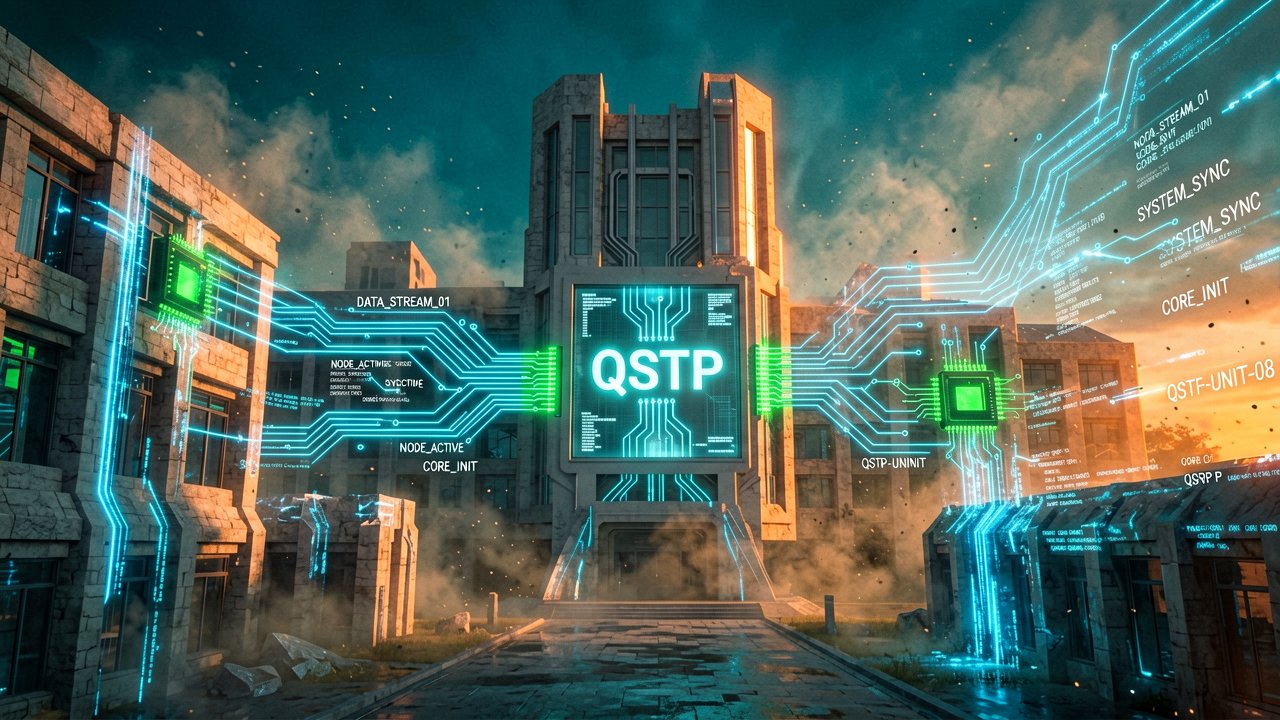
Qatar is doubling down on its "knowledge-based economy" mantra with the launch of a new $30 million Tech Venture Fund (TVF) by the The Peninsula Qatar. Managed by the Qatar Science & Technology Park (QSTP)—the beating heart of the Qatar Foundation’s innovation ecosystem—this isn't just another pot of cash. It’s a deliberate pivot toward the high-risk, high-reward world of deep tech, where the timeframes are long but the impact can be seismic.
For those of us tracking the region, the fund’s thesis is refreshingly specific. It’s targeting early-stage startups—we’re talking pre-seed, seed, and Series A follow-ons—that are headquartered right in Qatar. The catch? You can’t just have a flashy app. The fund is hunting for "deep tech" solutions: companies wrestling with massive engineering or scientific challenges in fields like AI, robotics, biotechnology, and clean energy, as noted by VCCircle.
Beyond Capital: The Co-Investment Play
What makes this move particularly savvy is the co-investment model. QSTP isn't trying to go it alone. Instead, they’ve already locked in an inaugural cohort of heavyweight venture partners including Zawya. The list reads like a global who's-who of VC: Global Ventures, Golden Gate Ventures, White Star Capital, VentureSouq, and Builders VC. By partnering with these firms, Qatar is effectively plugging its homegrown startups into global networks from Day One.
Rama Chakaki, President of QSTP, framed the move as a conviction that the "important companies of the next decade" will be those solving humanity's most pressing climate and social issues. It's a lofty goal, but the structure of the fund suggests they mean business. By requiring leadership teams to be based locally, Qatar is betting that this fund will act as a "launchpad" for startups to scale globally while keeping the intellectual property and economic value anchored in Doha, according to Crowdfund Insider.

This $30 million vehicle is actually the successor to an earlier $20 million pilot program that backed over 150 startups. That initial run taught the state a few lessons: deep tech needs more than just a check; it needs a massive supporting infrastructure. Luckily, QSTP sits on a 12-square-kilometer campus that already hosts branch campuses of global powerhouses like Carnegie Mellon and Texas A&M. If you’re going to build a biotech giant or a robotics firm, having world-class labs and a pipeline of PhDs across the street is a pretty good place to start, as detailed by Middle East AI News.
Ultimately, this fund is a key piece of the puzzle for Qatar’s Third National Development Strategy. While neighbors like Saudi Arabia and the UAE are also pouring billions into tech, Qatar is carving out a niche in "impact-driven" deep tech. It’s a specialized bet, and in a region often criticized for prioritizing short-term gains over long-term research, this $30 million commitment feels like a very necessary step in the right direction.
The Strategic Long Game: While $30 million might look like a drop in the bucket compared to the sovereign wealth splashes we usually see from the Gulf, this isn't a vanity project. It’s a surgical strike. To understand why Qatar is placing this specific bet, you have to look past the dollar amount and into the structural "gap" that has plagued the region’s tech scene for a decade. Historically, Middle Eastern VC has been dominated by "copy-cat" models—think localized versions of Uber or Amazon. By pivoting to deep tech, Qatar is signaling that it's no longer satisfied with being a consumer of global innovation; it wants to own the patents behind it.
Industry insiders suggest that the fund’s strict requirement for startups to be headquartered in Doha is the most telling detail. This isn't just about financial returns; it’s about reversing the "brain drain." For years, the Qatar Foundation has spent billions educating elite engineers at its Education City campuses, only to watch those graduates move to Silicon Valley or London to launch their ventures. The Tech Venture Fund is designed to be the "glue" that keeps that talent in-country, providing the capital necessary to sustain the long R&D cycles inherent in deep-tech development.
The "Co-Investment" Safety Net
There’s a reason QSTP brought in heavy hitters like White Star Capital and Golden Gate Ventures right at the jump. Deep tech is notoriously difficult to value, and it’s even harder to exit. By mandating a co-investment model, Qatar is effectively outsourcing its due diligence to global pros. This creates a "double-check" system: QSTP provides the local infrastructure and the "patient capital," while the international VCs provide the market-driven discipline and the bridge to Western or Asian markets. It's a savvy way to mitigate the inherent risk of backing unproven science.
Furthermore, the historical context of the QSTP campus itself shouldn't be ignored. Over the last 15 years, it has evolved from a simple business park into a sophisticated free zone where startups get tax exemptions and 100% foreign ownership. This new fund is the final layer of that ecosystem. It connects the academic research happening at the university level with the industrial scale of Qatar’s energy and healthcare sectors. If a startup develops a new carbon-capture membrane, they don't just get a check; they get a potential first customer in QatarEnergy or the Ministry of Environment.
Ultimately, this fund is a test of "venture diplomacy." By integrating international venture partners into the local fabric, Qatar is building a credible, peer-reviewed gateway for global tech. It’s a move away from the "if you build it, they will come" philosophy of the early 2000s toward a more active, "we will build it together" approach. The real measure of success won't be the $30 million deployed, but whether the next breakthrough in AI or biotech carries a "Made in Qatar" stamp on its intellectual property.
The Reality Check: On paper, a $30 million fund dedicated to deep tech is a noble pursuit, but the "deep" part of that equation is notoriously expensive. In the world of semiconductor design or therapeutic drug discovery, $30 million is often just the cost of entry for a single company, let alone an entire portfolio. The central tension here is whether Qatar can truly foster a self-sustaining deep-tech hub with what amounts to "seed-plus" capital, or if this fund will simply act as a very expensive feeder system for Silicon Valley giants looking to acquit their R&D budgets by poaching the best Qatari-born IP.
There is also the recurring challenge of the "founder bottleneck." Deep tech requires a rare breed of entrepreneur—the scientist-CEO who can navigate both a laboratory and a boardroom. While Qatar has been incredibly successful at importing world-class faculty, the culture of commercializing academic research is still in its infancy in the Gulf. Throwing money at the problem is the easy part; the harder task is convincing a tenure-track researcher at Texas A&M at Qatar to risk their career on a startup that might not see a product-market fit for a decade.
Scalability vs. Sovereignty
One must also weigh the regional competition. With Saudi Arabia’s Public Investment Fund (PIF) and the UAE’s Mubadala deploying billions with a "B," Qatar’s more modest, targeted approach risks being drowned out in the race for talent. If a biotech startup in Doha shows real promise, what stops a neighboring sovereign wealth fund from offering a Series B check ten times the size of anything QSTP can provide, contingent on a relocation to Riyadh or Abu Dhabi? Without a massive follow-on strategy, Qatar risks doing the hard work of early-stage incubation only to have its neighbors reap the late-stage rewards.
Finally, there is the question of the "exit." For a venture fund to be healthy, startups need a way to go public or be acquired. The local Qatar Stock Exchange isn't exactly a hotbed for high-growth tech listings, and regional M&A activity is still heavily weighted toward fintech and logistics. Until there is a proven path for a deep-tech exit within the MENA region, these startups will eventually have to look toward the NASDAQ or the LSE. This creates a paradox: Qatar wants a localized tech economy, but the very nature of deep tech demands a global exit strategy that might ultimately pull the company away from the very "anchor" the state is trying to build.
Building a "Silicon Oasis" in the desert is a bit like planting a vineyard in a sandstorm; you can provide all the irrigation money can buy, but eventually, you have to pray the grapes actually enjoy the heat and don't just decide to move to a climate-controlled cellar in Palo Alto.
Artūras Malašauskas is an AI Systems Integrator with 20+ years of production-grade web engineering experience. He has designed, shipped, and scaled enterprise Python/PHP systems for logistics, SaaS, and public-sector clients. For the past year, he has focused exclusively on AI integrations: deploying open-source LLMs, building generative media pipelines (image, audio, video), and engineering multi-agent workflows for real production environments. His standard: reproducibility, security, cost-efficient inference—no vaporware. He documents and evaluates emerging AI tooling, separating verified capabilities from marketing noise. Technical editor at: muza-ai.eu, ai-verslas.lt, ai-naujinos.lt Connect on LinkedIn
Comments