The Orbital Office: Global X Bets on the Commercialization of the Cosmos
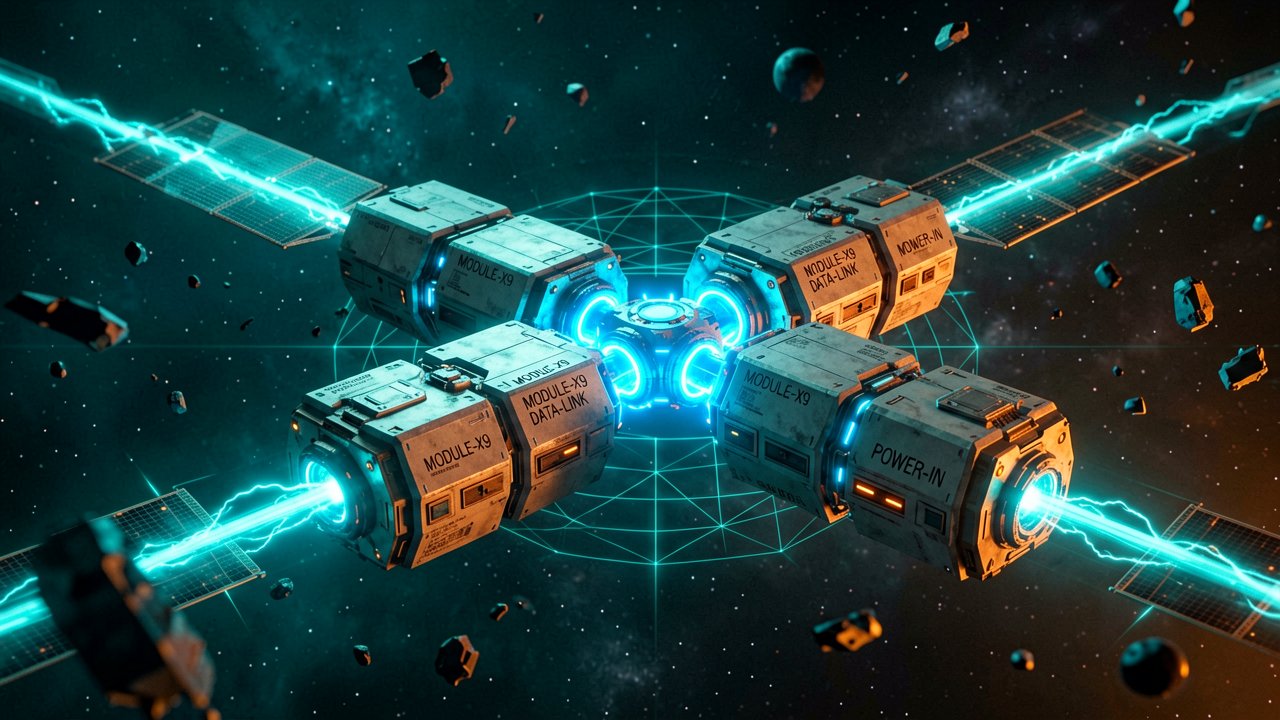
Space used to be the ultimate gated community, accessible only to global superpowers with bottomless budgets and a taste for Cold War posturing. But that era is fading faster than a spent booster stage. On April 14, 2026, Business Wire reported that Global X officially entered the fray with its Space Tech ETF (ticker: ORBX). It’s a move that signals a fundamental shift: the "Final Frontier" isn’t just for flag-planting anymore; it’s a full-blown commercial marketplace.
The logic behind the launch is hard to ignore if you’ve been watching the launch pads. For years, the barrier to entry for space was the eye-watering cost of just getting off the ground. According to Global X ETFs, reusable rocket systems have slashed those costs by roughly 20 times over the last decade. When it’s no longer a multi-billion dollar "one-and-done" mission, suddenly the business models for things like orbital data centers and low-earth orbit (LEO) broadband start to look a lot more sensible on a balance sheet.
The Shift from Government to Gearheads
If you need proof that the momentum has shifted toward the private sector, look at the numbers. Data from the Space Foundation shows the global space economy hit a record \$613 billion in 2024, with a staggering 78% of that growth fueled by commercial players. We’re moving away from the "cost-plus" government contracts that defined the Apollo era and toward a lean, competitive environment where efficiency is king. Private firms now handle about 70% of all orbital launches, effectively becoming the cosmic Uber for both satellites and scientific payloads.
The ORBX fund isn't just throwing darts at anything with a NASA logo. It’s designed as a "pure-play" vehicle, meaning it focuses on companies that actually derive the bulk of their revenue from space tech. As noted by Global X Canada, the fund targets everything from the companies building the actual launch systems to the ones operating the satellite networks that provide our GPS and high-speed internet. It's an attempt to capture the entire value chain rather than just the flashy rocket launches we see on social media.
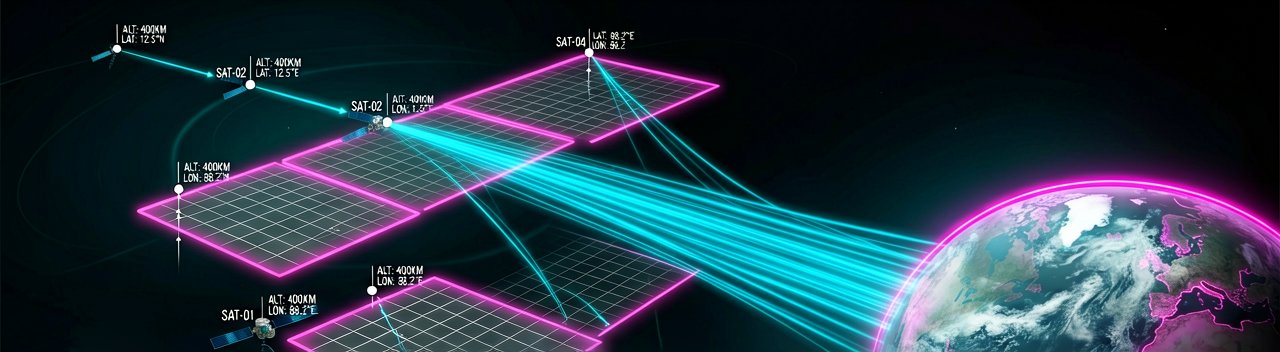
While the sexy headlines go to lunar bases and Mars missions, the real money—at least for now—is in the "boring" stuff. Satellite-enabled services are projected to make up nearly two-thirds of all space revenue by 2034, according to Global X Insights. Think of it this way: we’re currently building the essential infrastructure for an orbital economy. It’s less about being a pioneer and more about being the company that owns the cell towers in the sky.
A Trillion-Dollar Trajectory?
Analysts at Aranca suggest we’re on a path to a \$1.8 trillion space economy by 2035. That sounds like a lot of zeros, but it reflects how deeply we’ve become dependent on space-based assets for everything from climate monitoring to global finance. Global X is betting that as launch frequency increases—reaching a historic 296 commercially procured launches in 2025 as reported by SatNews—the companies facilitating this traffic will become the blue chips of the 2030s.
Of course, space is still a risky bet. For every SpaceX, there are five startups that never quite make it past the stratosphere. This is why a thematic ETF like ORBX is popping up now; it offers a way for investors to play the theme without betting their entire retirement on a single rocket engine that might go "rapid unscheduled disassembly" on the pad. The industry is maturing, the costs are falling, and the infrastructure is being laid. The only question left is whether the commercial demand can keep pace with the technical capacity to reach the stars.
The Real Gravity of the Situation: While the glossy brochures for space ETFs focus on the awe-inspiring vision of a multi-planetary future, seasoned industry watchers know the real story is currently unfolding in the unglamorous world of unit economics and regulatory bottlenecks. Transitioning from a government-led "space race" to a commercial "space marketplace" isn't just about better rockets; it’s about shifting the burden of risk from the taxpayer to the venture capitalist. This fundamental change is forcing a level of fiscal discipline on the industry that would have been unrecognizable during the Voyager era.

One of the most nuanced shifts a reporter sees on the ground is the "Commoditization of Orbit." Ten years ago, launching a satellite was a bespoke, artisan process. Today, we are seeing the rise of standardized satellite buses—mass-produced chassis that can be outfitted with various sensors like a cosmic Lego set. This modularity is what allows Global X to include diverse players in its ORBX fund; the distinction between an aerospace giant and a Silicon Valley software house is blurring as the "space" part of the equation becomes a standardized service rather than a unique engineering hurdle.
The Hidden Battle for Spectrum and Slots
What most retail investors miss is that the most valuable real estate in the solar system isn't on the Moon—it’s in the radio frequency spectrum and specific orbital slots. As the private sector floods Low Earth Orbit (LEO) with thousands of satellites, the risk of "Kessler Syndrome"—a cascading collision of space debris—is moving from a sci-fi trope to a line item in corporate risk disclosures. The regulatory fight at the International Telecommunication Union (ITU) over who gets which "lane" in the sky is becoming as fierce as any terrestrial trade war.
Stakeholders from the traditional "Old Space" guard, like the legacy defense contractors, are also pivoting. They aren't just watching from the sidelines; they are aggressively acquiring smaller, agile startups to maintain their foothold. This consolidation is a classic sign of industry maturity. We are moving past the "wild west" phase where any founder with a CAD drawing could get funding, into a period of survival of the fittest. The ORBX ETF effectively bets on this consolidation, favoring the survivors who can navigate both the vacuum of space and the shark-infested waters of institutional finance.
Finally, we have to talk about the "Downstream" effect. A seasoned reporter looks beyond the launchpad to the end-user. The success of this commercial transition depends on whether companies can find enough customers on Earth to justify the orbital infrastructure. From precision agriculture to real-time supply chain tracking, the data being beamed down is the actual product. The industry is no longer selling "the dream of exploration"; it is selling actionable intelligence to hedge funds, farmers, and shipping magnates. That transition from exploration to exploitation is the quiet engine driving the current surge in space-tech valuations.
The Reality Check Beneath the Liftoff: It is easy to get swept up in the narrative of a seamless "commercial transition," but looking beneath the fairing reveals a industry still tethered to the very institutions it claims to be replacing. The irony of the current space boom is that while we talk about "private" exploration, the biggest customer for almost every company in the ORBX portfolio remains the government. We aren't seeing a clean break from the public sector; rather, we’re seeing a rebranding of government spending as "commercial procurement." If the Department of Defense or NASA were to tighten their belts tomorrow, the "commercial" space industry would find itself gasping for oxygen in a very literal way.
There is also a glaring contradiction in the valuation of many space tech firms. Investors are pricing these companies as if they are high-margin SaaS (Software as a Service) businesses, yet the underlying reality is one of "Heavy Metal" industrialism. Space remains a CAPEX-heavy endeavor where a single hardware failure—a sticky valve or a micro-meteoroid—can wipe out a year’s worth of revenue in a millisecond. The market is currently operating on the assumption that launch costs will continue to drop linearly, but we may be approaching a floor dictated by the raw physics of energy density and materials science.
The Trillion-Dollar Question Mark
Projection fatigue is a real risk for the space sector. For a decade, we’ve been told a trillion-dollar economy is just five years away. While the growth is undeniable, the "measured skepticism" comes in when you ask where the *new* money is coming from. To reach those trillion-dollar heights, space needs to move beyond serving the telecom and defense sectors. We are waiting for a "killer app"—perhaps orbital manufacturing of fiber optics or life-saving pharmaceuticals—that can only be done in microgravity. Without that unique value proposition, we aren't building a new economy; we’re just building a very expensive satellite radio and a slightly faster way to spy on each other.
Furthermore, the democratization of space brings a geopolitical headache that no ETF prospectus can fully solve. As private companies gain capabilities that were once the sole province of sovereign states—such as high-resolution global surveillance and rapid launch—the potential for "private" actors to inadvertently spark international incidents is non-negligible. The transition to commercial exploration isn't just a financial shift; it’s a transfer of power that our current international treaties, mostly written in the 1960s, are woefully unprepared to handle. The "commercial" label might provide a convenient shield for now, but the friction between profit motives and national security is only going to intensify.
"Space might be the final frontier, but for the modern investor, it’s mostly a very sophisticated way to lose a satellite in a place where you can’t even hire a mechanic to go up and kick the tires. We’ve successfully turned the heavens into a business park; let's just hope the Wi-Fi works better there than it does on the ground."
Artūras Malašauskas is an AI Systems Integrator with 20+ years of production-grade web engineering experience. He has designed, shipped, and scaled enterprise Python/PHP systems for logistics, SaaS, and public-sector clients. For the past year, he has focused exclusively on AI integrations: deploying open-source LLMs, building generative media pipelines (image, audio, video), and engineering multi-agent workflows for real production environments. His standard: reproducibility, security, cost-efficient inference—no vaporware. He documents and evaluates emerging AI tooling, separating verified capabilities from marketing noise. Technical editor at: muza-ai.eu, ai-verslas.lt, ai-naujinos.lt Connect on LinkedIn
Comments