The Digital Juggernaut: How Capcom Conquered the PC Market

There was a time, not so long ago, when Japanese publishers treated the PC like a neglected stepchild—a platform for late ports, half-baked optimization, and "maybe someday" release dates. But those days are officially dead and buried. According to the latest financial disclosures from Capcom, the house that built Resident Evil and Monster Hunter is no longer just a console powerhouse; it’s a PC-first juggernaut that has effectively traded physical store shelves for the digital ether.
The numbers from Capcom’s fiscal year 2026 report are nothing short of staggering. The publisher moved a record-breaking 59.07 million units, and for the third year in a row, the PC has sat comfortably on the throne as their top-selling platform. PC sales accounted for a whopping 54.5% of total units—edging out PlayStation, Xbox, and Nintendo combined. As noted by Kotaku, this isn't just a minor shift; back in 2022, PC only represented about 33% of their business. We’re witnessing a total structural realignment of one of gaming’s most storied companies.
The Death of the Disc
If you’re the type of person who still loves the weight of a plastic case and the smell of a fresh manual, you might want to sit down. Capcom’s transition to digital isn't just "happening"—it’s virtually complete. An eye-watering 93% of all Capcom games sold in the last fiscal year were digital downloads. Physical media has been relegated to a measly 7% of the pie. The publisher expects that digital ratio to climb even higher, hitting a projected 95.4% in the coming year, as reported by 80 Level.
It’s easy to see why the C-suite is smiling. Digital sales aren’t just about "convenience" for the player; they are a goldmine for the bottom line. By cutting out the middleman (goodbye, GameStop), physical manufacturing, and shipping logistics, Capcom has managed to post its ninth consecutive year of record-high profits. This "digital-first" strategy allows them to reach markets where console infrastructure is spotty at best. In their Integrated Report 2025, Capcom explicitly mentions that PC availability has allowed them to sell products in over 220 countries and regions, far outstripping the reach of traditional hardware.
The Strategy of the Long Tail
One of the most fascinating nuggets in these reports is where the money is actually coming from. While big-budget launches like Resident Evil Requiem (which shifted nearly 7 million copies in mere weeks) grab the headlines, the real MVP is the "catalog." Roughly 83.7% of Capcom’s annual sales came from older titles. On PC, games don't just disappear after the launch window; thanks to frequent Steam sales and a global audience, titles like Resident Evil 7 and Monster Hunter: World continue to sell millions of copies years after they debuted, as highlighted by Respawn (Outlook India).
Capcom COO Haruhiro Tsujimoto hasn't been shy about this pivot. He has previously stated his belief that the PC will establish itself as the world’s leading gaming platform, a sentiment echoed by VGC. By treating the PC as a primary platform rather than an afterthought, Capcom is ensuring their games stay relevant—and profitable—long after the initial hype dies down. The days of Capcom being a "console company" are over; they’re a software company now, and the PC is their new home base.
The Long Game: What most reports miss when staring at these charts is that Capcom isn't just following a trend; they are aggressively engineering a world where the "console cycle" no longer dictates their survival. By pivoting to PC as their primary pillar, they’ve effectively insulated themselves from the volatile boom-and-bust nature of hardware transitions. When a new PlayStation or Xbox launches, other publishers bite their nails over install bases. Capcom just keeps updating its Steam backend and watching the revenue roll in from 230 different territories.
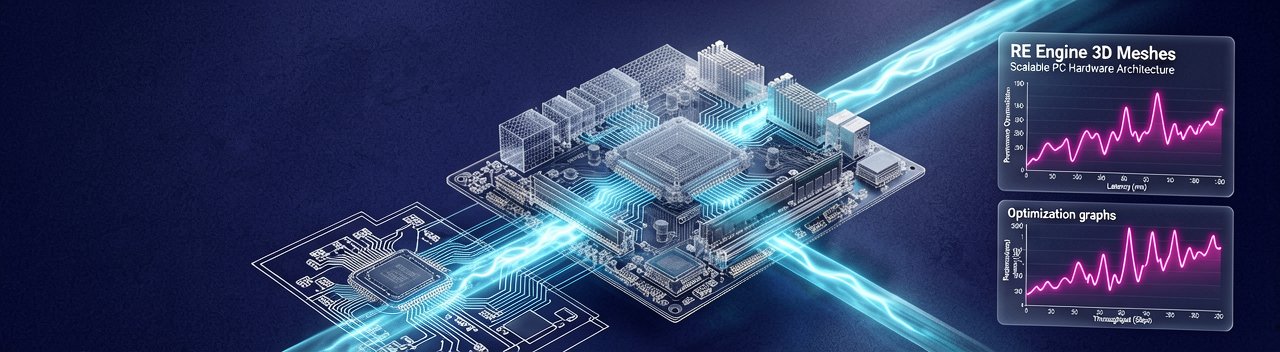
This strategy is deeply rooted in a historical lesson the company learned the hard way during the early 2010s. Back then, Capcom struggled with Western appeal and inconsistent tech. The decision to develop the "RE Engine"—a proprietary, highly scalable toolset—was the turning point. As noted by Capcom's Annual Report, this engine allowed them to hit high performance targets on PC simultaneously with consoles, removing the "bad port" stigma that once plagued Japanese releases. It turned their development pipeline into a platform-agnostic machine.
The "Long Tail" Pricing Mastery
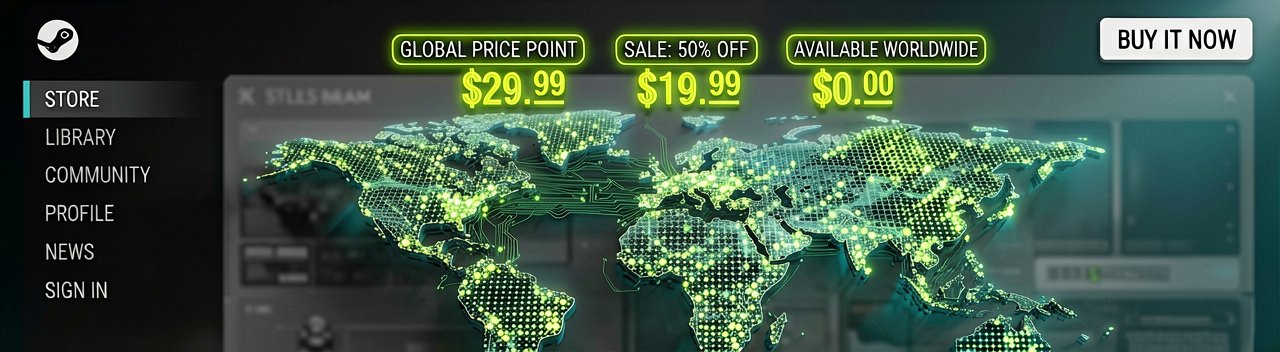
Beyond the tech, there is a psychological masterclass happening in how Capcom handles digital pricing. Unlike some competitors who fiercely guard a $70 price point for years, Capcom utilizes the "Steam Sale" ecosystem as a secondary marketing arm. They’ve perfected the art of the steep discount, frequently dropping older Resident Evil or Devil May Cry titles to the $5-$10 range. This doesn't just generate quick cash; it acts as a low-cost entry point for new fans who then go on to buy the latest $70 sequel. It’s a ecosystem-building play that physical retail simply cannot replicate due to the costs of shipping and shelf space.
Stakeholders are also keeping a close eye on Capcom's aggressive expansion into emerging markets. In places like Brazil, Southeast Asia, and India, where a $500 console is a luxury but a multi-purpose PC is a necessity, Capcom’s digital-first, PC-heavy approach is winning the "hearts and minds" battle. According to GamesIndustry.biz, leadership has been vocal about the PC's role in reaching a "global" audience that consoles traditionally leave behind. They aren't just selling games; they are building a borderless brand.
Finally, we have to consider the internal cultural shift within the Osaka headquarters. For decades, Japanese development was siloed, with PC gaming often viewed as a niche or "gray market" hobby. Today, the internal prestige of the PC team at Capcom has skyrocketed. They aren't the port house anymore; they are the architects of the company's record-breaking financial streak. As they look toward the next decade, the question isn't whether Capcom will stay on PC, but rather how much longer they’ll feel the need to support physical discs at all when the digital margins are this addictive.
The Digital Mirage: Reading between the lines of these glowing fiscal reports reveals a tension that Capcom’s PR department isn't exactly shouting from the rooftops. While a 93% digital split looks like a victory for efficiency, it raises a thorny question about the erosion of consumer ownership. By funneling the vast majority of their users into digital storefronts, Capcom isn't just selling software; they are selling licenses that can, theoretically, be revoked or altered at the whim of a platform holder. The "record profits" celebrated by investors are built on a foundation where the secondary market—the used game ecosystem—has been systematically dismantled.
There is also a curious contradiction in Capcom’s "PC-first" messaging versus their actual release behavior. Despite claiming the PC is their primary pillar, the company still flirts with the old-school "console-first" marketing tactics. We saw this with the staggered release of Monster Hunter: World years ago, and even today, certain demos or marketing beats prioritize PlayStation's stage. This suggests a lingering institutional hesitation. Is Capcom truly a PC company, or are they a console company that simply discovered that Steam users have deeper pockets for deep-discounted back catalogs? The "54% PC sales" figure is impressive, but much of that is driven by older titles sold for the price of a latte, rather than day-one $70 hits.
The Sustainability Paradox
Furthermore, we must look at the long-term implications of their "Long Tail" strategy. Capcom has been exceptionally good at remaking its past—Resident Evil 2, 3, and 4 were masterclasses in revitalizing old IP. But a company cannot live on its heritage forever. As the catalog sales begin to make up more than 80% of their volume, the pressure on the "New" to perform becomes immense. If a future flagship title underperforms on PC due to technical issues or poor optimization—a common pitfall in the Windows ecosystem—the digital-first house of cards could look a lot shakier. Relying on digital distribution means you are at the mercy of the "Mostly Negative" Steam review bomb, a force far more destructive than a bad review in a physical magazine ever was.
There’s also the matter of hardware parity. As Capcom pushes further into the PC space, the "lowest common denominator" problem shifts from the Xbox Series S to the aging mid-range PCs of global players. If Capcom wants to maintain that 220-country reach, they can’t just push the graphical envelope; they have to ensure their games run on the digital equivalent of a toaster. Balancing the "high-end" prestige of the RE Engine with the "mass-market" reality of global PC specs is a tightrope walk that will define their next five years. They’ve won the digital transition, certainly, but keeping that crown requires more than just high margins—it requires navigating a platform they don't actually control.
Ultimately, Capcom’s pivot is a gamble on the permanence of the current digital status quo. They are betting that players will continue to value convenience over the tangibility of a disc, and that the "infinite shelf life" of a Steam page will outweigh the risks of platform gatekeeping. It’s a pragmatic, cold-blooded strategy that has made them the envy of the industry, but it leaves the "physical" fans in the rearview mirror, clutching empty plastic cases like relics of a bygone civilization.
As the industry watches Capcom’s bank account swell, the lesson for other publishers is clear: the future is a download bar, and the past is a 7% rounding error. Whether this leads to a golden age of accessibility or a walled garden of licensed rentals remains to be seen, but for now, Capcom is laughing all the way to the digital bank.
"We’ve officially reached the era where 'unboxing' a new Capcom game consists of watching a progress bar crawl across a screen for forty minutes—at least the digital manual can’t get dog-eared, mostly because it doesn't exist."
Artūras Malašauskas is an AI Systems Integrator with 20+ years of production-grade web engineering experience. He has designed, shipped, and scaled enterprise Python/PHP systems for logistics, SaaS, and public-sector clients. For the past year, he has focused exclusively on AI integrations: deploying open-source LLMs, building generative media pipelines (image, audio, video), and engineering multi-agent workflows for real production environments. His standard: reproducibility, security, cost-efficient inference—no vaporware. He documents and evaluates emerging AI tooling, separating verified capabilities from marketing noise. Technical editor at: muza-ai.eu, ai-verslas.lt, ai-naujinos.lt Connect on LinkedIn
Comments