The Puppet’s Dilemma: Why the Lies of P Studio is Betting on AI
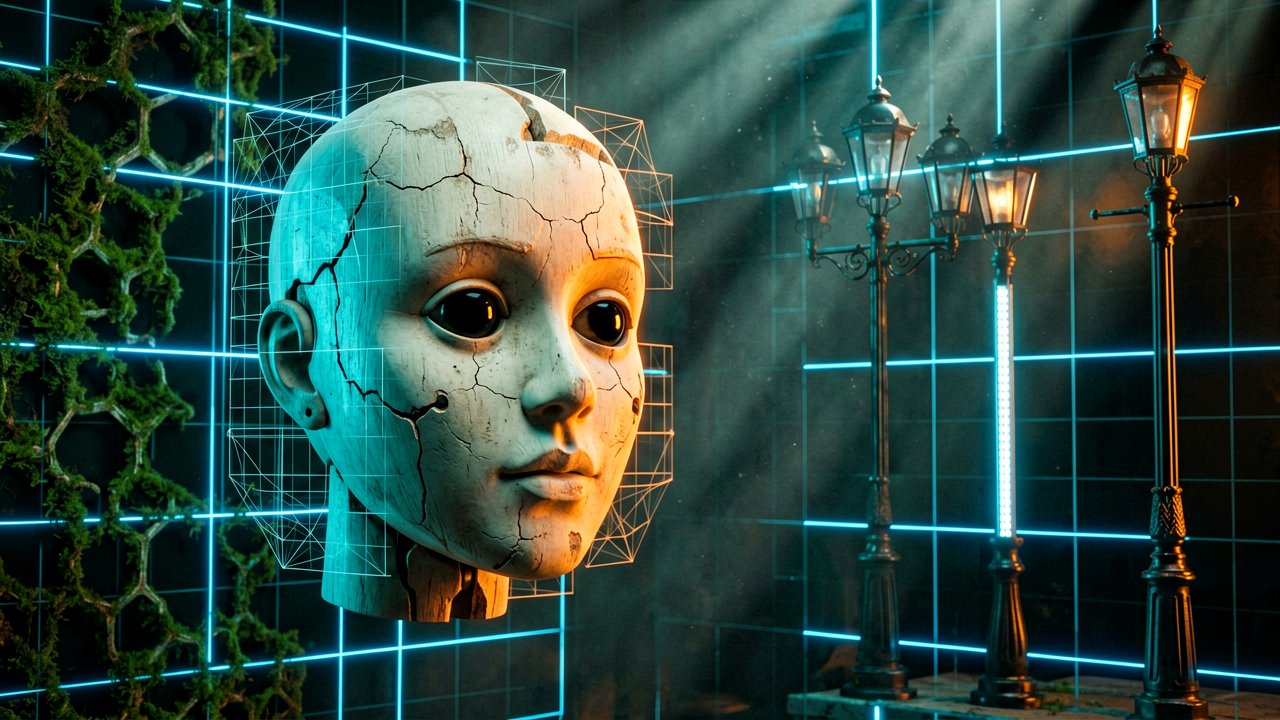
The Puppet Master’s New Tool: Neowiz and the AI Controversy
If you spent any time last year stalking through the rain-slicked streets of Krat, you know that Lies of P wasn’t just another Soulslike—it was a masterclass in atmosphere. Its developer, Round8 Studio, managed to bottle a very specific kind of Belle Époque dread that felt tactile and, more importantly, human-made. But as the studio shifts gears into full production for a sequel, a new job listing has fans wondering if that handcrafted soul is about to be automated. Neowiz, the game's publisher, recently posted an opening for an "AI Creator," and to say the internet reacted with a measured, calm discourse would be a massive lie.
The role, as originally spotted by Push Square, wasn't exactly subtle about its intent. We’re talking about a position designed to weave generative AI directly into the art pipeline. Specifically, the "AI Creator" would be tasked with using tools like Midjourney and Stable Diffusion to generate concept drafts, textures, and even train unique internal models. For a community that prides itself on the "art" of the genre, the idea of a machine spitting out the next iconic boss design feels a bit like finding out your favorite local bakery started using pre-frozen dough.
Naturally, the backlash was swift enough to parry. Fans on Reddit and social media pointed out the irony of a game centered on the "humanity" of a puppet potentially being built by soulless algorithms. It didn’t take long for the studio to notice the heat. In what many are calling a classic corporate pivot, reports from suggest the job title was quietly scrubbed and rebranded to the much more palatable "Technical Artist." It's the kind of semantic gymnastics we’ve come to expect in an industry currently obsessed with "efficiency" at any cost.
Damage Control or Standard Procedure?
Neowiz hasn't just sat back and let the fire burn, though. In a statement shared with Eurogamer, the company attempted to clear the air. According to them, this AI specialist won't be "directly involved" in the Lies of P sequel's final assets. Instead, they’ll be tucked away in an independent R&D team at Round8. The pitch is that GenAI will only be used for the "boring stuff"—repetitive tasks and internal reference material—to help establish a visual direction before the real artists take over. Think of it as a digital mood board on steroids.
The studio also made a point to address the stickiest part of the AI debate: ethics. They’ve promised that any proprietary visual library they build will be trained exclusively on assets they already legally own. It’s a smart defensive move, likely designed to dodge the ongoing legal minefields surrounding AI training data. By keeping the "brain" of their AI limited to their own past work, they're trying to prove they aren't just "outsourcing creativity" to the open web, as reported by Gagadget.
Still, the timing is a bit of a mood killer. This news broke right as Neowiz confirmed in their Q1 2026 earnings report that the Lies of P sequel has officially cleared the prototyping phase and entered "full production." We know it's moving to Unreal Engine 5, and rumors of an open-world setting are already swirling. It should be a moment of pure hype. Instead, the conversation is stuck on whether the city of Krat 2.0 will feel like a living world or a procedurally generated ghost of its former self. If Lies of P taught us anything, it’s that the truth is rarely simple—and in this case, the truth of how AI will shape our games is still being written.
Beyond the Job Board: The High-Stakes Gamble of "Efficiency"
What Most Reports Miss: This isn’t just a localized PR fire for Neowiz; it’s a symptom of a massive, quiet pivot happening across the entire South Korean development scene. While Western studios often treat AI adoption as a delicate tightrope walk to avoid "cancellation," major K-gaming hubs like Neowiz and NCSoft are feeling immense pressure to compete with the sheer output scale of Chinese giants. Behind the scenes, the "AI Creator" role wasn't just a whim—it was likely a strategic attempt to slash the skyrocketing costs of high-fidelity asset production that nearly bankrupted several mid-tier studios during the transition to the current console generation.
A seasoned look at the studio's trajectory reveals why this move stung so much. Lies of P succeeded because it was the underdog that "got it." It captured the soul of the genre in a way that felt deeply intentional, from the weight of a blade to the flicker of a gaslight. By signaling a move toward generative tools, Neowiz inadvertently signaled a shift from being an "artisan" studio to becoming a "production house." Veteran developers in Seoul have whispered for months about the internal friction this causes: the old guard wants to maintain the handcrafted prestige that won them Game Awards, while the business side is looking at Unreal Engine 5’s overhead and seeing a financial cliff they need to bridge with automation.
There is also the historical context of the Soulslike community to consider. These players are notoriously forensic; they analyze every texture and lore note for "intent." When you introduce a tool like Midjourney into that pipeline, you risk the "uncanny valley" of gameplay—where things look right but feel hollow. If a player suspects a secret room or a boss’s design was the result of a prompt rather than a designer’s obsession, the "contract of trust" between the developer and the hardcore fan breaks. It’s the difference between a puppet that wants to be a real boy and a machine that’s just programmed to mimic one.
Furthermore, the rebranding to "Technical Artist" is a move we’ve seen before in the tech industry’s greatest hits of damage control. By burying AI responsibilities under a traditional title, the studio hopes to integrate these tools into the workflow without the "AI" stigma attached to every milestone update. But this creates a new kind of risk: transparency. If Neowiz isn't upfront about which parts of the sequel are machine-assisted, they risk a "Deepfake" moment later in development where a disgruntled employee or a savvy data-miner reveals the extent of the automation, potentially turning a successful launch into a controversy about authenticity.
Ultimately, Neowiz is acting as a canary in the coal mine for the AA+ gaming space. They have proven they can reach the summit of prestige gaming, but now they are testing whether they can stay there using a digital shortcut. The sequel's success won't just be measured by its sales, but by whether it can maintain that "hand-painted" feel in an era where the brush is increasingly held by an algorithm. As production ramps up, the industry will be watching to see if Round8 can actually use AI as a "boring task" tool, or if the technology will inevitably start making the creative decisions too.
Reading Between the Lines: The Myth of the "Boring" Task
Reading Between the Lines: The industry’s favorite defense for generative AI—that it only handles the "repetitive, uncreative grunt work"—is a convenient fiction that ignores how artistic cohesion is actually built. In game development, the "boring" tasks, like painting moss on a stone wall or sketching fifty variations of a generic streetlamp, are exactly where the world-building takes root. When a human artist spends hours on those details, they are subconsciously aligning them with the game's core themes. If an AI "creator" automates that process, the studio isn't just saving time; they are outsourcing the atmospheric glue that holds a fictional world together.
There’s a glaring contradiction in Neowiz’s stance that deserves more scrutiny. They claim the AI specialist is tucked away in an "independent R&D team," yet the job listing explicitly looked for someone to support the "visual direction" of their flagship projects. You don't hire a specialist in Stable Diffusion to sit in a vacuum; you hire them to produce results that the main team can use. The rebranding to "Technical Artist" suggests the studio realized that the term "AI Creator" sounded too much like a replacement for a Lead Concept Artist, but changing the name doesn't change the workflow. If the machine is generating the "drafts" that the humans then "polish," who is really the director of the vision?
We also have to look at the long-term implications for the talent pool. If mid-to-large studios like Round8 begin delegating entry-level "grunt work" to AI, they are effectively burning the ladder for the next generation of artists. The junior artists who used to learn the ropes by doing those repetitive tasks will find themselves replaced by a single "AI Creator" who can prompt a thousand iterations in an afternoon. Five years from now, when the industry needs new Senior Art Directors, where will they come from? By opting for immediate efficiency, the studio might be accidentally sabotaging its own creative future.
Furthermore, the promise of "ethically trained" models is a difficult one to verify in an industry notorious for its "black box" development cycles. While Neowiz says they will only use their own assets, the reality of GenAI is that these models are often built on top of pre-existing foundations that were trained on the entire internet. It’s nearly impossible to truly "sanitize" an AI's influence once it's in the pipeline. If the Lies of P sequel ends up looking a little too much like a generic amalgamation of every Victorian-era game on the market, no amount of ethical labeling will save it from being labeled "derivative" by a base that expects—and pays for—originality.
Ultimately, this hiring saga is a masterclass in the "new normal" of game PR. It’s a dance of trial and error: post a controversial listing, gauge the level of internet vitriol, retract or rename, and then proceed anyway under a quieter title. Neowiz is betting that by the time the first trailer for the sequel drops, the visuals will be so stunning that fans will forget—or simply stop caring—that a robot helped draw the blueprints. It’s a cynical bet, but in an industry where budgets are ballooning toward the hundreds of millions, it’s one that many studios seem increasingly willing to make.
The irony remains that a game about a puppet desperately trying to prove he’s a real boy is now at the center of a debate about whether its creators are replacing real boys (and girls) with digital puppets. If the sequel manages to keep its soul while using a soulless tool, it will be the most impressive trick Neowiz has ever pulled. But if the final product feels even slightly "computed," the studio might find that the community’s parry window is much tighter than they anticipated.
The tech world is currently obsessed with teaching machines how to dream, seemingly forgetting that the most terrifying part of Lies of P wasn't the mechanical monsters—it was the realization that anything can be hollowed out if you replace the heart with enough clockwork.
"It’s quite a feat to develop a game about the existential struggle of being an authentic human while simultaneously trying to automate the very people making it; one can only hope the sequel’s AI doesn’t take the theme too literally and start asking for a benefits package."
Artūras Malašauskas is an AI Systems Integrator with 20+ years of production-grade web engineering experience. He has designed, shipped, and scaled enterprise Python/PHP systems for logistics, SaaS, and public-sector clients. For the past year, he has focused exclusively on AI integrations: deploying open-source LLMs, building generative media pipelines (image, audio, video), and engineering multi-agent workflows for real production environments. His standard: reproducibility, security, cost-efficient inference—no vaporware. He documents and evaluates emerging AI tooling, separating verified capabilities from marketing noise. Technical editor at: muza-ai.eu, ai-verslas.lt, ai-naujinos.lt Connect on LinkedIn
Comments