The Silicon Safety Net: Inside Madigan’s AI-Driven Hunt for Lung Cancer
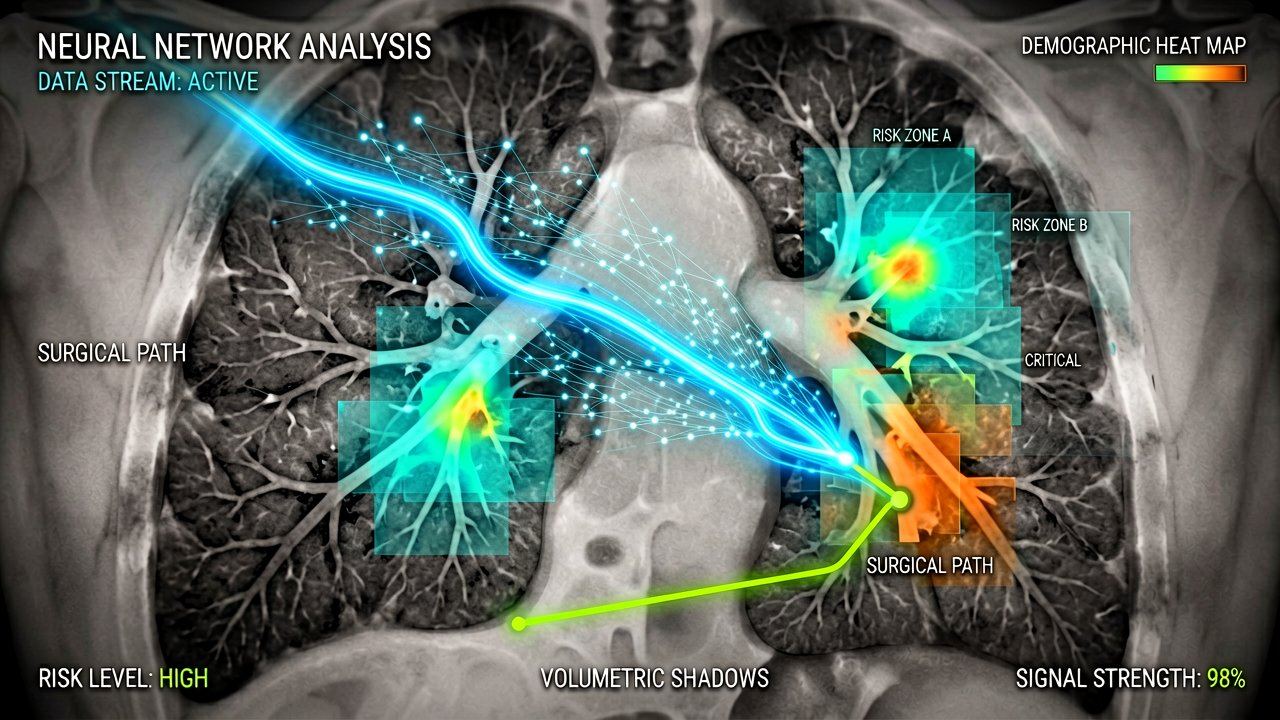
In the high-stakes environment of military medicine, where "force readiness" is more than just a buzzword, Madigan Army Medical Center is proving that the future of diagnostics isn't just about better hardware—it’s about smarter software. The center has officially rolled out its AI-assisted Pulmonary Nodule Registry, a move that aims to catch early-stage lung cancer before it becomes a battle that can’t be won. It’s a classic "needle in a haystack" problem: doctors are constantly finding tiny growths, or nodules, on scans meant for something else entirely—maybe a car wreck evaluation or a broken rib. Most are harmless, but the few that aren't can be lethal if they're allowed to "slip through the cracks," as reported by MilitaryAI.
The sheer volume of imaging in a facility like Madigan is staggering. Tracking every incidental finding manually is a logistical nightmare that even the most caffeinated radiology department would struggle to manage. Enter the new registry, which acts as a digital safety net. By utilizing the Defense Health Agency-approved Ask Sage large language model, the system doesn't just store names; it actively sifts through radiology reports using natural language processing to flag suspicious findings. It’s a sophisticated approach to "patient discovery" that ensures no suspicious shadow on an X-ray is forgotten just because the patient was originally there for a twisted ankle, according to The US Army.
Closing the Loop on Incidental Findings
What makes Madigan’s approach particularly slick is how it prioritizes those who need help most. The AI doesn’t just shout "nodule" at every opportunity; it cross-references imaging results with a patient’s medical history, smoking records, and demographics to create a risk-stratified list. As Rick Barnhill, Madigan’s chief health information officer, put it, the goal is to increase access to care while boosting the efficiency of the providers on the ground. This isn't about replacing doctors with robots; it’s about giving those doctors a super-powered assistant that never blinks. The system helps manage the longitudinal tracking of patients, sending reminders to the clinical team if a follow-up scan is missed, as detailed by DVIDS.
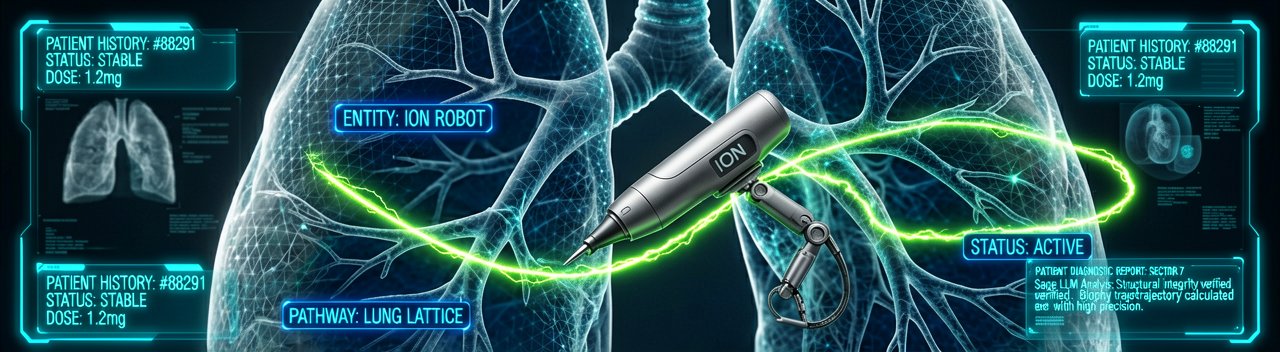
This AI integration is part of a broader push at Madigan to dominate the "full-cycle management" of lung health. While the registry handles the tracking and identification, the hospital is also leaning on robotic-assisted technology like the Ion system for biopsies. This allow surgeons to navigate deep into the peripheral lung to grab tissue samples from the very nodules the AI flagged, often performing the diagnosis and even the resection in a single visit. It’s a closed-loop system of care that drastically reduces the time a patient spends in "diagnostic limbo," a period fraught with the kind of anxiety only a potential cancer diagnosis can bring, according to The Defense Health Agency.
Ultimately, Madigan is setting a blueprint for how military and civilian hospitals alike can handle the increasing deluge of medical data. By treating AI as a "second reader" and a clerical watchdog, they’ve managed to turn a potential source of administrative burnout into a life-saving tool. The registry ensures that "anytime, anyplace" readiness isn't just about the soldiers in the field, but about the long-term health of every service member and beneficiary who walks through their doors. It’s a tech-forward approach that proves, in the fight against cancer, the best weapon might just be a really well-trained algorithm.
The Real-World Friction of Innovation: While the press releases often make these technological leaps sound like a seamless "plug-and-play" evolution, the reality inside the halls of Madigan involves a much more nuanced dance between man and machine. Implementing an AI registry in a military setting isn't just about the software; it’s about overcoming the deep-seated skepticism of clinicians who have spent decades relying on their own eyes and manually maintained spreadsheets. The true triumph here isn't the code itself, but the "change management" required to convince a busy radiology department that an algorithm can reliably catch what they might miss during a 12-hour shift.
Historically, "incidentalomas"—those unexpected findings on a scan—have been the bane of preventive medicine. A doctor might note a small lung nodule in a report, but if the patient is being treated for a traumatic injury, that note can easily get buried in the discharge paperwork. According to The US Army, the registry is designed to solve this specific point of failure. It acts as a persistent memory for the health system, ensuring that a finding recorded in 2024 is still being tracked in 2026, regardless of whether the patient has moved bases or changed primary care providers.
The Ethical and Operational Tightrope
There is also the matter of the "Ask Sage" platform's specific role within the Defense Health Agency’s ecosystem. Unlike a general-purpose AI, this system has to operate within the strict security confines of the Department of Defense. This means the AI must be "hallucination-proof" and strictly localized to ensure patient data remains within the secure military cloud. Stakeholders at Madigan have emphasized that the AI doesn't make a diagnosis—it merely facilitates "patient discovery." This distinction is critical; it keeps the human expert in the driver's seat while the AI handles the data-crunching heavy lifting that no human can do at scale.
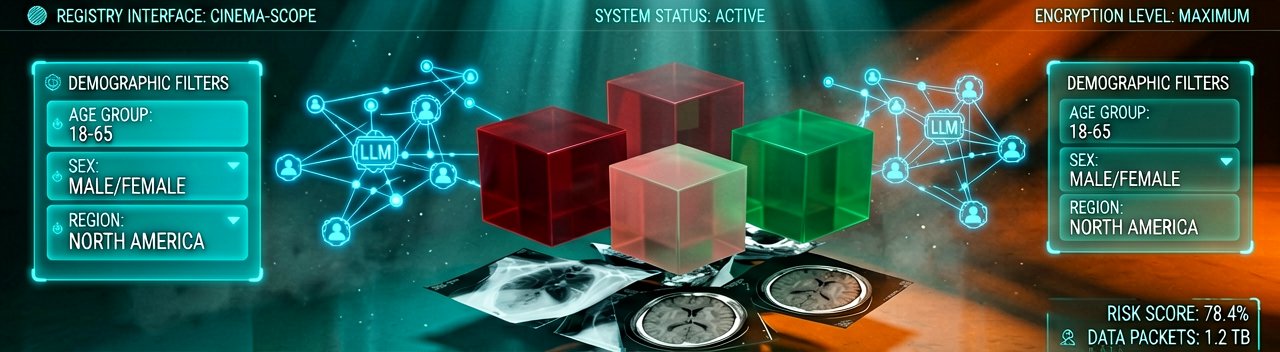
From a reporter’s perspective, the most compelling angle is the shift toward "risk-based" care. By integrating the registry with the Ion robotic-assisted biopsy system, Madigan is effectively collapsing the traditional timeline of cancer care. In the old model, a patient might wait months between the discovery of a nodule and a definitive biopsy. Now, as highlighted by The Defense Health Agency, the goal is "single-anesthesia" diagnosis and treatment. This efficiency doesn't just save lives; it preserves the operational readiness of the force, allowing soldiers to return to duty—or their families—much faster.
Finally, we have to consider the long-game of military health informatics. Madigan is essentially serving as a "beta test" for a model that could eventually be rolled out across the entire Military Health System. If this AI registry proves successful in reducing late-stage lung cancer diagnoses, it will likely serve as a template for tracking other incidental findings, such as cardiac anomalies or adrenal masses. The "safety net" being woven today in Washington state may soon catch patients across the entire global network of military medicine, turning every routine scan into a proactive opportunity for life-saving intervention.
The Skeptic’s Ledger: While the narrative of "AI as a medical savior" is an easy sell for recruitment brochures and tech conferences, we have to look at the unintended side effects of casting such a wide digital net. The introduction of an automated registry inevitably triggers the "overdiagnosis" trap. When you use high-powered algorithms to flag every microscopic shadow in the lungs, you aren't just finding cancer; you’re finding thousands of indolent nodules that would never have harmed the patient in their lifetime. This creates a surge in follow-up imaging and invasive biopsies, potentially clogging the system and exposing patients to unnecessary radiation and surgical risks under the guise of "total surveillance."
There is also the friction between "Force Readiness" and individual health. In a military context, a flagged nodule isn't just a medical data point; it’s a career variable. Does an AI-flagged incidental finding suddenly ground a pilot or disqualify a soldier from deployment before a human has even looked at the scan? According to The US Army, the registry is meant to streamline care, but the speed of AI can often outpace the bureaucracy's ability to interpret it fairly. The risk is that we trade "slipping through the cracks" for "being trapped in the system."
The Paradox of Automated Efficiency
We also need to talk about the "Ask Sage" integration. Using a Large Language Model (LLM) to parse radiology reports is a masterstroke of convenience, but LLMs are notoriously sensitive to the quality of the input. If a radiologist’s dictation is vague or uses non-standard phrasing, does the AI hallucinate a risk level that isn't there, or worse, ignore one that is? As MilitaryAI suggests, the tech is a "second reader," but in the real world of overworked medical staff, the "second reader" often becomes the *only* reader for administrative tracking.
Furthermore, there is the question of the "Ion" robotic biopsy system's cost-benefit ratio. Integrating high-end robotics to chase the nodules found by high-end AI is a classic example of the "technological imperative"—the idea that because we *can* intervene with a $2 million robot, we *must*. While The Defense Health Agency touts the efficiency of these tools, we have yet to see if this high-tech pipeline actually lowers the long-term cost of care or simply adds more expensive layers to an already bloated medical budget.
If Madigan’s registry is to be the blueprint for the Pentagon, it must survive the shift from a controlled pilot program to the chaotic, diverse environments of global military bases. AI thrives on clean data and consistent workflows, two things that often evaporate during a tactical shift or a massive turnover in personnel. The real test won't be whether the AI can find a nodule in a lab in Washington, but whether it can maintain its accuracy when the data is messy and the human oversight is spread thin.
"At the end of the day, we’ve created a system where an algorithm spends its life looking for trouble so that humans don't have to. It’s the ultimate irony of modern medicine: we’ve finally automated the 'worrying' part of the job, though I suspect the patients will still insist on doing that bit themselves, free of charge."
Artūras Malašauskas is an AI Systems Integrator with 20+ years of production-grade web engineering experience. He has designed, shipped, and scaled enterprise Python/PHP systems for logistics, SaaS, and public-sector clients. For the past year, he has focused exclusively on AI integrations: deploying open-source LLMs, building generative media pipelines (image, audio, video), and engineering multi-agent workflows for real production environments. His standard: reproducibility, security, cost-efficient inference—no vaporware. He documents and evaluates emerging AI tooling, separating verified capabilities from marketing noise. Technical editor at: muza-ai.eu, ai-verslas.lt, ai-naujinos.lt Connect on LinkedIn
Comments