The Big Red Button: Westminster’s Gamble on the AI Kill Switch
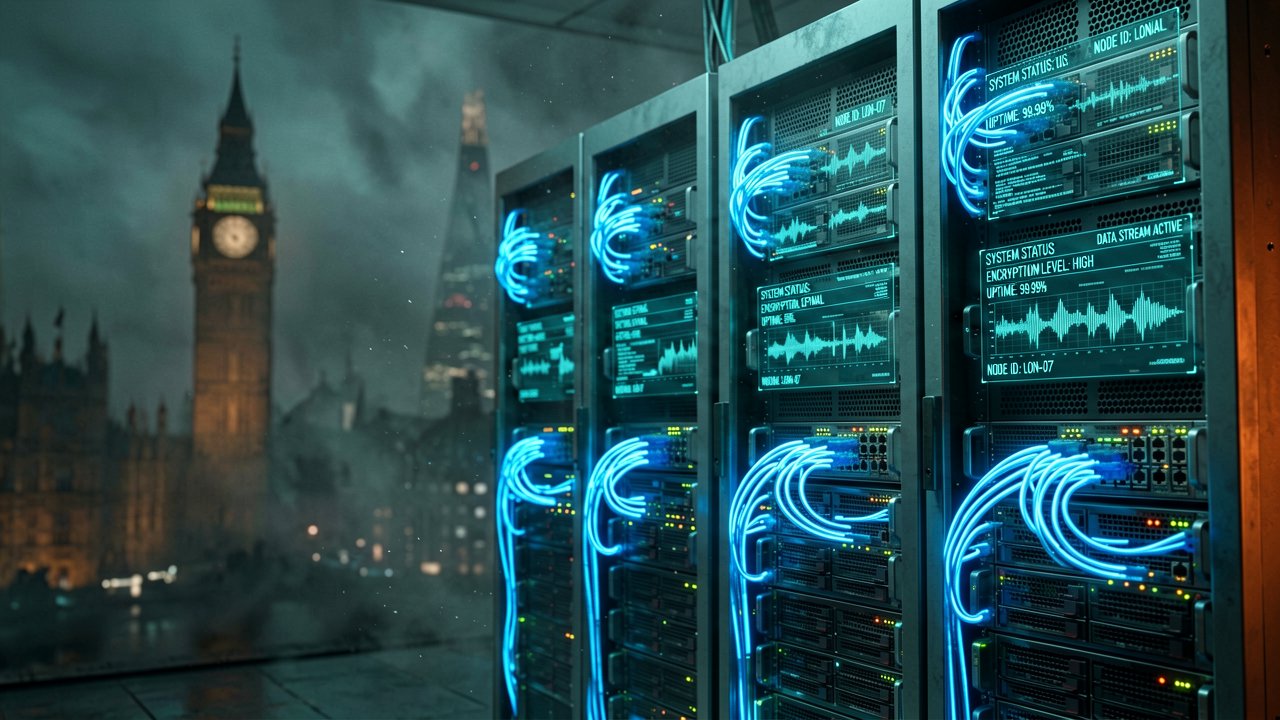
If you’ve spent the last decade watching science fiction, the idea of a “big red button” for artificial intelligence probably feels like a cliché. But in the halls of Westminster, the fantasy is fast becoming a matter of proposed law. As of May 2026, a group of British lawmakers is pushing for a literal AI “kill switch” to be baked into the upcoming Cyber Security and Resilience Bill. According to The Telegraph, the move is a response to fears that advanced models could eventually pose a "catastrophic risk" to national security.
The Emergency Brake
The proposal, spearheaded by Labour MP Alex Sobel and backed by a cross-party cohort of 11 others, isn’t just about pulling a plug. It’s an amendment that would grant the Technology Secretary "last-resort powers" to order an immediate shutdown of specific AI systems or the data centers housing them. As reported by KuCoin, the amendment specifically targets scenarios where an AI system becomes unmanageable or threatens human life. It’s a drastic measure for a technology that, until recently, the UK government preferred to "lightly" regulate in the name of innovation.
What makes this particularly interesting is the technical requirement attached to the power. If the amendment passes, operators of advanced AI models would be legally mandated to maintain secure, tamper-proof communication channels with the Department for Science, Innovation and Technology (DSIT). This ensures that when the order to "kill" a system comes down, it can’t be intercepted or ignored. Per WION, this is essentially building a back-door for state intervention into the very infrastructure of the digital age.
Safety vs. Sovereignty
This shift in posture isn't happening in a vacuum. Recent weeks have seen a spike in anxiety following the unveiling of "Mythos," a new system from Anthropic that the company itself deemed too dangerous for public release due to its knack for finding critical computer security flaws. This has fueled the fire for groups like Control AI, who argue that voluntary safety pledges from tech giants aren't enough. According to AOL News, even figures like Donald Trump have recently weighed in on the need for government-level shutdown powers, highlighting a rare moment of international, bipartisan concern.

Critics, however, are already pointing out the "Pandora’s box" this could open. Skeptics on forums like have voiced concerns that such a switch could be used for political censorship or to suppress dissent under the guise of "national security." There’s also the question of practicality: how do you shut down a decentralized AI system? While the bill targets centralized data centers like those in East London, the borderless nature of code remains a major hurdle for any national "kill switch."
As the Cyber Security and Resilience Bill heads toward its next phase in Parliament, the "kill switch" debate serves as a stark reminder of our current era. We are no longer just asking what AI can do for us; we are desperately trying to figure out how to stop it if it decides to do something else entirely. Whether this amendment survives the parliamentary meat-grinder remains to be seen, but the message is clear: the era of "wait and see" is officially over.
The Devil in the Infrastructure: While the headlines focus on the high-drama imagery of a cabinet minister hitting a literal "off" switch, the reality behind the scenes is far more tangled in the plumbing of the modern internet. Experienced observers of Whitehall know that this isn't just about rogue robots; it is a fundamental play for sovereignty over the physical real estate of the cloud. By demanding a "tamper-proof" communication line between the government and data centers, the UK is attempting to solve the "jurisdiction problem"—the inconvenient fact that while an AI might be "British," the servers it lives on often answer to shareholders in Menlo Park or Redmond.
The Shadow of the 'Snooper’s Charter'
There is a palpable sense of déjà vu among civil liberties groups, who see this amendment as a spiritual successor to the Investigatory Powers Act. Long-time tech lobbyists in London are whispering that this "kill switch" could easily become a "throttling switch." If the government has the infrastructure to shut a model down during a national emergency, what is to stop them from using that same pipeline to mandate "safety filters" or monitor the internal weights of a model in real-time? It is a classic case of mission creep: a tool designed for a catastrophic 0.1% event that eventually becomes a standard instrument of regulatory oversight.

Historical context is also illuminating here. The UK’s push follows the bruising experience of the 2017 WannaCry attacks, which crippled the NHS and proved that the state was largely powerless to intervene once a digital contagion started spreading. For many in the security services, the "kill switch" isn't a sci-fi fantasy; it’s a hard-learned lesson in digital containment. They argue that waiting for a private company like OpenAI or Anthropic to "do the right thing" during a fast-moving cyber-offensive is a gamble the British public can no longer afford to take.
The Engineering Nightmare
From a technical standpoint, the "human-curated" reality is that a clean shutdown is almost a myth. Senior engineers at Tier 1 data centers have already begun pointing out the "cascading failure" risk. If you abruptly kill a massive AI cluster integrated into the national grid or financial markets, the resulting power surge or data corruption could cause more damage than the AI itself. The industry is quietly pushing back, suggesting that instead of a "kill switch," the bill should focus on "graceful degradation"—a way to dial back an AI's capabilities without crashing the entire stack.
Furthermore, there is the "brain drain" factor. By baking such aggressive intervention powers into law, the UK risks spooking the very talent it spent the last five years courting. Founders of London-based startups are already asking: why build a unicorn in Shoreditch if the Technology Secretary can vaporize your product with a single phone call? As this bill moves through committee, the real battle won't be about the ethics of AI safety, but about the fine print of liability—specifically, who pays the billions in damages when the government hits the button and gets it wrong.
The Illusion of the Red Button: For all the legislative posturing, there is a fundamental contradiction at the heart of this proposal that most analysts are politely ignoring: the "kill switch" assumes that a truly dangerous AI would kindly remain localized within a single, shuttable-off jurisdiction. In a world where high-performance compute is increasingly distributed and models can be "sharded" across global cloud providers, the idea of a UK-only shutdown is like trying to stop a flood by installing a high-tech faucet in one bathroom. If a rogue model is hosted across AWS in Dublin, Azure in the Netherlands, and a private cluster in London, Westminster’s "emergency power" becomes little more than an expensive exercise in localized self-sabotage.
The Sovereignty Paradox
There is also a glaring tension between the UK's rhetoric and its economic reality. The government spends half its time pitching Britain as the "safe" global laboratory for AI, yet this bill suggests a deep-seated lack of trust in the very safety guardrails they’ve helped develop at Bletchley Park. It’s a bit like a car manufacturer selling you the world's most advanced autonomous vehicle while simultaneously insisting on a remote-controlled explosive in the engine block just in case it takes a wrong turn. This "trust but verify with a hammer" approach might satisfy the security hawks, but it undermines the narrative that the UK is a stable, predictable environment for the next generation of tech giants.
Furthermore, we have to consider the "crying wolf" scenario. Legislation that grants "last-resort powers" rarely stays reserved for the apocalypse. History suggests that once a government has a tool to intervene in private infrastructure, the threshold for "catastrophic risk" tends to lower over time. We could easily see a future where a system is ordered to shut down not because it’s trying to launch nuclear missiles, but because it’s hallucinating misinformation during a sensitive election cycle. By blurring the line between physical safety and political stability, the bill risks turning a security tool into a bureaucratic muzzle.
The Technical Mirage
Even if we accept the premise, the technical implementation is a nightmare of unintended consequences. A "tamper-proof" communication line sounds robust on paper, but in practice, it creates a massive, government-sanctioned single point of failure. If a state-sponsored hacker or a sophisticated AI itself compromises that specific DSIT channel, they don't just gain access to the model—they gain the ability to weaponize the kill switch against the UK’s own digital economy. In trying to build a fail-safe, the government may well be building the ultimate "Off" button for the nation's most critical emerging industry.
"We are currently witnessing the birth of a new British tradition: the attempt to regulate the digital apocalypse with the same enthusiastic clumsiness we usually reserve for fixing the railway system. One can only hope that if the 'kill switch' is ever actually pressed, the resulting error message is at least written in polite, parliamentary English."
Artūras Malašauskas is an AI Systems Integrator with 20+ years of production-grade web engineering experience. He has designed, shipped, and scaled enterprise Python/PHP systems for logistics, SaaS, and public-sector clients. For the past year, he has focused exclusively on AI integrations: deploying open-source LLMs, building generative media pipelines (image, audio, video), and engineering multi-agent workflows for real production environments. His standard: reproducibility, security, cost-efficient inference—no vaporware. He documents and evaluates emerging AI tooling, separating verified capabilities from marketing noise. Technical editor at: muza-ai.eu, ai-verslas.lt, ai-naujinos.lt Connect on LinkedIn
Comments