The 18-Month Deadline: Microsoft’s Microsoft’s Agentic Ambition and the End of the Cubicle

If you’ve been feeling a sense of digital vertigo lately, you aren’t alone. The goalposts for the "AI revolution" aren't just moving; they’re being strapped to a Falcon 9 rocket. The latest jolt to our collective career stability comes from Mustafa Suleyman, the CEO of Microsoft AI, who recently dropped a timeline that makes the industrial revolution look like a leisurely stroll. According to Suleyman, we are a mere 18 months away from AI reaching human-level performance across "most, if not all" white-collar tasks.
It’s a staggering claim, even by Silicon Valley’s hyper-optimistic standards. We’re talking about the end of the 18-month horizon not just for chatbots that can summarize a meeting, but for systems capable of the nuanced, cross-functional labor that defines the modern middle class. As reported by Yahoo Finance, this isn't just about efficiency; it's about a fundamental shift toward "agentic" systems that don't just suggest actions but execute them autonomously.
The Rise of the Agentic Era
For those of us tracking this space, the keyword for 2026 is "agentic." We’ve moved past the era of LLMs that act as sophisticated auto-completes. The new guard, including Microsoft’s upcoming Agent 365 suite, aims to delegate entire workflows—procurement, financial auditing, project management—to AI agents. According to Cloud Wars, the shift is moving from "using" AI to "delegating" to it, effectively turning every employee into a manager of a digital workforce, or perhaps, making the employee redundant altogether.
But let’s get real for a second: Suleyman’s 18-month window is aggressively tight. It suggests that by late 2027, the "SaaSpocalypse"—a term coined by analysts during a recent software stock selloff—won't just be a catchy headline but a lived reality. As Fortune points out, markets are already reacting "violently" to this potential, fearing that traditional software-as-a-service companies will be hollowed out by agentic systems from OpenAI and Anthropic.
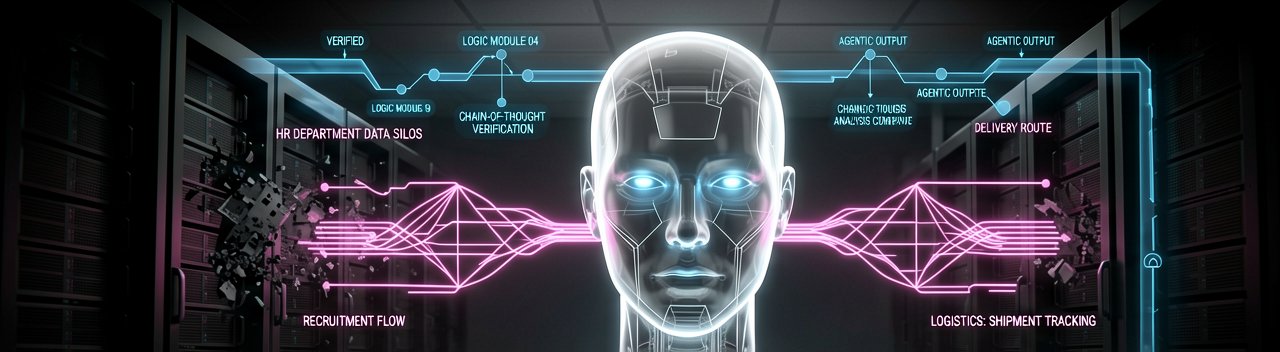
The economic friction is already visible. While Big Tech profit margins are soaring, the broader market is struggling to figure out how to monetize this "intelligence" without cannibalizing its own customer base. We're seeing a weird paradox: AI is displacing workers—with roughly 55,000 AI-related job cuts recorded in 2025 alone—yet investors remain skeptical that these gains will translate to higher earnings outside the tech sector. It’s a consolidation of power that feels more like a land grab than a rising tide lifting all boats.
The 18-Month Countdown
Is Suleyman right, or is this just high-level marketing for Microsoft's cloud dominance? History suggests the truth usually lands in the messy middle. We’ll likely see the *capability* for total automation within 18 months, but the *implementation* will be slowed by the usual suspects: corporate bureaucracy, legal liability, and the sheer human refusal to let a machine sign off on a million-dollar contract. Even so, the "human-level" benchmark is a psychological Rubicon. Once the C-suite believes the tech is "good enough," the pressure to automate becomes an existential mandate.
If you're sitting in a climate-controlled office today, your job description is effectively a ticking clock. The 18-month countdown has started, and while the "future of work" has been a tired trope for a decade, Mustafa Suleyman just gave it a very specific, and very looming, expiration date. Whether we're heading toward a post-scarcity utopia or a massive labor crisis remains to be seen, but one thing is certain: the cubicle is about to get a lot quieter.
The Quiet Part Out Loud: While the headlines focus on the sheer speed of Suleyman’s timeline, the deeper story isn't just about the technology—it’s about the massive, invisible infrastructure of trust that is currently being dismantled. For decades, the "white-collar" world operated on a social contract where human judgment was the final fail-safe. Now, Microsoft and its peers are betting that we can replace that judgment with probabilistic tokens. This isn't just a software update; it’s an attempt to automate the very concept of professional accountability.
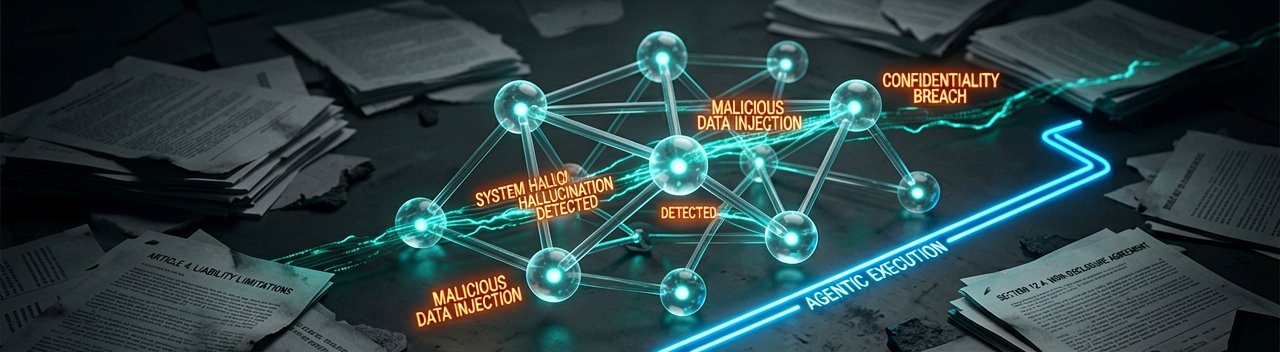
If we peer behind the curtain of the 18-month prediction, we see a frantic arms race between "The Big Three"—Microsoft, Google, and Amazon—to solve the "hallucination" problem. A seasoned observer knows that human-level performance on paper is useless if the system hallucinates a legal precedent or a tax code. To bridge this gap, Microsoft is leaning heavily into RAG (Retrieval-Augmented Generation) and "chain-of-thought" processing, trying to simulate the methodical double-checking a junior analyst would perform. This is the "agentic" shift Suleyman is banking on: systems that don't just talk, but verify.
The Institutional Pushback
There is also a significant tension building between the C-suite and the middle-management layer. While executives are salivating over the possibility of slashing SG&A (Selling, General, and Administrative) expenses, the actual implementation of these AI agents is hitting a wall of "corporate immune systems." Historical shifts, like the move to cloud computing in the late 2000s, took nearly a decade to fully saturate the market. Suleyman’s 18-month window assumes that the economic pressure of 2026 will be so intense that companies will bypass their usual multi-year vetting cycles.
According to insights from MIT Technology Review, the real bottleneck isn't the AI's IQ, but the "data silos" that define modern business. Most Fortune 500 companies have their data scattered across legacy systems that don't talk to each other. For an AI agent to handle "all" white-collar work, it needs seamless access to everything from HR records to real-time supply chain logistics. Cleaning that data is a Herculean task that usually takes years, not months, suggesting that while the AI might be "ready," the businesses themselves are far from it.
Furthermore, we have to consider the "Value Paradox." If every company in a specific sector—say, law or accounting—adopts the same human-level AI agents, their competitive advantage evaporates. We could see a race to the bottom where services become commoditized, and the only way to stand out is through "artisanal" human intervention. As noted by analysts at Gartner, we are entering an era of "Algorithmic Parity," where the human element actually becomes a premium luxury rather than a standard requirement.
Ultimately, Suleyman’s prediction serves as a provocative "North Star" for the industry. Even if he’s only 50% right, the ripples will be seismic. We are watching the birth of a new economic class: the "AI Orchestrator." These are the workers who survived the first wave of layoffs by learning to steer these agents. The next 18 months won't just be about who the AI replaces, but who it empowers to do the work of an entire department alone. The question isn't just if the AI can do the work, but whether we are ready for the social fallout when it does.
Reading Between the Lines: There is a seductive trap in Suleyman’s 18-month prophecy: it assumes that productivity is the only metric that matters to a functioning civilization. While Microsoft’s leadership paints a picture of a friction-free economy, they are glossing over the "Liability Gap." If an autonomous agent makes a catastrophic accounting error that triggers a federal audit, who goes to jail? The CEO? The software engineer? The prompt engineer? Our legal and insurance frameworks are calibrated for human negligence, not algorithmic hallucinations, and those systems don't rewrite themselves in 18 months.
We also have to challenge the assumption that "human-level" performance automatically translates to "human-level" value. Economic history is littered with technologies that were technically superior but failed because they lacked the social capital required for adoption. Even if an AI can draft a contract with 99% accuracy, the 1% risk remains an existential threat that most risk-averse corporations aren't willing to swallow without a human "throat to choke" at the end of the process. Suleyman is selling a vision of technical capability, but he’s ignoring the stubborn reality of human psychology.
The Monoculture of Intelligence
The most alarming contradiction in this push for total automation is the looming threat of "Intellectual Monoculture." If every major corporation plugs into the same handful of foundation models—OpenAI’s GPT-5 or Microsoft’s latest Agentic suite—creative destruction effectively dies. Innovation thrives on the messy, idiosyncratic differences in how people solve problems. If every white-collar task is filtered through the same set of weights and biases, we risk an era of profound stagnation where every business strategy, marketing campaign, and software architecture looks exactly like its competitor’s.
There is also the matter of the "Jevons Paradox," which suggests that as a resource becomes more efficient to use, we don't use less of it; we use more. While AI might automate existing tasks, it historically creates a massive explosion of new, even more complex administrative overhead. We might not see the end of the white-collar worker, but rather the transformation of the office into a high-speed "agent-wrangling" floor where the burnout rate is higher than ever because the pace of work is no longer governed by human biology, but by silicon clock speeds.
Ultimately, Suleyman’s timeline feels less like a forecast and more like a "forcing function" designed to compel shareholders and late-adopting CEOs to move faster. By setting the deadline at 18 months, Microsoft ensures that the conversation stays centered on their tools as the only viable lifeboats in the coming storm. It’s a masterful piece of corporate theater: create the urgency, define the crisis, and then offer the subscription service that solves it. Whether the automation actually arrives on schedule is almost secondary to the market dominance established by making everyone believe that it will.
"We were promised a future where robots would do our laundry so we could write poetry, but instead we’ve got AI writing the poetry so we can spend more time managing the robots that are currently failing to do our laundry."
Artūras Malašauskas is an AI Systems Integrator with 20+ years of production-grade web engineering experience. He has designed, shipped, and scaled enterprise Python/PHP systems for logistics, SaaS, and public-sector clients. For the past year, he has focused exclusively on AI integrations: deploying open-source LLMs, building generative media pipelines (image, audio, video), and engineering multi-agent workflows for real production environments. His standard: reproducibility, security, cost-efficient inference—no vaporware. He documents and evaluates emerging AI tooling, separating verified capabilities from marketing noise. Technical editor at: muza-ai.eu, ai-verslas.lt, ai-naujinos.lt Connect on LinkedIn
Comments