The House Always Wins: Interactive Brokers Mainstreams the Prediction Market
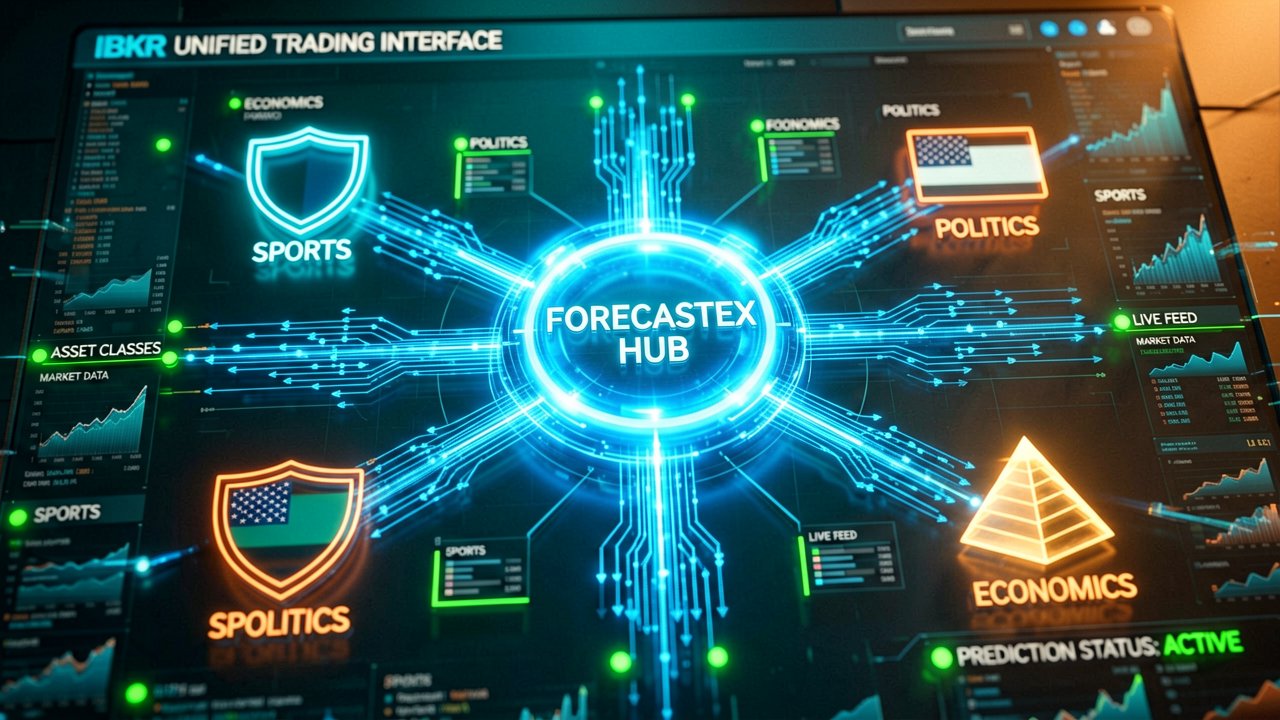
If you've been watching the fintech space lately, you know that prediction markets are having a bit of a "moment." What used to be the playground of niche enthusiasts and political junkies is rapidly going mainstream. Leading the charge into this frontier is none other than the old guard itself. Interactive Brokers Group (IBKR) has officially pulled the curtain back on its new unified interface, designed specifically to streamline the chaotic world of event trading and prediction markets.
Wall Street Meets the Wisdom of the Crowd
The move isn't just a UI facelift; it’s a strategic play to bridge the gap between traditional asset classes and the burgeoning world of "event contracts." For the uninitiated, Wikipedia defines these markets as exchange-traded environments where traders bet on the outcome of real-world events—anything from interest rate hikes to election results. By consolidating these into a single interface, IBKR is essentially telling its 3.3 million clients that betting on the Fed's next move should be as seamless as buying a share of Apple.
What’s particularly clever here is the timing. We’re seeing a massive shift in how retail and institutional investors perceive information. Traditional models are being supplemented—and sometimes supplanted—by the "wisdom of the crowd." Interactive Brokers, which Wikipedia notes as the largest electronic trading platform in the U.S. by daily revenue trades, is uniquely positioned to handle the liquidity requirements these markets desperately need.
A Unified Front for Chaos
Let’s be honest: prediction markets have historically been a mess. You’d have one platform for sports, another for political outcomes, and a third for economic data. IBKR’s unified interface aims to kill that fragmentation. It brings together ForecastEx—their own internal exchange—with other event-driven instruments, providing a clean, professional-grade dashboard that doesn't feel like a glorified sportsbook.
From a journalist's perspective, this launch feels like a tipping point. When a behemoth like IBKR leans this hard into event trading, it lends a layer of regulatory and operational legitimacy that smaller, crypto-native prediction platforms often lack. They’re leveraging their massive infrastructure—processing over 2.6 million trades a day—to ensure that when you want to take a position on the next global event, the plumbing actually works.
Of course, it’s not all smooth sailing. Prediction markets still face a patchwork of global regulations, with some jurisdictions viewing them as innovative financial tools and others as plain old gambling. But by embedding these trades within a regulated brokerage environment, IBKR is betting that the future of finance isn't just about what a company is worth, but about what the world thinks will happen next. It's a bold, slightly cynical, and incredibly smart evolution for a firm that has always prioritized the sophisticated trader.
Ultimately, this unified interface is more than just a new tab in your TWS (Trader Workstation). It’s an admission that the lines between "investing" and "predicting" are blurring. Whether you’re hedging against a political shift or just trying to capitalize on your niche knowledge of climate data, Interactive Brokers is making sure you don't have to leave their ecosystem to do it. It’s efficient, it’s professional, and frankly, it’s about time.
The Strategic Pivot: While the press release focuses on the "what," the real story lies in the "why"—and it’s a calculated bet on the death of the traditional silos that have separated speculation from sophisticated hedging for decades. For years, Interactive Brokers founder Thomas Peterffy has been a vocal proponent of the transparency that market-clearing prices can bring to public discourse. By rolling out this unified interface, IBKR isn't just adding a feature; they are attempting to institutionalize the "oracle" effect, turning speculative fervor into a legitimate data stream that rivals the precision of the bond market.
The ForecastEx Factor and the Liquidity Moat
At the heart of this expansion is ForecastEx, IBKR’s wholly-owned exchange that operates under a CFTC-regulated framework. This is a critical distinction that most surface-level reports gloss over. Unlike the offshore, blockchain-based platforms that often operate in a legal gray area, IBKR is building a "walled garden" that satisfies the rigorous compliance demands of institutional wealth managers. This isn't just for the retail trader in their basement; it’s for the hedge fund manager who needs a regulated way to hedge against specific geopolitical shocks without the counterparty risk inherent in decentralized protocols.
Historically, the Achilles' heel of prediction markets has been thin liquidity—the "spread" was often too wide to make professional trading viable. By integrating these markets into the same interface used for equities and options, IBKR is effectively funnelling its massive pool of global capital directly into these event contracts. It’s a classic "network effect" play: more traders lead to tighter spreads, which in turn attracts even more institutional volume. If they succeed, IBKR could become the primary liquidity provider for global sentiment, a position that would be incredibly difficult for newcomers to disrupt.
The Shift from Wagering to Risk Management
There is also a fascinating cultural shift happening within the firm’s philosophy. For decades, the "serious" investor looked down on event trading as little more than glorified gambling. However, as we’ve seen with the volatility of the 2020s, traditional assets often move in lockstep during a crisis. Diversification is failing. In this new landscape, a "Yes" contract on a specific economic outcome acts as a more surgical hedge than a broad-market put option. IBKR’s experts seem to recognize that in an era of "polycrisis," the ability to trade specific outcomes is the ultimate tool for risk mitigation.
Looking back at the evolution of the firm, from its roots in pioneering handheld computers on the trading floor to this unified prediction interface, a clear pattern emerges: a relentless drive toward efficiency through vertical integration. By owning the interface, the clearinghouse, and the exchange (via ForecastEx), Interactive Brokers is capturing the entire value chain. They aren't just providing the seats at the table; they own the table, the cards, and the building itself. This launch marks the moment when the "prediction market" stopped being a fringe experiment and officially became a core component of the modern financial stack.
The Reality Check: While the marketing department paints a picture of seamless financial synergy, the cynical observer has to ask whether the average investor actually wants their brokerage to feel like a high-stakes debate stage. There is a fundamental tension in IBKR’s push toward unified prediction markets: the firm is essentially inviting "noise traders" into a house built for "signal traders." By lowering the barrier to entry for event-based speculation, Interactive Brokers risks diluting the professional atmosphere of their platform in favor of the high-velocity, high-churn environment that typically characterizes retail betting.
The Regulatory Tightrope
We should also be skeptical of the "unified" promise when it comes to the legal landscape. While the interface might look cohesive, the plumbing underneath is still a fragmented nightmare of international jurisdictions. A trader in London, one in New York, and another in Hong Kong are not all looking at the same menu of event contracts. IBKR’s challenge will be maintaining this "unified" illusion while navigating the CFTC’s historically prickly stance on event contracts that look too much like gaming. One wrong move, or one controversial contract on a sensitive political outcome, and the regulatory hammer could fall, forcing the firm to pull back the very features it is currently championing.
Furthermore, there is the question of the "Incentive Gap." Traditional markets are backed by underlying assets—earnings, dividends, or physical commodities. Prediction markets are backed by nothing but the collective opinion of the participants. In a period of high market stress, the correlation between these "event bets" and actual reality can decouple spectacularly. If IBKR’s platform becomes the go-to venue for these trades, the firm isn't just facilitating commerce; they are essentially hosting a massive experiment in behavioral psychology. Whether that experiment yields useful data or just expensive chaos for the end user remains a very open, and very expensive, question.
Finally, we have to consider the irony of a firm known for its "low-cost, no-frills" ethos diving into a product category that thrives on high-margin excitement. It feels like a departure from the Peterffy tradition of austere efficiency. If prediction markets fail to gain the institutional traction IBKR expects, this unified interface might end up as a digital ghost town—a sophisticated solution to a problem that most serious investors weren't actually trying to solve with their brokerage accounts.
At the end of the day, Interactive Brokers is betting that the future of finance looks less like a library and more like a casino where everyone is wearing a suit. It’s a bold move, provided you ignore the fact that even the most 'unified' interface can't stop a trader from being confidently wrong about the future.
Artūras Malašauskas is an AI Systems Integrator with 20+ years of production-grade web engineering experience. He has designed, shipped, and scaled enterprise Python/PHP systems for logistics, SaaS, and public-sector clients. For the past year, he has focused exclusively on AI integrations: deploying open-source LLMs, building generative media pipelines (image, audio, video), and engineering multi-agent workflows for real production environments. His standard: reproducibility, security, cost-efficient inference—no vaporware. He documents and evaluates emerging AI tooling, separating verified capabilities from marketing noise. Technical editor at: muza-ai.eu, ai-verslas.lt, ai-naujinos.lt Connect on LinkedIn
Comments